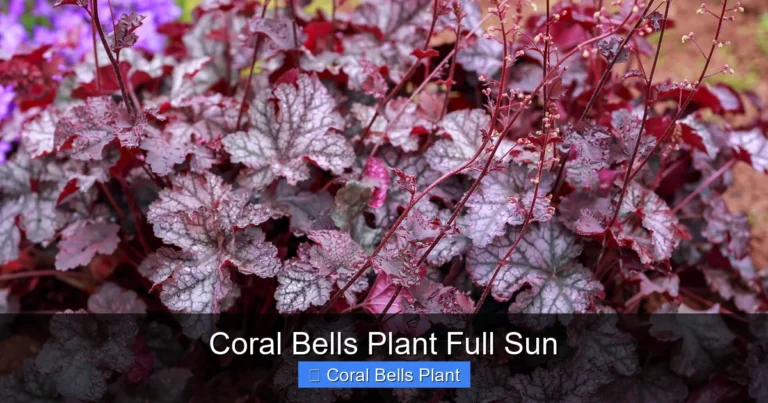
What to Plant with Purple Coral Bells
Purple coral bells (Heuchera) thrive alongside shade-loving companions like hostas, ferns, and astilbes. These pairings create beautiful texture contrasts while sharing similar growing needs. Choose plants with complementary foliage colors and bloom times for year-round garden interest.
Key Takeaways
- Hostas make ideal partners: Their broad leaves contrast beautifully with the ruffled foliage of purple coral bells while sharing the same shade requirements.
- Ferns add delicate texture: Japanese painted ferns and maidenhair ferns create airy movement that highlights the bold color of Heuchera.
- Astilbes provide seasonal blooms: Their feathery plumes in pink, white, or red rise above coral bells foliage for summer color.
- Consider foliage color echoes: Plant chartreuse or silver-leaved companions to make purple tones pop in shaded beds.
- Match moisture needs: All recommended companions prefer consistently moist, well-draining soil rich in organic matter.
- Layer by height: Place taller plants like foxglove behind coral bells, with lower growers like foamflower in front.
- Plan for four-season interest: Combine evergreen and deciduous partners so your garden looks good even in winter.
Quick Answers to Common Questions
What are the best hostas to plant with purple coral bells?
Chartreuse varieties like ‘Guacamole’ and ‘Sum and Substance’ create vibrant contrast, while blue hostas like ‘Blue Angel’ deepen the purple tones. Variegated ‘Patriot’ brightens shady spots where dark foliage might disappear.
Can I plant purple coral bells in full sun?
In cooler climates (zones 3-5), purple coral bells tolerate morning sun with afternoon shade. In warmer zones, they need dappled or full shade to prevent leaf scorch and color fading.
How far apart should I space coral bells and hostas?
Space coral bells 12-18 inches apart. Space hostas according to their mature spread (check the label). Allow at least 24 inches between a coral bells clump and a large hosta to prevent crowding.
Do coral bells and ferns compete for nutrients?
No, they occupy different root zones. Coral bells have shallow, fibrous roots while ferns root deeper. They share the same love for organic-rich soil without aggressive competition.
When is the best time to divide purple coral bells?
Early spring as new growth emerges, or early fall (September) so divisions establish before winter. Divide every 3-4 years when centers become woody and flowering declines.
📑 Table of Contents
- Why Companion Planting Matters for Purple Coral Bells
- Top Shade Perennials to Pair with Purple Coral Bells
- Foliage-Focused Companions for Year-Round Interest
- Seasonal Bloomers That Extend the Show
- Structural Plants for Architecture and Winter Interest
- Ground Covers to Knit the Planting Together
- Design Strategies for Stunning Combinations
- Practical Planting and Care Tips
- Common Mistakes to Avoid
- Regional Considerations
- Creating Your Own Plant Combinations
- Conclusion
Why Companion Planting Matters for Purple Coral Bells
If you have ever grown purple coral bells, you know they are garden stars. Their ruffled leaves in deep plum, burgundy, or amethyst catch light like stained glass. But even stars need a supporting cast. Learning what to plant with purple coral bells transforms a nice planting into a magazine-worthy garden scene.
Companion planting is not just about looks. It is about creating plant communities that thrive together. The right neighbors share similar light, water, and soil needs. They cover bare soil to suppress weeds. They bloom at different times so something is always happening. And they play off each other’s textures and colors in ways that make both plants look better than they would alone.
Purple coral bells, botanically known as Heuchera, are native to North American woodlands. This tells you everything about what they like. Dappled shade. Rich, humusy soil. Consistent moisture but good drainage. When you choose companions that evolved in similar conditions, gardening gets easier. You water once. You mulch once. Everyone is happy.
Top Shade Perennials to Pair with Purple Coral Bells
Hostas: The Classic Companion
Ask any gardener what to plant with purple coral bells, and hostas will be the first answer. This pairing works for good reason. Hostas bring big, bold leaves in greens, blues, golds, and variegated patterns. Purple coral bells bring fine, ruffled texture in deep jewel tones. Together they create a texture conversation that never gets boring.
Choose hosta varieties that echo or contrast with your Heuchera. ‘Guacamole’ has chartreuse centers that glow against purple foliage. ‘Blue Angel’ offers huge blue-green leaves that make burgundy coral bells look richer. ‘Patriot’ with its white margins brightens shady corners where dark leaves might disappear.
Plant hostas behind or beside your coral bells, not on top of them. Hostas get big. A mature ‘Sum and Substance’ spans five feet. Give each plant room to reach its full size without crowding. Crowding leads to poor air flow, and poor air flow invites slugs and fungal problems.
Ferns: Airy Texture for Heavy Foliage
If hostas are the bold brushstrokes, ferns are the delicate pencil lines. Their feathery fronds move with the slightest breeze, adding life to static shade plantings. Japanese painted fern (Athyrium niponicum ‘Pictum’) is a standout partner. Its silver fronds brushed with burgundy and green pick up the purple tones in coral bells perfectly.
Maidenhair fern (Adiantum pedatum) brings wiry black stems and soft green fans. It looks delicate but handles tough shade once established. Christmas fern (Polystichum acrostichoides) stays evergreen through winter, keeping the garden interesting when hostas have gone dormant.
Plant ferns in drifts of three or five between clumps of coral bells. Their roots occupy different soil depths, so they do not compete aggressively. Ferns also appreciate the same leaf mold mulch that coral bells love. Top-dress annually with shredded leaves for happy plants.
Astilbes: Summer Blooms Above the Foliage
Coral bells bloom in late spring with wands of tiny bells. Astilbes take the floral baton in early to midsummer. Their feathery plumes rise 18 to 36 inches above mounded foliage in shades of pink, red, white, and lavender. The vertical flowers contrast beautifully with the low, mounding habit of Heuchera.
‘Fanal’ offers deep red plumes that harmonize with purple foliage. ‘Bridal Veil’ brings pure white for a cooling effect. ‘Pumila’ is a dwarf variety perfect for the front of the border. All astilbes need consistent moisture. If your soil dries out in summer, they will brown and go dormant early.
A practical tip: plant astilbes where they get morning sun and afternoon shade. This combination produces the best flowering while protecting the foliage from scorching. The coral bells at their feet will appreciate the same conditions.
Foliage-Focused Companions for Year-Round Interest
Heucherellas: The Best of Both Worlds
Heucherellas (x Heucherella) are hybrids between coral bells and foamflower (Tiarella). They inherit the colorful foliage of Heuchera and the deeply lobed leaf shape and running habit of Tiarella. ‘Sweet Tea’ has cinnamon-orange leaves that warm up a purple palette. ‘Solar Eclipse’ shows burgundy leaves with lime green edges.
Because they share parentage, heucherellas have identical cultural needs. They intermingle beautifully. Plant them in repeating groups along a woodland path. The similar mounding habit creates rhythm. The different colors create surprise.
Foamflower: Native Ground Cover Charm
Tiarella cordifolia, the native foamflower, spreads gently by runners to form a living mulch. Its maple-shaped leaves often have dark center markings. In spring, foamy white or pink flower spikes hover above the foliage. It knits together other shade plants, covering soil and suppressing weeds.
‘Running Tapestry’ has deeply cut leaves with burgundy centers. ‘Spring Symphony’ offers pink buds opening to white flowers. Both stay under 12 inches tall, making them perfect foreground plants for taller coral bells varieties.
Brunnera: Silver Hearts for Shade
Brunnera macrophylla, sometimes called Siberian bugloss, brings large heart-shaped leaves frosted in silver. ‘Jack Frost’ and ‘Looking Glass’ are popular cultivars that practically glow in shade. Their tiny blue forget-me-not flowers in spring are a bonus.
The silver foliage makes purple coral bells look more vibrant by contrast. It is a classic color theory trick. Dark colors recede. Bright colors advance. Silver reflects light. Together they create depth in shadowy beds.
Lungwort: Early Blooms and Spotted Foliage
Pulmonaria, or lungwort, is one of the earliest perennials to bloom in spring. Clusters of pink buds open to blue flowers on the same plant. The foliage stays attractive all season with silver spots or splashes on green leaves. ‘Raspberry Splash’ has coral-pink flowers and heavily spotted leaves.
Lungwort goes summer dormant in hot climates but re-emerges in fall. In cooler regions it stays evergreen. Either way, it fills the early season gap before coral bells hit their stride.
Seasonal Bloomers That Extend the Show
Bleeding Heart: Romantic Spring Drama
Dicentra spectabilis, the old-fashioned bleeding heart, arches graceful stems of pink and white hearts in spring. It grows three feet tall and wide, creating a fountain shape behind lower coral bells. ‘Gold Heart’ has chartreuse foliage that lights up the shade garden.
After flowering, bleeding heart often goes dormant in summer heat. Plan for this. Plant late-emerging companions like hostas or ferns nearby to fill the gap. Or choose the fringed bleeding heart (Dicentra eximia) which blooms sporadically all summer and keeps its foliage.
Japanese Anemone: Fall Finale
When most shade plants have finished, Japanese anemones (Anemone hupehensis) begin. Their tall wiry stems carry poppy-like flowers in white or pink from late summer into fall. ‘Honorine Jobert’ is a classic white. ‘September Charm’ offers silvery pink.
These spread by underground runners. Give them room or plant them where you want a colony. Their height (3-4 feet) makes them perfect background plants for a coral bells border.
Toad Lily: Exotic Late Season Blooms
Tricyrtis, or toad lily, produces orchid-like flowers spotted with purple in September and October. The flowers appear along arching stems at every leaf node. ‘Sinonome’ is a vigorous cultivar with white flowers heavily freckled in purple.
Toad lilies like the same rich, moist soil as coral bells. Plant them where you can see the flowers up close. They reward careful observation.
Structural Plants for Architecture and Winter Interest
Hellebores: Winter and Early Spring Stars
Hellebores (Helleborus) bloom when nothing else does. From January through April, their nodding cups in white, pink, purple, green, and near-black appear above leathery evergreen foliage. They are the backbone of the winter shade garden.
Plant hellebores where you can see them from windows. Their flowers face downward, so a slight slope or raised bed improves viewing. The evergreen leaves provide structure when hostas and coral bells have melted down.
Evergreen Ferns: Reliable Green Structure
Christmas fern, holly fern (Cyrtomium falcatum), and tassel fern (Polystichum polyblepharum) keep their fronds all winter. They catch frost beautifully. They shelter beneficial insects. They remind you that the garden is alive even in January.
Mix evergreen and deciduous ferns for a dynamic planting. The deciduous ones bring fresh green in spring. The evergreen ones hold the space through winter.
Boxwood and Dwarf Conifers: Formal Contrast
For a more structured look, add small evergreen shrubs. ‘Green Velvet’ boxwood forms a neat mound to 3 feet. ‘Bird’s Nest’ spruce (Picea abies ‘Nidiformis’) spreads wider than tall with a depression in the center. ‘Golden Mop’ false cypress (Chamaecyparis pisifera) adds gold thread foliage.
These woody plants anchor the planting. They provide bones when perennials disappear. Keep them pruned to scale with your coral bells.
Ground Covers to Knit the Planting Together
Wild Ginger: Native and Carefree
Asarum canadense, native wild ginger, spreads slowly by rhizomes to form a dense mat of heart-shaped leaves. It thrives in deep shade where grass refuses to grow. The flowers hide at ground level, pollinated by ants and beetles.
European ginger (Asarum europaeum) has glossier, more rounded leaves. Both stay under 6 inches tall. They make a living mulch that eliminates weeding.
Barrenwort: Tough as Nails
Epimedium, called barrenwort or bishop’s hat, handles dry shade better than almost anything. Once established, it laughs at drought. Heart-shaped leaves on wiry stems turn bronzy in fall. Spidery flowers in yellow, white, pink, or orange appear in spring.
‘Sulphureum’ has yellow flowers and red-tinted new growth. ‘Rubrum’ offers pink flowers and red-edged leaves. They spread politely, never aggressive.
Creeping Phlox: Spring Carpet
Phlox stolonifera, creeping phlox, forms a low mat smothered in blue, pink, or white flowers in April. ‘Sherwood Purple’ has deep violet blooms. ‘Blue Ridge’ offers sky blue. The needle-like evergreen foliage stays attractive year-round.
Plant it at the edge of paths where it can spill over. It handles light foot traffic. It pairs beautifully with the ruffled leaves of coral bells.
Design Strategies for Stunning Combinations
Color Echoes and Contrasts
Great garden design uses color deliberately. With purple coral bells, you have several strategies. Echo the purple with plants that have burgundy accents. Japanese painted fern. ‘Palace Purple’ heucherella. ‘Red Dragon’ persicaria. This creates harmony.
Contrast with chartreuse, gold, or silver. ‘Aureola’ hakonechloa grass. ‘Sum and Substance’ hosta. ‘Jack Frost’ brunnera. This creates excitement. The eye jumps between dark and light.
Analogous colors sit next to each other on the color wheel. Blue hostas. Pink astilbes. Purple coral bells. This creates serenity. All cool tones. All restful.
Texture Play: Fine, Medium, Bold
Texture is as important as color. Coral bells have medium texture. Ruffled leaves. Visible but not huge. Pair them with bold texture (hostas, bergenia, rodgersia) and fine texture (ferns, grasses, foamflower). Three textures create depth. Two textures can feel flat.
Grasses add movement. Hakonechloa macra ‘Aureola’ cascades like a golden waterfall. Carex ‘Ice Dance’ has white-edged blades that brighten shade. Both are well-behaved clumpers.
Height Layering: Front, Middle, Back
Think in layers. Front layer: under 12 inches. Foamflower, wild ginger, creeping phlox, coral bells. Middle layer: 12 to 24 inches. Hostas, ferns, brunnera, lungwort, astilbes. Back layer: over 24 inches. Bleeding heart, Japanese anemone, tall ferns, shrubs.
Stagger plants within layers. Avoid soldier rows. Nature does not plant in lines. Use odd numbers. Groups of three, five, seven. This looks natural.
Seasonal Succession: Always Something Happening
Plan for four seasons. Late winter: hellebores bloom. Early spring: lungwort, foamflower, creeping phlox bloom. Mid-spring: coral bells, bleeding heart, brunnera bloom. Early summer: astilbes, heucherellas bloom. Mid-summer: hostas, ferns at peak foliage. Late summer: Japanese anemones begin. Fall: toad lilies, anemones continue. Winter: evergreen ferns, hellebores, boxwood hold structure.
Make a simple chart. List months across the top. Plants down the side. Mark bloom times and foliage peaks. Look for gaps. Fill them.
Practical Planting and Care Tips
Soil Preparation Makes the Difference
All these plants want the same thing. Rich, moisture-retentive, well-draining soil. Before planting, amend generously with compost, leaf mold, or aged manure. Work it in 12 inches deep. This is your one chance to improve the root zone.
If you have clay soil, add coarse sand or fine gravel along with organic matter. If you have sandy soil, add extra compost and consider a clay amendment like bentonite. The goal is moisture-retentive but not soggy.
Planting Technique for Success
Water plants thoroughly in their pots before planting. Dig holes twice as wide as the root ball, same depth. Loosen circling roots gently. Place plant so crown sits at soil level. Backfill with amended soil. Firm gently. Water deeply to settle soil and eliminate air pockets.
Mulch with 2 inches of shredded leaves, pine bark, or compost. Keep mulch away from crowns to prevent rot. Water new plantings every 2-3 days for the first month, then weekly unless rain provides an inch.
Ongoing Maintenance Made Simple
These are not high-maintenance plants. In spring, cut back any tattered evergreen foliage on ferns, hellebores, epimediums. Apply a light top-dressing of compost. Divide crowded clumps every 3-4 years in early spring or fall.
Deadhead spent flowers on astilbes, coral bells, and anemones if you want tidy looks. Or leave seed heads for winter interest and birds. Your choice.
Watch for slugs and deer. Slugs love hostas and coral bells. Use beer traps, diatomaceous earth, or iron phosphate baits. Deer browse hostas, astilbes, and coral bells. Fencing or repellents help.
Container Combinations for Small Spaces
No ground? No problem. Purple coral bells thrive in containers. Choose a pot at least 14 inches wide and deep. Use high-quality potting mix with compost added. Combine a coral bells with a small hosta (‘Mouse Ears’), a fern (Japanese painted fern), and a trailing plant (creeping jenny or ivy).
Water containers daily in summer heat. Fertilize monthly with dilute liquid fertilizer. Overwinter in an unheated garage or bury pots in the ground.
Common Mistakes to Avoid
Planting Too Deep
Coral bells and many companions have crowns that rot if buried. Keep crowns at soil level. Mulch around, not over. This is the number one killer of Heuchera.
Ignoring Mature Sizes
That cute 4-inch pot becomes a 3-foot hosta. Space for the future. Check plant tags. Use the mature spread as your spacing guide. You can always fill temporary gaps with annuals.
Mixing Incompatible Water Needs
Do not pair moisture-loving astilbes with drought-tolerant epimediums in the same irrigation zone. One will suffer. Group plants by water needs.
Forgetting Winter
A garden that looks great in June but dead in January is a failed design. Include evergreens. Include structural plants. Include plants with winter interest (seed heads, bark, berries).
Regional Considerations
Hot Southern Gardens
In zones 7-9, afternoon shade is non-negotiable. Choose heat-tolerant cultivars. ‘Caramel’ and ‘Citronelle’ coral bells handle heat better than dark purple ones. Southern maidenhair fern (Adiantum capillus-veneris) replaces northern species. Autumn fern (Dryopteris erythrosora) handles heat and humidity.
Cold Northern Gardens
In zones 3-5, choose hardy varieties. Most coral bells are zone 4 hardy. Mulch heavily after ground freezes. Select hellebores rated for your zone. ‘Winter Jewels’ series handles zone 4. Christmas fern is native to zone 3.
Dry Western Gardens
In low-humidity regions, focus on drought-tolerant companions once established. Epimedium. Heuchera (many species are western natives). Penstemon. Salvia. Use drip irrigation. Mulch heavily.
Creating Your Own Plant Combinations
Start with What You Have
Already have purple coral bells? Great. Observe them through the seasons. Note when they look best. When they struggle. What light they get. What soil they are in. This information guides your companion choices.
Visit Public Gardens
Botanical gardens and arboreta show mature plant combinations. Take photos. Note plant labels. See what grows well in your climate. Steal ideas shamelessly. Gardeners love sharing.
Experiment on a Small Scale
Try one new combination each year. A group of three coral bells with three ferns. A drift of foamflower at their feet. Watch. Learn. Adjust. Gardening is a conversation with plants. They tell you what works.
Keep a Garden Journal
Record what you plant where. Bloom times. Problems. Successes. Photos help. Memory fails. A journal becomes your most valuable gardening tool.
Conclusion
Learning what to plant with purple coral bells opens up a world of shade garden possibilities. The key is choosing companions that share the same cultural needs while offering contrasting textures, complementary colors, and staggered bloom times. Hostas, ferns, astilbes, hellebores, and foamflowers are just the beginning.
Remember that great plant combinations evolve. They are not static. Plants grow. Seasons change. Light shifts as trees mature. The gardener who observes, adapts, and experiments creates the most beautiful spaces. Your purple coral bells are waiting for their perfect partners. Go introduce them.
Start small. Choose three companions from this guide. Plant them thoughtfully. Mulch well. Water consistently. Then sit back and watch the magic unfold. The ruffled purple leaves catching morning light. The fern fronds dancing in breeze. The astilbe plumes glowing at dusk. This is what shade gardening is all about.
Frequently Asked Questions
What to plant with purple coral bells in dry shade?
Epimedium (barrenwort) is the top choice for dry shade under trees. Heuchera villosa cultivars like ‘Autumn Bride’ tolerate more drought than other coral bells. Christmas fern and hellebores also handle dry conditions once established.
Can I plant annuals with purple coral bells?
Yes, shade annuals like impatiens, begonias, and coleus fill gaps while perennials establish. Choose colors that echo or contrast with the purple foliage. Remove annuals in fall to avoid disturbing perennial roots.
What shrubs work well with purple coral bells?
Dwarf evergreens like ‘Green Velvet’ boxwood, ‘Bird’s Nest’ spruce, and ‘Golden Mop’ false cypress provide winter structure. Deciduous options include oakleaf hydrangea and fothergilla for multi-season interest.
How do I prevent coral bells from heaving in winter?
Apply 3-4 inches of shredded leaf mulch after the ground freezes. This insulates soil and prevents freeze-thaw cycles that push plants up. Plant crowns slightly high initially to account for settling.
What causes purple coral bells to turn green?
Too much shade reduces anthocyanin production, causing purple leaves to green up. Some cultivars naturally green in summer heat. Morning sun with afternoon shade maintains the best color.
Are purple coral bells deer resistant?
They are moderately deer resistant due to fuzzy leaves and astringent taste. However, hungry deer will eat almost anything. Use repellents or fencing in high-pressure areas. Companion planting with strongly scented herbs may help deter browsing.