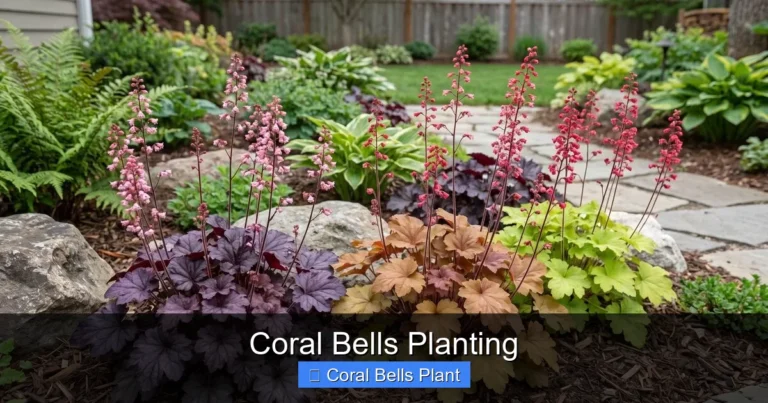
What Is a Coral Bell Plant
Coral bells (Heuchera) are versatile perennial plants prized for their stunning foliage colors and delicate bell-shaped flowers. These low-maintenance shade lovers thrive in zones 4-9 and add year-round interest to gardens, borders, and containers.
Key Takeaways
- Botanical identity: Coral bells belong to the genus Heuchera, part of the Saxifragaceae family, native to North America
- Foliage focus: Grown primarily for colorful leaves in shades of purple, silver, chartreuse, caramel, and near-black
- Shade tolerance: Thrives in partial to full shade, making it ideal for woodland gardens and north-facing beds
- Seasonal interest: Provides year-round color with evergreen or semi-evergreen foliage in most climates
- Low maintenance: Drought-tolerant once established, deer-resistant, and rarely bothered by pests
- Versatile uses: Works in borders, rock gardens, containers, ground covers, and as edging plants
- Easy propagation: Can be divided every 3-4 years or grown from seed for new plants
Quick Answers to Common Questions
What is a coral bell plant?
A coral bell plant (Heuchera) is a North American perennial prized for its colorful foliage and delicate bell-shaped flowers that bloom on tall wiry stems.
Do coral bells like sun or shade?
Coral bells prefer partial shade with morning sun and afternoon shade. Dark-leaved varieties need more light for best color, while lime and silver varieties tolerate deeper shade.
Are coral bells perennial?
Yes, coral bells are hardy perennials in USDA zones 4-9, returning year after year with proper drainage and winter protection in colder zones.
How often should you water coral bells?
Water newly planted coral bells twice weekly until established. Mature plants are drought-tolerant but perform best with consistent moisture, especially during hot spells.
When should you divide coral bells?
Divide coral bells every 3-4 years in spring or fall when the center becomes woody and growth declines. This rejuvenates the plant and provides free divisions.
📑 Table of Contents
- Introduction to Coral Bell Plants
- The Botany and History of Heuchera
- Understanding Coral Bell Foliage
- Flowers: The Delicate Bonus
- Choosing the Right Variety for Your Garden
- Planting Coral Bells Successfully
- Ongoing Care and Maintenance
- Common Problems and Solutions
- Designing with Coral Bells
- Propagation Methods
- Seasonal Interest Throughout the Year
- Buying Guide: What to Look For
- Conclusion
Introduction to Coral Bell Plants
If you have ever walked through a garden center in spring, you have likely seen coral bells. They catch your eye immediately. Their leaves come in colors you rarely see on other plants. Deep purple. Bright lime green. Warm caramel. Silvery pewter. Some even look almost black.
But what is a coral bell plant exactly? The name sounds delicate. The flowers are delicate. They look like tiny bells on thin stems. Yet the plant itself is tough. It handles shade. It handles drought. It comes back year after year. Gardeners love it because it solves problems. That shady spot under the tree? Coral bells. The north side of the house? Coral bells. A container that needs year-round color? Coral bells.
In this guide, we will explore everything about coral bells. You will learn their history. You will discover the best varieties. You will get planting tips. You will learn care routines. By the end, you will know exactly how to use these amazing plants in your own garden.
The Botany and History of Heuchera
What Is a Coral Bell Plant Scientifically
The coral bell plant belongs to the genus Heuchera. It is part of the Saxifragaceae family. This family includes other garden favorites like astilbe and bergenia. The genus contains roughly 55 species. All are native to North America.
Carl Linnaeus named the genus in 1753. He honored Johann Heinrich von Heucher. Heucher was an 18th-century German physician and botanist. The common name “coral bells” comes from the flowers. They resemble tiny coral-colored bells. The name “alumroot” is also used. This refers to the astringent roots. Native Americans used them for medicinal purposes.
Native Range and Natural Habitat
Heuchera species grow across the United States and Canada. They range from Mexico to the Arctic Circle. Different species adapted to different niches. Some live on rocky cliffs. Some thrive in woodland floors. Others prefer alpine meadows. This diversity explains why modern cultivars are so adaptable.
In the wild, most species form small clumps. They grow in well-drained soil. They often sit in rock crevices. This tells you something important. They hate wet feet. Good drainage is essential. Their natural habitat also explains their shade tolerance. Many evolved under tree canopies.
From Wild Plant to Garden Star
For centuries, coral bells were minor garden plants. They had green leaves. They had pink or red flowers. They were nice but not spectacular. Then breeders got involved. In the 1980s and 1990s, everything changed.
Breeders like Charles Oliver and Dan Heims began crossing species. They focused on foliage. They discovered amazing color variations. Heuchera villosa brought heat tolerance. Heuchera americana brought cold hardiness. Heuchera sanguinea brought bright flowers. The results exploded onto the market.
Today, hundreds of cultivars exist. New ones appear every year. The focus remains on leaves. Flowers are a bonus. This shift changed how gardeners use the plant. It became a foliage plant first. A flowering plant second.
Understanding Coral Bell Foliage
The Incredible Color Range
This is the main event. Coral bell foliage defies description. The palette includes:
- Purples and plums: ‘Palace Purple’, ‘Plum Pudding’, ‘Forever Purple’
- Silvers and pewters: ‘Silver Scrolls’, ‘Steel City’, ‘Appletini’
- Chartreuse and lime: ‘Lime Rickey’, ‘Electric Lime’, ‘Citronelle’
- Caramels and ambers: ‘Caramel’, ‘Georgia Peach’, ‘Peach Flambe’
- Reds and bronzes: ‘Fire Alarm’, ‘Red Lightning’, ‘Midnight Rose’
- Near-blacks: ‘Obsidian’, ‘Black Pearl’, ‘Dark Secret’
- Variegated patterns: ‘Marmalade’, ‘Tiramisu’, ‘Delta Dawn’
Colors change with seasons. Spring brings bright new growth. Summer heat may mute tones. Fall often intensifies colors. Winter reveals the toughest pigments. Some varieties hold color all year. Others go dormant in cold zones.
Leaf Shapes and Textures
Color is not the only variable. Leaves come in different shapes. Some are rounded. Some are maple-like. Some are deeply lobed. Some are ruffled. Texture varies too. Smooth. Velvety. Glossy. Matte. Heavily veined. The veins often contrast with the leaf surface. This adds another layer of interest.
Size ranges from tiny to large. Miniature varieties stay under six inches. Large cultivars can spread two feet wide. Height varies similarly. Flower stalks rise above the foliage mound. They can reach three feet on some varieties.
Evergreen vs. Deciduous Behavior
In mild climates, coral bells are evergreen. The leaves persist through winter. They may look ragged by spring. New growth pushes out the old. In cold climates, they act herbaceous. Leaves die back. The crown survives underground. Mulch helps protect the crown in zone 4 and 5.
Flowers: The Delicate Bonus
Flower Structure and Bloom Time
Do not ignore the flowers. They are charming. Thin wiry stems rise from the center. They hold dozens of tiny blooms. Each flower is bell-shaped. Hence the name. Colors include white, pink, coral, and red. Some are greenish. Blooming typically starts in late spring. It continues into summer. Deadheading encourages rebloom.
Pollinator Value
The flowers attract hummingbirds. They love the tubular shape. Bees visit too. Butterflies stop by. If you want wildlife, let some flowers bloom. The nectar provides early season food. This is valuable in shade gardens. Few shade plants feed pollinators.
Cut Flower Potential
Coral bell stems work in arrangements. They add airy texture. They last about a week in water. Harvest when half the bells are open. They pair well with hosta leaves. They complement ferns. They add height to low bouquets.
Choosing the Right Variety for Your Garden
Match Variety to Climate
Not all coral bells handle every climate. This is crucial. Heuchera villosa hybrids handle heat and humidity. They thrive in the Southeast. Look for ‘Caramel’, ‘Citronelle’, ‘Mocha’. Heuchera sanguinea types prefer cooler nights. They do well in the North and at elevation. Heuchera americana hybrids offer broad adaptability. They handle cold winters and moderate summers.
Check the hardiness rating. Most are zones 4-9. Some push to zone 3 with protection. Others tolerate zone 10 with shade and moisture. Read the plant tag. Ask your local nursery. They know what works in your area.
Match Variety to Light Conditions
Light affects color. This surprises many gardeners. Dark varieties need some sun. Deep purple and black leaves develop best with morning sun. Afternoon shade is essential. Chartreuse and lime varieties tolerate more shade. They brighten dark corners. Silver varieties need good air circulation. They can melt in humid heat.
General rule: more color = more sun needed. But never full afternoon sun in hot climates. The leaves will scorch. The plant will decline. Dappled shade is ideal for most. Morning sun, afternoon shade is perfect.
Match Variety to Purpose
Think about how you will use the plant. For ground cover, choose spreading types. ‘Green Spice’ spreads well. ‘Autumn Bride’ self-sows gently. For containers, choose compact mounds. ‘Delta Dawn’ stays tidy. ‘Berry Smoothie’ holds shape. For borders, choose upright habits. ‘Palace Purple’ makes a strong edge. For rock gardens, choose small species. Heuchera pulchella is tiny and cute.
Planting Coral Bells Successfully
When to Plant
Spring and fall are best. Spring planting gives roots time to establish before summer heat. Fall planting gives roots time before winter cold. Avoid summer planting in hot zones. Avoid winter planting in cold zones. Container plants can go in anytime the ground is workable.
Soil Preparation
This step determines success. Coral bells need well-drained soil. Heavy clay kills them. Sandy soil dries too fast. Loam is ideal. Amend clay with compost. Add coarse sand or fine gravel. Amend sand with compost. Add peat moss or coconut coir. The goal is moisture-retentive but free-draining.
Test your pH. Slightly acidic to neutral is best. 6.0 to 7.0 works well. Very acidic soil limits nutrient uptake. Very alkaline soil causes chlorosis. Adjust with sulfur or lime if needed. But compost buffers pH naturally. Regular compost additions solve most issues.
Planting Technique
Dig a hole twice the pot width. Same depth as the pot. This is critical. Do not plant deep. The crown must sit at soil level. Buried crowns rot. Exposed crowns dry out. Gently loosen circling roots. Place the plant. Backfill with amended soil. Firm gently. Water thoroughly.
Space plants 12-18 inches apart. Check the label for mature spread. Crowding reduces air flow. Poor air flow invites disease. Mulch with shredded leaves. Or pine straw. Or compost. Keep mulch off the crown. A one-inch gap prevents rot.
Container Planting
Coral bells excel in pots. Use a quality potting mix. Not garden soil. Add perlite for drainage. Choose a pot with holes. Terra cotta breathes well. Glazed ceramic holds moisture. Match pot size to plant. One gallon for small. Two to three gallons for large.
Container plants need more water. They need more fertilizer. They need winter protection in cold zones. Move pots to a garage. Or sink them in the ground. Or wrap with bubble wrap. The roots are exposed above ground. They freeze faster.
Ongoing Care and Maintenance
Watering Wisely
New plants need consistent moisture. Water deeply twice a week. Adjust for rain. Established plants are drought-tolerant. But they look best with regular water. Water at the base. Wet leaves invite fungal issues. Morning watering lets foliage dry. Mulch reduces watering frequency.
Watch for signs. Wilting in afternoon heat is normal. Wilting in morning means water now. Crispy leaf edges mean underwatering. Yellowing lower leaves can mean overwatering. Feel the soil. Two inches down should be moist. Not soggy. Not bone dry.
Fertilizing for Foliage
Coral bells are light feeders. Too much fertilizer burns roots. It also reduces color intensity. Apply compost in spring. One inch around the plant. That is usually enough. If growth is weak, use balanced slow-release. 10-10-10 or 14-14-14. Apply at half rate. Once in spring. That is it.
Container plants need more. Liquid fertilizer monthly. Half strength. April through August. Stop in fall. Let the plant harden off. Excess nitrogen makes soft growth. Soft growth winter-kills.
Dividing and Rejuvenating
Every three to four years, divide. The center gets woody. The plant loses vigor. Spring is best. Fall works too. Dig the whole clump. Shake off soil. Pull apart with hands. Or cut with a knife. Each division needs roots and crown. Replant immediately. Water well.
Division also gives you free plants. Share with friends. Fill new beds. Pot up for gifts. It keeps the parent plant young. It prevents the “donut effect.” That is when the center dies out. Leaving a ring of growth.
Seasonal Cleanup
In spring, remove winter-damaged leaves. Cut them at the base. Be gentle. New growth is emerging. Do not step on the crown. In fall, leave the foliage. It protects the crown. In cold zones, add mulch after ground freezes. Pine boughs work well. They trap snow. Snow is the best insulator.
Deadhead flower stalks after bloom. Cut at the base. This tidies the plant. It may encourage rebloom. It prevents unwanted seedlings. Though seedlings can be fun. They sometimes create new colors.
Common Problems and Solutions
Fungal Diseases
Powdery mildew appears in humid conditions. White coating on leaves. Improve air circulation. Space plants properly. Water at soil level. Choose resistant varieties. ‘Caramel’ and ‘Citronelle’ show good resistance. Fungicides work but prevention is better.
Rust shows as orange pustules. Usually on leaf undersides. Remove affected leaves. Clean up debris. Avoid overhead watering. Crown rot is the killer. Caused by wet soil. Poor drainage. Buried crowns. Once rot starts, the plant usually dies. Prevention is everything. Plant high. Drain well.
Pest Issues
Deer and rabbits usually avoid coral bells. The leaves are astringent. Tough. Bitter. But hungry animals eat anything. Voles may eat roots. Use hardware cloth if voles are bad. Black vine weevil larvae eat roots. Adults notch leaf edges. Beneficial nematodes control larvae. Neem oil deters adults.
Foliar nematodes cause angular brown spots. Between veins. Hard to control. Remove infected plants. Do not compost. Sanitize tools. Aphids occasionally cluster on flower stems. Blast with water. Or use insecticidal soap. They rarely cause serious damage.
Environmental Stress
Sun scorch shows as white or brown patches. On leaves facing the sun. Move the plant. Or provide shade cloth. Frost heave pushes crowns up. In freeze. Mulch prevents this. If heaved, replant immediately. Press firmly. Water.
Salt damage occurs near roads. Or from over-fertilizing. Brown leaf margins. Flush soil with water. Use gypsum to displace sodium. Winter burn shows as brown edges. On evergreen leaves. In exposed sites. Wind barrier helps. Burlap screen works.
Designing with Coral Bells
Companion Plants for Shade
Coral bells play well with others. Their mounding habit fits between upright plants. Their colors echo or contrast. Classic partners include:
- Hostas: Large leaves contrast with small coral bell leaves. Blue hostas make purple coral bells pop.
- Ferns: Fine texture contrasts with bold coral bell foliage. Japanese painted fern echoes silver varieties.
- Astilbe: Feathery plumes rise above mounded coral bells. Both like similar conditions.
- Brunnera: Heart-shaped leaves complement lobed coral bell leaves. ‘Jack Frost’ pairs with silver heuchera.
- Hellebores: Early bloomers. Leathery leaves persist. Coral bells fill in after hellebores finish.
- Lungwort (Pulmonaria): Spotted leaves echo variegated coral bells. Early spring flowers.
- Bleeding Heart: Arching stems. Ferny foliage. Goes dormant in summer. Coral bells cover the gap.
Container Combinations
Use the thriller-filler-spiller formula. Coral bells are perfect fillers. They mound nicely. They don’t overwhelm. For thriller, add a tall grass. Or a small shrub. For spiller, use creeping jenny. Or ivy. Or sweet potato vine.
Color themes work well. Monochromatic purple. ‘Palace Purple’ heuchera. Purple fountain grass. Purple petunias. Silver and white. ‘Silver Scrolls’ heuchera. Dusty miller. White bacopa. Hot colors. ‘Fire Alarm’ heuchera. Orange calibrachoa. Red coleus.
Landscape Uses
Edge a shady path. Plant in drifts of odd numbers. Three, five, seven. Mix varieties for a tapestry. Use as ground cover under trees. Plant on slopes for erosion control. Roots hold soil. Tuck into rock walls. They love the drainage. Line a woodland trail. They guide the eye.
Create a coral bell collection. Group by color family. All purples together. All limes together. Label each. It becomes a living catalog. Visitors love it. You learn what thrives.
Propagation Methods
Division: The Reliable Method
We covered division in care. It is the fastest way to get mature plants. It preserves the cultivar exactly. Seed does not come true. Hybrids revert. Division gives you clones. Do it in spring. Every three to four years. Or when the center gets woody.
Seed: The Adventure Method
Growing from seed is fun. But unpredictable. Collect seed after flowers fade. Pods turn brown. Split open. Sow fresh seed. Or store cool and dry. Surface sow on moist mix. Do not cover. Light aids germination. Keep at 65-70°F. Germination takes 2-8 weeks.
Seedlings vary wildly. You might get a gem. You might get green mud. It takes two years to bloom. To see the true foliage. But the cost is near zero. And the surprise is delightful.
Leaf Cuttings: The Experimental Method
Some gardeners root leaf cuttings. Take a leaf with petiole. Dip in rooting hormone. Stick in perlite. Cover with humidity dome. Bottom heat helps. Roots may form at the base. A tiny plantlet emerges. Success rate is low. But it works sometimes. Especially with species types.
Tissue Culture: The Commercial Method
This is how nurseries produce thousands. Meristem tissue grows in sterile labs. It produces virus-free plants. It multiplies rare cultivars fast. Home gardeners cannot do this. But it explains why new varieties appear so quickly. And why they are uniform.
Seasonal Interest Throughout the Year
Spring Awakening
New leaves emerge. Colors are intense. Fresh. Clean. Flower stalks begin rising. This is peak foliage season. The plant looks perfect. Take photos. Enjoy the show. This is why you planted them.
Summer Bloom
Flowers dance above the mound. Hummingbirds visit. The foliage may fade slightly in heat. Dark varieties hold color best with moisture. Light varieties brighten shady spots. Deadhead for neatness. Or leave for seeds.
Fall Transformation
Cooler nights intensify colors. Veins become more prominent. Some varieties develop new tones. ‘Peach Flambe’ turns bright red. ‘Marmalade’ glows amber. The plant often looks better than spring. This is the second peak.
Winter Structure
In mild zones, leaves persist. Frost highlights texture. Snow caps the mounds. In cold zones, leaves collapse. But the crown waits. Mulch protects. The promise of spring remains. Few perennials offer this much winter presence.
Buying Guide: What to Look For
At the Nursery
Inspect the plant. Leaves should be clean. No spots. No yellowing. Check the crown. It should be firm. Not mushy. Not dry. Pull gently. The plant should hold in the pot. Roots should be white. Not brown. Not circling tightly.
Read the label. Variety name. Hardiness zone. Mature size. Light needs. Patent status. Patented plants cannot be propagated for sale. But you can divide for your own garden. Price reflects novelty. New introductions cost more. Older varieties cost less. Both can be excellent.
Mail Order Tips
Order from reputable nurseries. Spring shipping is common. Plants arrive dormant or barely awake. They may look rough. This is normal. Pot them up. Water. Wait. They will grow. Fall shipping works too. Roots establish before winter.
Bare root plants are cheaper. They ship lighter. Soak roots before planting. Plant immediately. Keep moist. They catch up fast. Potted plants establish faster. But cost more to ship. Choose based on budget and patience.
Specialty Sources
For rare varieties, seek specialists. Heuchera breeders often sell direct. Plant societies have sales. Botanical gardens have shops. Online forums share sources. The American Heuchera Society exists. They connect enthusiasts. They trial new varieties.
Conclusion
What is a coral bell plant? It is a gardener’s dream. It solves the shade problem. It solves the color problem. It solves the maintenance problem. It gives you four seasons of interest. It feeds hummingbirds. It resists deer. It divides into free plants.
Start with one. Plant it where you see it daily. Watch it through the seasons. Notice how the light changes its color. Notice how it survives neglect. Then add another. And another. Mix colors. Mix textures. Create a tapestry at ground level.
Your garden will thank you. Your neighbors will ask. Your hummingbirds will return. And you will wonder how you ever gardened without coral bells. They are not just plants. They are reliable friends. They show up every year. They ask for little. They give much.
Go find your first coral bell. Or your tenth. There is always room for one more. The variety list grows every year. The colors deepen. The habits improve. The journey never ends. Happy planting.
Frequently Asked Questions
Can coral bells grow in full sun?
Coral bells can tolerate full sun only in cool northern climates with consistent moisture. In most regions, afternoon sun scorches the foliage. Morning sun with afternoon shade is ideal for vibrant leaf color without damage.
Why are my coral bells dying in the center?
The “donut effect” occurs when the crown becomes woody after 3-4 years. The center dies out while outer edges remain healthy. Divide the plant in spring, discarding the woody center and replanting vigorous outer sections.
Do coral bells spread on their own?
Most coral bells form tight clumps and do not spread aggressively. Some varieties like ‘Autumn Bride’ may self-sow gently. They are not invasive and stay where planted, making them well-behaved garden citizens.
Should I cut back coral bells in fall?
Leave foliage intact through winter as it protects the crown. In spring, remove any winter-damaged leaves at the base. In cold zones (4-5), add a layer of mulch or pine boughs after the ground freezes for extra insulation.
What causes brown crispy edges on coral bell leaves?
Brown edges indicate either underwatering, too much sun, or fertilizer burn. Check soil moisture first. If the plant gets afternoon sun, relocate to a shadier spot. Avoid over-fertilizing; a spring compost application is sufficient.
Can I grow coral bells indoors as houseplants?
Coral bells can grow indoors temporarily but prefer outdoor conditions. They need a cool dormancy period, bright indirect light, high humidity, and excellent drainage. They perform best as outdoor perennials in the garden or containers.