Plants Similar to Catmint
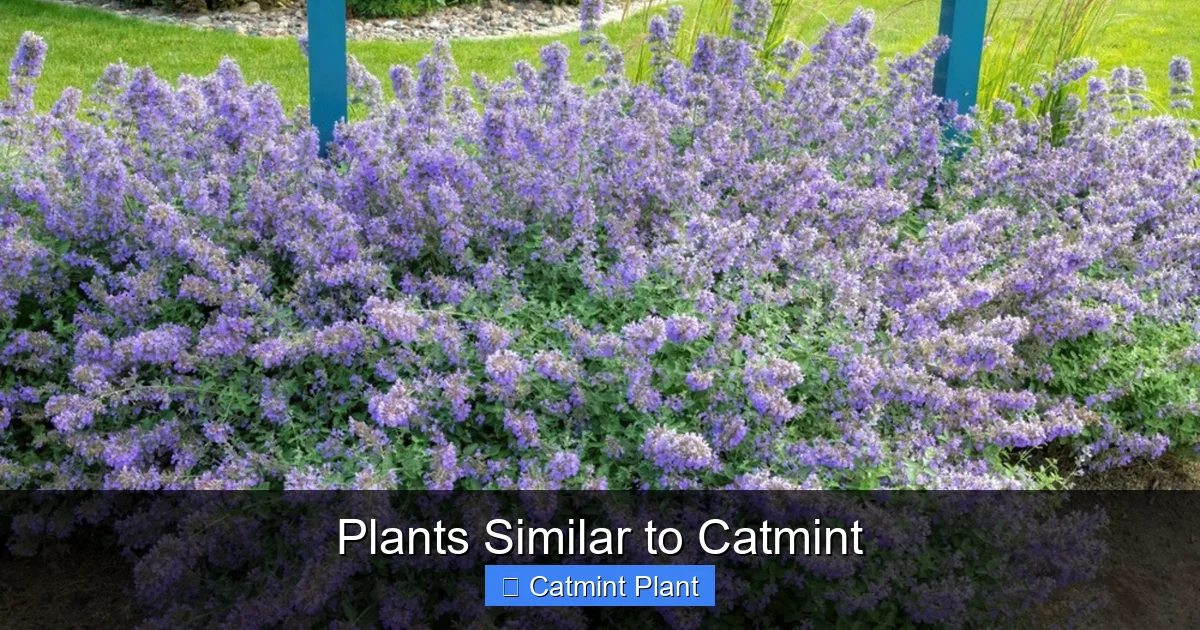
Catmint (Nepeta) is a garden favorite, but many plants similar to catmint offer comparable beauty with unique twists. This guide explores top alternatives like lavender, Russian sage, and salvia, comparing their growing needs, bloom periods, and wildlife benefits so you can choose the perfect low-maintenance perennial for your landscape.
If you love the soft purple haze of catmint swaying in your garden, you are not alone. This tough perennial has earned its spot in countless landscapes. It blooms for months. It laughs at drought. Bees and butterflies cannot resist it. Deer and rabbits usually leave it alone. What is not to love?
But maybe you want something a little different. Perhaps you need a taller plant for the back of the border. Maybe you want a stronger scent for cutting. Or you might be curious about plants similar to catmint that offer new colors or textures. Good news. The mint family is huge. Many cousins share catmint’s best traits while bringing their own personality to the party. Let us walk through the best options together.
Key Takeaways
- Lavender shares catmint’s fragrance and drought tolerance: Both thrive in full sun and well-drained soil, but lavender prefers more alkaline conditions and offers culinary uses.
- Russian sage provides height and airy texture: Its silvery stems and purple-blue flowers create a similar haze effect but grow taller, making it ideal for back borders.
- Salvia varieties match catmint’s long bloom season: Many salvias flower from late spring through fall and attract the same pollinators, especially hummingbirds.
- Catnip is catmint’s closest relative: Nepeta cataria has a looser habit and stronger effect on cats, while ornamental catmint varieties are bred for garden performance.
- Calamint offers a compact, tidy alternative: This lesser-known mint family member forms neat mounds with tiny white or pale pink flowers that bloom for months.
- Hyssop brings vertical interest and herbal value: Agastache varieties share catmint’s minty foliage scent and pollinator appeal but add taller flower spikes in more color options.
- Most plants similar to catmint are deer-resistant and low-maintenance: Once established, these perennials need minimal water, no fertilizer, and only annual pruning to thrive.
Quick Answers to Common Questions
What is the closest plant to catmint?
Catnip (Nepeta cataria) is the closest relative, sharing the same genus, but ornamental catmint hybrids like ‘Walker’s Low’ have better garden habits and less appeal to cats.
Which plants similar to catmint are best for humid climates?
Salvia nemorosa, betony (Stachys ‘Hummelo’), and calamint handle humidity better than lavender or Russian sage, which prefer arid conditions and sharp drainage.
Do all plants similar to catmint repel deer?
Yes, nearly all mint-family perennials including lavender, Russian sage, salvia, Agastache, and catmint are strongly deer-resistant due to their aromatic oils.
Can I grow plants similar to catmint in containers?
Absolutely. Use a gritty, well-draining mix and ensure pots have drainage holes. Lavender, catmint, salvia, and calamint all thrive in containers with minimal care.
When should I cut back plants similar to catmint?
Shear catmint, salvia, and calamint by half after their first bloom flush. Cut lavender, Russian sage, and Agastache back hard in early spring only.
📑 Table of Contents
Why Look for Plants Similar to Catmint?
Catmint (Nepeta x faassenii and related hybrids) sets a high bar. It forms a neat mound of gray-green leaves. It sends up spikes of lavender-blue flowers from late spring to fall if you shear it back. It handles heat, humidity, and poor soil. It asks for almost nothing in return. So why shop around?
Sometimes the site calls for a different size. Standard catmint reaches eighteen to twenty-four inches tall and wide. That is perfect for edging a path or filling a middle border. But it might get lost behind taller shrubs. Or it might swallow a delicate neighbor. Other times, the gardener wants a stronger fragrance. Catmint smells minty when brushed. Lavender or hyssop perfume the air from farther away. Some gardeners want a specific color. Catmint stays in the blue-purple range. Its relatives open the door to pink, red, white, and deep violet.
Exploring plants similar to catmint also stretches the season. While catmint takes a brief pause in midsummer heat, some cousins keep blooming straight through. Others start earlier or finish later. Mixing them creates a relay of color. And if you garden for wildlife, different flower shapes feed different pollinators. Hummingbirds prefer tubular salvia flowers. Bees love the tiny florets of calamint. Diversity builds a healthier garden.
Top Perennial Alternatives in the Mint Family
Lavender (Lavandula species)
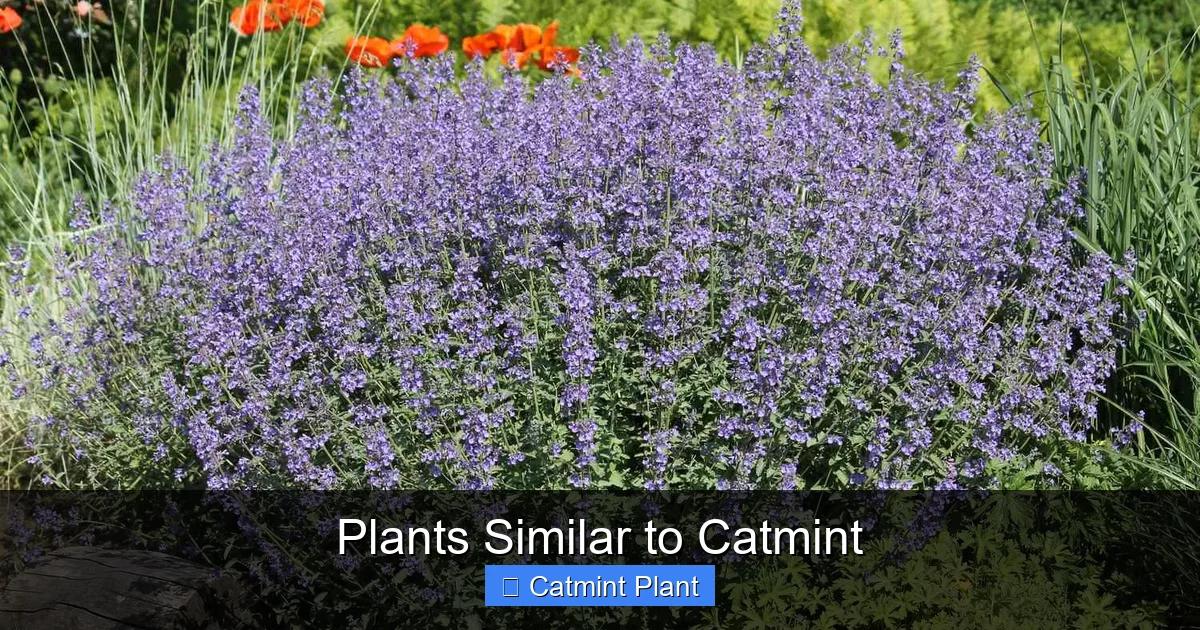
Lavender is the first plant most people name when asked about plants similar to catmint. The resemblance is strong. Both have silvery foliage. Both produce spikes of purple flowers. Both demand full sun and sharp drainage. Both hate wet feet in winter. But lavender brings a few distinct differences.
Visual guide about Plants Similar to Catmint
Image source: southernliving.com
Lavender is a woody sub-shrub. Its base becomes thick and gnarled over years. Catmint stays herbaceous, dying to the ground in cold climates. Lavender lives longer when happy, often ten to fifteen years. Catmint tends to get woody and open in the center after three to five years, needing division or replacement. Lavender flowers are tighter, more cylindrical. They dry beautifully for sachets and crafts. Catmint flowers shatter quickly when cut.
English lavender (Lavandula angustifolia) is the hardiest, surviving zone 5 with good drainage. ‘Hidcote’ and ‘Munstead’ are classic compact varieties. French and Spanish lavenders offer showier “rabbit ear” bracts but are less cold-hardy. All lavenders prefer alkaline soil. If your soil is acidic, add lime at planting. Catmint tolerates a wider pH range. That is a key practical difference.
Russian Sage (Perovskia atriplicifolia)
Russian sage creates a similar purple haze but on a much larger scale. Mature plants reach three to five feet tall and wide. The stems are silver-white. The leaves are deeply cut, almost lacy. The flowers are tiny, tubular, and lavender-blue, packed into airy panicles that float above the foliage. From a distance, it looks like a lavender cloud.
This plant is tough as nails. It handles extreme heat, drought, and poor soil. It is hardy to zone 4. Deer absolutely ignore it. The only demand is full sun and drainage. In rich soil or shade, it flops. The cultivar ‘Little Spire’ stays around two feet tall for smaller spaces. ‘Blue Steel’ offers sturdier stems. Russian sage emerges late in spring. Do not panic if it looks dead in April. It wakes up when the soil warms.
Unlike catmint, Russian sage does not respond well to midseason shearing. Cut it back hard in early spring, to six to twelve inches. That is it. The spent seed heads provide winter interest and bird food. If you want the catmint look but need height and drama, this is your plant.
Salvia (Salvia nemorosa and hybrids)
Salvia is a massive genus. The wood sages (Salvia nemorosa, S. x sylvestris) are the closest matches for plants similar to catmint in habit and use. They form tidy clumps of wrinkled, aromatic green leaves. Dense spikes of violet, purple, pink, or white flowers rise above in late spring. Deadheading brings repeat blooms into fall.
‘May Night’ is the classic deep purple variety. ‘Caradonna’ has dark stems that contrast beautifully with violet flowers. ‘Snow Hill’ offers pure white. ‘Pink Dawn’ and ‘Rose Queen’ expand the palette. These salvias are hardy to zone 4. They want full sun but tolerate light shade better than catmint. They also handle heavier clay soil if drainage is decent.
One big advantage: hummingbirds adore salvia. The tubular flowers are perfectly shaped for their beaks. Catmint attracts bees and butterflies but sees fewer hummingbirds. Salvia also makes excellent cut flowers. The stems are strong and the blooms last a week in a vase. Shear the whole plant back by half after the first flush. You will get a second and sometimes third show.
Catnip (Nepeta cataria)
It feels almost like cheating to list catnip separately. It is the same genus. But the experience is different. Catnip is the wild parent. It grows taller, looser, and rangier. It reaches three to four feet. The leaves are larger, greener, and fuzzier. The flowers are white with pale purple spots, smaller and less showy.
The famous essential oil, nepetalactone, is much more concentrated. Cats go wild for it. They will roll, chew, and flatten a plant in minutes. If you have outdoor cats, site catnip in a protected spot or accept the damage. Ornamental catmint varieties have been selected for lower nepetalactone and better garden manners.
Catnip self-sows aggressively. You will find seedlings everywhere. That can be a feature in a wild area or a nuisance in a tidy bed. It is hardy to zone 3. It tolerates poorer soil and more shade than its cultivated cousins. If you want a true herb for tea and cat toys, grow catnip. If you want a landscape plant, stick with named catmint hybrids like ‘Walker’s Low’ or ‘Cat’s Pajamas’.
Calamint (Calamintha nepeta)
Calamint is the quiet achiever of this group. It forms a perfect, dense mound twelve to eighteen inches tall. The leaves are small, shiny, and intensely minty when crushed. From early summer to frost, it covers itself in clouds of tiny, pale lilac-white flowers. The effect is like a soft mist.
This plant does not flop. It does not spread by runners. It does not self-sow aggressively. It just sits there looking tidy and blooming its head off. Bees cover it all day. It is hardy to zone 5. The cultivar ‘Montrose White’ has pure white flowers. ‘Marvelette Blue’ offers a slightly bluer tone. Calamint prefers the same conditions as catmint: sun, drainage, lean soil.
It is slower to establish in spring. Be patient. Once going, it is incredibly long-lived. I have seen clumps thrive for fifteen years without division. For edging a path or filling a rock garden, calamint is one of the best plants similar to catmint you can choose. It plays well with others. Its fine texture contrasts beautifully with bold leaves like hosta or sedum.
Hyssop / Anise Hyssop (Agastache species)
Agastache brings vertical spikes and a licorice-mint fragrance. The foliage smells delicious when brushed. The flowers are packed into dense, bottlebrush spikes in shades of blue, purple, pink, orange, and red. Bloom time is midsummer to fall, bridging the gap when catmint slows down.
Anise hyssop (Agastache foeniculum) is a North American native. It reaches three to four feet. It self-sows moderately. The leaves make a wonderful tea. Hybrid varieties like the ‘Kudos’ series, ‘Poquito’ series, and ‘Blue Fortune’ are bred for compact habits and intense colors. ‘Blue Fortune’ is a sterile hybrid, so no seedlings. It grows three feet tall and wide with lavender-blue spikes.
Agastache needs sharp drainage, especially in winter. Wet clay kills it. Plant it high, on a slope, or in a raised bed. Mulch with gravel, not bark. It is hardy to zone 5, sometimes zone 4 with perfect drainage. Hummingbirds fight over these flowers. Goldfinches eat the seeds in winter. If you want height, scent, and wildlife action, Agastache is a superstar among plants similar to catmint.
Lesser-Known Gems Worth Trying
Betony (Stachys officinalis ‘Hummelo’)
Betony is not in the mint genus, but it is in the mint family (Lamiaceae). ‘Hummelo’ was the Perennial Plant of the Year in 2019. It forms a basal rosette of crinkly, dark green leaves. In early summer, sturdy stems rise two feet, topped with dense spikes of vibrant magenta-pink flowers. The color is richer than any catmint.
It blooms for weeks. Deadheading encourages a lighter second flush. The foliage stays attractive all season, unlike catmint which can look tired by August. It is hardy to zone 4. It tolerates more moisture and clay than most plants on this list. Bees love it. Deer ignore it. It does not run. It does not seed aggressively. It just performs.
Germander (Teucrium chamaedrys)
Wall germander is a low, woody spreader. It makes a dense mat six to twelve inches tall. The leaves are small, glossy, deep green, and evergreen in mild winters. In summer, short spikes of rosy-purple flowers appear. It clips beautifully into a tiny hedge or knot garden pattern.
Germander wants the same sun and drainage as catmint. It handles alkaline soil better. It is hardy to zone 5. The cultivar ‘Prostratum’ is even lower, hugging the ground. Use it to edge a herb garden or line a path. It brings a formal texture that soft catmint cannot match.
Holy Basil / Tulsi (Ocimum tenuiflorum)
Grown as an annual in most zones, holy basil deserves mention for its intense fragrance and pollinator power. It grows two feet tall and wide. The leaves are green or purple, slightly hairy. The flowers are pink-white spikes that bees mob constantly. The scent is complex, clove-like, and calming.
It self-sows readily. Let a few plants go to seed. You will have volunteers next spring. Pinch flowers to keep leaves tender for tea. Or let it bloom for the insects. It thrives in heat that makes catmint sulk. In zones 10-11, it is a short-lived perennial.
Designing with Plants Similar to Catmint
Creating a Pollinator Relay
One of the smartest ways to use plants similar to catmint is to stagger bloom times. Catmint peaks in late spring to early summer. Shear it, and it returns in late summer. Russian sage picks up in midsummer. Agastache carries through fall. Salvia bridges the gaps with deadheading. Calamint blooms nonstop. Plant them in drifts of three or five. The garden becomes a continuous buffet.
Add early bulbs like allium for May. Leave seed heads on Agastache and Russian sage for winter birds. Include native grasses like little bluestem for structure. You now have a four-season habitat. The maintenance is low. The reward is high.
Color Echoes and Contrasts
Catmint’s blue-purple plays well with almost everything. Pair it with yellow coreopsis or achillea for a classic complementary scheme. Combine with pink echinacea or phlox for a softer analogous blend. White calamint or ‘Snow Hill’ salvia cools down hot beds. Red or orange Agastache (like ‘Tango’ or ‘Kudos Mandarin’) adds fire.
Foliage matters too. The silver leaves of lavender, Russian sage, and catmint echo each other. They light up a twilight garden. Dark green betony or germander provides a foil. Chartreuse foliage like ‘Aureola’ hakone grass makes purple flowers pop. Think in layers: groundcover, mound, vertical spike, airy cloud.
Container Combinations
Many plants similar to catmint thrive in pots. Use a gritty mix: two parts potting soil, one part perlite or coarse sand, one part compost. Ensure drainage holes. Water when the top inch is dry. Feed once in spring with slow-release fertilizer. That is all.
A large pot can hold a thriller (Russian sage or Agastache), a filler (catmint or salvia), and a spiller (creeping thyme or oregano). Or keep it simple: one lavender plant in a terra cotta pot. The scent on a sunny patio is unbeatable. Overwinter pots in an unheated garage in cold zones. Water monthly. Cut back in spring.
Growing Conditions Comparison
Sun and Soil Needs
Almost every plant on this list wants full sun. That means six to eight hours of direct light. A few tolerate light shade: catmint, salvia, betony. None thrive in deep shade. Soil must drain. Winter wet is the number one killer. If you have clay, amend with coarse sand and compost. Plant on a slight mound. Mulch with gravel or chicken grit, not wood chips. Wood holds moisture against the crown.
pH preferences vary slightly. Lavender wants alkaline (7.0+). Catmint, salvia, Russian sage, calamint, and Agastache tolerate neutral to slightly alkaline (6.5-7.5). Betony and germander handle slightly acidic soil. A soil test is cheap insurance. Lime is easy to add. Sulfur takes months to lower pH.
Water and Fertilizer
Established plants need little water. Deep soak every two weeks in drought is plenty. New plants need weekly water for the first month, then taper off. Fertilizer is usually harmful. Rich soil makes floppy stems and fewer flowers. No flowers means no pollinators. If your soil is pure sand, a light handful of compost in spring is fine. Skip the Miracle-Gro.
Pruning and Maintenance
Catmint, salvia, calamint, and betony benefit from the “Chelsea Chop” or midseason shear. Cut back by half after first bloom. Water well. New growth and flowers follow. Lavender, Russian sage, Agastache, and germander prefer a single hard cut in early spring. Cut to six to twelve inches. Do not cut into old wood on lavender. It will not resprout.
Division keeps catmint, salvia, and betony vigorous. Every three to four years in spring, dig the clump. Pull or cut into fist-sized pieces. Replant. Water. Lavender and Russian sage hate division. Propagate by cuttings instead. Agastache is short-lived (three to five years). Let it self-sow or take cuttings.
Troubleshooting Common Issues
Flopping Stems
Flopping usually means too much shade, too much water, too much fertilizer, or overcrowding. Move to more sun. Stop watering. Stop feeding. Divide or thin. Stake early with grow-through supports if you must. The “Chelsea Chop” in late May prevents flopping on catmint, salvia, and betony by creating shorter, bushier plants.
Winter Death
Wet crowns kill more plants than cold. Ensure the crown sits slightly above soil level. Mulch with gravel. Do not cut back in fall. The dead stems protect the crown and catch snow. Wait for spring. If a plant dies, check the tag. Some Agastache are only zone 6. Some lavenders are zone 7. Match the plant to your zone.
Powdery Mildew
Humid summers bring mildew. It looks like white dust on leaves. Catmint, bee balm (Monarda), and some salvias are prone. Space plants for airflow. Water at the base, not overhead. Choose resistant varieties. ‘Cat’s Pajamas’ catmint has good resistance. ‘Blue Fortune’ Agastache resists well. Remove badly affected leaves. Spray with neem oil or potassium bicarbonate if severe.
Where to Buy and What to Look For
Local nurseries often carry the best varieties for your region. Staff know what survives your winters. Look for healthy, non-rootbound plants. White roots filling the pot are good. Circling brown roots are bad. Avoid plants with yellowing lower leaves or signs of pests.
Online specialists like Bluestone Perennials, White Flower Farm, and High Country Gardens offer wider selections. They ship at proper planting times. Read reviews. Check guarantee policies. Bare-root plants are cheaper but need immediate planting. Potted plants are more forgiving.
When shopping for plants similar to catmint, check the botanical name. Common names overlap. “Hummingbird mint” can mean Agastache or Monarda. “Sage” covers Salvia, Perovskia, and Artemisia. The Latin name tells you exactly what you are getting.
Conclusion
Catmint is a garden workhorse. But the stable is full of talented relatives. Lavender brings scent and craft material. Russian sage brings height and drama. Salvia brings hummingbirds and cut flowers. Calamint brings tidy endurance. Agastache brings late color and licorice fragrance. Betony brings bold pink and clay tolerance. Germander brings evergreen structure.
You do not have to choose just one. A mixed planting of plants similar to catmint creates a resilient, dynamic, wildlife-rich garden that asks little and gives much. Start with your conditions. Match the plant to the site. Plant in groups. Water until established. Then step back and watch the show. The bees will thank you. The butterflies will thank you. Your weekends will thank you because you are not watering, fertilizing, or spraying. You are just enjoying.
Next spring, pick one new variety. Tuck it in near your catmint. Take notes. Take photos. Share divisions with friends. That is how gardens grow. That is how gardeners grow. Happy planting.
Frequently Asked Questions
What are the easiest plants similar to catmint for beginners?
Catmint itself is the easiest, followed by salvia ‘May Night’ and calamint ‘Montrose White’. All three tolerate a range of soils, need little water once established, and bloom for months with just a midseason shear.
Which plants similar to catmint attract the most pollinators?
Agastache (anise hyssop) and calamint are pollinator magnets. Agastache draws hummingbirds, bees, and butterflies. Calamint’s tiny flowers feed native bees and beneficial wasps all summer long.
Can I plant lavender and catmint together?
Yes, they make excellent companions. Both want full sun, lean soil, and sharp drainage. Lavender prefers more alkaline soil, so add lime if your soil is acidic. Space them for good airflow.
Why does my catmint flop open in the center?
This usually happens from too much shade, rich soil, or age. Shear it back hard after the first bloom. Divide clumps every three to four years in spring. Ensure it gets at least six hours of direct sun.
Are there any plants similar to catmint with pink or red flowers?
Yes. Salvia ‘Pink Dawn’ and ‘Rose Queen’ bloom pink. Agastache ‘Tango’ (orange-red), ‘Kudos Mandarin’ (orange), and ‘Rosie Posie’ (hot pink) add warm colors. Betony ‘Hummelo’ offers vivid magenta-pink spikes.
How do I propagate plants similar to catmint?
Divide catmint, salvia, betony, and calamint in spring. Take softwood cuttings of lavender, Russian sage, and Agastache in early summer. Let Agastache and catnip self-sow for free plants.


