Parsley Care for Apartment Living
Parsley thrives indoors when you give it bright light, consistent moisture, and a well‑draining pot. Follow these simple steps to enjoy fresh leaves all year.
Welcome to the guide on parsley care for apartment living. This article shares easy steps for growing fresh parsley inside a small space. You do not need a garden. A sunny windowsill or a balcony can work. Follow the tips and enjoy green leaves all year.
First, understand the basic needs of parsley. Light, water, soil, and a good pot are the four pillars. Each pillar is simple to manage. With a little attention, your plant will thrive. Let us dive into each topic.
Key Takeaways
- Light: Place parsley where it gets at least six hours of bright, indirect sun.
- Water: Keep soil evenly moist but never soggy.
- Soil: Use a light potting mix with good drainage.
- Container: Choose a pot with drainage holes and a saucer.
- Harvest: Snip outer leaves regularly to encourage new growth.
- Pests: Watch for aphids and spider mites; treat early with neem oil.
- Seasonal care: Reduce watering in winter and provide a cool rest period.
Quick Answers to Common Questions
How much light does parsley need indoors?
Parsley needs at least six hours of bright, indirect light each day.
What size pot is best for a windowsill?
A 6‑inch deep pot with drainage holes works well for a windowsill.
Can I grow parsley from seed in an apartment?
Yes, sow seeds directly in the pot and keep the soil moist until germination.
How often should I fertilize parsley?
Feed with a balanced liquid fertilizer once a month during the growing season.
What do I do if leaves turn yellow?
Yellow leaves often mean overwatering; let the top inch of soil dry before watering again.
📑 Table of Contents
Choosing the Right Spot for Your Parsley
Light Requirements
Parsley loves bright light. It needs at least six hours of indirect sun each day. A south facing window is ideal. If light is low, use a grow light. Keep the light on for twelve hours. The plant will stay compact and flavorful.
Too much direct sun can scorch leaves. Watch for brown edges. Move the pot a few inches back if this happens. A sheer curtain can filter harsh rays. Consistent light leads to steady growth. This is a core part of parsley care for apartment living.
Temperature and Humidity
Parsley prefers cool temperatures. Ideal range is sixty to seventy degrees Fahrenheit. Avoid hot radiators or cold drafts. Humidity around forty percent is fine. Mist the leaves occasionally if air is dry. A small humidifier helps in winter.
Sudden temperature swings stress the plant. Keep the pot away from heating vents. A stable environment supports healthy roots. This stability is key for parsley care for apartment living.
Selecting the Best Container and Soil
Pot Size and Drainage
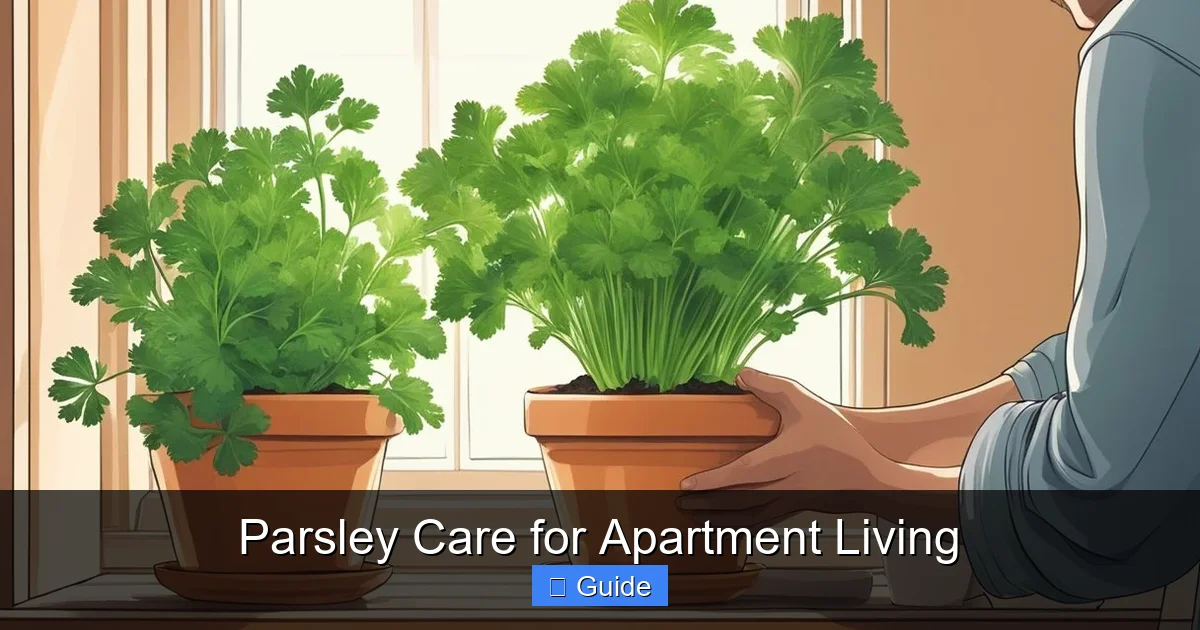
Choose a pot that is at least six inches deep. Width of eight inches gives room for roots. Ensure the pot has drainage holes. Place a saucer under the pot to catch excess water. Good drainage prevents root rot.
Visual guide about Parsley Care for Apartment Living
Image source: koala.sh
Terracotta pots breathe well. Plastic pots retain moisture longer. Pick the material that matches your watering habit. A proper container is a foundation of parsley care for apartment living.
Soil Mix Tips
Use a light potting mix designed for herbs. Mix one part peat, one part perlite, and one part compost. This blend drains fast but holds nutrients. Avoid garden soil; it compacts in containers. Refresh the top inch of soil each spring.
Adding a slow release fertilizer to the mix gives a steady feed. Do not over‑fertilize; parsley is a light feeder. A balanced soil supports strong stems and bright leaves. This step completes the container setup for parsley care for apartment living.
Watering and Feeding Your Parsley
How Often to Water
Check the top inch of soil before watering. If it feels dry, water thoroughly. Water until it runs out of the drainage holes. Empty the saucer after ten minutes. Consistent moisture keeps leaves tender.
Overwatering causes yellow leaves and root rot. Underwatering makes leaves wilt and turn crisp. Find a rhythm that matches your indoor climate. A moisture meter can help beginners. This watering routine is central to parsley care for apartment living.
Fertilizer Schedule
Feed parsley once a month during active growth. Use a balanced liquid fertilizer diluted to half strength. Apply after watering to avoid root burn. Stop feeding in late fall when growth slows. Resume in early spring.
Organic options like fish emulsion work well. They provide micronutrients without salt buildup. A light feeding schedule keeps the plant vigorous. This feeding plan fits parsley care for apartment living.
Pruning, Harvesting, and Keeping Plants Productive
When to Cut Leaves
Begin harvesting when the plant has at least three sets of true leaves. Snip outer stems close to the base. Leave the inner growth untouched. This encourages new shoots. Harvest in the morning for best flavor.
Regular cutting prevents the plant from flowering. Flowering makes leaves bitter. Remove any flower buds as soon as they appear. Consistent harvest extends the productive period. This practice is a hallmark of parsley care for apartment living.
Encouraging Bushier Growth
Pinch back the tips of stems every two weeks. This stimulates branching. A bushier plant yields more leaves. Use clean scissors to avoid disease spread. Rotate the pot after each pinch for even light exposure.
Remove any yellow or damaged leaves promptly. Clean foliage improves airflow. Good airflow reduces fungal risk. A tidy plant stays productive longer. These habits support parsley care for apartment living.
Dealing with Common Pests and Diseases
Identifying Aphids and Spider Mites
Aphids cluster on new growth. They are tiny green or black insects. Spider mites leave fine webbing on leaf undersides. Both suck sap and weaken the plant. Inspect leaves weekly for early signs.
Yellow stippling on leaves often signals spider mites. Sticky residue indicates aphids. Early detection makes control easier. This vigilance is part of parsley care for apartment living.
Natural Remedies
Spray a strong jet of water to dislodge pests. Follow with neem oil spray applied every seven days. Insecticidal soap works for soft‑bodied insects. Apply in the evening to avoid leaf burn. Repeat until pests disappear.
Introduce beneficial insects like ladybugs if you have a balcony. They eat aphids naturally. Keep the area clean to discourage reinfestation. Natural control keeps herbs safe for cooking. This approach aligns with parsley care for apartment living.
Seasonal Adjustments for Year‑Round Harvest
Winter Care
Reduce watering frequency in winter. Let the top two inches of soil dry out. Keep the plant in a bright spot but away from cold drafts. A temperature of fifty‑five degrees is acceptable. Light feeding once every two months is enough.
If indoor air is very dry, use a pebble tray with water. This raises humidity around the plant. Avoid placing the pot near heaters. A gentle rest period prepares parsley for spring growth. Winter tweaks are essential for parsley care for apartment living.
Summer Boost
Increase watering as temperatures rise. Check soil daily in hot weeks. Provide a light shade during peak afternoon sun. Fertilize every three weeks with a half‑strength feed. Harvest more often to keep the plant from bolting.
Move the pot outdoors on a balcony if weather permits. Acclimate gradually over a week. Bring it back inside before night temperatures drop below fifty degrees. Summer care maximizes yield for parsley care for apartment living.
Conclusion
Growing parsley in an apartment is simple and rewarding. Choose a bright spot, use a well‑draining pot, water wisely, and harvest regularly. Watch for pests and adjust care with the seasons. With these habits you will enjoy fresh parsley year round. Happy planting.
Frequently Asked Questions
Can parsley survive low light conditions?
Parsley can tolerate lower light but growth will be slower and leaves may become leggy.
Is it necessary to rotate the pot?
Rotating the pot every week helps the plant receive even light on all sides.
How do I prevent fungal issues?
Good airflow, proper watering, and avoiding wet foliage reduce fungal risk.
Can I use tap water for parsley?
Tap water is fine; let it sit for a few hours to let chlorine dissipate.
When should I repot parsley?
Repot when roots fill the container, usually every 12 to 18 months.
Does parsley need a dormant period?
A short cool rest in winter helps the plant stay vigorous for the next season.