How to Maintain Galvanized for Palms
Maintaining galvanized steel for palm trees requires regular cleaning, inspection, and protective treatments to prevent corrosion and extend service life. This guide covers everything from basic maintenance routines to advanced restoration techniques for galvanized planters, supports, and fencing used in palm cultivation.
If you grow palms, you know they need solid support. Many growers use galvanized steel for planters, stakes, and fencing. It’s strong and lasts a long time. But it’s not maintenance-free. The zinc coating protects the steel underneath. When that coating wears down, rust starts. Salt air, fertilizer, and constant moisture speed up the process. I’ve seen beautiful palm installations fail because the galvanized parts gave out. Don’t let that happen to you. This guide walks you through everything you need to know.
We’ll cover cleaning routines, inspection checklists, repair methods, and long-term planning. Whether you have a few potted palms on a patio or a commercial grove, these principles apply. The goal is simple: keep that zinc layer intact as long as possible. Let’s dive in.
Key Takeaways
- Regular cleaning prevents buildup: Remove dirt, salt, and organic debris monthly to protect the zinc coating from premature degradation.
- Inspect for damage quarterly: Check for scratches, white rust, and red rust spots that indicate coating failure requiring immediate attention.
- Apply protective coatings annually: Use clear sealants or zinc-rich paints to reinforce the galvanized layer in high-exposure areas.
- Ensure proper drainage: Prevent standing water in planters and around supports to minimize prolonged moisture contact with galvanized surfaces.
- Address white rust immediately: Treat zinc carbonate deposits with vinegar solution and light brushing before they progress to structural corrosion.
- Use compatible fasteners: Only use hot-dip galvanized or stainless steel hardware to prevent galvanic corrosion at connection points.
- Plan for eventual replacement: Track installation dates and coating thickness to budget for replacement when protection drops below 20% of original.
Quick Answers to Common Questions
How often should I clean galvanized planters for palms?
Clean galvanized planters monthly during growing season and quarterly during dormancy. Increase to bi-weekly in coastal areas or with heavy fertilizer use.
Can I use a pressure washer on galvanized steel?
Only below 1500 PSI with a wide fan tip. Higher pressure strips the zinc coating. Hand washing with a nylon brush is safer and just as effective.
What’s the white powder on my galvanized stakes?
That’s zinc carbonate (white rust). It’s initially protective but should be cleaned with vinegar solution and brushed off if it becomes thick or flaky.
Which fasteners should I use with galvanized planters?
Use only hot-dip galvanized Grade 5+ or 316 stainless steel fasteners. Never mix metals without isolating washers to prevent galvanic corrosion.
When should I replace vs. repair galvanized components?
Repair scratches under 1 inch and white rust patches under 6 inches. Replace when red rust covers large areas, coating thickness drops below 1 mil, or structural integrity is compromised.
📑 Table of Contents
- Understanding Galvanized Steel and Palm Environments
- Monthly Cleaning Routine for Galvanized Palm Equipment
- Quarterly Inspection Checklist
- Repairing Damaged Galvanized Coatings
- Protective Treatments and Long-Term Preservation
- Seasonal Maintenance Calendar
- Special Situations and Troubleshooting
- Budgeting and Lifecycle Planning
- Advanced Tips from Commercial Growers
Understanding Galvanized Steel and Palm Environments
What Is Galvanized Steel?
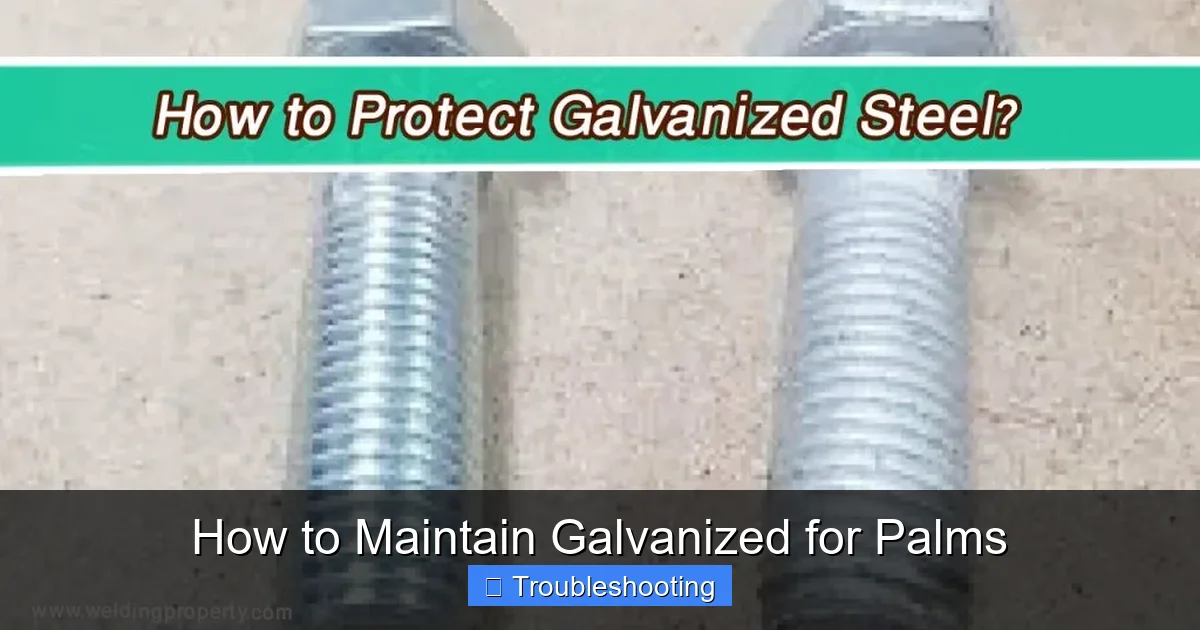
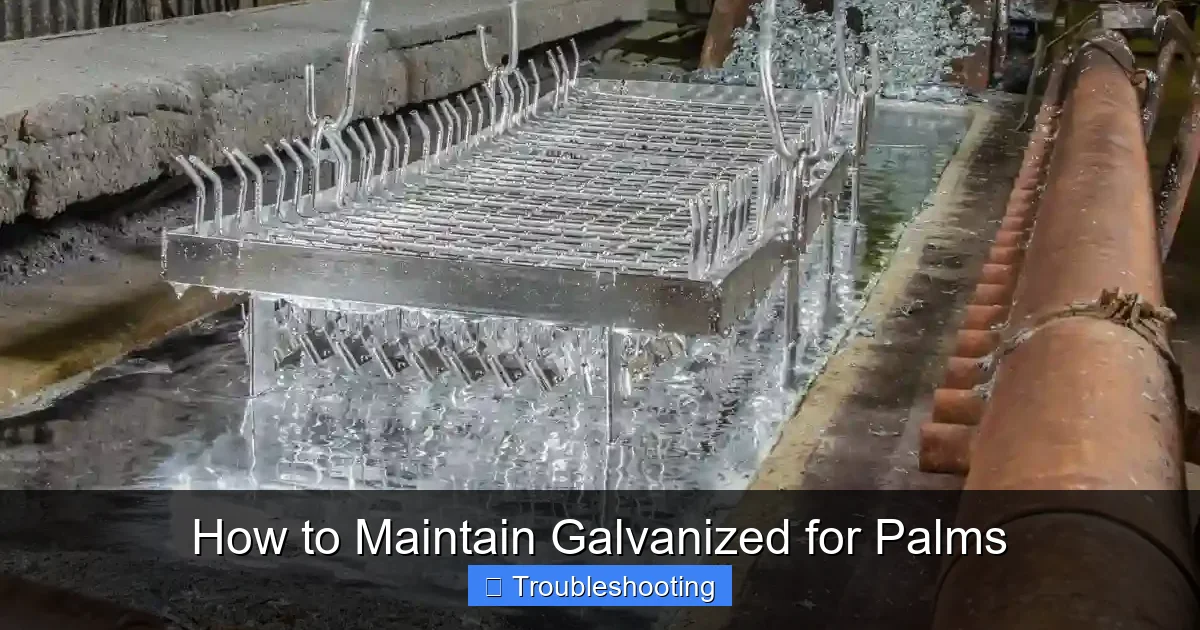
Galvanized steel is regular steel dipped in molten zinc. The zinc bonds to the steel. It creates a barrier. It also provides sacrificial protection. If the coating gets scratched, the zinc corrodes first. The steel stays safe. There are two main types. Hot-dip galvanizing gives a thick, dull gray coating. Electro-galvanizing gives a thinner, shinier coating. For outdoor palm use, hot-dip is far superior. It lasts decades longer.
Why Palms Are Hard on Galvanized Steel
Palms create a perfect storm for corrosion. They need lots of water. That means constant moisture. Fertilizers contain salts. Salts eat zinc. Palm roots push against planters. That causes mechanical damage. In coastal areas, salt spray adds another attack vector. The combination is brutal. Standard galvanized steel might last 20 years in a dry climate. In a wet, fertilized, salty palm environment? Maybe 5 to 10 years without maintenance. With good maintenance, you can double or triple that.
The Corrosion Process Explained Simply
Zinc reacts with oxygen and water. It forms zinc oxide. Then zinc hydroxide. Then zinc carbonate. That white powdery stuff? That’s zinc carbonate. It’s called white rust. It’s actually protective… up to a point. It slows further corrosion. But if it gets thick and flaky, it falls off. Then fresh zinc is exposed. The cycle accelerates. Eventually, the zinc runs out. Red rust appears. That’s the steel corroding. Structural failure follows. Your job is to keep the cycle in the early, protective stage.
Monthly Cleaning Routine for Galvanized Palm Equipment
Tools and Materials You’ll Need
Keep a dedicated cleaning kit. You need: soft nylon brushes (never wire brushes), mild dish soap, white vinegar, baking soda, clean rags, a garden sprayer, and a bucket. For planters, add a wet/dry vac. For tall supports, add a telescoping pole with a brush attachment. Label everything “galvanized only.” Cross-contamination from steel brushes embeds iron particles. Those create rust spots fast.
Visual guide about How to Maintain Galvanized for Palms
Image source: hdcmfg.com
Step-by-Step Cleaning Process
Start with dry brushing. Remove loose dirt, spider webs, and fertilizer granules. Work top to bottom. Next, mix warm water with a few drops of dish soap. Spray or wipe on. Let it sit 5 minutes. Scrub gently with the nylon brush. Rinse thoroughly with clean water. For planters, vac out the slurry. Don’t let it sit on the bottom. For white rust spots, spray 50/50 vinegar and water. Wait 10 minutes. Scrub lightly. Rinse well. Neutralize with a baking soda rinse (1 tablespoon per gallon). Final rinse. Let air dry completely.
Special Considerations for Different Components
Planters need interior cleaning too. Remove the palm if possible. If not, work around the root ball. Clean drainage holes carefully. Clogged holes trap water. Supports and stakes need attention at soil level. That’s the splash zone. Corrosion is worst there. Fencing needs gate hinge and latch cleaning. Moving parts trap grit. Lubricate with PTFE spray after cleaning. Avoid petroleum lubricants. They trap dirt.
What NOT to Use
Never use bleach. It destroys zinc. Never use muriatic acid. It strips the coating in minutes. Never use pressure washers above 1500 PSI. The force peels zinc. Never use steel wool or wire brushes. They embed iron. Never use naval jelly or rust converters meant for bare steel. They’re too aggressive. Stick to mild soap, vinegar, and baking soda. Simple works best.
Quarterly Inspection Checklist
Visual Inspection Protocol
Walk your entire installation. Bring a clipboard, camera, and flashlight. Photograph everything. Date the photos. Compare to last quarter. Look for: color changes (bright gray to dull gray to white powder to red rust), coating thickness changes (edges thin first), mechanical damage (dents, scratches, abrasion from ties), fastener condition (rust streaks under bolt heads), and structural deformation (bowing, cracking welds). Pay extra attention to: soil line on stakes, bottom 6 inches of planters, fence post bases, and any weld seams.
Coating Thickness Measurement
If you have many installations, buy a magnetic coating thickness gauge. They cost $50 to $150. Measure at 5 spots per component. Record minimums. Hot-dip galvanizing starts at 3 to 4 mils (75 to 100 microns) per side. When average drops below 1 mil (25 microns), plan replacement. When any spot reads zero, repair immediately. This data builds your replacement budget. It also shows which microclimates are harshest.
Documentation System
Create a simple spreadsheet. Columns: Component ID, Location, Install Date, Last Cleaning, Last Inspection, Min Coating Thickness, Issues Found, Actions Taken, Next Inspection Due. Add photos to a cloud folder named by date and location. This takes 10 minutes per quarter. It saves thousands in emergency replacements. It also helps if you sell the property. Buyers love maintenance records.
Common Problem Areas by Component Type
Planters: bottom corners, drainage holes, rim where ties attach. Stakes: soil line, tie wire contact points, ground anchor welds. Fencing: post bases, gate hinges, top rail water traps, chain link tension wire. Trellises: wire crossings, attachment clips, base plates. Irrigation brackets: saddle clamps, pipe penetrations, timer mounts. Each has a signature failure mode. Learn yours.
Repairing Damaged Galvanized Coatings
Assessing Repair vs. Replace
Small scratches under 1 inch? Repair. White rust patches under 6 inches? Repair. Red rust spots under 2 inches? Repair if caught early. Large areas of red rust? Replace. Structural bending? Replace. Perforation? Replace. When in doubt, replace. A failed stake can topple a 20-foot palm. That’s expensive and dangerous. Planters are harder to replace. Repair aggressively. But set a replacement timeline.
Cold Galvanizing Compounds (Zinc-Rich Paint)
This is your primary repair tool. Buy 92%+ zinc content. Brands like ZRC, Galvanol, or Crown. Shake vigorously for 2 minutes. Stir, don’t shake, after first use. Prep the area: wire brush (stainless only) to bare steel, wipe with acetone, let dry. Apply with a small brush or foam roller. Two thin coats beat one thick coat. Wait 4 hours between coats. Cure 24 hours before water contact. Touch up annually. These compounds last 3 to 5 years in splash zones.
Zinc Spray for Hard-to-Reach Areas
Spray cans (like CRC Cold Galvanize) work for fence post interiors, planter drain holes, and tight corners. Same prep. Shake 3 minutes. Spray 10 to 12 inches away. Light passes. Multiple coats. Ventilate well. The propellant can lift adjacent coating if you spray too close. Mask off surrounding areas. These sprays have lower zinc content (65 to 85%). They’re convenient but less durable. Use for touch-ups only.
Mechanical Repairs for Planters
Cracked welds on planter corners? Don’t just paint over. Drill the crack ends (1/8 inch bit) to stop propagation. Clean to bare metal 2 inches each way. Apply zinc-rich primer. Then a fiberglass patch kit (marine grade) over the crack. Then two coats of zinc-rich paint. Then a final coat of 2-part epoxy paint (like Interlux Brightside) for waterproofing. This buys 5 to 10 years. Mark the repair date. Inspect monthly.
Fastener Replacement Protocol
Rusty bolts spread corrosion. Replace any fastener showing red rust. Use only hot-dip galvanized Grade 5 or better. Or 316 stainless steel. Never mix metals. Galvanized bolts in stainless holes? Okay. Stainless bolts in galvanized holes? Bad. The galvanized hole corrodes fast. Use isolating washers (nylon or EPDM) if you must mix. Torque to spec. Loose bolts move. Movement wears coating. Tight is right.
Protective Treatments and Long-Term Preservation
Clear Coat Sealants
After cleaning and repairs, seal the surface. Use a clear, UV-stable, moisture-cure urethane (like Clear Coat 400 or similar marine products). Apply with a foam roller. Thin coats. Two coats minimum. Three in splash zones. Reapply annually. This adds a sacrificial barrier. It also makes future cleaning easier. Dirt washes off instead of bonding. Test a small area first. Some sealants yellow. Choose non-yellowing formulas.
Wax Coatings for Seasonal Protection
For planters you move seasonally, apply a carnauba wax paste after cleaning. Buff to a haze. This gives 3 to 6 months of water beading. It’s not a long-term solution. But it helps during moves and storage. Reapply after each move. Don’t use synthetic polymer waxes. They can trap moisture against the zinc. Natural carnauba breathes.
Cathodic Protection for High-Value Installations
Commercial groves with expensive galvanized infrastructure should consider sacrificial anodes. Magnesium anodes buried near fence posts. Zinc anodes welded to planter bottoms. They corrode instead of your structure. A corrosion engineer should design the system. It costs $500 to $2000 per acre. It can double galvanized life in aggressive soils. Worth it for 100+ palm installations.
Drainage Improvements
Water is the enemy. Elevate planters on 2-inch feet. Add 3 inches of gravel at planter bottoms. Drill extra drainage holes (1/2 inch, every 6 inches). Slope grade away from fence posts. Install French drains along fence lines in wet areas. Use drip irrigation instead of overhead. Wet leaves on galvanized fencing accelerate corrosion. Every inch of drainage helps.
Seasonal Maintenance Calendar
Spring: Heavy Maintenance Season
March to May. Full cleaning. Full inspection. All repairs. Recoat sealants. Replace questionable fasteners. Check irrigation for leaks onto galvanized parts. Fertilize palms carefully. Keep fertilizer off steel. Use slow-release spikes away from planter walls. This is your big annual investment. Budget 4 hours per 10 planters. 2 hours per 50 feet of fencing.
Summer: Monitor and Spot Treat
June to August. Monthly cleaning only. Watch for fertilizer splash. Rinse immediately after feeding. Check for sprinkler misalignment. Salt buildup from evaporation? Increase rinse frequency. Storm damage? Inspect after each event. High heat accelerates corrosion. Stay vigilant.
Fall: Pre-Winter Prep
September to November. Deep clean. Apply wax to movable items. Check drainage before rains. Clear gutters above galvanized fencing. Ensure planter drain holes are open. Touch up any summer damage. In freeze zones, plan for ice expansion. Water in cracks destroys planters. Keep them dry if possible.
Winter: Minimal but Critical
December to February. In mild climates, continue monthly cleaning. In freeze zones, avoid deicing salts near galvanized. Use sand or calcium magnesium acetate. Check for ice dams on planter rims. Chip carefully with plastic tools. Don’t chip ice off galvanized. Let it melt. Inspect after thaw for new damage.
Special Situations and Troubleshooting
Coastal Salt Spray Environments
Within 1 mile of ocean? Double everything. Clean every 2 weeks. Inspect monthly. Sealant every 6 months. Use 316 stainless fasteners exclusively. Consider powder coating over galvanizing for new purchases. The salt is relentless. Budget 3x replacement frequency. Some growers switch to aluminum or fiberglass planters. They cost more upfront. They last forever in salt.
High Fertilizer Regimes
Heavy feeding programs (monthly high-nitrogen) create salt buildup. Rinse planters weekly during growing season. Use a soil flush protocol: water until 20% runoff, wait 30 minutes, water again. This pushes salts down and out. Less salt on the planter walls. Consider organic fertilizers. They’re lower in salts. But they still create moisture. Clean anyway.
Reclaimed Water Irrigation
Recycled water has higher salts and different pH. Test it. If chlorides exceed 100 ppm, expect 50% faster corrosion. Increase cleaning to bi-weekly. Apply sealant quarterly. Install a carbon filter on the irrigation line if possible. It removes chlorine and some salts. Document water quality. It explains corrosion patterns.
Moving and Storing Galvanized Planters
Never drag. Use a dolly or pallet jack. Pad contact points with cardboard. Lift from the bottom, not the rim. Store upside down on blocks. Cover with breathable fabric (canvas, not plastic). Plastic traps condensation. Stack no more than 3 high. Weight distributes unevenly. Bottom planters crush. Before reuse, full clean and inspect.
Budgeting and Lifecycle Planning
Cost Analysis: Maintain vs. Replace
A 24-inch galvanized planter costs $150 to $300. Annual maintenance: $20 in supplies, 2 hours labor. Replacement: $300 plus palm transplant stress ($100+ if you hire help). Maintenance wins by 10:1 over 15 years. But only if you actually do it. Deferred maintenance costs 5x more in emergency repairs. Track your costs. Prove the ROI to yourself or your boss.
Creating a Replacement Reserve Fund
Take your total galvanized asset value. Divide by expected life (15 years with maintenance). Set aside that amount annually. Example: $10,000 in planters and fencing. $667 per year into a reserve. When something fails, you have cash. No emergency loans. No deferred maintenance. This is how professional operations run. Even hobbyists should do a mini version.
Upgrading Specifications for New Purchases
When replacing, upgrade. Specify: hot-dip galvanized per ASTM A123 (not A153, that’s for hardware). Minimum 3.9 mils (100 microns) coating. Smooth finish (no drips). Vent and drain holes for proper galvanizing. Powder coat over galvanizing (duplex system) for coastal. 316 stainless fasteners included. Cost premium: 20 to 30%. Life extension: 2 to 3x. Do the math. It pays.
Working with Contractors
If you hire maintenance, write the spec. “Clean with mild soap and nylon brush only. No bleach, acid, or pressure washing over 1500 PSI. Inspect and photograph quarterly. Repair coating damage with 92% zinc-rich paint within 14 days. Apply clear urethane sealant annually. Use only HDG or 316 SS fasteners. Provide written report with photos.” Attach to contract. Verify compliance. Most contractors will default to harsh methods. Don’t let them.
Advanced Tips from Commercial Growers
The Vinegar Soak Method for Removable Parts
Stake brackets, planter feet, removable trellis sections. Soak in 50/50 vinegar/water for 1 hour. Scrub with nylon brush. Rinse. Baking soda rinse. Rinse. Dry in sun. Apply cold galvanizing compound. Reinstall. Do this annually. It restores coating on complex shapes you can’t brush well installed. Commercial ops do this during winter downtime.
Zinc Anode Tape for Buried Sections
Fence posts and planter bottoms in soil. Wrap the bottom 12 inches with zinc anode tape (3M Scotchkote or similar). It’s a zinc-filled tape with conductive adhesive. It provides localized cathodic protection. Costs $3 per foot. Lasts 5 to 7 years. Invisible once buried. Dramatically reduces base corrosion. The #1 failure point.
Ceramic Coating for Extreme Duty
Some high-end growers use ceramic coatings (Cerakote or similar). Applied by pros. Costs $50 to $100 per planter. Creates a 1-mil ceramic barrier over the zinc. Impervious to fertilizer, salt, UV. Lasts 10+ years. Only for new or perfectly prepped items. Not a DIY job. But if you have $500 planters, it’s cheap insurance.
Monitoring with Corrosion Coupons
Serious operations install test coupons. Small galvanized steel strips (2×4 inches) mounted near critical components. Same exposure. Weigh annually. Weight loss = corrosion rate. Adjust maintenance frequency based on data. Coupons cost $5 each. Data saves thousands. This is next-level. But if you’re reading this deep, you might be ready.
Maintaining galvanized steel for palms isn’t glamorous. But it’s the difference between a thriving grove and a costly disaster. The zinc coating is a finite resource. Every cleaning, every inspection, every touch-up buys time. Time for your palms to mature. Time for your investment to pay off. Start this month. Clean one planter. Inspect one fence line. Build the habit. Your palms will thank you with decades of beauty.
Remember: the best maintenance is the maintenance you actually do. A simple monthly rinse beats a perfect annual overhaul that never happens. Set calendar reminders. Keep supplies visible. Make it easy. And when in doubt, call a pro. A $200 consultation beats a $2000 replacement. Now go check your planters.
Frequently Asked Questions
How long does galvanized steel last in palm planters?
With proper maintenance, hot-dip galvanized planters last 15 to 25 years in typical conditions. Coastal or high-fertilizer environments reduce this to 8 to 15 years. Without maintenance, expect 5 to 10 years maximum.
Can I paint over galvanized steel for extra protection?
Yes, but preparation is critical. Clean thoroughly, apply a zinc-rich primer, then use a compatible topcoat like 2-part epoxy or polyurethane. Avoid oil-based paints directly on galvanized surfaces as they can peel.
Is white rust (zinc carbonate) harmful to my palms?
No, white rust is not toxic to plants. It’s a natural corrosion product of zinc. However, excessive buildup indicates the protective coating is degrading and should be cleaned to prevent progression to red rust.
What’s the best way to clean galvanized planters with established palms?
Work around the root ball using a long-handled nylon brush and spray bottle. Vacuum out slurry with a wet/dry vac. Avoid disturbing roots. Clean the exterior normally. Rinse thoroughly to prevent soap residue in soil.
Can I use galvanized steel for palm tree stakes and guy wires?
Yes, hot-dip galvanized stakes and guy wires work well. Use 316 stainless steel turnbuckles and clips. Inspect tie points monthly as abrasion from wind movement wears coating fastest there.
How do I know if my galvanized coating is too thin?
Use a magnetic coating thickness gauge (under $150). Measure 5 spots per component. Hot-dip starts at 3-4 mils. Plan replacement when average drops below 1 mil. Any zero reading needs immediate repair.