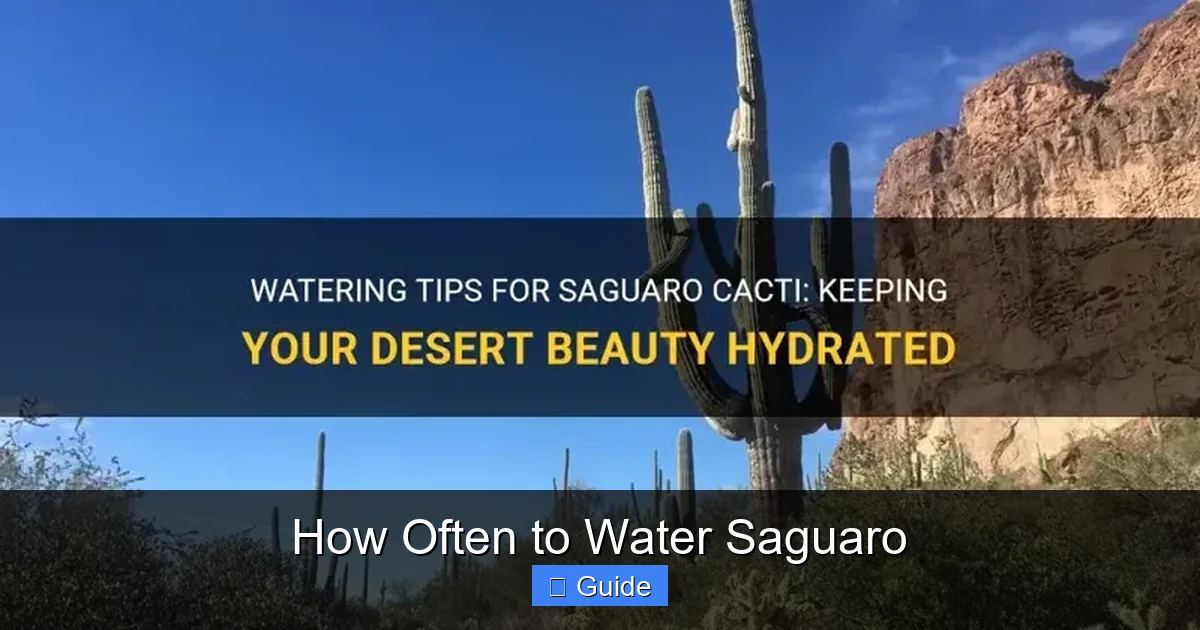
How Often to Water Saguaro
Saguaro cacti need very little water — established plants thrive on rainfall alone in their native desert habitat. Only water young saguaros during their first two summers, then stop completely unless extreme drought occurs. Overwatering is the fastest way to kill these iconic giants.
If you have ever stood beneath a towering saguaro in the Sonoran Desert, you know the feeling. These giants command respect. They rise forty feet into blue sky. Their arms reach upward like frozen dancers. They live for two hundred years. Some reach three hundred. And they do it all on almost no water.
People love saguaros. They plant them in yards from Tucson to Phoenix to Las Vegas. They buy them at nurseries. They bring them home with big hopes. Then they water them. And water them. And watch them rot. The number one killer of cultivated saguaros is not drought. It is kindness. It is the gardener who cannot believe a plant this big survives on almost nothing. This guide will teach you exactly how often to water saguaro cacti at every stage of life. You will learn when to water. When to stop. And how to read the signals your plant sends.
Key Takeaways
- Established saguaros need no supplemental water: Mature plants survive entirely on natural rainfall in desert climates.
- Water only during the first two summers: Young saguaros (under 2 feet tall) benefit from monthly deep watering in hot months.
- Stop watering completely after establishment: Continuing to water mature saguaros causes root rot and structural failure.
- Winter watering is never needed: Saguaros are dormant in cold months and cannot use water — it only causes damage.
- Watch for wrinkling as a water signal: Accordion-like pleats contracting deeply indicate genuine thirst in young plants.
- Soil must drain completely between waterings: Standing water around roots kills saguaros faster than drought ever will.
- Container saguaros need different care: Potted specimens require occasional watering year-round but still very sparingly.
Quick Answers to Common Questions
How often should I water a newly planted saguaro?
Water deeply once every 3-4 weeks during the first summer (May-September), then reduce to every 4-6 weeks in the second summer. Stop completely after two years.
Do mature saguaros ever need supplemental water?
No. Established saguaros in their native climate survive entirely on rainfall. Watering mature plants causes fatal root rot.
What do contracted pleats mean on my saguaro?
Deep pleats indicate the plant is using stored water — this is normal and healthy. Only water young saguaros showing severe contraction during extreme drought.
Can I water my saguaro in winter?
Never. Winter watering causes rapid rot because the plant is dormant and cannot use water. Cold wet soil is deadly.
How do I water a saguaro in a container?
Water deeply every 4-6 weeks spring through fall, every 8-10 weeks in winter. Let soil dry completely between waterings. Use fast-draining mineral soil mix.
📑 Table of Contents
- Understanding the Saguaro’s Natural Habitat
- Watering Young Saguaros: The Critical First Years
- Watering Mature Saguaros: The Golden Rule
- Seasonal Watering Calendar
- Reading Your Saguaro’s Signals
- Container-Grown Saguaros: Different Rules
- Common Watering Mistakes and How to Avoid Them
- Regional Adjustments for How Often to Water Saguaro
- Troubleshooting Water-Related Problems
- Long-Term Care Beyond Watering
- Conclusion
Understanding the Saguaro’s Natural Habitat
To understand how often to water saguaro, you must understand where it comes from. The saguaro (Carnegiea gigantea) grows in one place on Earth. The Sonoran Desert. This desert spans southern Arizona, southeastern California, and parts of Mexico. It is a land of extremes. Summer temperatures exceed one hundred fifteen degrees Fahrenheit. Winter nights drop below freezing. Rain falls in two distinct seasons. Winter brings gentle, widespread rains. Summer brings violent monsoon storms.
The saguaro has evolved for this exact pattern. Its root system is shallow but vast. A mature saguaro’s roots spread horizontally up to fifty feet in every direction. They sit just inches below the surface. This design captures every drop of rain before it evaporates. The roots absorb water fast. The pleated trunk expands like an accordion. A full-grown saguaro can store over one thousand gallons of water. That stored water lasts months. The plant uses it slowly. It photosynthesizes through its green skin. It loses almost no moisture to the air. Its waxy coating and spines reduce water loss to near zero.
Why This Matters for Your Yard
When you plant a saguaro in your landscape, you cannot replicate the Sonoran Desert perfectly. But you must respect its biology. The roots still spread wide and shallow. The trunk still stores water. The plant still expects long dry periods. If you water on a schedule designed for roses or citrus, you will kill your saguaro. The roots will rot. The base will soften. The giant will fall. Understanding the natural rhythm is the first step to success.
Watering Young Saguaros: The Critical First Years
Young saguaros are different from adults. In the wild, a saguaro seed germinates under a nurse plant. A palo verde tree. A mesquite. The nurse plant provides shade. It slows evaporation. The tiny cactus grows slowly. After fifteen years, it might reach one foot tall. After thirty years, it might have its first arm. In cultivation, we speed this up. Nursery-grown saguaros get water and fertilizer. They grow faster. But they also become dependent on that care. The transition to independence is where most fail.
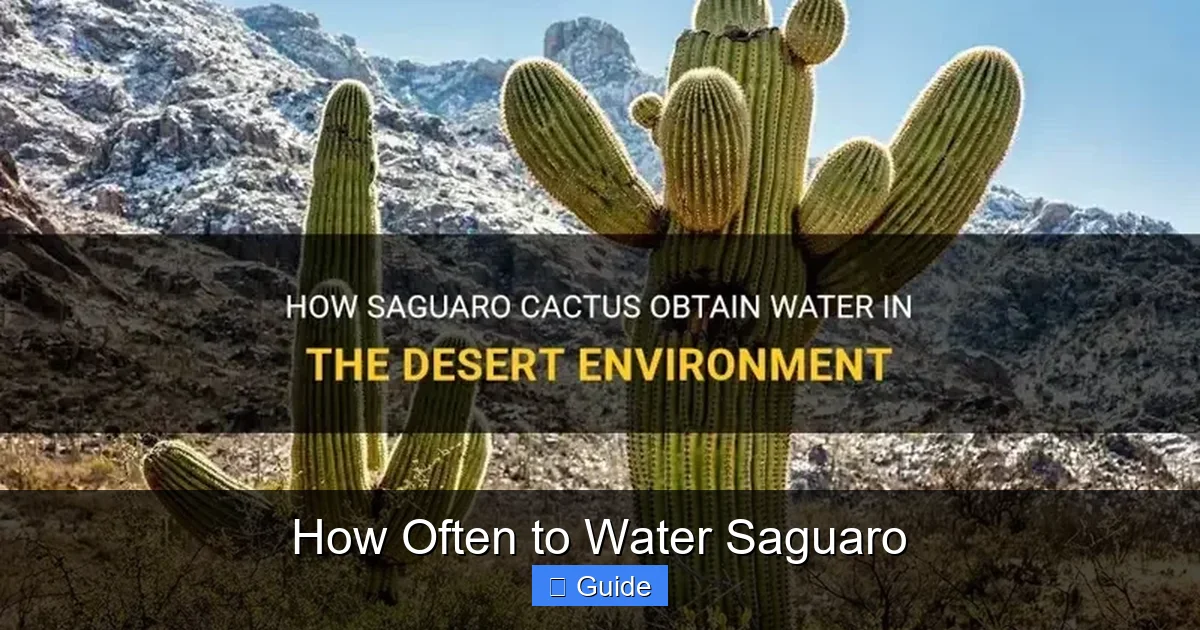
Visual guide about How Often to Water Saguaro
Image source: shuncy.com
First Summer After Planting
If you plant a saguaro in spring, it needs help through its first summer. The root ball has been disturbed. The tiny feeder roots are damaged. The plant cannot yet access the wide soil area it needs. Water deeply once every three to four weeks from May through September. “Deeply” means running a hose on a slow trickle for two to three hours. The water must penetrate two to three feet down. This encourages roots to chase moisture downward. Do not water more often. Do not water less deeply. Frequent shallow watering keeps roots at the surface. Surface roots bake in summer heat. They die. The plant fails.
Second Summer
Reduce watering to once every four to six weeks. The plant should be establishing its own root network. Watch the pleats. If they are full and round, skip the watering. If they show deep contraction — the accordion folds tightening dramatically — water deeply once. Then wait. The goal is to wean the plant. By the end of the second summer, the saguaro should handle normal rainfall alone.
Third Summer and Beyond
Stop watering entirely. This is the hardest rule for gardeners to follow. But it is absolute. A saguaro three years in the ground with established roots needs zero supplemental water in the Sonoran Desert region. If you live at the edge of its range — Las Vegas, high desert areas — you might water once in an extreme drought year. Once. Not monthly. Not weekly. Once. And only if the plant shows severe stress.
Watering Mature Saguaros: The Golden Rule
Here is the golden rule for how often to water saguaro cacti that are established: Never. Not in summer. Not in winter. Not during drought. Not when they look thirsty. A mature saguaro in the ground in its native climate needs no irrigation. Period. This rule shocks people. It feels wrong. But the biology is clear.
Why Mature Saguaros Rot
Saguaro roots cannot tolerate constant moisture. They evolved for boom-and-bust cycles. Wet soil means no oxygen. No oxygen means root death. Dead roots invite fungus. Fungus spreads to the main stem. The base turns brown. Then black. Then mushy. The structural integrity fails. A forty-foot cactus falls over. This happens fast. A saguaro watered monthly in summer can rot in two years. The damage is irreversible. By the time you see external signs, the internal structure is already compromised.
What About Extreme Drought?
Even in record drought, mature saguaros survive. They have thousands of gallons stored. They shrink. Their pleats contract deeply. They look alarming. But they are not dying. They are waiting. When rain returns, they expand again. This cycle has repeated for millennia. Watering during drought disrupts this natural rhythm. It signals the plant to grow when it should conserve. It weakens the internal structure. Trust the plant. It knows what it is doing.
Exceptions That Prove the Rule
There are exactly two exceptions. First: saguaros planted outside their native range. If you grow a saguaro in Houston or Orlando or San Diego, the climate is wrong. The humidity is high. The soil stays wet. The rain falls at wrong times. In these climates, you must be extremely careful. Water only when the soil is bone dry three inches down. Even then, water sparingly. Second: saguaros in containers. We will cover container care separately. For in-ground saguaros in Arizona, California desert, and similar climates — never water mature plants.
Seasonal Watering Calendar
Understanding the seasonal rhythm helps you resist the urge to water. The saguaro year has four phases. Each demands different restraint.
Spring: March Through May
Spring is growth season. Wild saguaros use stored winter rain to produce flowers and new tissue. In cultivation, this is when gardeners most want to water. Do not. The plant has stored water from winter rains. It is programmed to use that reserve. Adding water now encourages soft, weak growth. That growth cannot survive summer heat. Let the plant use its reserves. Watch for flower buds in late April. Enjoy the blooms in May. Do not water.
Summer: June Through September
Early summer (June) is the driest, hottest time. The saguaro waits. It shrinks. It survives on stored water. Monsoon season typically begins in early July. Violent storms drop inches of rain in hours. The saguaro drinks deeply. Its roots absorb fast. Its pleats expand visibly overnight. This is the only water it needs. If monsoon fails completely — no rain for eight weeks — a young saguaro (under two feet) can receive one deep watering. A mature saguaro still gets nothing.
Fall: October Through November
Fall brings cooling temperatures. The saguaro prepares for winter. It hardens off new growth. It stops expanding. Watering now prevents this hardening. Soft tissue freezes and dies in winter. Do not water. Let the plant feel the seasonal change. The shortening days and cooling nights trigger internal changes. Respect them.
Winter: December Through February
Winter is absolute dormancy. The saguaro cannot use water. Its metabolic processes slow to near zero. Water in the root zone during winter causes rot faster than any other time. Cold wet soil is a death sentence. Even young saguaros get zero winter water. If you have an irrigation system, cap the emitter at the saguaro. Disconnect it. Do not trust a timer. Do not trust a rain sensor. Physically remove the water source.
Reading Your Saguaro’s Signals
The saguaro communicates clearly. You just need to learn its language. The primary signal is the pleats. The accordion folds on the trunk and arms expand and contract with water content.
Full and Round Pleats
When pleats are shallow and the trunk looks smooth and round, the saguaro is fully hydrated. It has ample stored water. Do not water. Watering now forces excess water into tissues. This causes splitting. It weakens the woody skeleton. It invites bacterial rot. A plump saguaro is a happy saguaro. Leave it alone.
Moderately Contracted Pleats
As water is used, pleats deepen. The accordion folds become more pronounced. The trunk diameter shrinks. This is normal. This is healthy. A saguaro in summer should show moderate contraction. It means the plant is living within its means. It is using stored water as designed. Do not water. This contraction is not distress. It is the annual cycle.
Severely Contracted Pleats
Deep, sharp pleats with visible ridges indicate genuine dehydration. The skin may look slightly dull. The arms may droop slightly. This occurs in young plants during extreme drought. It occurs in mature plants after multiple dry years. Only water a young saguaro showing this signal. Water deeply once. Then wait. A mature saguaro with severe contraction is still using reserves. It will recover when rain returns. Do not water it.
Other Warning Signs
Yellowing or browning at the base indicates rot. This is from overwatering. Soft, mushy spots anywhere on the trunk indicate rot. This is from overwatering. Black spots spreading upward indicate fungal infection. This is from overwatering. A saguaro leaning suddenly indicates root failure. This is from overwatering. Notice the pattern? Almost every visible problem comes from too much water. Too little water shows as contraction. The plant recovers. Too much water shows as rot. The plant dies.
Container-Grown Saguaros: Different Rules
Saguaros in pots cannot access the wide soil volume they need. Their roots hit the container wall. They circle. They cannot chase deep moisture. The soil volume is too small to store enough water for months. Container saguaros need some water year-round. But still very little.
Container Watering Schedule
Spring through fall: Water deeply once every four to six weeks. Let the soil dry completely between waterings. Check with a moisture meter or wooden dowel. The bottom of the pot must be dry before you water again. Winter: Water once every eight to ten weeks. Just enough to prevent total desiccation. The plant is dormant but the pot cannot buffer humidity like the ground does.
Container Soil Mix
Use a mix of fifty percent pumice or perlite, twenty-five percent coarse sand, twenty-five percent native soil or cactus mix. No peat. No compost. No water-retention crystals. The mix must drain in seconds. If water sits on the surface for more than ten seconds, the mix is wrong. Repot every three to four years. The roots will fill the pot. They need fresh mineral soil.
Container Location Matters
Place container saguaros where they get morning sun and afternoon shade in hot climates. Full sun all day heats the pot. Hot pots cook roots. In cooler climates, full sun is fine. Protect from reflected heat off walls. Move pots under cover during extended winter rain. You control the water. Do not let nature override your schedule.
Common Watering Mistakes and How to Avoid Them
Gardeners make the same mistakes repeatedly. Knowing them helps you avoid them.
Mistake: Watering on a Timer
Irrigation timers are the enemy of saguaros. A timer waters whether the plant needs it or not. It waters during rain. It waters during winter. It waters when the soil is already wet. If you have an irrigation system, the saguaro must be on its own zone. That zone must be manually activated. Never automatic. Better yet, cap the emitter and water by hand with a hose. Hand watering forces you to look at the plant. You see the pleats. You check the soil. You make a conscious decision.
Mistake: Planting Near Thirsty Plants
Planting a saguaro in a lawn is a death sentence. Lawn watering keeps the top twelve inches of soil constantly moist. Saguaro roots live in the top twelve inches. They rot. Planting near citrus trees, roses, or vegetables has the same effect. Their irrigation zones overlap. The saguaro gets watered indirectly. Create a dedicated dry zone. No irrigation heads within ten feet. No runoff flowing toward the saguaro. Grade the soil away from the base.
Mistake: Mulching the Base
Organic mulch holds moisture against the trunk. This causes basal rot. Wood chips, bark, leaves, gravel with fines — all trap moisture. The saguaro base must stay dry. Air must circulate. Use no mulch within two feet of the trunk. If you want a clean look, use large decorative rocks that do not hold moisture. Keep them six inches from the skin.
Mistake: Fertilizing to “Help” Growth
Fertilizer forces growth. Forced growth requires water. Water causes rot. Saguaros do not need fertilizer. In the wild, they grow in nearly pure sand and rock. They get nutrients from dust and bird droppings. That is enough. Fertilizer creates weak, watery tissue. That tissue splits in heat. It rots in humidity. It attracts pests. Do not fertilize. Ever.
Mistake: Transplanting Large Specimens Without Preparation
Nurseries sell large saguaros. Ten feet. Twenty feet. They look impressive. But a twenty-foot saguaro has a root ball three feet wide. Its natural root spread is fifty feet. Ninety percent of its roots are left behind. This plant is critically water-stressed. It needs careful watering for two to three years. But even then, the schedule is minimal. Deep watering every three weeks first summer. Every four weeks second summer. Then stop. Many large transplants die anyway. The survival rate drops sharply over six feet. Buy small. Grow your own giant. It is more rewarding and far more likely to succeed.
Regional Adjustments for How Often to Water Saguaro
The basic rules apply across the saguaro’s range. But local conditions require slight adjustments.
Low Desert: Phoenix, Tucson, Yuma
Follow the standard schedule exactly. Young saguaros get two summers of monthly watering. Then zero. Mature saguaros get zero ever. The climate matches the native range. The monsoon pattern matches. The soil temperatures match. No adjustments needed.
High Desert: Las Vegas, Kingman, Albuquerque
Winters are colder. Summers are slightly less intense. Monsoons are less reliable. Young saguaros may need watering into a third summer if monsoon fails. Mature saguaros still get zero. But watch for winter desiccation in containers. The combination of freezing temperatures and dry wind can damage potted plants. Water containers once in January if soil is bone dry and no precipitation is forecast.
Coastal Desert: San Diego, Palm Springs
Humidity is higher. Summer heat is less extreme. Winter rain is more frequent. The saguaro is outside its ideal range. Root rot risk is higher. Water young saguaros less often — every six weeks in summer. Mature saguaros get zero. Ensure perfect drainage. Plant on mounds. Use extra pumice in backfill. Accept slower growth. The plant will never look quite like a Sonoran specimen. That is okay.
Non-Native Climates: Humid Southeast, Pacific Northwest, Midwest
Growing saguaros here is possible but difficult. They must be in containers. They must be protected from rain. They must be brought indoors or under cover in winter. Watering is minimal — once every six to eight weeks in growing season. Once every twelve weeks in winter. The goal is survival, not thriving. These plants will stay small. They will grow slowly. They are conversation pieces, not landscape anchors.
Troubleshooting Water-Related Problems
Even with perfect intentions, problems arise. Here is how to diagnose and respond.
Basal Softening
The base of the saguaro feels soft. The skin yields to gentle pressure. The color may be brownish or grayish. This is rot. Stop all water immediately. Dig away soil from the base to expose the root crown. Let it dry. Apply powdered sulfur to any soft areas. Do not cover. Do not mulch. Pray. Basal rot is often fatal. If the rot is limited to a small area, the plant may wall it off. If it has spread up the trunk, the saguaro will fall. There is no cure for advanced basal rot.
Splitting Skin
Vertical cracks appear on the trunk. They may weep clear fluid. This is from too much water too fast. The tissues expanded faster than the skin could stretch. Stop watering. The cracks will callus over. They become permanent scars. The plant survives but loses structural strength at those points. Prevent by never watering a plump saguaro.
Yellowing Arms
Arms turn yellow, then brown, starting at the tips. This can be sunburn on a recently exposed arm. Or it can be root rot cutting off water transport. Check the base. If soft, it is rot. If firm, it may be sunburn. Sunburned arms often recover. Rotted arms do not. Do not water either way. Water worsens both.
Leaning
A saguaro that suddenly leans has lost root anchorage. This is almost always from rot. The roots on the leaning side have died. The plant is falling. If the lean is slight, stop all water. Let the soil dry. The plant may re-root. If the lean is severe, the saguaro is a hazard. It must be removed professionally. A falling saguaro kills people. It destroys property. Do not try to prop it up. Do not try to save it. Have it removed.
Long-Term Care Beyond Watering
Watering is the most critical factor. But other care supports the watering strategy.
Planting Technique
Dig a hole no deeper than the root ball. Twice as wide. Backfill with native soil only. No amendments. No fertilizer. No water-retention products. The interface between root ball and native soil must be seamless. Amendments create a “bathtub effect” — water collects in the amended zone and rots roots. Plant slightly high — the root crown should sit one inch above grade. Water once at planting to settle soil. Then follow the schedule.
Staking
Tall saguaros (over six feet) need staking for the first year. Use three stakes in a triangle. Attach with wide nylon straps. Not wire. Not rope. Check monthly. Remove stakes after one year. The saguaro must develop its own anchor roots. Permanent staking prevents this.
Protection
Young saguaros need protection from rabbits, javelina, and rodents. They eat the tender growing tip. A hardware cloth cage works. Remove it when the saguaro reaches three feet. Mature saguaros need no protection. Their spines defend them.
Patience
A saguaro grows one to one and a half inches per year in cultivation. Arms appear at fifty to seventy years. Flowers at thirty-five. This is not a fast plant. It is a legacy plant. You plant it for your children’s children. The watering discipline you practice today creates the giant of tomorrow. Every time you resist the hose, you are building a century of survival.
Conclusion
How often to water saguaro? The answer is simple. Young plants: monthly for two summers. Then never again. Mature plants: never. Container plants: every four to six weeks in growing season, every eight to ten weeks in winter. That is the entire schedule. The difficulty is not knowing. The difficulty is doing. It feels wrong to ignore a living thing in hundred-degree heat. It feels negligent. But the saguaro does not want your pity. It wants your respect. It wants you to understand two hundred million years of evolution. It wants you to trust its design.
Next time you stand before a saguaro in July, pleats deep, skin hot, arms reaching into shimmering air — do not reach for the hose. Stand with it. Feel the heat. Watch the horizon for monsoon clouds. Know that this plant has survived worse droughts than this. It will survive this one too. And when the rain finally comes, you will see the miracle. The pleats will smooth. The trunk will swell. The giant will drink its fill in hours. And it will not need you at all. That is the gift of the saguaro. It asks nothing. It gives beauty. It gives shade. It gives a home to birds. It gives a connection to deep time. All it requires is that you leave the water off. Can you do that? Your saguaro is counting on it.
Frequently Asked Questions
How often to water saguaro cactus in summer?
Young saguaros (under 2 feet tall) need deep watering once every 3-4 weeks during their first summer, and every 4-6 weeks during their second summer. Mature saguaros need zero summer watering — they survive on monsoon rains and stored water alone.
Can you overwater a saguaro?
Yes, overwatering is the leading cause of death for cultivated saguaros. Their shallow roots rot quickly in moist soil. Even monthly watering can kill a mature saguaro within 2-3 years. Always let soil dry completely between waterings.
When should I stop watering my saguaro?
Stop watering entirely after the second summer in the ground. By year three, the root system should be established enough to survive on natural rainfall. Continuing to water prevents the plant from hardening off and leads to rot.
How do I know if my saguaro needs water?
Check the pleats (accordion folds on the trunk). Moderately deep pleats are normal and healthy. Only water young saguaros showing severely contracted pleats with dull skin during extreme drought. Mature saguaros never need supplemental water regardless of appearance.
Should I water saguaro in winter?
Absolutely not. Saguaros are dormant in winter and cannot absorb water. Cold, wet soil causes fatal fungal rot. Cap irrigation emitters at the saguaro base from November through February. Zero winter water is the rule.
How often to water saguaro in a pot?
Container saguaros need water every 4-6 weeks during growing season (March-October) and every 8-10 weeks in winter. Use a fast-draining mineral mix (50% pumice/perlite, 25% coarse sand, 25% native soil). Always let the pot dry completely bottom-to-top before watering again.