Cotton Soil Mix for Juniper
A cotton soil mix for juniper combines organic cotton fibers with gritty minerals to create a lightweight, well‑draining medium that mimics the plant’s native rocky habitats. This guide walks you through why the mix works, how to blend it yourself, and the care routine that keeps junipers vigorous year‑round.
If you have ever watched a juniper struggle in heavy clay or soggy potting soil, you know the frustration of yellowing needles and stunted growth. The secret to a happy juniper often lies beneath the surface, in the texture and composition of the planting medium. A cotton soil mix for juniper offers a simple, natural solution that mimics the well‑drained, airy conditions these evergreens love. In this guide we’ll explore why the mix works, how to create it at home, and the best practices for planting and long‑term care.
Junipers are native to rocky slopes, sandy plains, and open woodlands where water moves quickly and roots breathe freely. Replicating that environment in a garden bed or container can be tricky, especially when using standard garden soil that compacts over time. By adding shredded cotton fibers to a gritty mineral base, you create a lightweight matrix that holds just enough moisture while allowing excess water to escape. The result is a cotton soil mix for juniper that supports vigorous root development, reduces disease pressure, and cuts down on watering chores.
Key Takeaways
- Excellent drainage: Cotton fibers create air pockets that prevent waterlogging, a common cause of juniper root rot.
- Improved aeration: The loose structure lets oxygen reach roots, encouraging strong, deep growth.
- pH neutrality: A cotton soil mix for juniper stays near neutral, matching juniper’s preference for slightly acidic to neutral soil.
- Easy DIY recipe: Combine shredded cotton, coarse sand, pumice, and a touch of compost for a balanced blend.
- Low maintenance: Once established, junipers in this mix need less frequent watering and fertilizing.
- Versatile use: Works for container planting, raised beds, and in‑ground amendments.
- Eco‑friendly: Reuses natural cotton waste, reducing landfill while feeding your garden.
Quick Answers to Common Questions
What is the ideal ratio for a cotton soil mix for juniper?
A balanced starting ratio is 1 part shredded cotton, 1 part coarse sand, 1 part pumice or perlite, and ½ part well‑rotted compost.
Can I use regular cotton balls instead of shredded fabric?
Cotton balls are too dense and may compact; shredded fabric or batting provides the airy fiber network needed for good drainage.
How often should I water junipers in this mix during winter?
Water sparingly—only when the top two inches of soil are dry, typically once every 3‑4 weeks in cold climates.
Is a cotton soil mix for juniper suitable for all juniper species?
Yes, most common juniper cultivars (e.g., Juniperus chinensis, J. horizontalis, J. scopulorum) thrive in this well‑drained medium.
Where can I source sustainable shredded cotton?
Local textile recycling centers, thrift stores, or online bulk suppliers of reclaimed cotton batting are good options.
📑 Table of Contents
Understanding Juniper Soil Needs
Natural Habitat Clues
Junipers thrive in soils that are coarse, low in organic matter, and quick to drain. In the wild they often grow in limestone gravel, volcanic ash, or sandy loam. These substrates share two traits: high macro‑porosity and low water‑holding capacity. When you plant a juniper in a dense, moisture‑retentive mix, the roots sit in stagnant water, leading to rot and fungal infections.
Key Soil Parameters
- Drainage rate: Water should percolate through the pot or bed within a few minutes.
- Air-filled porosity: At least 30 % of the volume should be air space after watering.
- pH range: 6.0 – 7.5 is ideal; junipers tolerate slightly acidic to neutral conditions.
- Nutrient level: Low to moderate; excess nitrogen encourages soft growth that is prone to winter damage.
Why Conventional Mixes Fall Short
Standard potting soils are peat‑heavy and retain water for days. Even “cactus” mixes often contain too much fine sand, which can compact. A cotton soil mix for juniper solves both problems by adding a fibrous, biodegradable component that holds structure without turning soggy.
What Is a Cotton Soil Mix?
Core Ingredients
A cotton soil mix for juniper typically contains four main ingredients: shredded cotton, coarse sand or grit, pumice or perlite, and a small amount of well‑rotted compost. Each plays a distinct role.
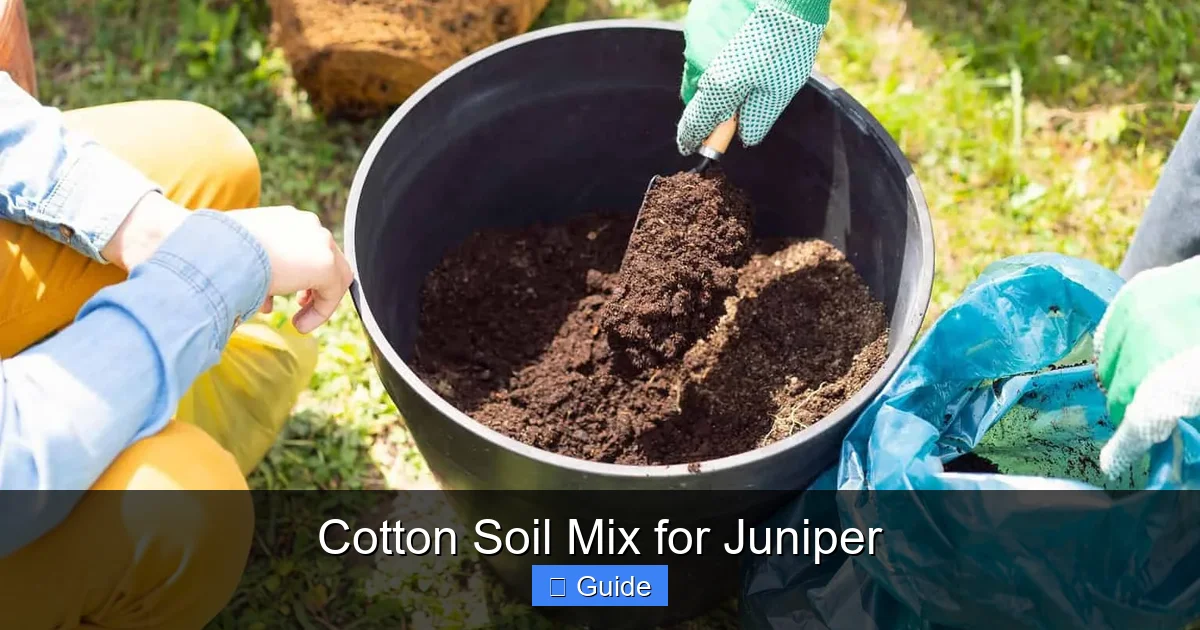
Visual guide about Cotton Soil Mix for Juniper
Image source: plantly.io
- Shredded cotton: Provides a lattice of fine fibers that trap air and slowly decompose, releasing trace nutrients.
- Coarse sand or grit: Supplies weight and macro‑pores for rapid drainage.
- Pumice or perlite: Adds lightweight volcanic particles that improve aeration and prevent compaction.
- Compost: Supplies a gentle nutrient baseline and beneficial microbes.
Texture and Feel
When you squeeze a handful of the finished blend, it should crumble easily, not form a sticky ball. The cotton fibers give a slight “fluff” that you can see between the mineral grains. This texture is the hallmark of a well‑balanced cotton soil mix for juniper.
Commercial vs. DIY
Some specialty nurseries sell pre‑bagged versions, but they can be pricey and may contain undisclosed additives. Making your own lets you control the ratio, source sustainable cotton (such as reclaimed textile scraps), and adjust the mix for your local climate.
Benefits of Cotton Soil Mix for Juniper
Superior Drainage and Root Health
The primary advantage is rapid water movement. Cotton fibers create microscopic channels that guide water away from the root zone, while the mineral fraction prevents the channels from collapsing. Roots stay oxygenated, which translates to faster growth and higher resistance to Phytophthora and other root pathogens.
Reduced Watering Frequency
Because the mix holds just enough moisture for the plant’s needs, you can water less often. In hot summer months a juniper in a cotton soil mix for juniper may need watering only once every 7‑10 days, compared to every 3‑4 days in peat‑based media.
Long‑Term Structural Stability
Unlike pure organic mixes that break down into mush, the mineral components keep the structure open for years. The cotton slowly decomposes, adding humus without causing compaction. This longevity means you won’t have to repot or amend the bed as frequently.
Environmental Upside
Using reclaimed cotton diverts textile waste from landfills. The fibers are biodegradable, carbon‑neutral, and free of synthetic chemicals. For gardeners who value sustainability, a cotton soil mix for juniper aligns with eco‑friendly practices.
Versatility Across Planting Scenarios
Whether you’re planting a dwarf juniper in a decorative pot, establishing a windbreak row in a raised bed, or amending a heavy garden soil, the same basic recipe adapts. Adjust the sand‑to‑pumice ratio for containers (more pumice) versus in‑ground (more sand).
How to Make Your Own Cotton Soil Mix for Juniper
Gather Materials
- Shredded cotton – 1 part (by volume). Source from old cotton t‑shirts, sheets, or purchase bulk cotton batting.
- Coarse horticultural sand – 1 part. Avoid fine play sand; it compacts.
- Pumice or perlite – 1 part. Pumice is heavier and stays put in windy sites.
- Well‑rotted compost – ½ part. Screened to remove large chunks.
- Optional: slow‑release granular fertilizer (low nitrogen) – 1 tablespoon per 5 gallons of mix.
Mixing Steps
- Prepare the cotton: Cut or tear cotton into 1‑inch strips. If using batting, fluff it by hand to separate fibers.
- Combine dry minerals: In a large wheelbarrow or tarp, blend sand and pumice thoroughly.
- Add cotton: Sprinkle the shredded cotton over the mineral blend. Toss with a garden fork until fibers are evenly distributed.
- Incorporate compost: Fold in the compost, ensuring no clumps remain.
- Moisten lightly: Mist the mix until it feels damp but not soggy. This helps the cotton settle and bind the particles.
- Test drainage: Fill a 1‑gallon pot, water thoroughly, and time how long it takes for water to exit the bottom. Aim for 30‑60 seconds.
Adjusting for Climate
In arid regions increase the cotton fraction to 1.5 parts to retain a bit more moisture. In humid coastal areas boost the pumice to 1.5 parts for extra aeration. The beauty of a cotton soil mix for juniper is its flexibility.
Storing the Mix
Keep any unused blend in a breathable bag (burlap or woven polypropylene) in a dry shed. The cotton will continue to break down slowly, enriching the mix over time.
Planting and Caring for Juniper in Cotton Soil Mix
Container Planting
Choose a pot with multiple drainage holes. Add a 1‑inch layer of coarse gravel at the bottom, then fill with your cotton soil mix for juniper. Position the root ball so the crown sits slightly above the rim. Backfill, firm gently, and water until excess drains out.
In‑Ground Planting
Dig a hole twice as wide as the root ball and the same depth. Amend the native soil by mixing 30 % of your cotton soil mix for juniper into the backfill. This creates a transition zone that encourages roots to explore beyond the planting hole.
Watering Regime
- Establishment (first 6‑8 weeks): Water deeply twice a week, allowing the top 2 inches to dry between sessions.
- Established plants: Water once every 7‑10 days in summer, less in winter. Check moisture by inserting a finger 2 inches deep.
Fertilizing
Apply a balanced, slow‑release fertilizer (e.g., 10‑10‑10) at half the label rate in early spring. Avoid high‑nitrogen formulas; they promote tender growth that can freeze.
Pruning and Maintenance
Junipers require minimal pruning. Remove dead or crossing branches in late winter. Light shaping can be done after the spring flush. The open structure of a cotton soil mix for juniper makes it easy to see root flare and avoid burying the trunk.
Mulching
Spread a 2‑inch layer of shredded bark or pine needles around the base, keeping mulch 3 inches away from the trunk. Mulch conserves moisture and suppresses weeds without suffocating the airy mix.
Common Mistakes and Troubleshooting
Over‑Watering
Even with excellent drainage, a saucer that holds water will keep the bottom of the pot soggy. Always empty saucers after watering. If needles turn brown at the tips, cut back watering frequency.
Using Fine Sand or Clay
Fine particles fill the macro‑pores created by cotton and pumice, turning the mix into a dense brick. Stick to coarse horticultural sand or grit sized 1‑2 mm.
Neglecting pH Checks
While the mix is naturally near neutral, some composts can be acidic. Test annually with a simple kit; amend with garden lime if pH drops below 6.0.
Compaction Over Time
Foot traffic or heavy pots can compress the blend. Gently fork the surface each spring to restore porosity, especially in raised beds.
Pest Issues
Spider mites love dry, dusty conditions. A periodic strong spray of water (early morning) dislodges them without harming the cotton fibers. Neem oil works as a last resort.
Root Rot Signs
Soft, blackened roots and a foul smell indicate rot. Remove the plant, trim diseased roots, and repot in fresh cotton soil mix for juniper. Improve drainage by adding extra pumice.
Conclusion
A cotton soil mix for juniper is more than a trendy gardening hack; it’s a practical, science‑backed medium that mirrors the natural conditions junipers have evolved to love. By blending shredded cotton with coarse sand, pumice, and a touch of compost, you create a lightweight, well‑drained, and sustainable substrate that keeps roots healthy, reduces watering chores, and supports vigorous evergreen growth for years. Whether you’re a seasoned bonsai enthusiast or a homeowner planting a windbreak, this mix gives you the control and confidence to grow junipers that thrive. Give it a try, observe the difference in needle color and growth rate, and enjoy the satisfaction of a garden that works with nature, not against it.
Frequently Asked Questions
What makes a cotton soil mix for juniper different from regular potting soil?
A cotton soil mix for juniper uses shredded cotton fibers and coarse mineral particles to create high macro‑porosity, whereas regular potting soil relies on peat and fine particles that retain water and compact over time.
Can I reuse the mix after a juniper dies?
Yes, you can sterilize the used blend by solarizing or baking at 180 °F for 30 minutes, then refresh with new cotton and compost before replanting.
Does the cotton decompose too quickly?
Cotton breaks down slowly over 1‑2 years, gradually adding organic matter without causing compaction, which is ideal for long‑term juniper health.
Will the mix attract pests like fungus gnats?
The rapid drainage and low organic moisture level discourage fungus gnats; however, keep the surface dry and avoid over‑watering to prevent any infestation.
Can I add mycorrhizal fungi to the mix?
Absolutely. Inoculating the cotton soil mix for juniper with a mycorrhizal product at planting enhances nutrient uptake and root resilience.
What size container works best with this mix?
Choose a container at least 12‑18 inches wide and deep for most juniper cultivars; the mix’s light weight makes larger pots easier to move.