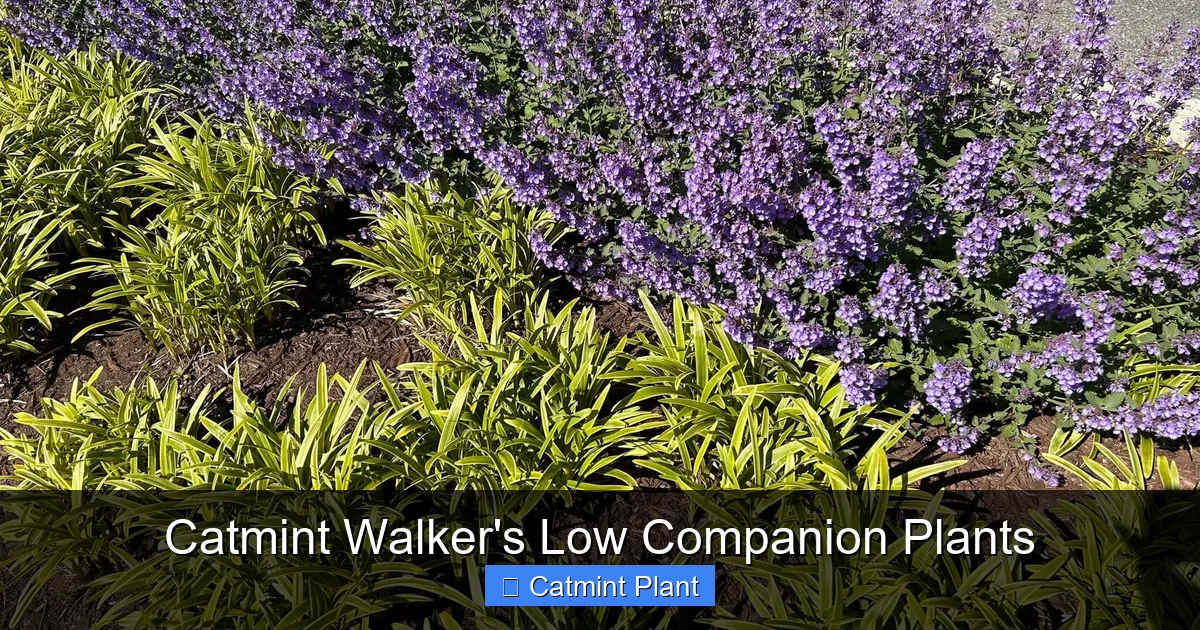
Catmint Walker’s Low Companion Plants
Catmint Walker’s Low is a versatile, drought-tolerant perennial that pairs beautifully with roses, salvias, and ornamental grasses. This guide reveals the best companion plants, design strategies, and care tips to create a thriving, pollinator-friendly garden with season-long color and texture.
If you have ever walked past a garden border in early summer and noticed a cloud of soft lavender-blue flowers buzzing with bees, chances are you were looking at catmint Walker’s Low. This perennial has earned its reputation as a garden workhorse for good reason. It blooms for weeks, tolerates drought like a champ, and asks for very little in return. But the real magic happens when you start thinking about catmint Walker’s Low companion plants. The right partners can turn a pretty planting into a spectacular, season-long display.
I remember the first time I planted Walker’s Low in my own garden. I tucked it near a rose bush, mostly because I had an empty spot. By midsummer, the catmint had formed a billowing mound that completely covered the rose’s bare canes at the base. The combination looked intentional, even romantic. The bees loved it. The neighbors asked about it. That happy accident taught me that companion planting with catmint Walker’s Low is not just about what survives together. It is about creating plant communities that look better together than they ever would alone.
Key Takeaways
- Walker’s Low catmint thrives in full sun and well-drained soil: It pairs best with plants that share these same growing requirements for a low-maintenance garden bed.
- Roses are classic companions: The soft blue-purple flowers of catmint hide the bare legs of rose bushes while attracting beneficial insects that control rose pests.
- Ornamental grasses add texture and movement: Grasses like feather reed grass or fountain grass create stunning contrast with catmint’s mounding habit and lavender blooms.
- Salvias extend the bloom season: Planting different salvia varieties alongside catmint ensures continuous color from late spring through fall frost.
- Pollinator magnets work together: Combine catmint with coneflowers, bee balm, and lavender to create a pollinator paradise that supports bees, butterflies, and hummingbirds.
- Consider height and spread for proper spacing: Walker’s Low reaches 24-30 inches tall and wide, so space companions accordingly to prevent overcrowding and ensure good air circulation.
- Shear after first bloom for a second flush: Cutting back catmint by half after its initial flowering encourages fresh growth and a tidy appearance through summer.
Quick Answers to Common Questions
What are the best companion plants for catmint Walker’s Low?
The best companions include roses, ornamental grasses like feather reed grass, salvias, coneflowers, bee balm, lavender, and black-eyed Susans. All share the same love of full sun and well-drained soil.
How far apart should I plant catmint Walker’s Low from its companions?
Space catmint 18-24 inches from companion plants. Walker’s Low reaches 24-30 inches wide at maturity, so proper spacing prevents overcrowding and ensures good air circulation.
When should I cut back catmint Walker’s Low?
Shear catmint back by half to two-thirds in early July after the first flush of flowers fades. This encourages a tidy habit and a second bloom period that lasts until frost.
Can catmint Walker’s Low grow in shade?
No, catmint requires full sun (at least 6 hours daily). In shade, it becomes leggy, flops open, and flowers poorly. Choose shade-tolerant companions like hostas or ferns for shady areas instead.
Is catmint Walker’s Low invasive?
Catmint spreads by self-seeding and slow rhizome expansion but is not considered invasive. It stays in a manageable clump. Deadheading after bloom reduces seeding, and division every 3-4 years controls spread.
📑 Table of Contents
- Understanding Walker’s Low Catmint
- Classic Companions: Roses and Catmint
- Ornamental Grasses for Texture and Movement
- Salvias and Catmint: The Long-Bloom Duo
- Pollinator Paradise: Native Plant Partners
- Mediterranean and Herb Garden Companions
- Design Principles for Successful Combinations
- Maintenance Tips for Mixed Plantings
- Container Combinations Featuring Catmint
- Troubleshooting Common Issues
- Seasonal Care Calendar
- Conclusion
Understanding Walker’s Low Catmint
What Makes This Variety Special
Walker’s Low is a cultivar of Nepeta racemosa, and despite its name, it is not exactly low growing. It reaches 24 to 30 inches tall and spreads just as wide. The name actually comes from the garden in Ireland where it was discovered, not its height. This variety won the Perennial Plant of the Year award in 2007, and it has been a staple in sunny borders ever since.
The foliage is aromatic, gray-green, and finely textured. When brushed against, it releases a minty scent that deer and rabbits tend to avoid. From late spring through early summer, it produces spikes of lavender-blue flowers that keep coming if you deadhead or shear the plant back. It is hardy in USDA zones 3 through 8, making it reliable across a huge range of climates.
Growing Requirements to Match
Before choosing catmint Walker’s Low companion plants, you need to understand what this perennial likes. Full sun is non-negotiable. It will flop and flower poorly in shade. Well-drained soil is equally critical. Wet feet, especially in winter, will kill it faster than cold temperatures. Once established, it is remarkably drought tolerant. It thrives in lean soil and actually flowers better without rich amendments or heavy fertilizing.
Any companion you choose should share these preferences. Plants that need constant moisture, rich soil, or afternoon shade will struggle next to catmint. The good news is that many of the most beautiful garden perennials love these exact same conditions.
Classic Companions: Roses and Catmint
Why This Pairing Works So Well
The combination of roses and catmint is a classic for a reason. Roses often have bare lower canes that are not particularly attractive. Catmint’s mounding habit covers those “knees” perfectly with a froth of gray-green foliage and blue flowers. The color contrast is stunning. Pink, red, yellow, or white roses all look better with a skirt of lavender-blue catmint at their feet.
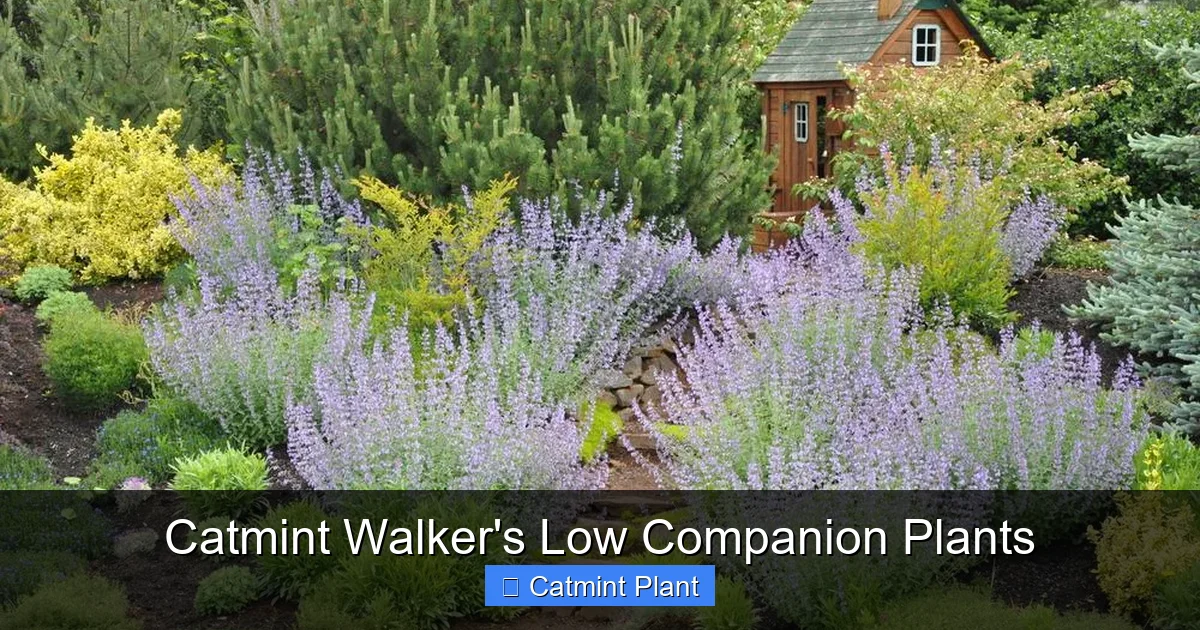
Visual guide about Catmint Walker’s Low Companion Plants
Image source: garden.org
But the benefits go beyond aesthetics. Catmint attracts hoverflies, parasitic wasps, and lady beetles. These beneficial insects prey on aphids, thrips, and other common rose pests. The aromatic foliage may also help deter some pests through scent masking. It is a genuine ecological partnership, not just a pretty face.
Design Tips for Rose and Catmint Combinations
Plant catmint about 18 to 24 inches from the base of the rose. This gives both plants room to reach their mature size without crowding. For shrub roses, plant three to five catmint plants in a drift around the base. For climbing roses on a fence or wall, plant a continuous row of catmint along the front edge of the bed.
Consider bloom time. Many modern roses bloom in flushes from late spring through frost. Catmint’s main flush is late spring to early summer. Shear the catmint hard after its first bloom, and it will often rebloom in time for the rose’s second flush. This coordination keeps the combination looking fresh all season.
Best Rose Varieties for Pairing
Almost any rose works, but some combinations are particularly striking. ‘Knock Out’ roses in cherry red or pink create high-contrast drama with catmint’s cool tones. David Austin English roses in soft apricot or cream look romantic and cottage-garden pretty. Yellow roses like ‘Julia Child’ or ‘Graham Thomas’ create a complementary color scheme that feels sunny and cheerful.
Ornamental Grasses for Texture and Movement
Why Grasses Make Perfect Partners
If catmint provides a soft, billowing cloud, ornamental grasses provide structure, verticality, and movement. The fine texture of catmint foliage echoes the fine blades of many grasses, creating harmony. But the form contrast is what makes the combination exciting. Catmint mounds. Grasses fountain, arch, or stand upright. When the wind blows, the grasses dance while the catmint ripples.
Both plants thrive in the same lean, well-drained soil and full sun. Both are drought tolerant once established. Both are low maintenance. This is a planting combination that looks sophisticated but asks very little of the gardener.
Top Grass Choices for Catmint Walker’s Low Companion Plants
Feather reed grass (Calamagrostis x acutiflora ‘Karl Foerster’) is perhaps the ultimate partner. Its strong vertical plumes rise 4 to 5 feet tall, creating a dramatic backdrop for catmint’s lower mound. The wheat-colored seed heads persist through winter, extending the season of interest long after catmint has gone dormant.
Fountain grass (Pennisetum alopecuroides) offers a softer, arching form that mirrors catmint’s mounding habit but at a larger scale. Varieties like ‘Hameln’ stay compact at 2 to 3 feet, making them perfect for middle-of-the-border placement with catmint in front.
Blue fescue (Festuca glauca) provides a cool-blue foliage echo that intensifies the color story. Its tight, porcupine-like mounds look great planted in a repeating rhythm along a border edge with catmint behind.
Switchgrass (Panicum virgatum) cultivars like ‘Shenandoah’ or ‘Northwind’ add native plant credibility and stunning fall color. Their upright habit contrasts beautifully with catmint’s spread.
Planting Design with Grasses and Catmint
Use grasses as the “bones” of the planting. Place them at intervals along the border. Then fill between with drifts of catmint. In a larger bed, you might use three to five feather reed grasses spaced 3 feet apart, with groups of three catmint plants between each grass. The rhythm creates a designed look that feels natural, not rigid.
For a meadow-style planting, mix catmint with lower grasses like prairie dropseed (Sporobolus heterolepis) and little bluestem (Schizachyrium scoparium). Add some coneflowers and black-eyed Susans, and you have a mini-prairie that supports pollinators all summer.
Salvias and Catmint: The Long-Bloom Duo
Extending the Color Show
Catmint and salvia are cousins in the mint family, and they share the same love of sun and drainage. But their bloom times and flower forms differ enough to create a longer season of interest. Catmint starts early, often in May. Salvias kick in strong in June and July. Many salvias rebloom reliably into fall if deadheaded.
The flower shapes complement each other beautifully. Catmint produces loose, fuzzy spikes. Salvias produce denser, more architectural spikes. Both come in shades of blue, purple, pink, and white. You can create a monochromatic blue-purple theme or mix warm and cool tones for more energy.
Best Salvia Varieties for Companion Planting
Salvia nemorosa cultivars like ‘May Night’, ‘Caradonna’, and ‘East Friesland’ are compact, long-blooming, and hardy. Their deep purple-blue flowers are a perfect color match for catmint. Plant them in groups of three or five, interspersed with catmint drifts.
Salvia x sylvestris ‘Mainacht’ (May Night) is a classic for a reason. It blooms heavily in late spring, takes a brief rest, then reblooms strongly in late summer if cut back. The dark stems add subtle contrast even when not in bloom.
For warmer tones, try Salvia greggii cultivars like ‘Furman’s Red’ or ‘Hot Lips’. These shrubby salvias bloom almost continuously in hot climates and attract hummingbirds like crazy. They are less hardy (zones 6-7 with protection) but worth it for the color range.
Russian sage (Perovskia atriplicifolia) is technically a salvia relative and makes a stunning tall companion. Its airy lavender-blue spires reach 3 to 4 feet, creating a haze above the catmint. ‘Little Spire’ is a more compact version for smaller spaces.
Care Tips for the Salvia-Catmint Combo
Both plants benefit from the same maintenance routine. Shear catmint by half after its first flush. Deadhead salvias by cutting spent spikes back to a leaf node. In midsummer, if plants look tired, give the whole area a light shear and a drink of water. They will bounce back with fresh foliage and flowers for fall.
Watch for overcrowding. Both plants spread over time. Divide every 3 to 4 years in early spring to maintain vigor and prevent the center of clumps from dying out.
Pollinator Paradise: Native Plant Partners
Creating a Wildlife Magnet
If you want your garden to buzz with life, combine catmint Walker’s Low companion plants that are native to your region. Catmint itself is not native to North America (it hails from the Caucasus and Iran), but it is a phenomenal nectar source for native bees, honeybees, butterflies, and hummingbirds. Pairing it with native perennials creates a buffet that supports pollinators from spring through fall.
The key is choosing natives that share catmint’s cultural requirements. Many prairie and meadow natives thrive in the same lean, sunny, well-drained conditions. This is not a coincidence. Plants from similar habitats around the world often make great garden companions because they speak the same ecological language.
Top Native Companions for Catmint
Purple coneflower (Echinacea purpurea) is a no-brainer. Its large daisy flowers in pink-purple provide a bold form contrast to catmint’s fuzzy spikes. It blooms mid-summer right when catmint may be taking a break. Goldfinches love the seed heads in winter. Leave them standing.
Bee balm (Monarda didyma and M. fistulosa) brings bright red, pink, or lavender shaggy flowers that hummingbirds fight over. It spreads by rhizomes, so give it room or choose clumping cultivars like ‘Pardon My Purple’. The aromatic foliage echoes catmint’s minty scent.
Black-eyed Susan (Rudbeckia fulgida ‘Goldsturm’) adds cheerful gold daisies with dark centers. It blooms for months, is incredibly tough, and the seed heads feed birds. The warm gold looks fantastic next to catmint’s cool blue.
Butterfly weed (Asclepias tuberosa) offers brilliant orange flowers that are a monarch butterfly host plant. Its deep taproot makes it extremely drought tolerant. It emerges late in spring, so mark its spot to avoid accidentally planting catmint on top of it.
Blazing star (Liatris spicata) sends up purple bottlebrush spikes that bloom top-down. The vertical form is a perfect counterpoint to catmint’s mound. It loves the same lean soil and attracts butterflies by the dozen.
Designing a Pollinator Border
Plant in drifts of at least three to five plants per species. Pollinators forage more efficiently when they can move from flower to flower of the same type. Arrange drifts in a repeating pattern along the border: catmint, coneflower, catmint, bee balm, catmint, black-eyed Susan. This creates rhythm and ensures continuous bloom.
Include early bloomers like penstemon or baptisia for spring, and late bloomers like asters and goldenrod for fall. Catmint bridges the gap beautifully in early to mid-summer.
Mediterranean and Herb Garden Companions
The Shared Heritage of Sun-Loving Herbs
Catmint fits naturally into Mediterranean-style plantings and herb gardens. Its cousins include lavender, rosemary, thyme, oregano, and sage. All these plants evolved in similar climates: hot, dry summers, mild wet winters, lean rocky soil. They share adaptations like aromatic oils, gray-green foliage, and deep root systems.
A Mediterranean border with catmint Walker’s Low companion plants is not only beautiful but incredibly water-wise. Once established, these plants need little to no supplemental irrigation in many climates. They are the definition of sustainable gardening.
Lavender and Catmint: The Ultimate Blue Duo
English lavender (Lavandula angustifolia) and catmint are often confused by garden visitors, and for good reason. Both have gray-green foliage and lavender-blue flower spikes. But lavender is woody and shrubby, while catmint is herbaceous and dies to the ground in winter. Lavender blooms earlier. Catmint blooms longer.
Plant them together for an extended blue haze. ‘Hidcote’ and ‘Munstead’ are compact lavender varieties that play well with catmint. Space lavender 24 inches apart and fill gaps with catmint. The combination is a bee magnet of the highest order.
Watch drainage carefully. Lavender is even more sensitive to wet feet than catmint. Plant both on a slight mound or in a raised bed if your soil is heavy. Mulch with gravel, not organic mulch, to keep crowns dry.
Rosemary, Sage, and Thyme as Companions
Upright rosemary (Rosmarinus officinalis) can reach 4 feet in warm climates, making a fragrant evergreen backdrop for catmint. In colder zones, grow it in a pot and sink the pot in the border for summer. The blue flowers echo catmint, and the piney scent is divine on a warm evening.
Culinary sage (Salvia officinalis) offers fuzzy gray leaves and purple flowers in early summer. ‘Berggarten’ has large, rounded leaves that contrast nicely with catmint’s fine texture. Purple sage cultivars add foliage color even when not in bloom.
Creeping thyme (Thymus serpyllum) makes a living mulch at catmint’s feet. It tolerates light foot traffic, blooms in pink or purple, and smells amazing when stepped on. Plant it along the front edge of a catmint border where it can spill onto a path.
Designing a Mediterranean Border
Use hardscape elements to reinforce the theme. Gravel paths, stone walls, terracotta pots, and large rocks all belong. Plant in informal drifts, not rigid rows. Let plants spill over edges. Include some evergreen structure like dwarf conifers or boxwood balls for winter interest.
Add a few non-herb Mediterranean plants for flower power. Cistus (rock rose) blooms in white or pink with crinkled petals. Euphorbia characias subsp. wulfenii adds chartreuse flower heads and architectural form. Artemisia ‘Powis Castle’ contributes feathery silver foliage that glows in moonlight.
Design Principles for Successful Combinations
Think in Layers
Great plant combinations occupy different vertical layers. Catmint is a mid-layer plant at 2 to 2.5 feet. You need taller plants behind it and shorter plants in front. This creates depth and ensures every plant gets its moment in the sun.
Back layer (3-5 feet): Feather reed grass, Russian sage, tall salvias, rose shrubs, butterfly bush.
Middle layer (2-3 feet): Catmint Walker’s Low, coneflower, bee balm, lavender, fountain grass.
Front layer (under 18 inches): Creeping thyme, sedum, dwarf catmint varieties, heuchera, dianthus, creeping phlox.
Repeat for Rhythm
Don’t plant one of everything. That creates a botanical collection, not a garden. Repeat key plants and combinations along the border. The eye loves rhythm. A drift of catmint, then a grass, then catmint again, then a coneflower group, then catmint again. This repetition ties the whole border together.
Odd numbers (3, 5, 7) look more natural than even numbers. Plant in triangles or loose drifts, not straight lines.
Consider Foliage First
Flowers are fleeting. Foliage is the main event for most of the growing season. Catmint’s gray-green, finely cut leaves are a neutral that goes with everything. But you can create excitement by pairing it with contrasting foliage: the bold paddles of hosta (in part shade edges), the strappy blades of iris, the silver felt of lamb’s ears, the deep purple of heuchera ‘Palace Purple’.
Even within the sunny border, foliage contrast matters. Blue fescue’s spiky blue tufts next to catmint’s soft mound. Sedum ‘Autumn Joy’ with its succulent blue-green leaves. The spiky yucca or agave for architectural drama.
Plan for Succession of Bloom
Walk through your border mentally in May, June, July, August, September. What is blooming each month? Catmint covers May-June. Shear it, and it covers August-September. But you need partners for the gaps.
May: Catmint, salvia ‘May Night’, baptisia, iris, allium.
June: Catmint, roses, lavender, coreopsis, yarrow.
July: Coneflower, bee balm, daylily, Russian sage, black-eyed Susan.
August: Catmint (rebloom), sedum ‘Autumn Joy’, goldenrod, aster, ornamental grass plumes.
September: Asters, goldenrod, grasses, catmint (final flush), sedum.
Maintenance Tips for Mixed Plantings
The Great Catmint Shear
If you do one maintenance task for your catmint Walker’s Low companion plants, make it the midsummer shear. Around early July, when the first flush is fading and the center of the plant starts to open up, cut the whole plant back by half to two-thirds. Use hedge shears for speed. It looks brutal for about a week. Then fresh gray-green growth emerges, followed by a second flush of flowers that lasts until frost.
This shear also prevents catmint from flopping on its neighbors. An unshorn catmint can spread 3 feet wide and smother smaller companions. The shear keeps it tidy and in bounds.
Divide and Conquer
Most of the perennials discussed here benefit from division every 3 to 5 years. Signs it is time: dead centers, reduced flowering, floppy growth. Early spring is best for most. Dig the clump, pull or cut into sections with roots and shoots, replant the healthiest pieces, compost the rest.
Divide catmint in spring. Divide grasses in spring. Divide coneflowers, bee balm, and black-eyed Susans in spring or fall. Divide iris after bloom in summer. Divide peonies in fall (though they rarely need it).
Watering Wisdom
The beauty of these companion plantings is their shared drought tolerance. Water deeply but infrequently to encourage deep roots. Once established (after the first full season), most of these plants need supplemental water only during extreme drought. Overwatering causes floppy growth, fewer flowers, and root rot.
New plantings need regular water for their first season. Mulch with 2 inches of shredded leaves, straw, or gravel to conserve moisture and suppress weeds. Keep mulch away from crowns.
Fertilizing: Less Is More
Resist the urge to fertilize. These plants evolved in lean soil. Rich soil produces lush foliage at the expense of flowers, and weak stems that flop. A shovel of compost worked into the planting hole is plenty. An annual top-dressing of compost in fall is optional but not necessary.
If you must fertilize, use a slow-release organic fertilizer at half the recommended rate in early spring. Never fertilize after midsummer. You do not want tender new growth going into winter.
Container Combinations Featuring Catmint
Why Catmint Works in Pots
Not everyone has a sunny border. But a large container on a patio, deck, or balcony can host a miniature version of these companion plantings. Catmint’s long bloom season and drought tolerance make it a container star. It tolerates the faster drying of pots better than many perennials.
Choose a pot at least 18 inches wide and deep. Use a gritty, well-draining potting mix. Add perlite or coarse sand if the mix seems heavy. Ensure excellent drainage holes.
Container Recipes
Recipe 1: The Mini Meadow. Center: Feather reed grass ‘Karl Foerster’. Middle ring: Catmint Walker’s Low (3 plants). Edge: Creeping thyme or sedum ‘Angelina’. This gives height, middle filler, and spiller in one pot.
Recipe 2: The Pollinator Pot. Center: Compact butterfly bush ‘Lo & Behold’ or dwarf coneflower ‘PowWow Wild Berry’. Middle: Catmint (2 plants), bee balm ‘Pardon My Purple’ (1 plant). Edge: Annual verbena or lantana for non-stop color.
Recipe 3: Mediterranean Trio. Center: Rosemary (upright). Middle: Lavender ‘Hidcote’ (1 plant), catmint (1 plant). Edge: Creeping thyme. All share the same water needs. In cold climates, treat as annuals or move pots to a protected garage for winter.
Recipe 4: Blue and Gold. Center: Blue fescue (3 plants). Middle: Catmint (2 plants). Edge: Sedum ‘Angelina’ or creeping jenny ‘Aurea’ (chartreuse). The blue-gold contrast pops in a pot.
Container Care
Water when the top 2 inches of soil are dry. Fertilize monthly with dilute liquid fertilizer, or use slow-release at planting. Shear catmint in midsummer just like in-ground plants. In zones 6 and colder, either move pots to an unheated garage for winter, sink them in the ground, or treat as annuals and replant fresh each spring.
Troubleshooting Common Issues
Catmint Flopping Open
This is the number one complaint. The center dies out, stems splay outward, and the plant looks like a donut. Causes: too much shade, too rich soil, too much water, or lack of shearing. Fix: Move to full sun. Stop fertilizing. Water less. Shear hard after first bloom. Divide in spring if the center is woody and dead.
Neighbors Getting Smothered
Catmint is a vigorous spreader. It can overwhelm smaller, slower-growing companions. Fix: Give neighbors a head start. Plant catmint from 4-inch pots, but plant companions from 1-gallon pots. Shear catmint regularly. Use a sharp spade to cut back the catmint’s root spread in spring if it is encroaching.
Poor Flowering
If catmint produces lots of leaves but few flowers, it is usually getting too much nitrogen. Lawn fertilizer runoff is a common culprit. Fix: Stop fertilizing. Ensure full sun (at least 6 hours direct). Shear after first bloom to stimulate second flush.
Winter Kill
Catmint is hardy to zone 3, but wet winter soil kills it. Fix: Improve drainage. Plant on a slope or mound. Mulch with gravel, not leaves. Avoid low spots where water collects. In heavy clay, amend with coarse sand and compost at planting time.
Seasonal Care Calendar
Early Spring (March-April)
Cut back last year’s dead stems to the ground. Remove winter mulch from crowns. Divide overcrowded clumps. Apply a thin layer of compost around plants. Plant new additions.
Late Spring (May)
First flush of catmint flowers begins. Enjoy the show. Watch for aphids on new growth (blast with water). Stake tall companions if needed (grasses, Russian sage).
Early Summer (June)
Catmint at peak bloom. Deadhead roses. Pinch back fall-blooming asters and sedums to prevent flopping later. Water new plantings during dry spells.
Midsummer (July)
The Big Shear. Cut catmint back by half to two-thirds. Deadhead salvias, coneflowers, bee balm. Water deeply if drought persists. Apply mulch if soil is exposed.
Late Summer (August)
Catmint reblooming. Second flush on salvias. Grasses sending up plumes. Sedums coloring up. Enjoy the pollinator activity. Remove any diseased foliage promptly.
Fall (September-October)
Final catmint flush. Grass plumes at their best. Asters and goldenrods blooming. Stop deadheading to allow seed heads for birds. Plant spring bulbs among perennials. Divide spring-blooming perennials if needed.
Late Fall (November)
Leave most stems standing for winter interest and wildlife habitat. Cut back only diseased or truly messy plants. Apply winter mulch (gravel or straw) after ground freezes in cold zones.
Winter (December-February)
Dream and plan. Order new plants. Sketch border changes. Enjoy the structural beauty of grass plumes and seed heads against snow. Catmint is dormant, gathering strength for next year.
Conclusion
Choosing the right catmint Walker’s Low companion plants transforms a garden from a collection of plants into a living tapestry. The combinations we have explored; roses for romance, grasses for architecture, salvias for endurance, natives for wildlife, herbs for fragrance and utility; all share the same simple needs. Sun. Drainage. A little neglect.
Start small. Pick one combination that speaks to you. Maybe it is the classic rose and catmint pairing. Maybe it is a drift of catmint and coneflowers for the bees. Plant them, water them in, and then step back. Watch how they grow together. Notice which insects visit. See how the light catches the grass plumes at sunset. Smell the minty aroma when you brush past.
Gardening with catmint Walker’s Low companion plants teaches patience and observation. It rewards you with a garden that looks better each year as the plants settle in and knit together. The maintenance is minimal. The joy is maximal. And every time you walk past that border buzzing with life, you will feel that quiet satisfaction of a garden well planted.
So grab your trowel. Choose your companions. Plant with intention. And get ready for a summer of blue clouds, dancing grasses, and the happy hum of a garden in perfect harmony.
Frequently Asked Questions
Does catmint Walker’s Low attract bees and butterflies?
Yes, catmint Walker’s Low is a magnet for pollinators. Its nectar-rich lavender-blue flowers attract honeybees, native bees, bumblebees, butterflies, and even hummingbirds throughout its long bloom season from late spring to fall.
Can I grow catmint Walker’s Low in containers?
Absolutely. Catmint performs well in containers at least 18 inches wide and deep. Use a gritty, well-draining potting mix and ensure the pot has drainage holes. It pairs beautifully with lavender, thyme, and ornamental grasses in mixed containers.
Why is my catmint Walker’s Low flopping open in the middle?
Flopping usually indicates too much shade, overly rich soil, excessive water, or lack of midsummer shearing. Move to full sun, stop fertilizing, reduce watering, and shear back by half after the first bloom flush to maintain a compact mound.
Is catmint Walker’s Low deer and rabbit resistant?
Yes, the aromatic minty foliage of catmint Walker’s Low is highly resistant to deer and rabbit browsing. The strong scent and fuzzy texture make it unpalatable, making it an excellent choice for gardens with wildlife pressure.
How do I divide catmint Walker’s Low?
Divide in early spring as new growth emerges. Dig up the entire clump, pull or cut it into sections with healthy roots and shoots, and replant the vigorous outer portions. Discard the woody center. Water well after replanting.
What is the difference between catmint Walker’s Low and regular catmint?
Walker’s Low is a specific cultivar (Nepeta racemosa ‘Walker’s Low’) known for its larger size (24-30 inches), longer bloom period, and superior garden performance. It won Perennial Plant of the Year in 2007. Regular catmint may refer to the species or other cultivars with different habits.