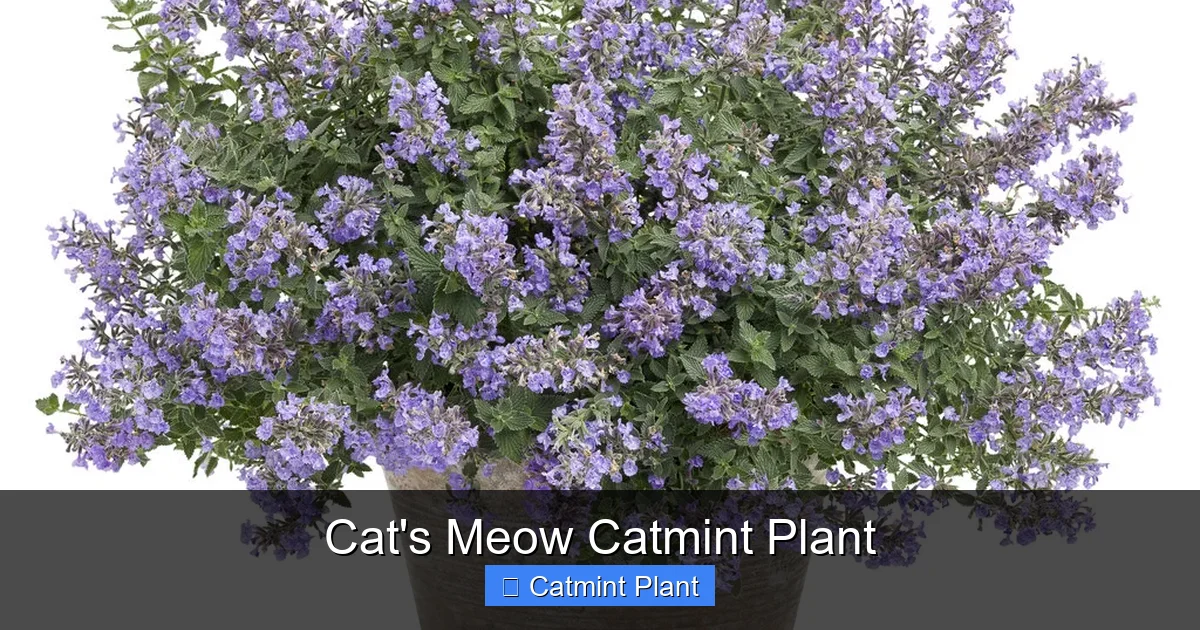
Cat’s Meow Catmint Plant
The Cat’s Meow Catmint Plant (Nepeta faassenii ‘Cat’s Meow’) is a standout perennial prized for its long-lasting lavender-blue flowers, aromatic gray-green foliage, and exceptional heat tolerance. This low-maintenance, deer-resistant plant blooms from late spring through fall, attracting bees, butterflies, and hummingbirds while delighting cats with its fragrant leaves.
If you have ever wandered through a garden center in late spring, you have likely spotted the Cat’s Meow Catmint Plant stealing the show. Its clouds of lavender-blue flowers seem to float above neat mounds of silvery foliage, drawing bees and butterflies like a magnet. But this plant is more than just a pretty face. It is a workhorse perennial that asks for little and gives back months of color, fragrance, and wildlife activity.
I first discovered the Cat’s Meow Catmint Plant when I was looking for something to fill a hot, baked corner of my front yard. Nothing else seemed to survive the afternoon sun and my occasional neglect. A nursery owner handed me a pot of this catmint and said, “Plant it, water it a few times, then forget about it.” She was not exaggerating. Three years later, that same plant is still the star of that bed, blooming its heart out from May through October.
Key Takeaways
- Long bloom season: Flowers from late spring to first frost with minimal deadheading
- Heat and drought tolerant: Thrives in hot, sunny locations once established
- Pollinator magnet: Attracts bees, butterflies, and hummingbirds all season
- Cat appeal: Contains nepetalactone that creates euphoric response in most cats
- Deer and rabbit resistant: Aromatic foliage deters browsing animals naturally
- Compact habit: Forms neat mounds 17-20 inches tall and 24-36 inches wide
- Low maintenance: Requires little water, fertilizer, or pruning to perform beautifully
Quick Answers to Common Questions
How tall does Cat’s Meow Catmint Plant grow?
The Cat’s Meow Catmint Plant reaches 17-20 inches tall and spreads 24-36 inches wide at maturity.
When does Cat’s Meow Catmint Plant bloom?
It blooms from late spring (typically May) through fall, often until the first hard frost, especially if sheared back after the first flush.
Is Cat’s Meow Catmint Plant deer resistant?
Yes, the aromatic foliage contains compounds that deer and rabbits find unpalatable, making it highly resistant to browsing.
Does Cat’s Meow Catmint Plant attract cats?
Yes, like other catmints, it contains nepetalactone which creates a euphoric response in approximately 70% of cats.
How often should I divide Cat’s Meow Catmint Plant?
Divide every 3-4 years in early spring to maintain vigor and prevent the center from becoming woody and unproductive.
📑 Table of Contents
- What Makes Cat’s Meow Catmint Plant Special
- Growing Cat’s Meow Catmint Plant Successfully
- Seasonal Care and Maintenance
- Design Ideas and Companion Plants
- Common Problems and Solutions
- Propagation Methods
- Cat’s Meow Catmint Plant vs. Other Popular Varieties
- Frequently Asked Questions About Cat’s Meow Catmint Plant
- Conclusion
What Makes Cat’s Meow Catmint Plant Special
A Breeding Breakthrough
The Cat’s Meow Catmint Plant is not just any catmint. It is a specific cultivar of Nepeta faassenii, bred by Kevin Hurd of Walters Gardens in Michigan. Introduced in 2017, it was selected for several improved traits over older varieties like ‘Walker’s Low’ or ‘Six Hills Giant.’ The breeding goal was simple: create a catmint that stays upright, blooms longer, handles heat better, and maintains a tidy shape without flopping open in the center.
Older catmints have a tendency to split apart in midsummer, leaving a bald spot in the middle of the plant. The Cat’s Meow Catmint Plant solves this with stronger stems and a more compact growth habit. It forms a dense, rounded mound that holds its shape all season. This makes it ideal for the front of borders, along pathways, or in containers where a neat appearance matters.
Botanical Background
Catmint belongs to the mint family, Lamiaceae, which explains its square stems and aromatic leaves. The genus name Nepeta likely comes from the ancient Etruscan city of Nepete, where the plant grew abundantly. The species faassenii honors J.H. Faassen, a Dutch nurseryman who developed early hybrids in the 1930s.
The Cat’s Meow Catmint Plant is a sterile hybrid, meaning it does not set viable seed. This is a huge advantage for gardeners. You will not find unwanted seedlings popping up everywhere. The plant puts all its energy into flowering instead of seed production, which contributes to its incredibly long bloom period.
Hardiness and Adaptability
This perennial thrives in USDA zones 3 through 8, covering a vast swath of North America. It handles winter lows down to -40°F (-40°C) in zone 3 and sails through the humid summers of zone 8. I have heard from gardeners in Minnesota who say it emerges reliably after brutal winters, and from gardeners in Georgia who praise its refusal to melt in August heat.
The Cat’s Meow Catmint Plant adapts to a range of soil types, from sandy loam to heavy clay, as long as drainage is decent. It prefers neutral to slightly alkaline soil but tolerates mildly acidic conditions. Once established, it laughs at drought. Its deep taproot seeks out moisture far below the surface, making it a star in water-wise gardens and xeriscapes.
Growing Cat’s Meow Catmint Plant Successfully
Choosing the Right Spot
Full sun is non-negotiable for the best performance. The Cat’s Meow Catmint Plant needs at least six hours of direct sunlight daily, and eight to ten hours is even better. In partial shade, the plant gets leggy, produces fewer flowers, and becomes more susceptible to powdery mildew. If you have a spot that bakes in afternoon sun, that is the sweet spot.
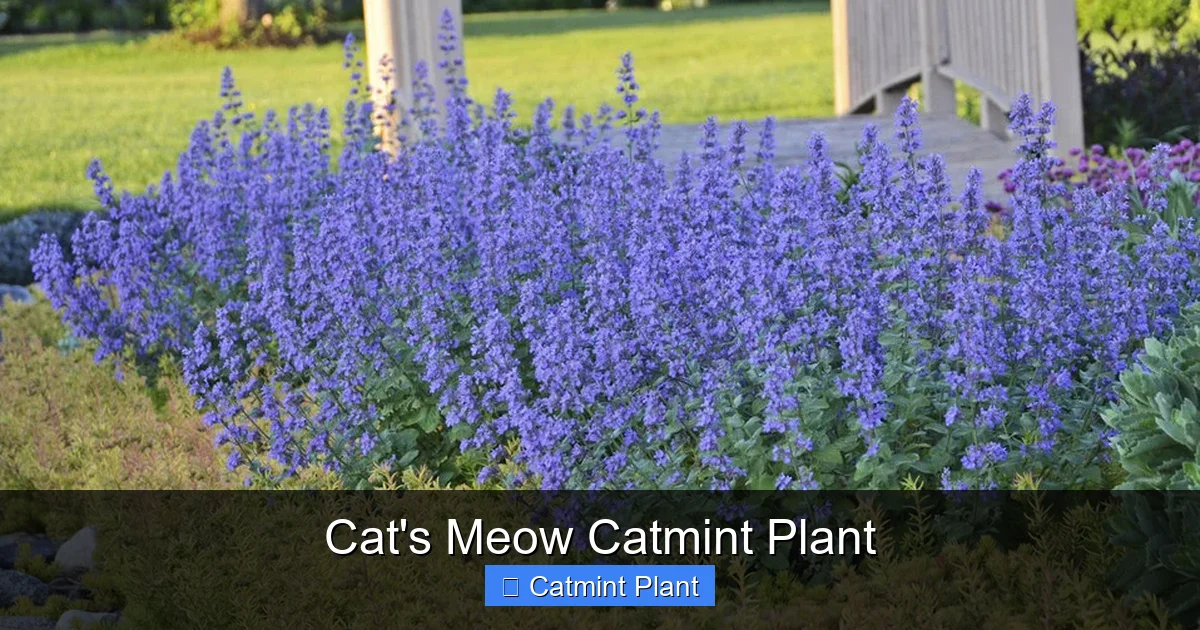
Visual guide about Cat’s Meow Catmint Plant
Image source: provenwinners.com
Good air circulation helps prevent fungal issues. Space plants 24 to 36 inches apart, depending on how quickly you want them to fill in. They will spread to about 30 inches wide at maturity. If you are planting a row along a walkway, 24-inch spacing creates a continuous hedge of color. For specimen plants in a mixed border, give them 36 inches to show off their natural mound shape.
Soil Preparation and Planting
While the Cat’s Meow Catmint Plant tolerates poor soil, it rewards a little preparation. Loosen the soil to a depth of 12 inches. Mix in a few shovelfuls of compost or aged manure to improve drainage and provide slow-release nutrients. If your soil is heavy clay, add coarse sand or fine gravel to the planting hole. The goal is soil that drains within an hour after a heavy rain.
Plant at the same depth it was growing in the pot. The crown, where stems meet roots, should sit at soil level. Backfill with your amended soil, firm gently, and water thoroughly to settle the roots. Apply a two-inch layer of shredded bark, pine straw, or gravel mulch, keeping it a few inches away from the crown. Mulch conserves moisture, suppresses weeds, and keeps foliage clean.
Watering for Establishment
New plants need consistent moisture for the first six to eight weeks. Water deeply twice a week if there is no rain. The goal is to encourage roots to grow downward. Frequent shallow watering creates shallow roots that cannot withstand drought. After the first growing season, the Cat’s Meow Catmint Plant is remarkably self-sufficient. In most climates, rainfall alone is enough. During extreme heat waves or prolonged dry spells, a deep soak every two weeks keeps it blooming strong.
Fertilizing: Less Is More
One of the biggest mistakes gardeners make with the Cat’s Meow Catmint Plant is overfeeding. Rich soil and heavy fertilizer produce lush, floppy growth with fewer flowers. A single application of balanced, slow-release fertilizer in early spring is plenty. Alternatively, top-dress with an inch of compost around the base. Avoid high-nitrogen fertilizers, which promote leaves at the expense of blooms. If your plant looks pale or stunted in midsummer, a light dose of liquid fertilizer at half strength can perk it up.
Seasonal Care and Maintenance
Spring Awakening
In early spring, you will see new gray-green shoots emerging from the base. This is the time to remove last year’s dead stems. Cut them back to about two inches above the ground using clean pruners. Be careful not to damage the tender new growth. If you left the stems standing for winter interest or bird habitat, now is the moment to clear them away.
Spring is also the ideal time to divide mature clumps. The Cat’s Meow Catmint Plant benefits from division every three to four years. The center of old plants can become woody and less productive. Dig up the entire clump in early spring just as growth begins. Use a sharp spade or knife to cut it into sections, each with healthy roots and several shoots. Replant divisions immediately, water well, and they will barely miss a beat.
Summer Bloom Management
The first flush of flowers typically begins in late May or early June, depending on your zone. The Cat’s Meow Catmint Plant covers itself in spikes of lavender-blue blossoms that last for weeks. To encourage a second heavy flush, shear the entire plant back by about half after the first bloom fades in midsummer. This sounds drastic, but it works wonders. Within two to three weeks, fresh foliage and flower buds will appear, carrying the show into fall.
If you prefer a less formal look, you can deadhead individual spent flower spikes instead of shearing. This takes more time but preserves the plant’s natural shape. Either way, removing spent blooms prevents the plant from wasting energy on seed production (though it is sterile, the hormonal signals are the same) and redirects it into new flowers.
Fall and Winter Preparation
As temperatures cool in autumn, the Cat’s Meow Catmint Plant often puts on a final flourish of bloom. Leave this late growth in place. The faded flower heads and foliage provide winter interest, catch snow for insulation, and offer shelter for beneficial insects. In cold climates, the dead tops protect the crown from freeze-thaw cycles.
Do not cut back in fall. Wait until early spring. If you garden in a wet climate or have heavy clay soil, you might remove the dead foliage in late fall to improve air circulation and reduce crown rot risk. But in most situations, leaving it standing is better for the plant.
Design Ideas and Companion Plants
Front-of-Border Star
The Cat’s Meow Catmint Plant shines at the front of a sunny border. Its 17-to-20-inch height makes it perfect for edging paths or defining bed lines. The soft, billowy texture contrasts beautifully with spiky plants like salvias, veronicas, or ornamental grasses. Plant it in drifts of three, five, or seven for maximum impact. The lavender-blue hue bridges warm and cool colors, making it a versatile mixer.
Try pairing it with yellow-flowering perennials like coreopsis, rudbeckia, or achillea for a classic complementary scheme. Or combine it with pink coneflowers, purple penstemons, and white shasta daisies for a cottage garden vibe. The silvery foliage also looks stunning against dark-leaved plants like Heuchera ‘Palace Purple’ or Sedum ‘Dark Magic.’
Rock Gardens and Slopes
Because it demands sharp drainage and thrives in lean soil, the Cat’s Meow Catmint Plant is a natural for rock gardens and sunny slopes. Its deep roots help stabilize soil on banks. Plant it among boulders, creeping thyme, sedums, and dwarf conifers. The lavender flowers soften hard edges and bring life to stone-heavy scenes.
On a slope, stagger plants in a zigzag pattern rather than straight rows. This looks more natural and slows water runoff. Mulch with gravel or crushed stone instead of organic mulch. Stone mulch reflects heat, keeps the crown dry, and enhances the Mediterranean feel.
Container Gardening
The Cat’s Meow Catmint Plant performs beautifully in containers. Choose a pot at least 14 inches wide and deep with drainage holes. Use a gritty, well-draining potting mix — cactus mix blended with regular potting soil works well. Container plants need more frequent watering than in-ground plants. Check daily in hot weather. Fertilize monthly with diluted liquid fertilizer during the growing season.
In containers, the Cat’s Meow Catmint Plant pairs well with other sun-loving, drought-tolerant plants. Try it with lantana, calibrachoa, or trailing verbena. Or make it the thriller in a “thriller-filler-spiller” combo with silver helichrysum as filler and white bacopa as spiller. In winter, move pots to an unheated garage or shed in zones 3-5. In zones 6-8, they can often stay outdoors if the pot is large enough to insulate roots.
Pollinator and Wildlife Gardens
If you are planting for pollinators, the Cat’s Meow Catmint Plant is a must-have. Its nectar-rich flowers feed bees, butterflies, and hummingbirds from late spring to frost. Plant it in groups to create a visible target for flying insects. Combine it with other pollinator favorites like monarda, agastache, echinacea, and asclepias for a continuous banquet.
And yes, cats love it. The compound nepetalactone in the leaves triggers a euphoric response in about 70% of cats. They may roll, rub, chew, or zone out on the plant. If you have outdoor cats, expect some flattened foliage. Most plants bounce back quickly. If you want to protect a prized specimen, surround it with a low wire cage or plant sacrificial catmint nearby for the cats to enjoy.
Common Problems and Solutions
Flopping and Leggy Growth
If your Cat’s Meow Catmint Plant flops open in the center, the usual culprits are too much shade, too much fertilizer, or not enough water during establishment. Move it to a sunnier spot in spring. Stop fertilizing. Shear it back hard after the first bloom to force bushy regrowth. Division every few years also rejuvenates the center.
Powdery Mildew
This fungal disease appears as a white, powdery coating on leaves. It thrives in humid conditions with poor air circulation. The Cat’s Meow Catmint Plant has good resistance, but it is not immune. Prevent it by spacing plants properly, watering at the base (not overhead), and ensuring full sun. If mildew appears, remove affected leaves and spray with a homemade solution of one tablespoon baking soda plus one teaspoon horticultural oil per gallon of water. Or use a commercial fungicide labeled for ornamentals.
Root Rot
Soggy soil is the enemy. The Cat’s Meow Catmint Plant will not tolerate wet feet, especially in winter. Symptoms include yellowing leaves, wilting despite moist soil, and a foul smell from the roots. Prevention is everything: plant in well-draining soil, avoid low spots where water collects, and do not overwater. If you catch it early, you might save the plant by digging it up, cutting away rotted roots, and replanting in a raised bed or container with gritty soil.
Aphids and Spider Mites
These pests occasionally appear, especially on stressed plants. Aphids cluster on new growth and flower buds. Spider mites cause stippled, bronzed leaves and fine webbing in hot, dry weather. A strong blast of water from the hose often dislodges them. Insecticidal soap or neem oil works for heavier infestations. Encourage beneficial insects like ladybugs and lacewings by avoiding broad-spectrum pesticides.
Propagation Methods
Division
Division is the easiest and most reliable way to propagate the Cat’s Meow Catmint Plant. Do it in early spring or early fall. Dig up the entire clump. Shake off excess soil. Pull or cut the clump into sections, each with three to five shoots and a good root system. Discard the woody center. Replant divisions at the same depth, water well, and mulch. Spring divisions often bloom the same year. Fall divisions need time to establish before winter.
Stem Cuttings
Take softwood cuttings in late spring or early summer. Choose non-flowering stems four to six inches long. Cut just below a leaf node. Remove lower leaves, leaving two or three pairs at the top. Dip the cut end in rooting hormone (optional but helpful). Insert into moist perlite, vermiculite, or a 50-50 mix of peat and sand. Cover with a clear plastic bag or dome to maintain humidity. Place in bright, indirect light. Roots form in three to four weeks. Transplant to individual pots and grow on until fall planting.
Layering
Simple layering works well because catmint stems root easily where they touch the ground. In spring, select a low, flexible stem. Bend it down to the soil. Make a small wound on the underside where it contacts the soil. Pin it down with a landscape staple or rock. Cover the wounded section with soil, leaving the tip exposed. Water regularly. By fall, roots will have formed. Cut the new plant from the mother and transplant.
Cat’s Meow Catmint Plant vs. Other Popular Varieties
Cat’s Meow vs. ‘Walker’s Low’
‘Walker’s Low’ is the classic catmint, named Perennial Plant of the Year in 2007. It is taller (24-30 inches), looser, and more prone to flopping. Its flowers are a deeper violet-blue. The Cat’s Meow Catmint Plant is more compact, stays upright better, and has a longer bloom season. Both are excellent, but Cat’s Meow wins for tidy gardens and small spaces.
Cat’s Meow vs. ‘Six Hills Giant’
‘Six Hills Giant’ is a large, vigorous variety reaching 36 inches tall and wide. It makes a bold statement but can overwhelm small beds. It also flops more readily. The Cat’s Meow Catmint Plant offers similar flower power in a package half the size. Choose ‘Six Hills Giant’ for large meadow plantings; choose Cat’s Meow for borders, containers, and urban gardens.
Cat’s Meow vs. ‘Junior Walker’
‘Junior Walker’ was bred as a compact version of ‘Walker’s Low,’ reaching 15-18 inches. It is very similar in size to the Cat’s Meow Catmint Plant. The difference is subtle: Cat’s Meow has slightly larger flowers, a more rounded habit, and better heat tolerance. Both are great choices. Cat’s Meow edges out ‘Junior Walker’ in southern gardens.
Cat’s Meow vs. Catnip (Nepeta cataria)
Catnip is the wild species that drives cats wild. It is weedy, sprawling, and not very ornamental. The flowers are small and white with pale purple spots. The Cat’s Meow Catmint Plant is a sterile hybrid bred for garden performance. It has showy lavender-blue flowers, attractive foliage, and a tidy habit. Cats still love it, but it will not reseed all over your yard.
Frequently Asked Questions About Cat’s Meow Catmint Plant
Is Cat’s Meow Catmint Plant invasive?
No. The Cat’s Meow Catmint Plant is a sterile hybrid that does not produce viable seeds. It will not spread by seed or become a nuisance. It slowly expands by clumping at the base, which is easily managed by division every few years. It is well-behaved in the garden.
Will it survive in zone 9 or 10?
The Cat’s Meow Catmint Plant is rated for zones 3-8. In zones 9-10, it may struggle with the combination of intense heat, humidity, and lack of winter chill. Some gardeners in zone 9 have success with afternoon shade and excellent drainage, but it is not guaranteed. In hot climates, consider heat-tolerant alternatives like Nepeta ‘Blue Wonder’ or Salvia nemorosa varieties.
Can I grow it indoors?
The Cat’s Meow Catmint Plant is not suited for long-term indoor growing. It needs full sun, seasonal temperature changes, and a winter dormancy period. You can bring a pot inside for a few weeks to enjoy the flowers, but it will decline without outdoor conditions. For indoor cat entertainment, grow true catnip (Nepeta cataria) in a sunny window instead.
Why is my plant not flowering?
Lack of flowers usually means insufficient sun (less than six hours), too much nitrogen fertilizer, or the plant needs division. Overcrowded, old clumps lose vigor. Also, if you pruned too late in spring, you may have removed flower buds. The Cat’s Meow Catmint Plant blooms on new growth, so only prune in early spring before buds form.
Is it safe for pets?
Yes. The Cat’s Meow Catmint Plant is non-toxic to dogs, cats, and horses. Cats may eat enough to cause mild stomach upset, but serious toxicity is not a concern. The ASPCA lists Nepeta species as non-toxic. As always, discourage excessive chewing of any plant material.
Can I use the leaves for tea?
Technically yes, but the Cat’s Meow Catmint Plant is bred for ornament, not flavor. Its leaves make a mild, minty tea with subtle citrus notes. True catnip (Nepeta cataria) or catmint varieties grown for culinary use (like Nepeta x faassenii ‘Dropmore’) have stronger flavor. If you want herbal tea, grow a dedicated culinary plant. Enjoy Cat’s Meow for its beauty.
Conclusion
The Cat’s Meow Catmint Plant earns its place in any sunny garden. It delivers months of lavender-blue blooms, feeds pollinators, resists deer and drought, and asks for almost nothing in return. Its tidy habit fits modern landscapes, while its long season bridges the gap between spring bulbs and fall asters. Whether you tuck one into a container, line a pathway with a dozen, or let it spill over a rock wall, this catmint performs with quiet reliability.
I have watched my original plant grow from a four-inch pot into a three-foot mound that stops visitors in their tracks. Children chase the butterflies it attracts. My neighbor’s cat visits daily for a blissful roll in the foliage. And I? I barely water it. The Cat’s Meow Catmint Plant is the rare perennial that makes you look like a gardening genius with minimal effort. Plant it once. Enjoy it for years. That is the kind of plant we all need more of.
Frequently Asked Questions
What is the difference between catmint and catnip?
Catmint (Nepeta faassenii) refers to ornamental, sterile hybrids bred for garden performance with showy flowers and tidy habits. Catnip (Nepeta cataria) is the wild species grown primarily for its effect on cats; it is weedy, less ornamental, and reseeds aggressively.
Can Cat’s Meow Catmint Plant grow in shade?
No, this plant requires full sun (at least 6 hours of direct sunlight) for best flowering and compact growth. In shade, it becomes leggy, produces fewer flowers, and is more prone to powdery mildew.
How do I prune Cat’s Meow Catmint Plant?
Cut back dead stems to 2 inches above ground in early spring. After the first bloom fades in midsummer, shear the entire plant back by half to encourage a second heavy flush of flowers and fresh foliage.
Is Cat’s Meow Catmint Plant drought tolerant?
Yes, once established (after the first growing season), it is highly drought tolerant due to its deep taproot. Water deeply but infrequently during extreme heat for best appearance.
Can I grow Cat’s Meow Catmint Plant in a container?
Absolutely. Use a pot at least 14 inches wide with drainage holes and a gritty, well-draining potting mix. Water more frequently than in-ground plants and fertilize monthly with diluted liquid fertilizer during the growing season.
Why is my Cat’s Meow Catmint Plant flopping open in the middle?
Flopping is usually caused by too much shade, over-fertilizing (especially with nitrogen), overcrowding, or an old clump that needs division. Move to full sun, stop fertilizing, shear back after first bloom, and divide every 3-4 years.