Calathea Pest Problems and Solutions
Calathea pest problems and solutions require quick action and consistent care. This guide covers the most common invaders, from tiny spider mites to cottony mealybugs, with step-by-step treatment plans and prevention strategies to keep your prayer plants thriving.
Calatheas are stunning plants. Their patterned leaves fold up at night like praying hands. But these beauties can be drama queens. They demand high humidity. They hate tap water. And they attract pests like magnets. If you own a calathea, you will face bugs at some point. It is not a matter of if. It is a matter of when.
Understanding calathea pest problems and solutions saves your plants. It saves your sanity. This guide walks you through every common pest. You will learn how to spot them. You will learn how to kill them. You will learn how to keep them gone. Let us dive in.
Key Takeaways
- Early detection matters: Inspect leaves weekly for webbing, sticky residue, or tiny moving dots to catch infestations before they spread.
- Isolate immediately: Move affected plants away from healthy ones at the first sign of pests to prevent cross-contamination.
- Start gentle: Use insecticidal soap, neem oil, or strong water sprays before resorting to systemic treatments.
- Humidity helps: Maintain 60-80% humidity to discourage spider mites and thrips, which thrive in dry conditions.
- Quarantine new plants: Keep new additions separate for two to three weeks to ensure they’re pest-free before joining your collection.
- Rotate treatments: Alternate between different control methods to prevent pests from developing resistance.
- Healthy plants resist pests: Proper watering, lighting, and fertilizing create strong plants that naturally fight off invaders.
Quick Answers to Common Questions
What is the most common pest on calatheas?
Spider mites are the most common calathea pest, especially in dry indoor air during winter months when humidity drops below 40%.
Can I use neem oil on calathea leaves?
Yes, but test on one leaf first. Calathea leaves are sensitive. Dilute neem oil to one teaspoon per quart of water and apply at dusk to prevent leaf burn.
How do I get rid of fungus gnats in calathea soil?
Let the top two inches of soil dry between waterings, use yellow sticky traps, and apply BTI (mosquito bits) as a soil drench weekly for three weeks.
Why do my calathea leaves have sticky residue?
Sticky honeydew indicates sap-sucking pests like mealybugs, scale, aphids, or whiteflies. Check leaf undersides and stems for the insects producing it.
Should I throw away a heavily infested calathea?
If the plant has lost most leaves, stems are rotting, or treatment costs exceed the plant’s value, disposal may be best. Bag securely and trash—do not compost.
📑 Table of Contents
- Why Calatheas Attract Pests
- Spider Mites: The Invisible Destroyers
- Mealybugs: The Cottony Invaders
- Thrips: The Silvery Scourge
- Fungus Gnats: The Annoying Cloud
- Scale Insects: The Armored Tanks
- Aphids: The Sap-Sucking Swarms
- Whiteflies: The Cloud of White
- Root Mealybugs: The Hidden Enemy
- Broad Mites and Cyclamen Mites: The Microscopic Menace
- General Treatment Principles
- Natural and Homemade Remedies
- Biological Controls
- Prevention: The Best Solution
- When to Give Up
- Seasonal Pest Patterns
- Calathea-Specific Considerations
- Building a Pest Management Kit
- Record Keeping
- Common Mistakes to Avoid
- Conclusion
Why Calatheas Attract Pests
Calatheas come from tropical rainforests. They love moisture. They love warmth. Guess what else loves those conditions? Bugs. Spider mites explode in dry air. But they also show up when humidity fluctuates. Mealybugs hide in leaf joints. Thrips rasp tender new growth. Fungus gnats breed in wet soil. Scale insects clamp onto stems.
Your care routine plays a role. Overwatering creates fungus gnat heaven. Underwatering stresses the plant. Stressed plants send out chemical signals. Pests detect those signals. They swarm. Low airflow makes it worse. Crowded plants touch leaves. Bugs walk from plant to plant like highways. Dirty leaves collect dust. Dust blocks light. Dust hides eggs. A clean, happy calathea resists pests better.
Spider Mites: The Invisible Destroyers
Identifying Spider Mites
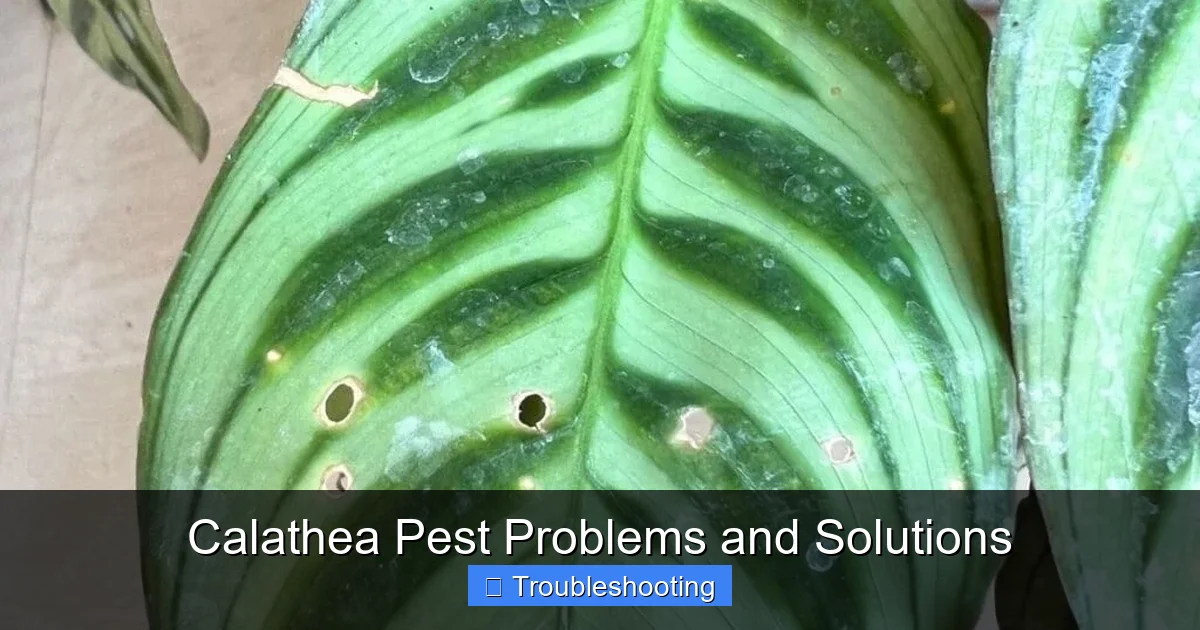
Spider mites are tiny. They are not insects. They are arachnids. They have eight legs. They are barely visible to the naked eye. You see their damage first. Look for stippling. Tiny yellow or white dots cover the leaf surface. The dots merge. Leaves turn bronze or gray. Fine webbing appears on leaf undersides. Webbing connects leaves to stems. In heavy infestations, webs cover the whole plant.
Visual guide about Calathea Pest Problems and Solutions
Image source: epicgardening.com
Hold a white paper under a leaf. Tap the leaf. Tiny specks fall. They crawl. Those are spider mites. Red ones are two-spotted spider mites. Green ones are also common. They suck chlorophyll from cells. Each puncture is a dot. Thousands of punctures kill the leaf.
Why Calatheas Get Spider Mites
Spider mites love heat. They love low humidity. Winter heating creates perfect conditions. Indoor air drops to twenty percent humidity. Calatheas want sixty to eighty percent. The mismatch stresses the plant. Mites reproduce fast. One female lays hundreds of eggs. Eggs hatch in three days. Adults emerge in five days. A generation takes one week. Populations explode.
Treating Spider Mites
Act fast. Isolate the plant. Take it to the shower. Spray every leaf. Top and bottom. Use lukewarm water. Strong pressure knocks mites off. Repeat every three days for two weeks. This breaks the life cycle.
Follow with insecticidal soap. Spray thoroughly. Cover every surface. Soap suffocates mites. It breaks down their waxy coating. Repeat weekly for a month. Neem oil works too. Mix one teaspoon neem oil per quart water. Add a drop of dish soap. Shake well. Spray at dusk. Neem disrupts feeding and reproduction. Do not use neem in bright light. It burns leaves.
For stubborn cases, use predatory mites. Phytoseiulus persimilis eats spider mites. Release them on the plant. They hunt and breed. They need humidity above sixty percent. They work great in greenhouses. Indoors, they may not establish.
Preventing Spider Mites
Humidity is your best weapon. Run a humidifier. Group plants together. Use pebble trays. Mist daily. Wipe leaves weekly with a damp cloth. This removes dust and early mites. Inspect new growth closely. Quarantine new plants for three weeks. Spider mites hate water. They hate humidity. Keep your calathea moist and happy.
Mealybugs: The Cottony Invaders
Identifying Mealybugs
Mealybugs look like tiny cotton balls. White. Fluffy. Waxy. They cluster in leaf axils. They hide where leaf meets stem. They hide on leaf undersides. They hide on roots. Yes, root mealybugs exist. You see white fuzz on soil surface. You see ants. Ants farm mealybugs for honeydew. Honeydew is sticky. It attracts sooty mold. Black fungus grows on honeydew.
Mealybugs are soft-bodied insects. They have piercing mouthparts. They suck sap. Leaves yellow. Growth stunts. New leaves emerge deformed. Heavy infestations kill plants.
Why Calatheas Get Mealybugs
Mealybugs hitchhike. They come on new plants. They come on contaminated soil. They come on tools. They crawl short distances. They spread fast in warm, humid conditions. Overfertilizing with nitrogen creates soft growth. Mealybugs love soft growth. Stressed plants are targets.
Treating Mealybugs
Isolate immediately. Dip a cotton swab in seventy percent isopropyl alcohol. Touch each bug. Alcohol dissolves their wax coating. They die instantly. Do this daily for two weeks. You will miss some. Eggs hide in crevices. They hatch later.
Spray with insecticidal soap. Cover all surfaces. Repeat weekly for a month. Systemic granules work for root mealybugs. Sprinkle on soil. Water in. The plant absorbs the chemical. Bugs die when they feed. Use as a last resort. Systemics harm beneficial insects.
Repot if roots are infested. Shake off all soil. Wash roots with lukewarm water. Dip roots in diluted neem oil. Repot in fresh, sterile mix. Clean the pot with bleach solution.
Preventing Mealybugs
Inspect every new plant. Check leaf joints. Check roots. Quarantine three weeks. Wipe leaves monthly. Alcohol wipes work. Do not overfertilize. Use balanced fertilizer at half strength. Keep ants away. Ants protect mealybugs. Use ant baits if needed.
Thrips: The Silvery Scourge
Identifying Thrips
Thrips are slender. One to two millimeters long. Yellow, brown, or black. They have fringed wings. They move fast. They jump. You see damage before bugs. Silvery patches on leaves. Black specks of frass. Distorted new growth. Flowers deform. Pollen scatters.
Thrips rasp leaf tissue. They suck out cell contents. Air enters empty cells. Light reflects differently. Silver patches appear. They lay eggs inside leaf tissue. Larvae feed. They drop to soil to pupate. Adults emerge. Cycle repeats.
Why Calatheas Get Thrips
Thrips enter on new plants. They fly through screens. They come on cut flowers. They love warm, dry conditions. They love bright light. Stressed plants attract them. They reproduce fast. One female lays eighty eggs. Eggs hatch in days. Generation takes two weeks.
Treating Thrips
Blue sticky traps catch adults. Thrips love blue. Hang traps near plants. Spray with spinosad. Spinosad is organic. It affects nervous system. Spray at dusk. Repeat weekly for three weeks. Spinosad kills larvae and adults. It has some systemic action.
Insecticidal soap works on contact. Must hit the bug. Thorough coverage essential. Neem oil disrupts growth. Beneficial nematodes in soil kill pupae. Steinernema feltiae seeks thrips pupae. Apply as soil drench. Predatory mites Amblyseius cucumeris eat thrips larvae. Release on leaves.
Prune heavily damaged leaves. Bag and trash them. Do not compost. Clean area thoroughly.
Preventing Thrips
Blue sticky traps always. Monitor weekly. Quarantine new plants. Inspect flowers before bringing inside. Keep weeds down outside. Thrips breed on weeds. Maintain humidity. Thrips hate moisture. Avoid broad-spectrum insecticides. They kill beneficials.
Fungus Gnats: The Annoying Cloud
Identifying Fungus Gnats
Tiny black flies. Two to four millimeters. Long legs. Long antennae. They fly weakly. They hover over soil. They run on soil surface. Larvae are tiny. Translucent. Black head. In top inch of soil. They eat fungus. They eat root hairs. They eat tender roots.
Adults do not bite. They do not damage plants directly. But they spread disease. They carry pythium. They carry fusarium. Larvae damage roots. Seedlings die. Established plants weaken. Growth slows. Leaves yellow.
Why Calatheas Get Fungus Gnats
Overwatering. That is the cause. Wet soil grows fungus. Fungus feeds larvae. Organic matter in soil feeds fungus. Peat moss holds water. Compost holds water. Poor drainage makes it worse. Saucers full of water. No airflow. Low light slows drying.
Treating Fungus Gnats
Let soil dry. Top two inches dry between waterings. This kills larvae. Yellow sticky traps catch adults. Place horizontally on soil. Replace when full. BTI (Bacillus thuringiensis israelensis) kills larvae. Mosquito bits. Sprinkle on soil. Water in. Repeat weekly for three weeks.
Beneficial nematodes work. Steinernema feltiae. Apply as drench. They enter larvae. Release bacteria. Larvae die in days. Hydrogen peroxide drench. One part three percent peroxide to four parts water. Water soil. Fizzes. Kills larvae on contact. Oxygenates roots.
Repot in fresh mix. Add perlite. Add orchid bark. Improve drainage. Remove saucers. Do not let pots sit in water.
Preventing Fungus Gnats
Water properly. Bottom water. Top stays dry. Use well-draining mix. Add sand or grit to top. Decorative gravel works. Prevents egg laying. Keep area clean. Remove dead leaves. Do not overpot. Large pots stay wet too long.
Scale Insects: The Armored Tanks
Identifying Scale
Scale looks like bumps. Brown, tan, or white. Round or oval. Stuck to stems. Stuck to leaf veins. Hard shell. Soft scale has no shell. Soft scale produces honeydew. Hard scale does not. Both suck sap. Leaves yellow. Stems die back. Honeydew brings sooty mold. Ants appear.
Crawlers are babies. Tiny. Mobile. They move to new spots. They settle. They build shells. They never move again. Females lay eggs under shell. Hundreds of eggs. Crawlers hatch. Cycle continues.
Why Calatheas Get Scale
Scale comes on new plants. Crawlers crawl short distances. Wind carries them. Ants move them. Stressed plants attract them. Low light. Improper watering. Dusty leaves. Scale hides well. You miss them until population explodes.
Treating Scale
Scrape off adults. Use fingernail. Use old toothbrush. Use plastic scraper. Be gentle. Do not damage bark. Follow with horticultural oil. Spray thoroughly. Oil suffocates. Cover every surface. Repeat in two weeks. Catch crawlers.
Systemic insecticide for heavy infestations. Imidacloprid granules. Water in. Plant absorbs. Kills feeding scale. Use carefully. Harms bees. Do not use on flowering plants outdoors. Indoors is safer.
Alcohol swabs for small numbers. Touch each scale. Dissolves covering. Kills insect. Insecticidal soap for crawlers. Spray weekly. Crawlers have no shell. Soap kills them.
Preventing Scale
Inspect stems monthly. Check leaf undersides. Check leaf veins. Quarantine new plants. Clean leaves monthly. Dust hides scale. Prune heavily infested stems. Improve plant health. Strong plants resist better.
Aphids: The Sap-Sucking Swarms
Identifying Aphids
Small. Pear-shaped. Green, black, pink, or white. Cluster on new growth. Cluster on flower buds. Cluster on leaf undersides. Two tailpipes (cornicles) on rear. They shed white skins. You see white flakes. Sticky honeydew coats leaves. Sooty mold follows. Ants farm them.
Aphids reproduce fast. Females birth live young. No eggs needed. Already pregnant when born. Population doubles in days. Winged forms appear when crowded. They fly to new plants.
Why Calatheas Get Aphids
New growth attracts them. Tender. Nutrient-rich. High nitrogen fertilizer creates soft growth. Open windows let them in. New plants bring them. They spread fast indoors. No natural predators inside.
Treating Aphids
Blast with water. Strong shower spray. Knocks them off. They cannot climb back well. Repeat daily for a week. Insecticidal soap. Spray thoroughly. Repeat weekly. Neem oil. Disrupts feeding. Stops reproduction. Ladybugs eat aphids. Release indoors at night. They stay on plant. Lacewings work too.
Prune infested tips. Bag and trash. Clean area. Sticky traps catch winged forms.
Preventing Aphids
Avoid high nitrogen fertilizer. Use balanced feed. Inspect new growth weekly. Quarantine new plants. Screen windows. Keep ants away. Ants protect aphids.
Whiteflies: The Cloud of White
Identifying Whiteflies
Tiny white moths. One to two millimeters. Fly up in cloud when disturbed. Settle on leaf undersides. Lay eggs in arcs. Nymphs are flat. Scale-like. Translucent. Suck sap. Leaves yellow. Leaves drop. Honeydew. Sooty mold. Virus transmission.
Why Calatheas Get Whiteflies
Come on new plants. Fly through screens. Love warm, humid conditions. Greenhouses breed them. They love soft growth. They reproduce fast. Generation in three weeks.
Treating Whiteflies
Yellow sticky traps. Whiteflies love yellow. Hang at plant level. Vacuum adults. Handheld vac. Early morning. They are sluggish. Empty vac into soapy water. Insecticidal soap. Spray undersides. Repeat every three days. Neem oil. Spinosad. Systemic for heavy cases.
Parasitic wasps. Encarsia formosa. Lay eggs in whitefly nymphs. Wasp larvae eat nymph. Release weekly. Works in greenhouses. Harder indoors.
Preventing Whiteflies
Yellow traps always. Inspect leaf undersides weekly. Quarantine new plants. Screen vents. Remove weeds outside. Do not overfertilize.
Root Mealybugs: The Hidden Enemy
Identifying Root Mealybugs
Plant declines. No obvious reason. Leaves yellow. Growth stops. Wilts despite water. White fuzz on soil surface. White fuzz on pot bottom. White fuzz on roots. Tiny white bugs in soil. Cottony egg sacs.
Why Calatheas Get Root Mealybugs
Contaminated soil. Infested new plants. Shared tools. Shared water trays. They spread through drainage holes. They love moist, organic soil.
Treating Root Mealybugs
Unpot plant. Shake off soil. Wash roots thoroughly. Lukewarm water. Remove all soil. Inspect roots. Trim damaged roots. Dip roots in hot water. One hundred twenty degrees Fahrenheit. Ten minutes. Kills bugs. Does not hurt plant. Or dip in neem oil solution. Repot in sterile mix. Clean pot with bleach. Systemic granules in new soil.
Preventing Root Mealybugs
Use sterile potting mix. Do not reuse soil. Clean pots. Quarantine new plants. Check roots before potting. Water from bottom. Avoid cross-contamination.
Broad Mites and Cyclamen Mites: The Microscopic Menace
Identifying Broad and Cyclamen Mites
Too small to see. Damage is the clue. New growth twisted. New growth hardened. Leaves curl downward. Leaves become brittle. Bronze or russet coloring. Flowers deform. Buds blast. Plant looks stunted. Damage resembles herbicide injury.
Why Calatheas Get These Mites
High humidity. Low light. Cool temperatures. They spread on hands. On tools. On clothing. On air currents. They hide in bud scales. They hide in leaf folds.
Treating Broad and Cyclamen Mites
Difficult. Miticides needed. Abamectin. Spiromesifen. Forbid. Judo. Rotate chemistries. Resistance develops fast. Remove damaged growth. Bag and trash. Treat weekly for a month. Predatory mites Neoseiulus californicus eat them. Release on plants.
Preventing Broad and Cyclamen Mites
Quarantine strictly. Do not touch healthy plants after handling suspect plants. Wash hands. Change clothes. Clean tools. Avoid overcrowding. Good airflow.
General Treatment Principles
Isolate First
Always isolate. Move plant away from others. Minimum three feet. Better in another room. Wash hands after handling. Change clothes if heavy infestation. Pests hitchhike on you.
Identify Correctly
Wrong treatment wastes time. Use magnifying glass. Ten power minimum. Take photos. Compare to guides. Ask experts. Post in plant groups. Get confirmation before spraying.
Start Least Toxic
Water spray. Insecticidal soap. Horticultural oil. Neem oil. Physical removal. Escalate only if needed. Systemics last resort. Protect yourself. Wear gloves. Wear mask. Ventilate area.
Repeat Treatments
One spray never works. Eggs survive. Pupae survive. Hidden adults survive. Life cycles vary. Spider mites: three days to hatch. Five days to adult. Treat every three days for two weeks. Mealybugs: eggs hatch in week. Treat weekly for a month. Thrips: pupae in soil. Treat weekly for three weeks. Mark calendar. Do not skip.
Treat the Environment
Clean the area. Vacuum floor. Wipe shelves. Wash pots. Wash trays. Clean tools. Pests hide in cracks. Eggs in debris. Reinfection comes from environment.
Natural and Homemade Remedies
Insecticidal Soap Recipe
One tablespoon pure castile soap. One quart water. Shake gently. Test on one leaf. Wait twenty-four hours. No damage? Spray plant. Cover all surfaces. Rinse after two hours if sensitive. Repeat weekly.
Neem Oil Spray
One teaspoon cold-pressed neem oil. One quart warm water. Few drops dish soap. Emulsifier. Shake vigorously. Use within eight hours. Neem degrades. Spray at dusk. Cover all surfaces. Repeat weekly.
Alcohol Spray
One part seventy percent isopropyl alcohol. One part water. Spray mealybugs directly. Spot treat. Do not soak plant. Alcohol burns leaves. Test first.
Garlic Pepper Spray
One bulb garlic. One tablespoon cayenne. One quart water. Blend. Strain. Add drop soap. Spray. Repels many pests. Smells strong. Use outdoors.
Sticky Traps
Yellow for whiteflies, aphids, fungus gnats. Blue for thrips. White for broad mites. Hang at plant level. Replace when covered. Monitor numbers. Declining catches means treatment works.
Biological Controls
Predatory Mites
Phytoseiulus persimilis for spider mites. Neoseiulus californicus for broad mites. Amblyseius cucumeris for thrips. Amblyseius swirskii for whiteflies and thrips. Release on leaves. They hunt. They breed. Need humidity. Need prey. Do not use pesticides with them.
Beneficial Insects
Ladybugs for aphids. Release at night. Mist plant first. They stay. Lacewings for aphids, mealybugs, thrips. Larvae eat everything. Parasitic wasps for whiteflies, aphids. Tiny. Specialized. Nematodes for fungus gnats, thrips pupae. Soil drench. Water soil first. Keep moist.
Microbial Controls
BTI for fungus gnats. Beauveria bassiana for whiteflies, aphids, thrips. Fungus infects insects. Spray thoroughly. Repeat. Chromobacterium subtsugae for thrips, mites. Organic. OMRI listed.
Prevention: The Best Solution
Quarantine Protocol
Every new plant. Every single one. Three weeks minimum. Separate room ideal. Separate shelf minimum. Inspect daily. Magnifying glass. Check roots at week two. Treat preventively if desired. Neem oil spray at week one and two. Only if no sensitivity.
Regular Inspection Routine
Weekly leaf check. Top and bottom. Leaf joints. Stem. Soil surface. New growth. Magnifying glass. Yellow sticky traps always. Blue sticky traps always. Check traps weekly. Count pests. Track trends. Early detection saves plants.
Cultural Practices
Proper watering. Not too wet. Not too dry. Well-draining mix. High humidity. Sixty to eighty percent. Good airflow. Fan on low. Not blowing directly. Clean leaves. Monthly wipe. Damp cloth. Remove dust. Remove eggs. Remove honeydew. Balanced fertilizer. Half strength. Monthly in growing season. None in winter. Repot annually. Fresh mix. Inspect roots.
Environmental Management
Clean growing area. No plant debris. No weeds. Screen windows. Door sweeps. Separate indoor and outdoor tools. Wash hands between plants. Disinfect pruners. Alcohol or bleach. Rotate plant positions. Breaks pest cycles. Improves light exposure.
When to Give Up
Sometimes the plant is too far gone. Roots destroyed. Stem rotted. All leaves damaged. Treatment cost exceeds plant value. Rare variety? Worth saving. Common variety? Replace it. Dispose properly. Bag plant. Seal bag. Trash. Not compost. Clean area thoroughly. Learn from it. Buy healthy replacement.
Seasonal Pest Patterns
Winter
Spider mites peak. Dry heated air. Low light stresses plants. Fungus gnats from overwatering. Scale populations grow slowly. Mealybugs persist.
Spring
New growth attracts aphids. Thrips emerge. Whiteflies increase. Spider mites decline with humidity rise. Fungus gnats peak with frequent watering.
Summer
Thrips explode. Whiteflies peak. Spider mites if AC dries air. Mealybugs thrive. Scale crawlers active. Fungus gnats constant.
Fall
Bringing plants in brings pests. Inspect thoroughly. Quarantine. Spider mites return with heating. Fungus gnats from reduced light.
Calathea-Specific Considerations
Sensitive Leaves
Calathea leaves are thin. Delicate. Sensitive to chemicals. Test sprays first. One leaf. Twenty-four hours. Watch for burn. Watch for curl. Dilute more if needed. Avoid oils in bright light. Avoid soaps in hot weather. Rinse after treatment if unsure.
Humidity Requirements
High humidity prevents spider mites. But encourages fungus gnats. Balance is key. Airflow prevents fungal issues. Humidifier with fan. Pebble trays. Group plants. Monitor with hygrometer.
Water Quality
Calatheas hate minerals. Distilled water. Rain water. RO water. Tap water causes brown tips. Brown tips look like pest damage. Know the difference. Mineral burn is uniform. Pest damage is random.
Dormancy Periods
Some calatheas slow in winter. Less water. Less fertilizer. Pests still active. Keep inspecting. Keep humidity up. Do not let dry out completely.
Building a Pest Management Kit
Essential Tools
Ten power magnifying glass. Yellow sticky traps. Blue sticky traps. Spray bottle. One quart. One gallon pump sprayer. Soft brush. Old toothbrush. Cotton swabs. Seventy percent isopropyl alcohol. Pure castile soap. Cold-pressed neem oil. Horticultural oil. Insecticidal soap concentrate. BTI mosquito bits. Beneficial nematodes. Predatory mite sachets. Gloves. N95 mask. Goggles. Notebook. Calendar.
Optional Advanced
Systemic granules. Spinosad concentrate. Abamectin. Forbid miticide. Parasitic wasp cards. Lacewing eggs. Ladybug container. Hygrometer. Soil moisture meter. pH meter. Grow lights for quarantine area.
Record Keeping
Track everything. Date. Pest found. Plant affected. Treatment used. Dilution. Frequency. Results. Photos. Patterns emerge. You learn what works. You learn timing. You prevent future outbreaks. Share records with plant friends. Collective knowledge helps everyone.
Common Mistakes to Avoid
Waiting too long. One bug becomes thousands. Using wrong product. Fungicide on mites. Insecticide on fungus. Over-treating. Burning leaves. Killing beneficials. Under-treating. Stopping too soon. Eggs hatch. Cycle restarts. Not isolating. Spreading to collection. Not cleaning environment. Reinfection. Using same chemistry. Resistance develops. Rotate modes of action. Ignoring cultural causes. Fix the reason pests came.
Conclusion
Calathea pest problems and solutions require vigilance. They require knowledge. They require patience. You will face pests. Every grower does. The difference is how fast you respond. How thoroughly you treat. How well you prevent. This guide gives you the tools. Identification guides. Treatment protocols. Prevention strategies. Natural options. Chemical options. Biological options.
Start with prevention. Quarantine everything. Inspect weekly. Keep plants healthy. Happy plants resist pests. When pests appear, act fast. Identify correctly. Treat appropriately. Repeat consistently. Clean environment. Track results. Learn continuously.
Your calatheas will reward you. Those stunning patterns. That nightly prayer dance. Those new leaves unfurling. Worth every effort. Keep growing. Keep learning. Keep those leaves clean and pest-free.
Frequently Asked Questions
How often should I inspect my calathea for pests?
Inspect your calathea weekly during watering. Check leaf undersides, leaf joints, stems, and soil surface with a 10x magnifying glass. Early detection makes treatment much easier and prevents spread to other plants.
Can calathea recover from severe spider mite damage?
Yes, calatheas can recover if the root system is healthy. Remove heavily damaged leaves, increase humidity to 70-80%, treat consistently for two weeks, and provide optimal care. New growth will emerge clean.
Are systemic insecticides safe for indoor calatheas?
Systemic granules like imidacloprid work well indoors for tough infestations but should be a last resort. They can harm beneficial insects if the plant flowers and pollinators access it. Always follow label directions carefully.
What humidity level prevents spider mites on calathea?
Maintain 60-80% relative humidity to discourage spider mites. Use a humidifier, pebble trays, or group plants together. Monitor with a hygrometer. Spider mites thrive below 50% humidity and reproduce rapidly in dry air.
How long should I quarantine a new calathea?
Quarantine new calatheas for at least three weeks in a separate room. Inspect daily with a magnifying glass. Treat preventively with neem oil at week one and two if the plant shows no sensitivity. Check roots at week two.
Why do pests keep coming back after treatment?
Recurring pests usually mean eggs or pupae survived, the environment wasn’t cleaned, treatments stopped too early, or cultural issues (overwatering, low humidity) weren’t fixed. Treat for the full life cycle, clean the growing area, and address the underlying cause.