How to Choose Best Bamboo for Basil
Choosing the right bamboo for basil transforms your herb garden with natural, sustainable support. This guide reveals the top bamboo varieties, sizing tips, and installation methods that help basil thrive all season long.
Growing basil is one of the most rewarding experiences for any home gardener. That first whiff of sweet, peppery aroma when you brush past the plants. The way fresh leaves transform a simple pasta sauce into something extraordinary. But here is something many gardeners overlook. The secret to truly spectacular basil often lies in what you use to support it. Enter bamboo. This humble grass family member might just be the best friend your basil ever had.
I learned this lesson the hard way. My first basil plants flopped over after a summer storm. Stems snapped. Leaves touched damp soil and developed fungal spots. The harvest was disappointing. Then a gardening mentor handed me a bundle of bamboo stakes. “Try these,” she said. “They breathe. They flex. They last.” That season changed everything. My basil grew taller. The stems stayed strong. Air circulated freely. Disease pressure dropped. The harvest doubled. Now I never grow basil without bamboo nearby.
But not all bamboo works equally well. The diameter matters. The treatment matters. The length matters. Even the species matters. Choosing the wrong bamboo can introduce chemicals to your food garden. It can snap under the weight of a mature plant. It can rot before the season ends. This comprehensive guide walks you through every consideration so you can select the perfect bamboo for your specific basil setup. Whether you grow in raised beds, containers, or a sunny windowsill, the right bamboo makes all the difference.
Key Takeaways
- Bamboo stakes provide essential support: Tall basil varieties need sturdy stakes to prevent stem breakage and promote upright growth.
- Choose untreated, chemical-free bamboo: Avoid bamboo treated with pesticides or preservatives that could leach into soil and affect edible herbs.
- Match bamboo diameter to basil variety: Use 1/2-inch stakes for compact basil and 3/4-inch to 1-inch for large varieties like Genovese or Thai basil.
- Bamboo trellises maximize vertical space: Perfect for container gardens and small spaces, allowing basil to grow upward with better air circulation.
- Bamboo mulch regulates soil moisture: Shredded bamboo retains moisture, suppresses weeds, and slowly releases silica that strengthens plant cell walls.
- Proper installation prevents root damage: Place stakes at planting time or carefully insert them 3-4 inches from the stem to avoid disturbing established roots.
- Rotate and replace bamboo annually: Natural bamboo degrades over time; plan to refresh stakes and mulch each growing season for best results.
Quick Answers to Common Questions
What diameter bamboo stake is best for standard sweet basil?
Half-inch diameter stakes provide ideal support for standard sweet basil varieties like Genovese, offering enough strength for heavy leaf sets without being visually obtrusive.
Can I use bamboo stakes from the hardware store for my edible basil garden?
Only if they are labeled untreated and chemical-free. Many hardware store stakes are treated with fungicides or methyl bromide for shipping, which can leach into your soil and be absorbed by basil roots.
How deep should I drive bamboo stakes for basil plants?
Drive stakes twelve to fourteen inches deep for four-foot stakes, following the one-third in ground, two-thirds above ground rule for optimal stability.
Does bamboo mulch really benefit basil plants?
Yes, bamboo mulch retains moisture, suppresses weeds, and slowly releases silica which strengthens basil cell walls, improving disease resistance and drought tolerance.
How long do bamboo stakes last in the garden?
Natural bamboo stakes typically last one to two seasons in ground contact. Above-ground structures like teepees and trellises can last three to four years if stored dry during winter.
📑 Table of Contents
- Understanding Why Basil Needs Bamboo Support
- Types of Bamboo Products for Basil Gardens
- Selecting the Right Bamboo Species and Quality
- Matching Bamboo to Your Basil Variety and Growing Method
- Installation Techniques for Maximum Effectiveness
- Maintenance, Longevity, and Seasonal Care
- Troubleshooting Common Bamboo and Basil Issues
- Advanced Bamboo Techniques for Basil Enthusiasts
- Conclusion
Understanding Why Basil Needs Bamboo Support
The Growth Habit of Basil Plants
Basil grows fast. Really fast. Under ideal conditions, a seedling becomes a bushy two-foot plant in just six weeks. That rapid growth creates soft, succulent stems. Unlike woody herbs such as rosemary or thyme, basil stems remain herbaceous throughout their life. They contain high water content. They bend easily. A heavy rainstorm. A strong wind gust. Even the weight of abundant leaves after fertilizing. Any of these can cause stems to bend permanently or snap entirely.
Different basil varieties exhibit different growth habits. Sweet basil and Genovese basil grow tall and upright, often reaching twenty-four to thirty inches. Thai basil develops a more branching structure but still achieves similar heights. Dwarf varieties like Spicy Globe or Pistou stay compact at eight to twelve inches. Purple basil varieties tend toward legginess without regular pinching. Understanding your specific variety helps determine the support system you need.
Benefits Beyond Physical Support
Bamboo does more than hold plants upright. It creates microclimates. Stakes spaced properly allow air to flow through the canopy. This reduces humidity around leaves. Lower humidity means less powdery mildew. Less downy mildew. Fewer fungal issues overall. Basil is notoriously susceptible to these diseases, especially in humid climates or when overhead watering is used.
Bamboo also provides subtle shade filtering. In intense afternoon sun, the thin shadows cast by bamboo stakes can prevent leaf scorch on tender new growth. The stakes themselves absorb heat during the day and release it slowly at night, creating a more stable temperature zone around the root crown. Some gardeners swear this extends the growing season by a week or two on each end.
Comparing Bamboo to Other Support Options
Metal stakes conduct heat. In summer, they can burn tender stems where they touch. In spring and fall, they pull heat from the plant. Plastic stakes become brittle under UV exposure. They snap unexpectedly. They also leach microplastics into your soil over time. Wooden stakes rot. They harbor fungal spores. They need replacement annually. Treated lumber introduces arsenic and copper compounds into your herb garden.
Bamboo avoids all these issues. It has a natural silica content that resists decay. It flexes without breaking. It has low thermal conductivity. It is completely biodegradable. At season end, you can chop it up and add it to compost. It returns silica to the soil, benefiting future crops. The hollow structure makes it lightweight yet strong. A half-inch bamboo stake weighs a fraction of a same-diameter wooden dowel but supports comparable weight.
Types of Bamboo Products for Basil Gardens
Bamboo Stakes and Poles
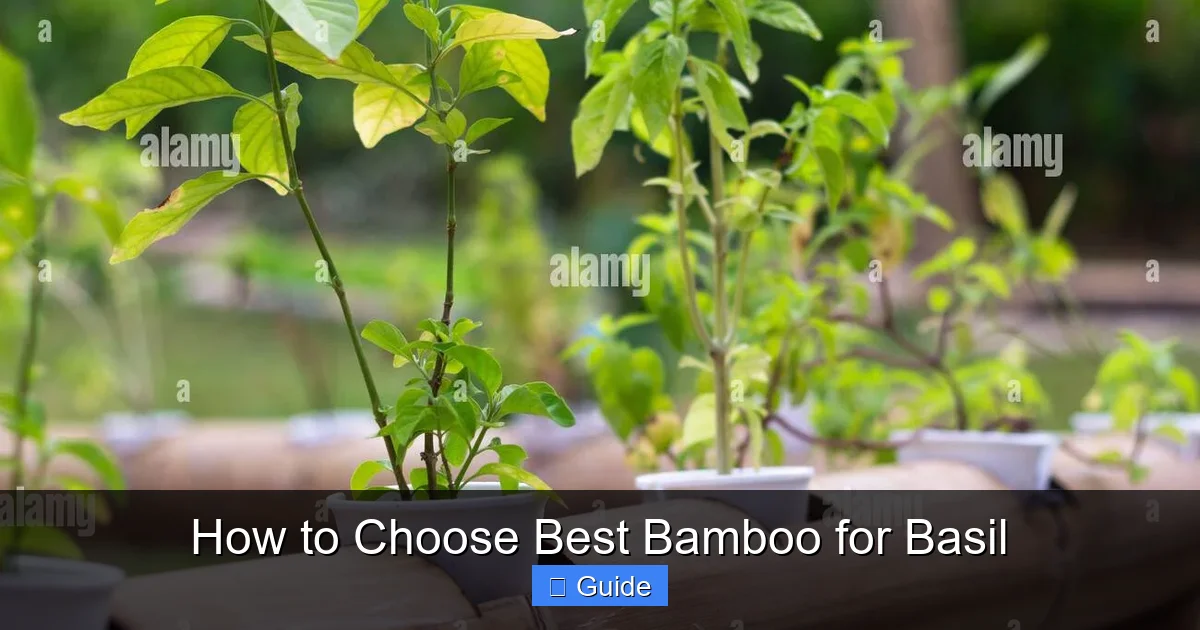
Individual stakes are the most versatile bamboo product for basil. They come in lengths from two feet to eight feet. For basil, four-foot and five-foot stakes work best. This allows twelve to eighteen inches in the ground for stability, leaving thirty to thirty-six inches above ground for plant support. Diameter options typically range from three-eighths inch to one inch.
Visual guide about How to Choose Best Bamboo for Basil
Image source: c8.alamy.com
Three-eighths inch stakes suit dwarf basil varieties and container growing. They disappear visually among the foliage. Half-inch stakes are the workhorse size. They support standard sweet basil, Genovese, and most culinary varieties. Five-eighths inch to three-quarters inch stakes handle the heavy branching of Thai basil, holy basil, and large-leaf Italian varieties. One-inch poles work for creating teepee structures or supporting multiple plants.
Look for stakes with nodes intact. The nodes are the raised rings along the bamboo. They prevent splitting when you drive the stake into soil. They also provide natural stopping points for ties. Stakes without nodes split easily. They also rotate in the ground, providing less stable support. Quality stakes have smooth, clean cuts at both ends. Rough cuts indicate hasty processing and potential splinters.
Bamboo Trellis Panels
Pre-made trellis panels save installation time. They typically measure three by six feet or four by eight feet. The grid pattern varies. One-inch squares provide dense support for bushy varieties. Two-inch squares allow easier harvesting access. Four-inch squares work for tall, single-stem training. Panels can be mounted vertically on stakes or angled against a wall.
For basil, I prefer the one-inch or two-inch grid. Basil stems are soft. They weave easily through small openings. The denser grid distributes weight across more contact points. This prevents individual stems from bearing too much load. Panels should be made from split bamboo, not whole poles. Split bamboo lies flatter. It creates a smoother surface for stems to rest against. Whole pole grids create pressure points that can damage stems.
Bamboo Teepee and Obelisk Structures
Teepees add vertical drama to herb gardens. Three to six poles tied at the top create a cone shape. Basil plants at the base climb the poles. This works beautifully for vining basil varieties like African Blue or Wild Magic. These varieties can reach four feet or more. The teepee keeps them contained and upright.
Obelisks are freestanding pyramid structures. They often feature decorative finials. They work well in formal herb gardens or as focal points in container groupings. Look for obelisks with horizontal crosspieces every six to eight inches. These provide resting points for basil branches. Pure vertical poles offer nothing for lateral branches to grab.
Bamboo Containers and Planters
Bamboo planters bring rustic elegance to patios and balconies. They come as rectangular troughs, round pots, or half-barrel styles. The natural material insulates roots from temperature extremes. In summer, soil stays cooler than in black plastic pots. In spring, soil warms faster than in ceramic. This extends the growing window for heat-loving basil.
Ensure bamboo containers have adequate drainage. Many decorative versions lack holes. Drill your own if needed. Line the interior with landscape fabric to prevent soil loss through gaps. The fabric also slows moisture evaporation from the sides. Bamboo planters typically last two to three seasons before the bottom rots. Elevate them on pot feet to maximize lifespan.
Bamboo Mulch and Chips
Shredded bamboo mulch is a hidden gem for basil beds. It creates a beautiful, uniform tan surface. It suppresses weeds effectively. It retains moisture without matting like wood chips. As it breaks down, it releases silica. Silica strengthens plant cell walls. This makes basil more resistant to pests and diseases. It also improves drought tolerance.
Apply a two-inch layer around established plants. Keep mulch one inch away from stems to prevent crown rot. Refresh annually as it decomposes. Avoid fresh bamboo chips from unknown sources. They may contain allelopathic compounds that inhibit seed germination. Aged or composted bamboo mulch is safe. Some commercial bamboo mulch is heat-treated to eliminate allelopathy.
Selecting the Right Bamboo Species and Quality
Common Bamboo Species Used for Garden Stakes
Not all bamboo is created equal. The species determines strength, durability, and straightness. Tonkin cane (Pseudosasa amabilis) is the gold standard for garden stakes. It grows straight. It has thick walls relative to diameter. It has high silica content. It resists splitting and rotting. Most premium garden stakes come from Tonkin cane plantations in China.
Moso bamboo (Phyllostachys edulis) is the giant timber bamboo. Poles exceed four inches diameter. It is overkill for basil but useful for heavy trellis posts. The walls are thick. The internodes are long. It is very strong but heavy and expensive. Arrow bamboo (Pseudosasa japonica) produces slender, straight canes ideal for small stakes. It is cold-hardy and grown in many temperate regions.
Golden bamboo (Phyllostachys aurea) has distinctive compressed internodes at the base. It is attractive but less straight. It works for decorative obelisks where appearance matters more than perfect straightness. Black bamboo (Phyllostachys nigra) offers stunning ebony canes. It is prized for decorative structures. The color fades to brown in full sun unless sealed.
Identifying Quality Bamboo Stakes
Hold a stake horizontally. Look down its length. It should be straight or have a very gentle, uniform curve. Sharp bends indicate poor growing conditions or improper harvesting. Roll it on a flat surface. It should roll smoothly without wobbling. Check the wall thickness at the cut ends. Thicker walls mean more strength and slower decay. Thin-walled bamboo crushes easily and rots fast.
Examine the surface. It should be smooth and glossy. Dull, chalky surfaces indicate old, weathered bamboo. This bamboo has lost its protective silica layer. It will degrade quickly in soil. The color should be uniform straw to light tan. Dark patches suggest fungal staining. Green patches mean it was harvested too young. Immature bamboo lacks structural lignin. It bends permanently under load.
Check the nodes. They should be prominent and intact. Damaged nodes split when driven into soil. The internode length should be consistent. Very long internodes (over eighteen inches) indicate fast growth in ideal conditions. This bamboo tends to be less dense. Very short internodes suggest stress growth. It may be brittle. Twelve to sixteen inches is ideal for garden stakes.
Avoiding Treated and Contaminated Bamboo
This is critical for edible gardens. Some imported bamboo stakes are treated with methyl bromide for pest quarantine compliance. Others receive fungicide dips to prevent mold during shipping. Some are coated with petroleum-based sealants for appearance. None of these belong in your basil bed. The chemicals leach into soil with every watering. Your basil roots absorb them. You eat them.
Look for labels stating “untreated,” “chemical-free,” or “organic compliant.” Reputable garden centers source from suppliers who heat-treat rather than chemically treat. Heat treatment kiln-dries bamboo at 140 degrees Fahrenheit for thirty minutes. This kills pests without residues. Ask your supplier about treatment methods. If they cannot answer, buy elsewhere.
Beware of “bamboo” stakes made from bamboo composite or bamboo fiber bonded with resins. These are essentially plastic. They do not biodegrade. They may contain formaldehyde binders. True bamboo stakes are solid cane sections, not manufactured products. The price difference is small. The peace of mind is enormous.
Sourcing Sustainable Bamboo
Bamboo is inherently sustainable. It grows rapidly. It regenerates from roots after harvest. It requires no replanting. It sequesters carbon aggressively. But transportation matters. Bamboo shipped from China to North America carries a carbon footprint. Look for regionally grown bamboo where possible. Several U.S. farms now produce garden stakes from locally grown species.
Certifications provide assurance. FSC (Forest Stewardship Council) certification for bamboo exists but is less common than for timber. Some suppliers carry “Grown in USA” labels. Others participate in verified sustainable harvest programs. Ask questions. Support suppliers who prioritize transparency. Your basil garden benefits from the same ethical care you put into plant selection.
Matching Bamboo to Your Basil Variety and Growing Method
Stake Sizing for Different Basil Types
Sweet basil, Genovese, and Italian large-leaf varieties grow twenty-four to thirty inches tall with heavy leaf sets. Use half-inch diameter stakes, four feet long. Drive them twelve inches deep. This leaves thirty-six inches above ground. The plant will reach the top third by late summer. Space stakes eight inches apart in rows. Place one stake per plant, three inches from the stem.
Thai basil, holy basil (tulsi), and African blue basil branch more vigorously. They become wide as they are tall. Use five-eighths inch stakes for these. The extra diameter handles the weight of multiple heavy branches. Consider a cage approach. Three stakes in a triangle around each plant. Tie horizontal bamboo crosspieces at twelve and twenty-four inches. This creates a cylinder that contains the sprawling habit.
Dwarf varieties like Spicy Globe, Pistou, and Greek basil stay under twelve inches. Three-eighths inch stakes, three feet long, are plenty. Drive them eighteen inches deep. The twelve inches above ground matches the plant height perfectly. These stakes are nearly invisible once the plant fills out. They provide insurance against wind without visual clutter.
Purple basil varieties (Dark Opal, Purple Ruffles, Red Rubin) tend toward legginess. They benefit from early staking at planting time. Use half-inch stakes. Pinch the central leader when the plant reaches six inches. Tie the main stem loosely to the stake. Continue tying every six inches of growth. This trains a strong central leader. The purple pigment makes stems slightly more brittle than green varieties. Extra support prevents heartbreak.
Container Growing Considerations
Containers limit root space. This means smaller plants but also less stability. A tall stake in a small pot creates a lever. Wind catches the plant. The whole pot tips. For containers under twelve inches diameter, use three-eighths inch stakes no longer than three feet. Drive them to the pot bottom. The limited depth is compensated by the pot weight.
For larger containers (fourteen inches plus), use half-inch stakes, four feet long. Add weight to the pot base. A layer of gravel or a heavy ceramic saucer helps. Group containers together. Stakes from adjacent pots can be tied together at the top. This creates a mutual support network. The group resists wind better than individuals.
Fabric grow bags need special attention. The sides flex. Stakes driven through the bag bottom into ground below work best. If on a patio, use bamboo teepees that sit on the surface. Three five-eighths inch poles, five feet long. Tie at the top. Spread the base wide. The teepee distributes forces across the bag surface. No single point bears excessive pressure.
Raised Bed and In-Ground Strategies
Raised beds offer deep soil. Stakes can be driven eighteen to twenty-four inches deep. This provides exceptional stability. Use the full four-foot stake length. The extra height accommodates vigorous growth in rich raised bed soil. Space stakes in a grid pattern. Twelve inches on center works for intensive planting. This creates a lattice effect when you add horizontal ties.
In-ground planting in native soil varies by soil type. Sandy soil requires deeper driving. Eighteen inches minimum. Clay soil grips stakes well but makes driving difficult. Pre-drill pilot holes with a piece of rebar. Rocky soil may require shorter stakes. Three-foot stakes driven twelve inches work if you cannot go deeper. Accept slightly less height above ground.
For row planting, consider a trellis system. Drive five-eighths inch posts every four feet. Run horizontal bamboo poles at twelve, twenty-four, and thirty-six inches. Weave basil stems through the grid. This is the commercial grower approach. It maximizes air flow. It makes harvesting ergonomic. You stand upright and pick from both sides.
Hydroponic and Indoor Adaptations
Hydroponic basil grows explosively. The constant nutrition and water produce weak, succulent stems. Support is non-negotiable. Use three-eighths inch bamboo stakes in net pots. The stakes anchor in the growing medium. For NFT (nutrient film technique) channels, use clips that attach stakes to the channel edges. Bamboo does not react with nutrient solutions. It does not alter pH.
Indoor basil under lights stretches toward the source. Rotate plants daily. Stake early. Use short stakes (two to three feet) in decorative pots. Bamboo looks natural indoors. It complements kitchen aesthetics. Avoid treated stakes indoors. Off-gassing in enclosed spaces concentrates any residues. Choose kiln-dried, untreated bamboo only.
Installation Techniques for Maximum Effectiveness
Timing: When to Install Bamboo Supports
The golden rule: install at planting time. This avoids root disturbance. Basil roots are shallow and spreading. A stake driven next to an established plant severs feeder roots. The plant wilts. Growth stalls. Disease enters through damaged roots. If you missed planting time, install stakes carefully. Use a narrow trowel to create a pilot hole three inches from the stem. Slide the stake in. Do not hammer near established plants.
For direct-sown basil, place stakes when thinning to final spacing. The seedlings are small. Roots are minimal. Stakes mark plant positions. They prevent accidental weeding of tiny basil. They provide immediate support as the plant grows. The stake becomes a familiar landmark. The plant grows around it naturally.
For succession planting, leave stakes in place. Cut the previous crop at soil level. Roots decompose and feed the next crop. New seedlings go in next to existing stakes. This saves labor. It maintains soil structure. It preserves the stake grid. Replace any stakes that show significant decay.
Proper Driving Techniques
Never drive bamboo by hammering directly on the top. The node splits. The fibers crush. The stake weakens. Use a driving cap. A short piece of PVC pipe slightly larger than the stake works perfectly. Place the cap on the stake. Hammer the cap. The force distributes evenly. The stake drives cleanly.
Drive stakes at a slight angle into prevailing wind. If wind comes mostly from the west, angle the top slightly west. The plant leans into the wind. The stake resists the lean. This reduces stress on ties. In calm areas, drive vertically. Use a level to check. A leaning stake in calm conditions looks untidy and provides less vertical guidance.
Depth matters. The general rule: one-third in ground, two-thirds above. For four-foot stakes, drive twelve to fourteen inches. For three-foot stakes, drive ten to twelve inches. In loose soil, go deeper. In hard clay, the minimum works. Test stability by pushing the top sideways. It should resist firmly. If it wobbles, drive deeper or add a second stake angled as a deadman anchor.
Tying Methods That Protect Stems
Basil stems are delicate. Ties that work for tomatoes damage basil. Use soft materials. Cotton twine. Strips of old t-shirt. Commercial plant ties with foam coating. Avoid wire. Avoid zip ties. Avoid rough jute. These cut into stems as they swell. The wound invites disease. It girdles the stem. The top dies.
Tie in a figure-eight pattern. Loop around the stake. Cross over. Loop around the stem. Tie off on the stake side. The cross creates a buffer. The stem cannot rub the stake. The loop around the stem should be loose. You should fit two fingers inside. Check ties weekly. Loosen as stems thicken. Retie higher as the plant grows.
For heavy branching varieties, use horizontal support lines. Run twine between stakes at twelve-inch intervals. Weave stems through the twine. This distributes weight across the whole plant. No single tie bears the load. It creates a living wall of basil. Harvesting becomes easy. You reach through the grid.
Creating Teepee and Trellis Structures
Teepees start with three to six poles. Five-eighths inch minimum. Five feet long. Space them in a circle eighteen inches diameter. Drive each twelve inches deep. Gather the tops. Overlap by six inches. Bind tightly with heavy twine. Wrap multiple times. Add a second binding six inches below the first. This prevents slipping.
Plant basil around the base. Three plants per teepee works well. Guide young stems toward poles. They will climb naturally. For non-vining basil, tie main stems to poles. Add horizontal wraps of twine every eight inches up the poles. This creates a ladder. Branches rest on the rungs.
Trellis panels mount on T-posts or sturdy wooden posts. Drive posts two feet deep. Attach panels with zip ties or wire. Ensure the panel is vertical. Use a level. Angle the bottom slightly outward (two inches) for drainage. Plant basil six inches from the panel base. Train stems through the grid as they grow.
Maintenance, Longevity, and Seasonal Care
Mid-Season Inspections and Adjustments
Check stakes monthly. Push each top sideways. Firm resistance means good anchoring. Movement means the stake has loosened. Soil settles. Rain compacts. Roots push. Drive loose stakes deeper. Add soil around the base. Tamp firmly. A stable stake all season prevents sudden failures during storms.
Inspect ties weekly during peak growth. Basil stems thicken rapidly. A loose tie in June becomes a girdling tie in July. Slide a finger under each tie. If tight, cut and retie. Use this opportunity to guide wayward stems. Train them to fill gaps. Create an even canopy. This maximizes light capture and air flow.
Watch for stake degradation at ground level. This is where moisture and soil organisms attack. The stake may look fine above but be crumbling below. Probe with a screwdriver. Soft, punky wood means replacement needed. Do not wait for catastrophic failure. Replace proactively. Keep spare stakes handy.
Managing Bamboo Decay and Replacement
Natural bamboo lasts one to two seasons in ground contact. Factors that shorten life: constant moisture, acidic soil, high fungal activity, termite pressure. Factors that extend life: well-drained soil, alkaline conditions, dry climate, periodic drying. You cannot control all factors. Plan for annual replacement of in-ground stakes.
Above-ground portions last longer. Teepee poles and trellis panels can serve three to four years if stored dry in winter. Bring them in. Clean off soil. Dry thoroughly. Store in a shed or garage. Do not leave in damp basements. Mold will develop. The bamboo will weaken.
When replacing, rotate positions. Do not drive new stakes in the exact same holes. The old hole contains decay organisms. Move six inches over. This also avoids compacted soil channels. The new stake finds fresh, firm soil. It anchors better.
End-of-Season Cleanup and Storage
Cut basil at soil level after frost. Leave roots to decompose. Remove ties. Compost cotton twine. Discard plastic ties. Pull stakes gently. Twist while pulling. This breaks soil suction. If a stake breaks, dig out the remnant. Do not leave pieces. They become tripping hazards. They interfere with spring tillage.
Clean stakes with a stiff brush. Remove soil. Inspect for cracks, splits, or soft spots. Sort into three piles: good for reuse, marginal (use for temporary supports), and compost. Bundle good stakes by size. Tie bundles with twine. Hang vertically or store flat off the ground. Good air circulation prevents mold.
Bamboo mulch can stay in place over winter. It protects soil. It feeds microbes. In spring, rake it aside for planting. Return it around new plants. Top up with fresh mulch to maintain two-inch depth. The old mulch has released most of its silica. The fresh mulch continues the supply.
Creative Reuses for Retired Bamboo
Stakes too weak for garden duty still have value. Cut into six-inch sections. Use as seedling markers. Write variety names with permanent marker. The bamboo weathers but the writing remains legible. Use shorter pieces as dibbers for transplanting. The smooth, rounded end creates perfect holes.
Split old stakes lengthwise. Create half-round edging for beds. The curved surface sheds water. It lasts a season or two more. Chop thoroughly decomposed bamboo into mulch. Add to compost. The high silica content benefits the whole pile. It improves the structure of finished compost.
Hollow sections become insect hotels. Cut into six-inch tubes. Bundle in a frame. Hang in a sheltered spot. Solitary bees nest in them. Beneficial wasps use them. Your garden gains pollinators and pest control. The bamboo returns to the ecosystem cycle beautifully.
Troubleshooting Common Bamboo and Basil Issues
Stake Failure and Prevention
Snapped stakes usually mean undersized diameter. Upgrade one size next season. Stakes that lean mean insufficient depth or poor soil. Drive deeper. Add a deadman anchor. A deadman is a short stake driven at forty-five degrees, tied to the main stake base. It creates a triangle. Triangles resist lateral forces.
Stakes that rot at ground level indicate drainage issues. Improve soil structure with compost. Raise beds slightly. Use gravel collars around stake bases. A two-inch gravel ring keeps the bamboo-soil interface drier. This significantly extends stake life in wet climates.
Stakes that pull out in wind mean the plant caught too much sail. Prune basil more aggressively. Pinch regularly. A dense, compact plant catches less wind than a tall, leggy one. Harvest frequently. This reduces top weight. It also gives you more basil. Win-win.
Basil Stem Damage from Supports
Rub marks on stems mean ties are too tight or stakes are too rough. Sand rough stakes before use. Use softer ties. Increase tie loop size. Check more frequently. A stem with rub marks is an entry point for botrytis and fusarium. Dust with cinnamon powder. It is a natural fungicide. Monitor closely.
Stems that kink at tie points mean the tie is a fulcrum. The stem bends sharply there. Use wider ties. Distribute pressure over more surface. Foam-coated wire ties work well. They spread the load. They cushion the stem. They are reusable.
Stems that grow horizontally along a stake then turn up create weak joints. The horizontal section is shaded. It becomes leggy. The turn-up point is a stress concentration. Guide stems vertically from the start. Use multiple ties. Keep the stem straight. A straight stem is a strong stem.
Disease and Pest Concerns
Bamboo can harbor pests. Spider mites love the textured nodes. Inspect stakes before installation. Wipe with neem oil if suspicious. In season, check nodes for webbing. Treat the plant, not the stake. The stake is just habitat. Remove the habitat if infestation persists. Replace with clean stakes.
Fungal spores overwinter on bamboo. This is why annual replacement is wise. If you reuse stakes, sterilize them. A ten-minute soak in ten percent bleach solution kills most pathogens. Rinse thoroughly. Dry completely. Sun-dry for a day. UV light adds extra sterilization.
Mold on bamboo mulch is usually harmless saprophytic fungi. It breaks down the mulch. It does not attack living basil. If it bothers you aesthetically, rake the mulch to expose fresh surfaces. Sun and air dry the mold. It disappears. Do not use fungicides on mulch. You kill beneficial decomposers.
Environmental Stress Adaptations
Heat waves stress basil. Bamboo stakes can help. Drape shade cloth over stake tops. The stakes become a frame. Thirty percent shade cloth reduces leaf temperature ten degrees. It prevents bolting. It extends harvest. Remove cloth when heat breaks. The stakes stay ready for next time.
Cold snaps threaten early and late plantings. Use stakes to support row cover. Drape frost cloth over the stake grid. Secure edges with soil or pins. The stakes keep fabric off leaves. Contact points freeze first. The air gap provides insulation. This gains you two to three weeks on each season end.
Heavy rain flattens basil. Stakes prevent total loss. But saturated soil loosens stakes. After deluges, check every stake. Re-drive as needed. Mound soil around bases. This adds stability. It also improves drainage at the crown. Basil hates wet feet. The mound keeps the crown higher.
Advanced Bamboo Techniques for Basil Enthusiasts
Building a Permanent Basil Trellis System
Serious basil growers build permanent structures. Set four-by-four cedar posts in concrete. Space eight feet apart. Run heavy bamboo poles horizontally at two, four, and six feet. Use galvanized wire through drilled holes. This creates a permanent grid. Annual bamboo stakes become verticals. Slide them into clips on the horizontals. Remove and store verticals each winter. The frame stays.
Add drip irrigation along the top horizontal. Water drips down through the canopy. Leaves stay dry. Disease pressure plummets. Mulch heavily at the base. The system becomes a basil machine. Yields increase thirty to fifty percent over staked rows. Labor decreases after year one.
Incorporate companion planting. Plant marigolds at the base. They deter nematodes. Plant nasturtiums to climb the verticals. They attract aphids away from basil. The trellis becomes an ecosystem. Biodiversity reduces pest outbreaks. The bamboo structure supports it all.
Bamboo Hydroponic Towers for Basil
Vertical hydroponics maximize space. A bamboo tower holds twenty plants in four square feet. Use four-inch diameter bamboo poles, six feet long. Drill two-inch holes every six inches in a spiral pattern. Insert net cups. Run nutrient solution from top to bottom. Roots dangle inside the hollow bamboo.
This works beautifully for basil. The hollow bamboo insulates roots. Temperature stays stable. The spiral pattern gives each plant light access. Harvest from all sides. The tower rotates on a lazy susan base. Every plant gets equal light. No shading issues.
Use food-grade bamboo only. No treatments. Seal the exterior with beeswax. This prevents water absorption without chemicals. The interior stays raw. Roots love the texture. They anchor securely. Clean between crops with hydrogen peroxide. The tower lasts years.
Integrating Bamboo with Season Extension
Bamboo frames support season extension materials. In spring, clear plastic over bamboo hoops creates a mini-greenhouse. Basil starts four weeks early. In fall, row cover over the same frame extends harvest six weeks. In winter, heavy plastic and a small heater creates a cold frame. Basil survives zone 5 winters.
The hoops use flexible bamboo. Fresh-cut green bamboo bends. Dry bamboo snaps. Source green bamboo locally. Bend over a form. Tie until dry. It holds the curve permanently. These hoops last two to three seasons. They are lighter than metal. They don’t conduct cold.
Combine with thermal mass. Place water-filled bamboo sections (nodes intact) inside the frame. They absorb day heat. Release night heat. This stabilizes temperatures. Basil grows steadily. No shock. No bolting. The bamboo serves double duty. Structure and thermal battery.
Artistic and Decorative Bamboo Applications
Bamboo beauty enhances the garden experience. Create a bamboo arch over the basil bed entrance. Two tall poles. Bent horizontals lashed between. Train basil up the sides. Harvest through the arch. It becomes a fragrant passageway. Visitors brush leaves. Scent releases. Joy multiplies.
Build a bamboo spiral herb tower. Three-foot diameter at base. Tapers to one foot at four feet high. Fill with soil. Plant basil varieties in bands. Green at bottom. Purple in middle. Thai at top. The spiral creates microclimates. South side warmer. North side cooler. Each variety finds its sweet spot.
Craft bamboo labels that last. Split stakes lengthwise. Sand flat. Burn names with a wood burner. The carbonized writing never fades. Stake at each variety. The garden becomes organized. Beautiful. Functional. The bamboo tells the story of what grows there.
Conclusion
Choosing the best bamboo for basil is not a single decision. It is a series of thoughtful choices. Species selection. Diameter matching. Treatment verification. Installation timing. Tying technique. Maintenance schedule. Each choice compounds. The result is basil that stands tall. Basil that produces abundantly. Basil that resists disease. Basil that makes every meal taste like summer captured in a leaf.
Start simple. Buy a bundle of untreated half-inch Tonkin cane stakes. Four feet long. Drive them at planting. Tie loosely with cotton twine. Watch what happens. Your basil will thank you. Your harvest will show it. Next season, experiment. Try a trellis panel. Try bamboo mulch. Try a teepee for Thai basil. Each experiment teaches. Each harvest improves.
Remember that bamboo connects you to thousands of years of gardening wisdom. Asian farmers have supported crops with bamboo since before written history. The principles have not changed. Straight. Strong. Natural. Sustainable. When you drive a bamboo stake beside your basil, you join that lineage. You garden with the same simple, perfect tool that has fed generations.
Your basil deserves the best support. You deserve the best harvest. Bamboo delivers both. Choose wisely. Install carefully. Maintain faithfully. Then step back and watch the magic unfold. Green stems rising. Fragrant leaves expanding. The quiet satisfaction of a garden well-tended. That is the bamboo difference. That is the basil reward.
Frequently Asked Questions
What is the best bamboo species for garden stakes?
Tonkin cane (Pseudosasa amabilis) is widely considered the best species for garden stakes due to its straight growth, thick walls, high silica content, and natural resistance to splitting and rotting.
Can I reuse bamboo stakes year after year?
Above-ground bamboo structures can be reused for three to four seasons if cleaned, dried thoroughly, and stored in a dry location over winter. In-ground stakes should be replaced annually as they degrade at the soil line.
How do I prevent bamboo stakes from damaging basil stems?
Use soft ties like cotton twine or foam-coated plant ties in a figure-eight pattern that creates a buffer between stem and stake. Check and loosen ties weekly as stems thicken.
Is bamboo safe for organic basil growing?
Untreated, heat-sterilized bamboo is safe for organic growing. Avoid stakes treated with methyl bromide, fungicides, or petroleum-based sealants. Look for “organic compliant” or “chemical-free” labeling.
Can bamboo stakes be used in hydroponic basil systems?
Yes, bamboo is excellent for hydroponics as it doesn’t react with nutrient solutions or alter pH. Use kiln-dried, untreated stakes and secure them with clips to channel edges or anchor in growing media.
What should I do with old bamboo stakes at season’s end?
Retired stakes can be repurposed as seedling markers, dibbers, bed edging, insect hotels, or composted. The high silica content benefits compost structure and future plant growth.