Best Cacti Pest Control
Protect your cacti collection with proven pest control strategies that work. This comprehensive guide covers identification, prevention, and treatment for the most common cacti pests including mealybugs, spider mites, scale insects, and fungus gnats. Learn both organic and chemical solutions to keep your succulents thriving year-round.
Key Takeaways
- Early detection is critical: Inspect your cacti weekly for signs of pests like white cottony masses, webbing, sticky residue, or yellowing pads to catch infestations before they spread.
- Isolate new plants immediately: Quarantine any new cacti for at least two weeks before introducing them to your collection to prevent introducing hidden pests.
- Mealybugs are the number one threat: These cotton-like pests hide in crevices and root systems, requiring targeted treatment with isopropyl alcohol or systemic insecticides for complete eradication.
- Spider mites thrive in dry conditions: Increase humidity and spray plants regularly with water to discourage these microscopic arachnids that cause stippling and webbing.
- Systemic insecticides provide long-term protection: Products containing imidacloprid or acephate absorb into plant tissue and protect against sucking insects for months.
- Neem oil works as both treatment and prevention: This organic option disrupts pest life cycles and acts as a mild fungicide when applied every 7-14 days during growing season.
- Proper cultural practices prevent most problems: Well-draining soil, appropriate watering, good air circulation, and adequate light create naturally pest-resistant plants.
Quick Answers to Common Questions
What is the single most effective treatment for mealybugs on cacti?
Isopropyl alcohol (70%) applied directly with a spray bottle or cotton swab kills mealybugs on contact by dissolving their protective wax coating. Repeat every three days for two weeks to eliminate newly hatching crawlers.
How do I know if my cactus has spider mites?
Look for tiny yellow or white stippling dots on the plant surface, fine webbing between spines or at growing tips, and a generally dusty, dull appearance. Use a 10x magnifying glass to see the microscopic mites themselves.
Can I use neem oil on all types of cacti?
Neem oil is safe for most cacti but test on a small area first. Some thin-skinned epiphytic cacti like Epiphyllum may show sensitivity. Apply in evening or shade to prevent sunburn, and don’t use on drought-stressed plants.
When should I use systemic insecticides versus contact sprays?
Use systemics (like imidacloprid) for pests hidden in roots, crevices, or heavy wax coatings (root mealybugs, scale, established mealybugs). Use contact sprays (alcohol, soap, pyrethrins) for visible, accessible infestations and quick knockdown.
How long should I quarantine new cacti before adding them to my collection?
Minimum two weeks, but four weeks is ideal. This allows time for hidden eggs to hatch and crawlers to become visible. Inspect daily during quarantine with a magnifying glass and flashlight.
📑 Table of Contents
- Why Cacti Pest Control Matters for Every Collector
- Know Your Enemy: Identifying Common Cacti Pests
- Prevention: Your First Line of Defense
- Organic and Natural Treatment Options
- Chemical Controls: When You Need Heavy Artillery
- Special Situations: Tailored Approaches
- After Treatment: Recovery and Monitoring
- Building a Pest-Resistant Collection Long-Term
- Conclusion: Your Cacti Deserve the Best Protection
Why Cacti Pest Control Matters for Every Collector
You bring home a stunning new cactus. It looks perfect in your sunny window. Two weeks later you notice white fuzz in the spines. Your heart sinks. This scenario plays out for countless plant parents every year. Pests don’t discriminate between a five-dollar hardware store cactus and a rare specimen worth hundreds. They simply want to eat and reproduce.
The good news? Most cacti pests are manageable when caught early. The bad news? They’re masters of disguise. By the time you see obvious damage, the population has often exploded. That’s why understanding the best cacti pest control strategies before problems arise saves you heartache, money, and potentially your entire collection.
This guide walks you through everything you need to know. We’ll cover identification, prevention, organic treatments, chemical options, and when to call it quits on a heavily infested plant. Whether you’re a beginner with three succulents on a windowsill or a serious collector with a greenhouse full of rarities, these principles apply.
Know Your Enemy: Identifying Common Cacti Pests
You can’t fight what you can’t identify. Different pests require different approaches. Treating spider mites with a mealybug spray wastes time and money. Let’s break down the usual suspects you’ll encounter.
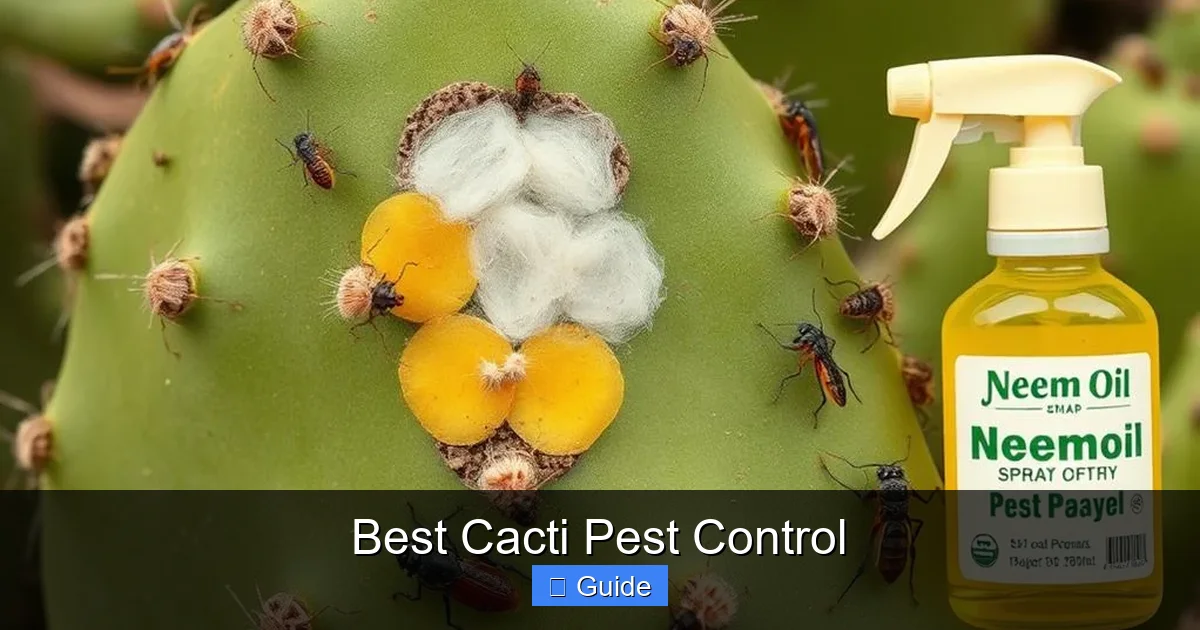
Visual guide about Best Cacti Pest Control
Image source: goodhomegarden.com
Mealybugs: The Cottony Nightmare
Mealybugs top the list for a reason. These soft-bodied insects look like tiny bits of cotton or white powder tucked into spine clusters, leaf axils, and root zones. Females lay hundreds of eggs in waxy sacs. Nymphs (crawlers) spread to new plants. Adults barely move once settled.
Signs include white fluffy deposits, sticky honeydew on plants or nearby surfaces, black sooty mold growing on that honeydew, and ants farming the mealybugs for their sweet secretions. Root mealybugs are especially sneaky. You won’t see them until you unpot the plant. They look like white powder on roots and in soil.
Mealybugs weaken plants by sucking sap. Heavy infestations cause stunted growth, yellowing, and eventual death. They also transmit viruses between plants. A single female can produce 600 eggs. Populations explode fast in warm indoor conditions.
Spider Mites: The Invisible Web Spinners
Spider mites aren’t insects. They’re arachnids related to spiders and ticks. At 1/50th of an inch, you need a magnifying glass to see them clearly. What you’ll notice first is their damage. Tiny yellow or white stippling dots on pads or stems. Fine webbing between spines or at growing tips. A dusty, dull appearance to the plant.
These pests thrive in hot, dry, dusty conditions. That describes many indoor growing environments perfectly. They hate humidity. A single female lays 20 eggs per day. In ideal conditions, a generation completes in five days. You can go from a few mites to thousands in two weeks.
Red spider mites (two-spotted spider mites) are most common. They’re pale yellow-green with two dark spots. In fall, females turn orange-red and seek overwintering sites. This is when many collectors notice sudden outbreaks as mites migrate.
Scale Insects: Armored Tanks on Your Plants
Scale insects look like small, immobile bumps on stems and pads. They come in two main types. Armored scales secrete a hard, protective cover separate from their body. Soft scales produce a waxy coating attached to their body. Both suck plant sap.
Colors range from brown and gray to white and black. Shapes vary from circular to oyster-shell shaped. Sizes run from 1-5 millimeters. You might mistake them for natural plant texture or scars. The giveaway? They scrape off with a fingernail (armored) or squish with sticky residue (soft).
Soft scales produce honeydew leading to sooty mold. Armored scales don’t. Both cause yellowing, stunting, and branch dieback. Crawlers (mobile nymphs) spread the infestation. Once settled, they never move again. This stationary nature makes them easy to miss until populations are high.
Fungus Gnats: More Annoying Than Deadly
Fungus gnats look like tiny mosquitoes hovering around your plants. Adults don’t damage cacti. Their larvae live in moist soil and feed on fungi, algae, and tender roots. They’re mostly a problem for seedlings and recently repotted plants with rich, damp soil mixes.
You’ll see adults flying when you water or disturb pots. Larvae are translucent white worms with black heads in the top inch of soil. Damage shows as poor growth, yellowing, and damping off in seedlings. Fungus gnats indicate overwatering or poor drainage. Fix the cultural issue and the gnats usually disappear.
Root Mealybugs: The Hidden Destroyers
Root mealybugs deserve special mention. They live entirely underground on roots. You won’t know they’re there until the plant declines mysteriously. Symptoms mimic underwatering: shrinking, yellowing, poor growth despite proper care. Unpotting reveals white, powdery masses on roots and in soil crevices.
These pests spread through drainage holes, shared water trays, and contaminated tools. They’re common in nursery stock. Always check roots when repotting new acquisitions. Root mealybugs resist many contact sprays since they’re protected by soil. Systemic treatments work best.
Less Common but Serious Threats
Thrips occasionally attack cacti flowers and new growth. They’re tiny, slender insects that rasp and suck. Damage appears as silvery patches and distorted growth. Western flower thrips can transmit viruses.
Cactus longhorn beetles target large outdoor specimens in southwestern regions. Larvae bore into stems causing structural collapse. Not a typical indoor problem but devastating in landscape settings.
Rodents and birds damage outdoor collections. Pack rats, rabbits, and birds eat pads and flowers. Physical barriers work better than pesticides for vertebrate pests.
Prevention: Your First Line of Defense
Prevention beats treatment every time. A pest-free collection starts with habits that keep bugs out entirely. These practices cost little but save enormous effort later.
Quarantine Every New Plant
This is the single most important rule. Never place a new plant directly with your collection. Not even for “just one night.” Set up a separate quarantine area at least six feet away from other plants. A different room is better. Keep new arrivals isolated for minimum two weeks, ideally four.
During quarantine, inspect daily with a flashlight and magnifying glass. Check spine clusters, growing tips, undersides of pads, soil surface, and drainage holes. Treat preventively with neem oil or insecticidal soap if you want extra insurance. Many collectors apply a systemic granule at repotting time for long-term protection.
Quarantine catches pests that weren’t visible at purchase. Eggs hatch. Crawlers emerge. Hidden root mealybugs reveal themselves. Your patience protects your entire collection.
Inspect Regularly With the Right Tools
Weekly inspections catch problems early. Use a 10x hand lens or jeweler’s loupe. A bright LED flashlight reveals pests hiding in shadows. Check during watering when you’re already handling plants. Look at every angle. Rotate the pot. Examine the crown, spine clusters, leaf axils, soil line, and pot bottom.
Keep a notebook or phone note with inspection dates and observations. Track which plants had issues. This helps spot patterns. Maybe spider mites always hit the same shelf near the heating vent. Maybe mealybugs favor your Euphorbias. Data drives better decisions.
Optimize Growing Conditions
Healthy plants resist pests naturally. Stressed plants emit chemical signals that attract insects. Provide what each species needs. Fast-draining mineral soil. Pots with drainage holes. Water only when completely dry. Bright light appropriate for the species. Good air circulation from a small fan.
Avoid overcrowding. Plants touching each other create pest highways. Space allows inspection and treatment access. It also improves airflow reducing fungal issues that weaken plants.
Clean up debris. Dead flowers, fallen spines, and shed leaves harbor pests and diseases. Remove them promptly. Sterilize tools between plants with isopropyl alcohol or a 10% bleach solution. Don’t reuse soil. Don’t share water trays between quarantine and main collections.
Use Preventive Treatments Strategically
Some collectors apply preventive systemic insecticides annually. Imidacloprid granules mixed into soil at repotting protect against sucking insects for months. This approach is controversial among organic growers but effective for valuable collections.
Organic preventives include monthly neem oil sprays during growing season. Diatomaceous earth on soil surface deters crawling insects. Beneficial nematodes applied to soil control fungus gnat larvae and root mealybugs. Yellow sticky traps catch flying adults and monitor populations.
Rotate preventive products to avoid resistance. Don’t use the same mode of action continuously. This applies to both chemical and organic treatments.
Organic and Natural Treatment Options
Many growers prefer starting with gentler methods. Organic treatments work well for light to moderate infestations. They’re safer for pets, children, beneficial insects, and the environment. They also reduce resistance buildup.
Isopropyl Alcohol: The Mealybug Killer
Seventy percent isopropyl alcohol (rubbing alcohol) is a cacti collector’s best friend. It dissolves the waxy coating on mealybugs and scale, dehydrating them on contact. Use a spray bottle for broad application or a cotton swab for precision targeting.
Spray directly on visible pests until saturated. The alcohol evaporates quickly leaving no residue. Repeat every three days for two weeks to catch newly hatching crawlers. Test on a small area first. Some thin-skinned cacti (like certain Epiphyllums) may show cosmetic damage. Most desert cacti tolerate it fine.
For root mealybugs, unpot the plant. Wash roots thoroughly with lukewarm water. Dip entire root ball in 50/50 alcohol/water solution for 10 minutes. Repot in fresh, sterile soil. Clean the pot with bleach solution before reuse.
Neem Oil: Multi-Purpose Protection
Cold-pressed neem oil contains azadirachtin, which disrupts insect feeding, growth, and reproduction. It also has mild fungicidal properties. Mix according to label directions (typically 1-2 teaspoons per quart water with a few drops mild liquid soap as emulsifier).
Spray thoroughly covering all surfaces including undersides and soil line. Apply in evening or shaded conditions to prevent leaf burn. Repeat every 7-14 days for active infestations. Monthly for prevention. Neem works slowly. You won’t see instant kill. But populations decline steadily over weeks.
Neem degrades in sunlight. Fresh mixtures work best. Don’t store mixed solution more than a few hours. Buy pure, cold-pressed oil not “neem oil extract” which has lower azadirachtin content.
Insecticidal Soap: Contact Killer for Soft Bodies
Potassium salts of fatty acids (insecticidal soap) penetrate soft-bodied insects’ cuticles causing cell collapse and dehydration. Effective on mealybug crawlers, spider mites, aphids, thrips, and whiteflies. Less effective on armored scale and adult mealybugs with heavy wax coating.
Use commercial formulations designed for plants. Homemade dish soap mixtures can damage plant tissues. Spray to runoff. Repeat weekly for 3-4 weeks. Soap has no residual activity. It only kills what it touches directly. Thorough coverage is essential.
Test on one pad first. Some succulents are soap-sensitive. Avoid applying in direct sun or temperatures above 90°F. Rinse with water after a few hours if concerned about residue.
Horticultural Oil: Suffocation Strategy
Lightweight horticultural oils (superior oils, summer oils) smother insects and eggs by blocking spiracles (breathing pores). They control scale, mealybugs, spider mites, and eggs of many pests. Modern refined oils are safe for most cacti when used correctly.
Apply as directed, usually 1-2% concentration. Cover all surfaces thoroughly. Don’t apply when temperatures exceed 85°F or drop below 40°F. Avoid drought-stressed plants. Don’t combine with sulfur fungicides. Wait 30 days between oil and sulfur applications.
Oils work well as dormant treatments on outdoor collections in late winter. They clean up overwintering stages before spring growth.
Diatomaceous Earth: Mechanical Barrier
Food-grade diatomaceous earth (DE) is fossilized algae with microscopic sharp edges. It abrades insect exoskeletons causing dehydration. Sprinkle on soil surface to deter crawling pests like root mealybugs, fungus gnat larvae, and ants. Dust lightly on plant bodies for above-ground pests.
DE only works dry. Reapply after watering. Wear a mask when applying. Don’t inhale the dust. It’s non-toxic but irritates lungs. DE doesn’t distinguish between pests and beneficials. Use judiciously.
Beneficial Insects: Biological Control
Predatory insects eat pests. Ladybugs, lacewings, and predatory mites (Phytoseiulus persimilis for spider mites) work in greenhouse or outdoor settings. Indoors, they often disperse or die without established populations.
Mealybug destroyers (Cryptolaemus montrouzieri) are lady beetle relatives that specialize on mealybugs. They’re effective but expensive and need minimum pest populations to sustain themselves. Best for large collections or commercial greenhouses.
Beneficial nematodes (Steinernema feltiae) applied as soil drench control fungus gnat larvae and root mealybugs. They’re microscopic worms that parasitize soil-dwelling insects. Keep soil moist after application. Results appear in 2-3 weeks.
Physical Removal: Hands-On Approach
For small infestations, manual removal works. Use tweezers, cotton swabs dipped in alcohol, or a strong water stream (for sturdy plants). Scrape scale off with a plastic card or old toothbrush. Vacuum spider mites with a handheld vac on low setting.
Prune heavily infested growth. Bag and trash clippings. Don’t compost. Sterilize tools after. Physical removal combined with follow-up treatment gives excellent results for localized problems.
Chemical Controls: When You Need Heavy Artillery
Sometimes organic methods aren’t enough. Heavy infestations, valuable specimens, or widespread outbreaks may require synthetic pesticides. Used responsibly, they’re valuable tools. Used carelessly, they create resistance, harm beneficials, and pose health risks.
Systemic Insecticides: Protection From Inside
Systemics absorb into plant tissue. Sucking insects die when they feed. This reaches pests hidden in crevices, roots, and galls where sprays can’t penetrate. Protection lasts weeks to months depending on product and plant growth rate.
Imidacloprid (Merit, Bayer Advanced, Bonide Systemic Granules) is the most common. Applied as soil drench or granules. Moves upward through xylem. Excellent for mealybugs, scale, aphids, whiteflies. Does not control spider mites (they’re not insects). Toxic to bees. Don’t use on flowering plants pollinators visit.
Acephate (Orthene, Bonide Systemic Insect Control) is both systemic and contact. Translaminar movement reaches leaf undersides. Controls broader range including some mites. Strong odor. More toxic than imidacloprid. Follow label precisely.
Dinotefuran (Safari, Zylam) moves faster than imidacloprid. Good for quick knockdown plus residual. More water soluble. Higher cost.
Rotate chemical classes (neonicotinoids, organophosphates, etc.) to prevent resistance. Don’t use systemics continuously year-round. Give plants breaks.
Contact Insecticides: Immediate Knockdown
Pyrethroids (bifenthrin, cyfluthrin, permethrin) are synthetic versions of natural pyrethrins. Fast-acting nerve toxins. Good for visible crawling insects. Poor residual on waxy cacti surfaces. Toxic to cats, fish, beneficial insects. Use outdoors or in well-ventilated areas only.
Pyrethrins (natural, from chrysanthemums) break down in hours. Safer but less residual. Often combined with piperonyl butoxide (PBO) synergist. Good for quick cleanup before bringing plants indoors.
Insecticidal soaps and oils (covered in organic section) are also contact killers. They fit here too but with lower toxicity profiles.
Miticides: Specific for Spider Mites
Standard insecticides don’t kill spider mites. You need miticides. Abamectin (Avid, Lucid) is translaminar. Moves into leaf tissue. Kills motile stages. Limited egg activity. Rotate with other modes of action.
Bifenazate (Floramite) excellent ovicidal (kills eggs) and motile activity. Long residual. Different mode of action from abamectin. Good rotation partner.
Spiromesifen (Forbid, Judo) controls all stages including eggs. Translaminar. Different chemical class. Useful in resistance management programs.
Etoxazole (TetraSan) primarily ovicide/larvicide. Stops reproduction. Slow acting but long-lasting. Best used early in infestation.
Horticultural oils and insecticidal soaps (organic section) also control mites mechanically. They’re valuable rotation tools with no resistance risk.
Safe Application Practices
Always read the entire label before opening the container. The label is law. Wear chemical-resistant gloves, long sleeves, eye protection, and a NIOSH-approved respirator for concentrates. Apply outdoors or in a spray booth. Never spray indoors where you live.
Calibrate your sprayer. Mix only what you’ll use today. Don’t store diluted pesticides. Label mixed containers clearly. Keep children and pets away until dry (usually 2-4 hours). Store concentrates locked, cool, dry, in original containers.
Observe pre-harvest intervals if growing edible cacti (Opuntia pads, dragon fruit). Most ornamentals have no PHI but check anyway. Don’t apply before rain. Don’t let runoff enter waterways.
Resistance Management Is Critical
Pests evolve resistance fast. Spider mites can develop resistance in 3-5 generations. Mealybugs and scale slower but it happens. Rotate modes of action (MOA). The IRAC (Insecticide Resistance Action Committee) classifies chemicals by MOA group number.
Example rotation for spider mites: Abamectin (Group 6) → Bifenazate (Group 20D) → Spiromesifen (Group 23) → Horticultural oil (physical) → Repeat. Never use same group twice in a row.
For mealybugs/scale: Imidacloprid (Group 4A) → Acephate (Group 1B) → Pyriproxyfen (Group 7C, IGR) → Alcohol/soap/oil (physical) → Repeat.
Include non-chemical methods in rotation. They have no resistance risk.
Special Situations: Tailored Approaches
Not all pest problems are straightforward. Certain scenarios require adapted strategies. Here’s how to handle the tricky ones.
Treating Root Mealybugs Effectively
Root mealybugs are the hardest to eradicate. Contact sprays don’t reach them. Systemics work but take time to transliterate to roots. The most reliable method combines approaches.
Step 1: Unpot plant. Shake off all soil. Discard soil (don’t compost). Step 2: Wash roots thoroughly with strong water stream. Step 3: Soak root ball in 50/50 alcohol/water for 15 minutes. Step 4: Dip in systemic insecticide solution (imidacloprid per label) for 30 minutes. Step 5: Repot in fresh sterile mix in cleaned pot. Step 6: Apply systemic granules to new soil surface. Step 7: Quarantine 4 weeks with weekly alcohol root drenches.
For valuable plants, consider hot water treatment. Submerge root ball in 115°F water for 10 minutes. This kills mealybugs without harming most cacti. Test on one plant first. Some species are heat sensitive.
Managing Spider Mites in Dry Climates
If you live in Arizona, Nevada, or similar arid regions, spider mites are a constant battle. Low humidity favors them. Increase humidity around plants. Group plants together. Use pebble trays with water. Run a humidifier. Mist plants daily (morning only so they dry).
Spray plants forcefully with water weekly. This physically removes mites and webbing. Focus on undersides and growing tips. Do this in morning so plants dry.
Rotate miticides aggressively. Abamectin → Bifenazate → Spiromesifen → Oil/Soap. Treat every 5-7 days during outbreaks. Mites reproduce fast. You must break the cycle.
Consider predatory mites (Phytoseiulus persimilis) for greenhouse or shade house collections. They establish well in humid microclimates.
Dealing with Scale on Large Specimens
Large outdoor cacti (columnar, Opuntia, Agave) with scale need different tactics. You can’t spray a 15-foot cactus thoroughly. Systemics are the answer. Soil drench with imidacloprid or dinotefuran moves through the entire plant.
For immediate knockdown on accessible areas, use horticultural oil spray. It smothers scale on contact. Apply in cool morning. Cover thoroughly.
Scrape heavy scale colonies off with plastic scraper before treatment. This removes the protective armor so sprays and systemics work better.
Monitor for ants. They farm scale for honeydew and move them around. Control ants with borax baits at base of plant. This breaks the farming cycle.
Rescuing Heavily Infested Prized Plants
Sometimes a rare or sentimental plant gets badly infested. Don’t give up immediately. Aggressive rescue protocol:
1. Isolate completely. 2. Prune all heavily damaged growth. 3. Unpot, wash roots, alcohol soak. 4. Apply systemic + contact spray combo. 5. Repot fresh. 6. Bag plant in clear plastic with systemic granule on soil. 7. Place in bright indirect light. 8. Monitor daily. 9. Repeat contact sprays weekly. 10. After 4 weeks clean, reintroduce gradually.
This stresses the plant. Only do it for plants worth the risk. Success rate varies. But many “goners” recover with intensive care.
Greenhouse and Large Collection Management
Commercial or serious hobby greenhouses need integrated pest management (IPM) programs. Scout weekly with sticky traps and visual inspection. Set action thresholds (e.g., 5 mites per leaf triggers treatment). Rotate crops if possible. Use beneficial insects preventively. Keep detailed records.
Sanitation is paramount. Remove all plant debris. Weed floors. Disinfect benches between crops. Control entry points (screens, double doors). Quarantine all incoming material.
Consider foggers or aerosol generators for large spaces. They penetrate dense canopies better than handheld sprayers. Use only labeled products. Follow re-entry intervals strictly.
After Treatment: Recovery and Monitoring
Treatment isn’t over when you spray. The recovery phase determines long-term success. Pests often rebound from survivors or new hatchings. Vigilance continues.
Post-Treatment Care
Treated plants are stressed. Don’t fertilize for 2-3 weeks. Water sparingly. Provide bright but not intense light. Avoid temperature extremes. The plant needs energy to repair tissue and push new growth.
Watch for phytotoxicity (chemical burn). Signs include brown tips, yellowing, distorted new growth, blackened spots. If you see it, flush soil with clean water. Spray foliage with water. Hold off on further treatments until plant recovers.
New growth is the best indicator of recovery. Clean, undamaged new spines or pads mean the plant is winning. Stunted or deformed new growth suggests ongoing pest activity or chemical damage.
Monitoring Schedule
Intensive monitoring for 8 weeks post-treatment. Week 1-2: Inspect every 2 days. Week 3-4: Every 4 days. Week 5-8: Weekly. Then return to normal weekly schedule.
Use yellow sticky traps changed weekly. Count and identify catches. Rising numbers mean breakthrough. Zero catches for 4 weeks suggests eradication.
Check roots at 4 and 8 weeks. Gently unpot or use clear pots for easy viewing. Root mealybugs are the most common cause of “mystery” reinfestations.
When to Retreat
Retreat if you see live pests at any check. Don’t wait. Use a different mode of action than last treatment. If you used alcohol, use neem. If you used systemic, use contact spray. Rotation prevents resistance.
Retreat on schedule for spider mites (every 5-7 days for 3 cycles) even if you don’t see them. Eggs hatch continuously. Scheduled treatment breaks the cycle.
For scale and mealybugs, retreat when you see new crawlers (tiny moving dots) or fresh honeydew. These indicate active reproduction.
Knowing When to Let Go
Sometimes the kindest choice is disposal. If a plant has been treated 3+ times without improvement, if more than 50% of tissue is damaged, if root system is destroyed, or if it threatens nearby valuable plants — bag it and trash it.
Don’t compost infested plants. Heat may not kill all pests. Don’t give away “rescue projects” to beginners. It spreads problems and discourages new growers.
Take a photo for your records. Note what pest, what treatments failed, and date. This builds your knowledge base. Replace the plant with a clean specimen from a reputable source.
Building a Pest-Resistant Collection Long-Term
The ultimate goal isn’t just treating pests. It’s creating conditions where pests rarely establish. This takes time but pays dividends in healthier plants and less work.
Source Plants Carefully
Buy from reputable specialists, not big-box garden centers where plants sit for months in pest-prone conditions. Inspect before buying. Ask about their pest management. Good nurseries have IPM programs and will discuss them openly.
Mail order from collectors often brings cleaner plants than retail. But always quarantine anyway. Even the best growers miss things occasionally.
Maintain Biodiversity
Monocultures (many of same species) invite specialized pests. Mix genera and families. A collection with cacti, euphorbias, mesembs, aloes, and caudiciforms has fewer explosive outbreaks than 100 mammillarias.
Include flowering plants that attract beneficial insects if you grow outdoors or in a greenhouse. Sweet alyssum, dill, fennel, yarrow, and cosmos draw predators and parasitoids.
Seasonal Adjustments
Pest pressure changes with seasons. Spring brings crawler emergence. Summer favors spider mites. Fall brings migrating pests seeking winter shelter. Winter reveals root mealybugs during repotting.
Adjust monitoring intensity. Increase inspections during high-risk periods. Apply preventives proactively before historical outbreak times. Keep a phenology journal tracking when pests appear each year.
Continuous Learning
Join cactus societies. Attend shows. Participate in forums. Read scientific literature. The best growers never stop learning. New pests arrive (cactus moth, new mealybug species). New treatments emerge. Resistance patterns shift.
Share knowledge. Mentor newcomers. A community that communicates about pest outbreaks stops regional spread. Your vigilance protects everyone’s plants.
Conclusion: Your Cacti Deserve the Best Protection
Pest control isn’t the glamorous part of cacti collecting. It’s not as fun as hunting for a rare Ariocarpus or watching a night-blooming cereus open. But it’s the foundation that makes everything else possible. Without it, your collection is always one mealybug away from disaster.
The strategies in this guide work. They’re used by hobbyists with windowsills and botanical gardens with acres. The principles scale. Early detection. Proper identification. Targeted treatment. Diligent follow-up. Prevention as lifestyle.
Start today. Grab your loupe and flashlight. Inspect every plant. Note what you see. Quarantine that new arrival from last week. Order some neem oil and alcohol. Set up sticky traps. Small actions compound into a resilient, thriving collection.
Your cacti can’t fight pests themselves. They rely on you. With the knowledge in this guide, you’re equipped to be the guardian they need. Here’s to clean plants, strong growth, and the satisfaction of knowing you’ve mastered one of the most challenging — and rewarding — aspects of this hobby.
Frequently Asked Questions
What are the first signs of mealybugs on cacti?
The first signs are small white cottony deposits in spine clusters, leaf axils, or at the soil line. You may also notice sticky honeydew on the plant or nearby surfaces, followed by black sooty mold growing on the honeydew. Ants trailing on the plant often indicate mealybugs since they farm them for honeydew.
How do I get rid of spider mites on cactus permanently?
Permanent eradication requires breaking the life cycle. Spray plants forcefully with water weekly to remove mites and webs. Apply a miticide rotation (abamectin, bifenazate, spiromesifen) every 5-7 days for three cycles. Increase humidity, as spider mites thrive in dry conditions. Monitor with a magnifying glass for 8 weeks after last sighting.
Is rubbing alcohol safe for all cacti?
Seventy percent isopropyl alcohol is safe for most desert cacti but can damage thin-skinned epiphytic varieties like Epiphyllum, Rhipsalis, and some Schlumbergera. Always test on a small inconspicuous area first and wait 24 hours. Avoid applying in direct sunlight which can increase risk of tissue burn.
What causes fungus gnats in cactus soil?
Fungus gnats indicate consistently moist soil with high organic matter. They’re common in peat-heavy mixes, overwatered plants, or pots without drainage. The larvae feed on fungi and tender roots. Let soil dry completely between waterings, use mineral-based gritty mixes, and add a layer of coarse sand or diatomaceous earth on the soil surface.
Can scale insects kill a mature cactus?
Yes, heavy scale infestations can kill mature cacti over time. They suck sap causing yellowing, stunting, and branch dieback. Armored scales are particularly damaging as they don’t produce honeydew (so no sooty mold warning sign) and their hard covers protect them from many treatments. Large landscape specimens may need systemic soil drenches for effective control.
How often should I inspect my cacti for pests?
Inspect weekly during growing season (spring through fall) and every two weeks in winter. Use a 10x magnifying glass and bright flashlight. Check spine clusters, growing tips, leaf axils, soil line, pot bottom, and roots during repotting. Increase frequency to every 2-3 days after any treatment to catch reinfestation early.