Best Automated Plant Care System
Finding the best automated plant care system transforms how you nurture indoor and outdoor greenery. These smart devices handle watering, lighting, and monitoring so your plants thrive even when you are busy or away.
[FEATURED_IMAGE_PLACEHER]
Keeping plants alive used to mean daily checks, sticky fingers, and the guilt of returning from vacation to crispy leaves. Today, the best automated plant care system options take that burden off your shoulders. They water on schedule, monitor soil moisture, adjust grow lights, and even send alerts to your phone. Whether you tend a single succulent or a jungle of tropicals, there is a smart setup that fits your space, budget, and tech comfort level.
This guide walks you through everything you need to know. We will cover the main types of systems, key features to compare, top picks for different needs, installation tips, and long-term maintenance. By the end, you will feel confident choosing a solution that keeps your green friends thriving year-round.
Key Takeaways
- Automated systems save time: They handle daily watering and monitoring tasks so you can enjoy healthy plants without constant hands-on work.
- Smart sensors prevent overwatering: Moisture, light, and temperature sensors deliver precise care tailored to each plant’s needs.
- App connectivity enables remote control: Most top systems let you adjust schedules and check plant health from your phone anywhere.
- Modular designs fit any space: From single-pot stakes to multi-zone irrigation, there is a solution for windowsills, shelves, or full gardens.
- Battery and solar options increase flexibility: Wireless units work without nearby outlets, making them ideal for balconies or hard-to-reach spots.
- Integration with smart home ecosystems adds convenience: Compatibility with Alexa, Google Home, and Apple HomeKit lets you use voice commands and routines.
- Investment pays off in plant survival: Consistent care reduces plant loss, saving money on replacements and preserving rare specimens.
Quick Answers to Common Questions
What is the best automated plant care system for beginners?
A single-pot smart stake with a built-in reservoir, battery power, and a simple app is ideal for beginners. It requires no tubing, installs in minutes, and teaches core concepts without overwhelm.
How long do batteries last in automated plant watering systems?
Most rechargeable battery units last 2 to 6 months per charge depending on watering frequency, sensor reporting interval, and Wi-Fi signal strength. Solar add-ons can extend this indefinitely in bright locations.
Can automated plant care systems work without Wi-Fi?
Yes. Many systems operate on Bluetooth for local control or run fully offline with physical buttons and stored schedules. Wi-Fi is only needed for remote access, cloud sync, and smart home integration.
How do I prevent algae growth in the water reservoir?
Use an opaque or dark-colored reservoir, keep it out of direct sunlight, and add a few drops of 3% hydrogen peroxide monthly. Regular monthly cleaning also prevents buildup.
Are automated plant care systems worth the money?
If you travel often, have many plants, or struggle with consistent watering, they pay for themselves by preventing plant loss. A single saved rare plant can exceed the system cost.
📑 Table of Contents
Understanding Automated Plant Care Systems
What They Do
An automated plant care system handles the core tasks plants need: water, light, and environmental monitoring. Basic models drip water on a timer. Advanced units measure soil moisture, ambient humidity, temperature, and light intensity. They then adjust watering frequency, activate grow lights, or trigger fans and humidifiers. Many connect to Wi-Fi or Bluetooth so you can view real-time data and override schedules from an app.
Why Automation Matters
Consistency is the secret to healthy plants. Humans forget. We overwater when nervous and underwater when busy. Automation removes that variability. It also helps when you travel. A reliable system keeps seedlings alive during a two-week trip without asking a neighbor to visit. For collectors with rare or sensitive species, precise control can mean the difference between a thriving specimen and a costly loss.
Core Components
Most systems share a few building blocks. A water reservoir holds the supply. A pump or gravity feed moves water through tubing. Emitters, drippers, or spikes deliver it to each pot. Sensors sit in the soil or air. A controller runs the logic, either on-device or in the cloud. Power comes from USB, batteries, solar panels, or a wall outlet. Understanding these parts helps you compare kits and expand later.
Types of Automated Plant Care Systems
Single-Pot Smart Stakes
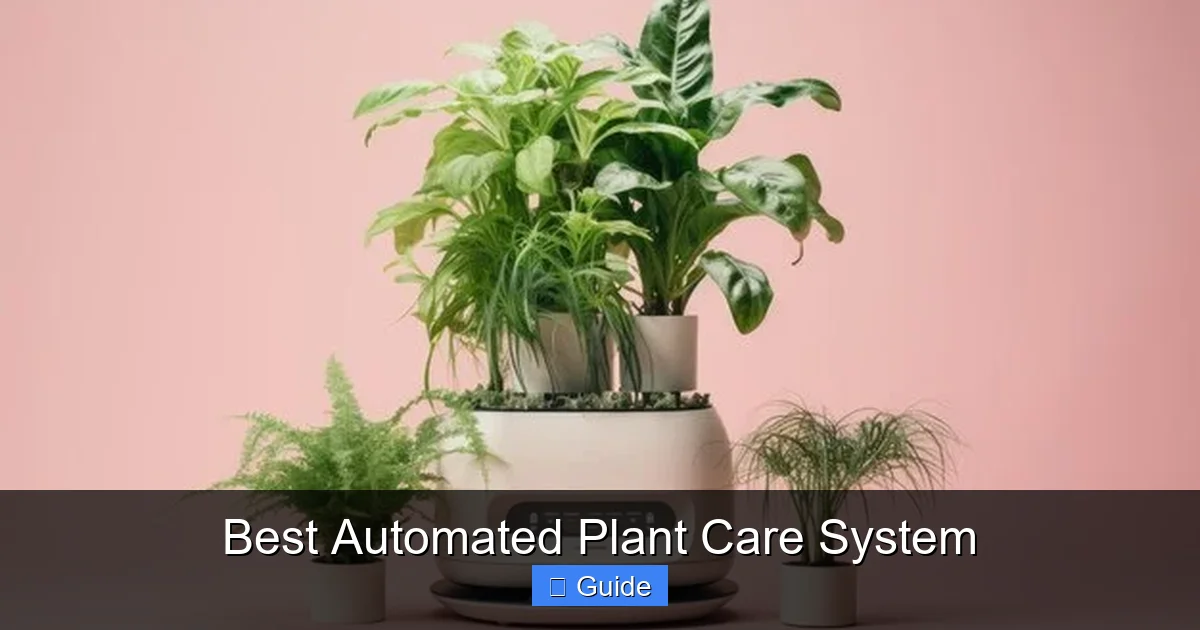
These compact units sit directly in a planter. A moisture sensor probes the soil. A small pump draws water from a built-in reservoir or external bottle. They are perfect for one prized plant or a small cluster. Setup takes minutes. Many run on rechargeable batteries lasting weeks. Apps show moisture graphs and let you set custom thresholds. They are affordable and low-commitment for beginners.
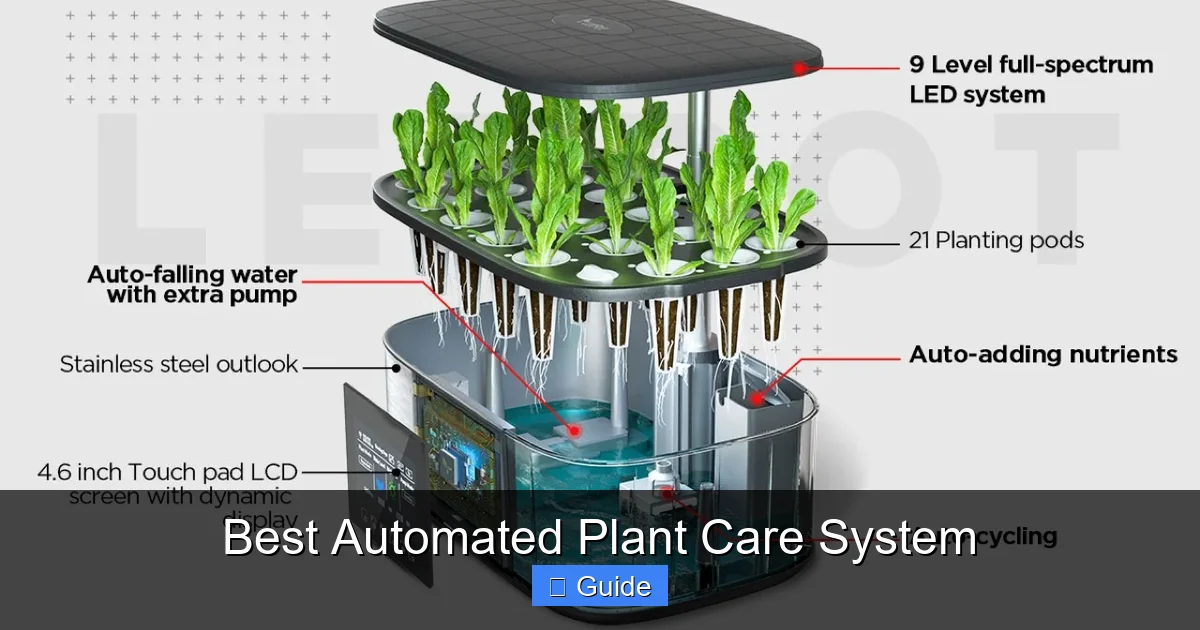
Visual guide about Best Automated Plant Care System
Image source: img.freepik.com
Multi-Zone Drip Irrigation Kits
These systems serve 4 to 20+ plants from one reservoir. A main controller manages multiple valves or pump channels. Each zone can have its own schedule and sensor. Tubing runs along shelves, under benches, or through walls. They suit serious indoor gardeners, balcony growers, and small greenhouses. Installation takes planning but scales well. Look for kits with pressure-compensating emitters for even flow.
Self-Watering Planters with Sensors
These all-in-one pots combine a reservoir, wicking system, and electronics. The plant sits in an inner pot above a water chamber. A float valve or sensor maintains optimal moisture. Some add LED grow lights and fans. They look like regular decor, blending into living rooms. Ideal for herbs, leafy greens, and ornamental foliage. Refill intervals range from days to weeks depending on reservoir size.
Hydroponic and Aeroponic Units
For soil-free growing, these systems circulate nutrient solution. Hydroponics use a growing medium like clay pebbles. Aeroponics mist roots directly. Automated models dose nutrients, adjust pH, and cycle lights. They produce faster yields for vegetables and herbs. They require more maintenance, cleaning, and monitoring than soil systems. Best for dedicated growers wanting high productivity in limited space.
Outdoor Smart Irrigation Controllers
If your focus is garden beds, lawns, or rooftop planters, these replace traditional sprinkler timers. They connect to weather services, soil probes, and flow meters. They skip watering when rain is forecast, adjust for evapotranspiration, and detect leaks. Many are EPA WaterSense certified. They integrate with home automation for voice control. Installation may need wiring to existing valves.
Key Features to Compare
Sensor Accuracy and Range
Moisture sensors vary in precision. Capacitive sensors resist corrosion better than resistive ones. Look for a range that covers your soil type, from sandy to peaty. Light sensors should measure PAR (photosynthetically active radiation) for grow light relevance. Temperature and humidity sensors help diagnose stress. More sensors mean richer data but higher cost.
Watering Precision
Volume control matters. Some systems only offer on/off timing. Better ones let you set milliliters per event. Pressure-compensating drippers ensure each plant gets the same amount regardless of tubing length. Flow meters confirm delivery and alert on clogs. If you grow succulents beside ferns, per-zone volume control is essential.
Connectivity and App Quality
Wi-Fi enables remote access anywhere. Bluetooth works only nearby but uses less power. Check app reviews for stability, notification reliability, and data export. Good apps show historical charts, let you name plants, and support multiple users. Offline operation is a plus if internet drops. Local control via physical buttons ensures basic function without a phone.
Power Options
USB-C rechargeable batteries last 2-6 months per charge. Solar panels extend that indefinitely in bright spots. Hardwired AC adapters suit permanent indoor installs. Outdoor controllers often use 24V AC from existing sprinkler wiring. Consider outlet access and aesthetic impact of cords. Battery-only units offer maximum placement freedom.
Reservoir Capacity and Refill Alerts
Larger reservoirs mean fewer refills. A 2-liter tank may last a week for four small plants. A 20-liter tank can run a balcony garden for a month. Low-water notifications prevent dry runs. Some systems auto-shutoff to protect pumps. Transparent tanks or float indicators let you glance-check levels.
Expandability and Ecosystem
Proprietary ecosystems lock you into one brand’s sensors, valves, and lights. Open systems work with standard 1/4-inch tubing, generic sensors, and third-party pumps. If you plan to grow, choose a platform that adds zones easily. Compatibility with Home Assistant, MQTT, or IFTTT lets you build custom automations beyond the vendor app.
Top Picks for Different Needs
Best Overall for Most Homes
The best automated plant care system for a typical plant parent balances ease, reliability, and price. Look for a kit with 4-8 zones, capacitive moisture sensors, a 2+ liter reservoir, and a polished app. Wi-Fi and Bluetooth dual-mode covers connectivity hiccups. USB-C charging with 3-month battery life reduces maintenance. Per-zone scheduling handles mixed collections. Strong community support means firmware updates and troubleshooting help.
Best for Frequent Travelers
If you are gone weeks at a time, prioritize reservoir size and fail-safes. A 10-liter tank with a float valve backup keeps water flowing even if the pump fails. Solar charging eliminates battery anxiety. The app should show real-time reservoir level and send low-water alerts at 20% and 10%. Look for a “vacation mode” that conserves water while maintaining minimum moisture. Redundant power, like battery plus solar, adds peace of mind.
Best for Large Collections
Serious collectors need 16+ zones, modular expansion, and detailed analytics. A central controller with relay boards lets you add valve manifolds as you grow. Soil sensors on long cables reach deep pots. Flow meters on each branch detect clogs instantly. The app should support plant profiles with species-specific moisture targets. Data export to CSV helps track long-term trends. Local network control ensures operation during internet outages.
Best for Small Spaces and Renters
Apartment dwellers want compact, damage-free, and quiet. A single-pot stake with a 500ml bottle reservoir fits any windowsill. No drilling, no tubing across floors. Battery life of 60+ days means rare charging. The app is simple: set a moisture threshold and forget. Silent pump operation won’t disturb sleep. Aesthetic design blends with decor. Low cost lets you buy several for different plants.
Best for Outdoor Gardens
Weatherproof enclosures, UV-resistant tubing, and freeze protection define this category. The controller mounts near your spigot or valve box. It pulls hyperlocal weather data to skip rain events. Soil probes bury at root depth. Flow monitoring catches broken lines. Integration with rain barrels or pumps expands water sources. Seasonal adjust features taper schedules automatically. Professional installation may be worth it for complex layouts.
Best Budget Option
Entry-level kits prove automation works without big spend. A 4-zone timer with a gravity-fed reservoir and basic moisture probes costs under $80. No app, just dials and buttons. It waters on fixed intervals. You adjust manually as seasons change. Great for learning your plants’ rhythms before upgrading. Keep expectations realistic: no remote alerts, no precision volume, no smart home integration.
Installation and Setup Guide
Plan Your Layout
Sketch your plant positions. Measure distances from the reservoir spot to each pot. Note elevation changes; pumps have max head height ratings. Group plants with similar water needs into zones. Mark where tubing will run: along shelf edges, behind furniture, through cable raceways. Plan for a power outlet or solar panel placement. A clear plan prevents wasted tubing and rework.
Assemble the Hardware
Unbox and inventory parts. Connect the pump to the controller. Attach tubing to the pump outlet. Run main line to a manifold or splitters. Cut micro-tubing for each plant. Push emitters or spikes into the ends. Insert moisture sensors at root depth, not just the surface. Secure tubing with clips so weight does not pull connections loose. Fill the reservoir and prime the pump per instructions.
Configure the Software
Download the app. Create an account. Add the device via QR code or Bluetooth pairing. Name each zone after the plant it serves. Set initial moisture targets: 40-60% for tropicals, 20-30% for succulents. Schedule a test run. Watch each emitter. Adjust flow with inline valves if needed. Enable notifications for low water, sensor disconnect, and completed cycles. Link to your smart home hub if desired.
Calibrate and Fine-Tune
Run the system for a week. Check soil daily with a manual probe to verify sensor readings. Adjust thresholds up or down. Observe plant response: perkiness, new growth, or yellowing leaves. Increase volume for thirsty plants, decrease for wet feet. Note seasonal shifts; summer heat may double water needs. Save profiles so you can restore them after experiments.
Troubleshoot Common Issues
Clogged emitters: soak in vinegar, flush lines. Pump noise: check for air bubbles, ensure submerged. Sensor drift: clean probes, recalibrate in app. Wi-Fi drops: move controller closer, use 2.4 GHz only, add extender. Battery drain: disable frequent reporting, check for pump running dry. Algae in reservoir: use opaque tank, add hydrogen peroxide drops monthly. Most issues are simple fixes once identified.
Maintenance and Long-Term Care
Weekly Checks
Glance at reservoir level. Confirm app shows all sensors online. Feel soil in a few pots to cross-check. Listen for pump operation during a cycle. Wipe sensor probes if dusty. Remove any leaves blocking emitters. These quick habits catch problems before plants suffer.
Monthly Deep Clean
Empty and rinse the reservoir. Flush tubing with clean water. Soak emitters in mild vinegar solution to dissolve mineral buildup. Clean pump intake filter. Check battery charge or solar panel output. Update firmware if available. Review app analytics for trends. Adjust schedules for season changes.
Seasonal Adjustments
Spring: increase frequency as growth accelerates. Summer: max volume, maybe add midday cooling mist. Fall: taper back as light drops. Winter: minimal water, watch for heater-induced dryness. If you move plants outdoors in summer, create a new zone profile. Indoor grow lights may need longer runs in dark months. Save each season as a preset.
Replacing Consumables
Tubing yellows and stiffens over years. Replace every 2-3 years. Emitters clog irreversibly; swap annually for peace of mind. Sensor probes corrode; capacitive ones last longer but still degrade. Pump diaphragms wear; keep a spare. Batteries lose capacity; plan replacement at 80% health. Budget $20-50 per year for a medium system.
Expanding Your System
Add zones before you add plants. Run extra tubing during initial install; cap unused ends. Buy a larger reservoir than you need today. Choose a controller with spare relay ports. Standardize on one tubing size and connector type. Document your layout with photos and notes. Future you will thank present you.
Smart Home Integration and Automation
Voice Control Basics
Link your system to Alexa, Google Assistant, or Siri. Then say, “Water the ferns” or “Check moisture on the monstera.” Create routines: “Good morning” triggers a light check and top-off. “Vacation mode” arms all zones with conservative settings. Voice is handy when hands are dirty or phone is elsewhere.
Advanced Automations
Use Home Assistant, Hubitat, or IFTTT for logic beyond the vendor app. Example: if outdoor humidity > 80% and rain forecast > 50%, skip watering. If indoor temperature > 85°F, run a misting cycle. If soil moisture drops below 15% for two consecutive readings, send a critical alert and run emergency watering. Log all events to a database for year-over-year analysis.
Data-Driven Growing
Export sensor data monthly. Plot moisture, temperature, and light against growth photos. Correlate yield or bloom cycles with environmental patterns. Share anonymized data with plant communities to learn optimal ranges for rare species. Over time, you build a personal knowledge base that beats generic care guides.
Security and Privacy
IoT devices can be entry points. Change default passwords. Keep firmware updated. Isolate plant devices on a separate VLAN or guest network. Disable cloud features if you only need local control. Review the vendor’s data policy. Prefer brands with local API access so you are not dependent on their servers.
Common Mistakes to Avoid
Over-Automating Too Soon
It is tempting to automate everything day one. Start with one zone. Learn how your plants respond. Add complexity gradually. A simple timer teaches you more than a black-box AI that hides its logic. You remain the expert on your plants; the system is just a tool.
Ignoring Plant-Specific Needs
One schedule does not fit all. A cactus and a calathea in the same zone will both suffer. Group by water appetite, not aesthetics. Use separate zones or adjustable emitters. Research each species’ preferred soil moisture range. Set targets accordingly. The best automated plant care system respects biological diversity.
Skipping Calibration
Factory sensor readings are generic. Your potting mix, pot material, and probe depth shift the baseline. Always calibrate against a known reference: a manual moisture meter or the “finger test” at root zone. Recalibrate after repotting or changing soil. Trust but verify.
Neglecting Water Quality
Hard water leaves mineral deposits that clog emitters and alter soil pH. Chlorine can harm sensitive roots. Use filtered, rain, or distilled water when possible. If using tap, let it sit 24 hours to off-gas chlorine. Add a sediment filter before the pump. Test pH monthly if growing finicky plants.
Forgetting Power Backup
A power outage kills a hardwired pump. Battery-backed controllers keep schedules. UPS units protect AC-powered systems. Solar with battery storage handles multi-day outages. At minimum, choose a system that resumes its schedule automatically when power returns, rather than waiting for app input.
Conclusion
Choosing the best automated plant care system is an investment in peace of mind and plant longevity. The right setup waters precisely, monitors tirelessly, and alerts you only when action is needed. It frees you from daily chores while giving your green companions the consistency they crave. Start with a clear picture of your collection size, travel habits, tech comfort, and budget. Match those to the system types and features we covered. Install thoughtfully, calibrate honestly, and maintain regularly. Your plants will reward you with lush growth, vibrant blooms, and the quiet satisfaction of a thriving indoor jungle. Happy growing.
Frequently Asked Questions
How often should I refill the reservoir in an automated plant care system?
Refill frequency depends on reservoir size, number of plants, and their water needs. A 2-liter tank serving four small tropicals may last 5-7 days. A 20-liter tank for a balcony garden can go 3-4 weeks. Check the app for low-water alerts and glance at the tank weekly.
Can I use fertilizer in an automated watering system?
Yes, but with caution. Use only water-soluble fertilizers at dilute concentrations. Flush the system with plain water weekly to prevent salt buildup in tubing and emitters. Some advanced systems have separate nutrient dosing chambers for precise control.
What happens if a moisture sensor fails or gives wrong readings?
Most apps alert you when a sensor stops reporting or shows values outside expected ranges. The system can fall back to a time-based schedule until you replace the sensor. Manual soil checks weekly catch sensor drift early.
Do automated plant care systems work with all pot types and sizes?
They work with most pots if you can insert a sensor probe and position an emitter. Very small pots under 3 inches may not fit standard probes. Large pots need longer probes to reach the root zone. Adjustable spikes and extenders solve most fit issues.
How do I winterize an outdoor automated irrigation system?
Before freezing temperatures, drain all water from tubing, pumps, and valves. Use compressed air to blow out lines. Remove battery-powered controllers and store indoors. Disconnect and store sensors. Shut off and insulate the water supply. Reinstall in spring after last frost.
Can I control multiple automated plant care systems from one app?
Most major brands support multiple controllers on one account. You can name each system by location (e.g., “Living Room,” “Balcony”) and view all zones in a single dashboard. Some third-party platforms like Home Assistant unify different brands into one interface.