Mist Soil Mix for Pothos
Creating the ideal mist soil mix for pothos ensures your plant thrives with proper drainage, aeration, and moisture retention. This guide covers the best ingredients, exact ratios, and pro tips for mixing your own blend at home.
If you’ve ever brought home a gorgeous pothos only to watch it slowly decline, you’re not alone. The secret to a thriving, trailing beauty isn’t just light or water. It’s what’s happening underground. The right mist soil mix for pothos makes all the difference between a plant that survives and one that explodes with new growth.
I learned this the hard way. My first golden pothos sat in dense, store-bought potting soil. It stayed wet for weeks. The leaves yellowed. The stems got mushy. I nearly gave up on houseplants entirely. Then a friend told me about the magic of a chunky, airy mix. I repotted that sad plant into a proper mist soil mix for pothos. Within weeks, new leaves unfurled. The vines started reaching for the ceiling. That was years ago, and I’ve never looked back.
Today, I’m sharing everything I know about creating the perfect growing medium. Whether you’re a beginner with your first cutting or a collector with dozens of varieties, this guide will help you nail the foundation. Because healthy roots mean happy leaves. And happy leaves mean a home filled with lush, green energy.
Key Takeaways
- Well-draining mix is essential: Pothos roots rot easily in soggy soil, so drainage comes first.
- Use a 2:1:1 ratio: Two parts potting soil, one part perlite, one part orchid bark works best.
- Add organic matter: Worm castings or compost boost nutrients without compacting the soil.
- Repot every 12-18 months: Fresh mist soil mix for pothos prevents salt buildup and compaction.
- Adjust for your environment: Humid homes need more perlite; dry homes need more coconut coir.
- Signs of bad soil: Yellow leaves, mushy stems, and fungus gnats mean it’s time to repot.
- DIY saves money: Making your own mix costs less than premium store-bought blends.
Quick Answers to Common Questions
What is the best soil mix ratio for pothos?
The best ratio is 2 parts potting soil, 1 part perlite, and 1 part orchid bark. This 2:1:1 mix provides ideal drainage, aeration, and moisture retention for healthy pothos roots.
Can I use regular potting soil for pothos?
Regular potting soil alone is too dense and holds too much water. You must amend it with perlite and bark to create proper drainage. Straight potting soil leads to root rot in pothos.
How often should I repot my pothos with fresh soil mix?
Repot every 12-18 months with fresh mist soil mix for pothos. Signs it’s time include roots circling the pot, soil drying too fast, or the plant becoming top-heavy and unstable.
Why is my pothos soil staying wet for over a week?
Soil staying wet too long means poor drainage. Add more perlite, ensure drainage holes aren’t blocked, increase light and airflow, or repot into a chunkier mix with more bark and perlite.
Can I use succulent soil for pothos?
Succulent soil drains too fast and lacks organic matter for pothos. If using it, mix 1 part succulent soil with 1 part regular potting soil and add worm castings for nutrients.
📑 Table of Contents
- Why Soil Mix Matters More Than You Think
- The Essential Ingredients for a Perfect Mix
- The Golden Ratio: Mixing Your Own Blend
- Store-Bought Alternatives: When DIY Isn’t an Option
- Repotting Into Your New Mix
- Troubleshooting Common Soil Issues
- Advanced Tips for Pothos Enthusiasts
- Maintaining Soil Health Long-Term
- Special Considerations for Pothos Varieties
- Conclusion
Why Soil Mix Matters More Than You Think
Most people focus on watering schedules and light levels. They forget that soil is the interface between your care and the plant’s needs. A pothos in the wild grows as an epiphyte. It climbs trees. Its roots grab bark and moss. They breathe air. They drink rain. They never sit in mud.
When we pot them in dense soil, we suffocate those roots. Oxygen can’t reach them. Water pools around them. Fungi and bacteria throw a party. Root rot sets in fast. The plant can’t take up water even though it’s drowning in it. That’s the cruel irony of overwatering. The roots die from lack of air, not excess water.
The Epiphytic Nature of Pothos
Understanding where pothos comes from changes how you think about soil. In Southeast Asian rainforests, these plants climb tree trunks. Their aerial roots attach to rough bark. They absorb moisture from humid air. They catch falling leaves and debris. That debris breaks down into a light, chunky medium. It holds some moisture but drains instantly.
Your job is to mimic that environment. Not replicate it perfectly. Just mimic the key qualities. Good drainage. Good aeration. Some moisture retention. Some organic matter for nutrients. That’s it. The perfect mist soil mix for pothos balances all four.
Signs Your Current Soil Is Failing
How do you know if your pothos hates its soil? Watch for these red flags. Soil stays wet more than a week after watering. You see white mold on the surface. Fungus gnats hover around the pot. Leaves turn yellow from the bottom up. Stems feel soft and mushy near the soil line. Growth has stalled for months. Roots are brown and mushy when you check.
Any of these mean it’s time to repot. Don’t wait. Root rot spreads fast. A fresh mist soil mix for pothos can save a dying plant if you catch it early enough.
The Essential Ingredients for a Perfect Mix
You don’t need fancy or expensive components. You need the right ones. Each ingredient plays a specific role. Understanding those roles helps you adjust the recipe for your conditions. Let’s break down the building blocks of a great mist soil mix for pothos.
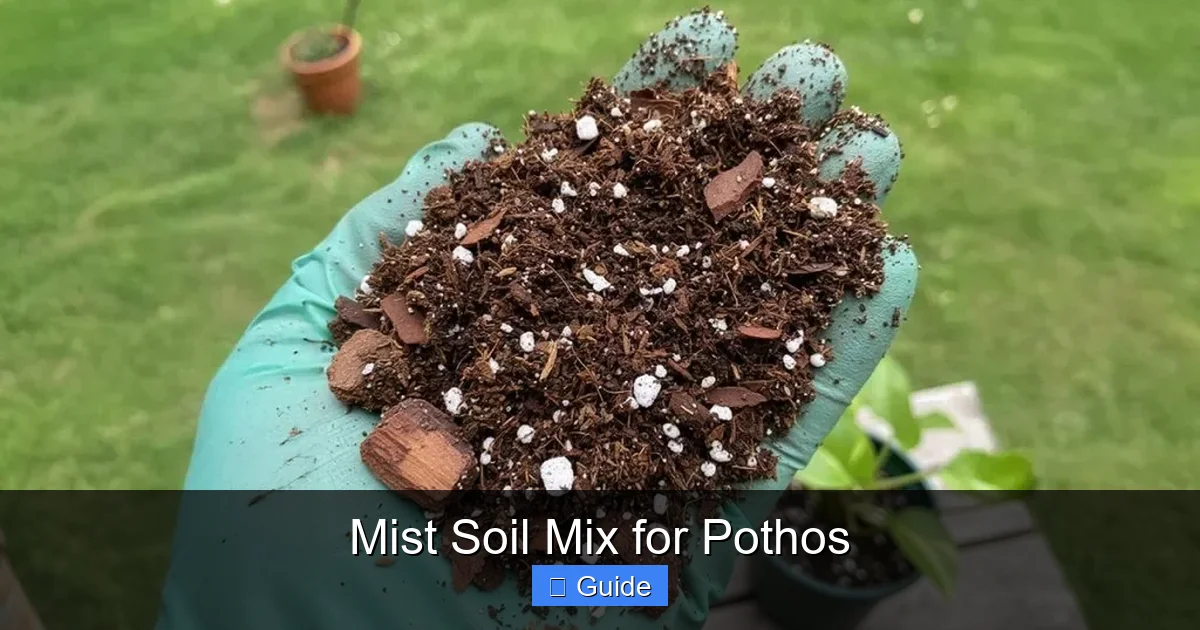
Visual guide about Mist Soil Mix for Pothos
Image source: plantcarebasics.com
Base: Quality Potting Soil
Start with a decent all-purpose indoor potting mix. This provides structure and baseline nutrients. Avoid garden soil. It’s too heavy. Avoid moisture-control mixes with water-retention crystals. They hold too much water. Look for a light, fluffy mix with peat moss or coconut coir as the main ingredient. Brands like FoxFarm, Espoma, or Miracle-Gro Indoor work well.
The base should make up about 40-50% of your total volume. It anchors the plant. It holds some water and nutrients. But on its own, it compacts over time. That’s why we amend it.
Aeration: Perlite or Pumice
This is non-negotiable. You need inorganic particles that create air pockets. Perlite is the classic choice. It’s those white volcanic glass balls in potting soil. Pumice works too and doesn’t float to the top when watering. Both create permanent pore space. Roots need that oxygen.
Use 20-30% perlite or pumice by volume. Don’t skimp. This is the single most important amendment for preventing root rot. If your home is humid, go higher. If it’s very dry, you can go slightly lower but never below 15%.
Structure: Orchid Bark or Pine Bark Fines
Bark mimics the tree surfaces pothos climbs in nature. It creates large air gaps. It breaks down slowly, feeding beneficial microbes. It adds weight so tall pots don’t tip over. Orchid bark (medium grade) is ideal. Pine bark fines work too and cost less.
Aim for 20-25% bark. This gives the mix that chunky, open texture roots love. It also helps the mix drain instantly while holding moisture on the bark surfaces. That’s the sweet spot.
Moisture Buffer: Coconut Coir or Peat Moss
Your base soil already has some. But adding extra gives you control. Coconut coir is more sustainable than peat. It rewets easier. It has a neutral pH. It holds water like a sponge but releases it gradually. Peat moss works too but gets hydrophobic when dry.
Add 10-15% extra coir or peat if your mix feels too gritty. This is especially helpful in dry climates or for people who forget to water. It buys you time between waterings without risking rot.
Nutrition: Worm Castings or Compost
Slow-release organic nutrition beats synthetic fertilizers for soil health. Worm castings are gentle. They won’t burn roots. They inoculate the mix with beneficial bacteria. Compost works similarly. Both improve soil structure over time.
Just 5-10% by volume. A little goes a long way. Too much organic matter breaks down fast and compacts. Think of this as a vitamin, not a main course.
Optional Boosters
Charcoal absorbs impurities and odors. Horticultural charcoal (not BBQ briquettes) at 5% keeps the mix fresh longer. Sphagnum moss holds tons of water. Use sparingly, maybe 5%, for very dry homes. LECA or clay pebbles at the bottom of the pot improve drainage further. Not mixed in, just a layer at the base.
The Golden Ratio: Mixing Your Own Blend
Now for the recipe you came for. This ratio works for 90% of pothos growers in 90% of conditions. It’s the classic mist soil mix for pothos formula. Memorize it. Write it down. Tape it to your potting bench.
The 2:1:1 Formula
Two parts potting soil. One part perlite. One part orchid bark. That’s it. Three ingredients. Perfect balance.
Let’s say you’re filling a 6-inch pot. That’s about 3 quarts of mix. You’d use 1.5 quarts potting soil. 0.75 quarts perlite. 0.75 quarts bark. Mix in a bucket or wheelbarrow. Add a handful of worm castings per pot. Done.
Adjusting for Your Conditions
This base recipe assumes average home conditions. 65-75°F. 40-60% humidity. Watering when top inch is dry. But your home isn’t average. Here’s how to tweak.
Humid Climate or Overwaterer
Increase perlite to 1.5 parts. Decrease soil to 1.5 parts. Keep bark at 1 part. New ratio: 1.5:1.5:1. More air. Faster drainage. Forgiving of heavy hands with the watering can.
Dry Climate or Underwaterer
Increase soil to 2.5 parts. Add 0.5 parts coconut coir. Keep perlite at 1 part. Bark at 1 part. New ratio: 2.5:1:1:0.5. Holds moisture longer. Buys you extra days between waterings.
Low Light Conditions
Plants use less water in low light. Increase drainage. Ratio: 1.5:1.5:1 (soil:perlite:bark). Add extra charcoal. Prevents anaerobic conditions in dim corners.
Terracotta Pots
Terracotta wicks moisture. Soil dries faster. Add 0.5 parts coir to the standard recipe. Compensates for the pot’s breathability.
Mixing Technique Matters
Don’t just dump and hope. Mix thoroughly. Wear gloves. Use a trowel or your hands. Break up soil clumps. Distribute perlite evenly. Bark should be dispersed throughout, not layered. A homogeneous mix prevents wet spots and dry spots. Wet spots rot roots. Dry spots kill root tips.
Moisten the mix slightly before potting. It should hold shape when squeezed but crumble when poked. Not soggy. Not dusty. This prevents hydrophobic pockets that repel water later.
Store-Bought Alternatives: When DIY Isn’t an Option
Maybe you’re short on time. Or space. Or just want to buy one bag and be done. Good news. Several commercial mixes work well for pothos with minor tweaks. You don’t have to make your own mist soil mix for pothos to succeed.
Best Ready-Made Options
FoxFarm Ocean Forest is rich and airy. Add 30% extra perlite. It’s nutrient-dense so skip fertilizer for months. Espoma Organic Potting Mix is lighter. Add 20% perlite and 10% bark. Good value. Miracle-Gro Indoor Potting Mix is widely available. It already has perlite. Add 20% more perlite plus 15% bark. Oh Happy Plants Tropical Blend is pricey but nearly perfect out of the bag. Designed for aroids like pothos.
What to Avoid
Steer clear of “moisture control” or “water retaining” formulas. They contain polymers that turn soil into gel. Avoid garden soil, raised bed soil, or topsoil. Too dense. Avoid pure succulent or cactus mix. Too little organic matter. Pothos isn’t a cactus. It needs some water-holding capacity.
Doctoring a Bagged Mix
Even the best bagged soil benefits from amendments. Always add extra perlite. Bagged mixes settle and compact during shipping. That extra 20-30% perlite restores aeration. Bark adds longevity. Without it, the mix breaks down in 6-8 months. With bark, you get 12-18 months before repotting.
Keep a bag of perlite and a bag of bark near your potting area. Every time you open soil, amend it. Make it a habit. Your plants will thank you.
Repotting Into Your New Mix
You’ve mixed the perfect medium. Now what? Repotting stresses plants. Done wrong, it kills them. Done right, it triggers a growth explosion. Here’s the step-by-step for moving your pothos into its new mist soil mix for pothos.
When to Repot
Spring is ideal. The plant is waking up. Roots grow fast. Recovery is quick. But if your plant is suffering, repot anytime. Root rot waits for no season. Signs it’s time: roots circling the bottom. Roots poking out drainage holes. Soil dries in one day. Plant is top-heavy and tips over. It’s been 18+ months since last repot.
Pot Selection
Only go up 1-2 inches in diameter. Pothos likes being slightly rootbound. A huge pot holds too much soil. That soil stays wet. Root rot city. Ensure drainage holes. Multiple holes are better than one. Terracotta breathes. Plastic retains moisture. Choose based on your watering habits.
The Repotting Process
Water the plant the day before. Moist rootball slides out easier. Dry soil crumbles and damages roots. Soggy soil falls apart. Gently squeeze the pot sides. Turn sideways. Slide plant out. If stuck, run a knife around the edge.
Loosen the rootball. Tease apart circling roots. Trim any brown, mushy roots with clean scissors. Healthy roots are white or tan and firm. Don’t remove more than 1/3 of roots. Shake off old soil. You want roots touching new mix directly.
Add a layer of new mix to the pot bottom. Position plant at same depth as before. Fill sides with mix. Tap pot gently to settle. Don’t pack down. Air pockets are good. Water thoroughly until it drains freely. Let drain completely. Done.
Aftercare
No fertilizer for 4-6 weeks. The mix has nutrients. The roots need to heal. Place in bright indirect light. Not direct sun. Water when top 1-2 inches feel dry. Expect a brief pause in growth. Then watch it take off.
Troubleshooting Common Soil Issues
Even with the perfect mist soil mix for pothos, things happen. Environment changes. Life gets busy. Here’s how to diagnose and fix the most common soil-related problems.
Soil Stays Wet Too Long
If the top inch isn’t dry after 7-10 days, something’s wrong. Check drainage holes. Are they blocked? Roots often clog them. Poke a chopstick through from the bottom. Increase air flow around the pot. A fan on low helps. Move to brighter light. Plant uses more water there. If all else fails, repot with more perlite.
Soil Dries Too Fast
Daily watering needed? That’s excessive. Check for rootbound plant. Roots fill the pot, leaving no soil to hold water. Repot up a size. Add more coir or peat to the mix. Mulch the surface with sphagnum moss. Group plants to raise humidity. Move away from heating vents.
White Crust on Soil Surface
That’s mineral buildup from tap water and fertilizer. Scrape off the top 1/2 inch. Replace with fresh mix. Flush the pot monthly. Run water through for 2-3 minutes. Let drain. Use filtered or rain water if possible. Cut fertilizer strength in half.
Fungus Gnats
Tiny flies. Larvae eat roots. They love wet, organic-rich soil. Let top 2 inches dry completely between waterings. Add a 1/2 inch layer of sand or perlite on top. They can’t lay eggs in dry inorganic material. Yellow sticky traps catch adults. Mosquito bits (BTi) in water kills larvae. Takes 2-3 weeks to break the cycle.
Mold on Soil Surface
White fuzzy mold. Usually harmless saprophytic fungus. But it signals too wet. Scrape it off. Increase air flow. Let dry more between waterings. Sprinkle cinnamon on surface. It’s a natural antifungal. If mold returns, repot with fresher, chunkier mix.
Hydrophobic Soil
Water runs straight through. Pot feels light. Soil pulled away from sides. Peat-based mixes do this when bone dry. Submerge pot in bucket of water. Hold until bubbles stop. 10-15 minutes. Or bottom water. Sit in tray of water 30 minutes. Add wetting agent or more coir next repot.
Advanced Tips for Pothos Enthusiasts
Ready to level up? These pro techniques take your mist soil mix for pothos from great to exceptional. They’re not necessary. But they’re fun. And they produce noticeable results.
Layered Substrate Method
Instead of one uniform mix, create zones. Bottom 20%: pure LECA or large bark. Maximum drainage. Middle 60%: your standard 2:1:1 mix. Top 20%: finer mix with more coir and castings. Seeds and cuttings root in the top. Mature roots chase moisture down. Mimics natural soil horizons.
Living Soil Approach
Inoculate your mix with mycorrhizal fungi. Add during mixing. These fungi colonize roots. They extend the root system 100x. They unlock nutrients. They protect against pathogens. You can buy powder or granules. A little goes a long way. Your pothos becomes part of a microscopic ecosystem.
Seasonal Mix Adjustments
Change your mix with the seasons? Some growers do. Spring/summer: standard recipe. Active growth needs nutrients and water. Fall/winter: increase perlite to 1.5 parts. Reduce soil to 1.5 parts. Less water, more air. Prevents cold, wet roots in low light. Repot annually to implement.
Propagation-Specific Mix
Rooting cuttings? They need different conditions. 1:1:1 perlite:coir:fine bark. Or 1:1 perlite:vermiculite. Sterile. Moist but airy. No nutrients yet. Transplant to standard mix once roots are 2-3 inches long. Don’t root in water then move to soil. Water roots differ from soil roots. Transition shock is real.
Testing Your Mix
Want science? Test your mix. Saturate a pot. Let drain 1 hour. Weigh it. That’s field capacity. Weigh daily. When weight drops 30-40%, it’s time to water. This teaches you your mix’s behavior. No more guessing. No more finger test uncertainty.
Maintaining Soil Health Long-Term
Your mist soil mix for pothos isn’t static. It changes. Organic matter decomposes. Perlite rises. Bark breaks down. Nutrients deplete. Salts accumulate. Maintenance keeps it performing.
Top Dressing
Twice a year, scrape off the top inch. Replace with fresh mix plus worm castings. This refreshes nutrients. Removes salt crust. Adds new structure. Disturbs minimal roots. Do it in spring and fall.
Flushing
Monthly, water heavily. 3-4 times the pot volume. Let drain fully. This leaches excess salts. Prevents fertilizer burn. Mimics tropical downpours. Your plant gets a reset. Do this the day before you’d normally fertilize.
Aerating
Every few months, poke holes in the soil. Use a chopstick. Go deep. Wiggle gently. Creates temporary air channels. Helps water penetrate evenly. Breaks up any crust. Don’t stab roots. Feel for resistance. Work around them.
When to Fully Replace
Even with maintenance, soil expires. After 18-24 months, the structure collapses. Bark turns to mush. Perlite migrates. Nutrients are gone. Repot fully. Fresh mix. New pot or cleaned old one. Trim roots. It’s a reset button. Your pothos will surge with gratitude.
Special Considerations for Pothos Varieties
Not all pothos are created equal. The classic golden pothos is tough as nails. But variegated and rare varieties have quirks. Your mist soil mix for pothos might need tweaks for specific types.
Highly Variegated Varieties
‘N’Joy’, ‘Pearls and Jade’, ‘Manjula’, ‘Glacier’. Less chlorophyll. Slower growth. Less water uptake. They rot easier. Use the humid-climate mix: 1.5:1.5:1 soil:perlite:bark. Add extra charcoal. Water less frequently. Bright light is crucial. They need it to compensate for low chlorophyll.
Neon and Chartreuse Varieties
‘Neon’, ‘Lemon Lime’. Vigorous growers. Thirstier. Can handle standard or even slightly moisture-retentive mix. 2:1:1 with extra coir works. They’ll drink it up. Fertilize more often. They burn through nutrients fast.
Large-Leaf Varieties
‘Cebu Blue’, ‘Baltic Blue’, ‘Silver Satin’ (technically Scindapsus but same care). Thick leaves store water. But large leaves transpire more. They need consistent moisture. Standard mix works. Add a moss pole. Aerial roots into the pole create a second root zone. Mix at the base, sphagnum on the pole.
Rare and Expensive Varieties
‘White Ghost’, ‘Albo Variegata’, ‘Global Green’. Costly mistakes hurt more. Err on the side of drainage. 1:1:1 soil:perlite:bark. Clear pots let you monitor roots. Weigh pots to track moisture. Treat them like the investment they are.
Conclusion
We’ve covered a lot of ground. From the rainforest floor to your living room shelf. The perfect mist soil mix for pothos isn’t magic. It’s science. It’s observation. It’s respect for how these plants actually live.
Remember the core principles. Drainage first. Aeration always. Moisture retention in moderation. Nutrition slow and steady. The 2:1:1 ratio is your north star. Adjust from there based on your home, your habits, your plant.
Don’t overthink it. Your first mix won’t be perfect. Mine wasn’t. But it was better than dense potting soil. And each repot taught me more. Each plant responded. Now mixing soil is my favorite part of plant care. It’s where I connect with the roots. Where I set the stage for everything above ground.
So grab a bucket. Get some perlite. Find that bark. Your pothos is waiting. The vines you dream of. The full, lush pot. The jealousy-inducing trailing display. It all starts here. In the dark. In the mix. Where roots breathe and drink and grow.
Happy planting. Your pothos thanks you already.
Frequently Asked Questions
What is the ideal pH for pothos soil mix?
Pothos prefers slightly acidic soil with a pH between 6.0 and 6.5. Most quality potting mixes fall in this range naturally. Coconut coir is pH neutral, while peat moss is slightly acidic. Avoid alkaline amendments like excessive lime.
Should I add fertilizer to my pothos soil mix?
Add 5-10% worm castings or compost to your initial mix for slow-release nutrients. Don’t add synthetic fertilizer pellets. They can burn roots and create salt buildup. Liquid fertilize monthly during growing season instead.
Can I reuse old pothos soil for new plants?
Only reuse if the previous plant was healthy and pest-free. Sterilize by baking at 180°F for 30 minutes. Refresh with 30% new potting soil, perlite, and bark. Add worm castings. Discard if any disease was present.
What’s the difference between perlite and vermiculite for pothos?
Perlite improves drainage and aeration. Vermiculite holds more water. For pothos, perlite is better because it prevents the soggy conditions that cause root rot. Use vermiculite only in very dry climates or for propagation mixes.
How do I know if my pothos needs repotting vs just fertilizing?
If roots circle the pot bottom, emerge from drainage holes, or soil dries in 1-2 days, it needs repotting. If growth is slow but roots have space and soil is fresh, try fertilizing first. Yellow leaves with wet soil mean repot immediately.
Can I grow pothos in LECA or semi-hydroponics instead of soil?
Yes, pothos adapts well to LECA. Transition by washing all soil off roots. Use a net pot in a cache pot with nutrient solution at 1/3 height. Refill when empty. Add hydroponic fertilizer. It’s lower maintenance long-term but requires a learning curve.