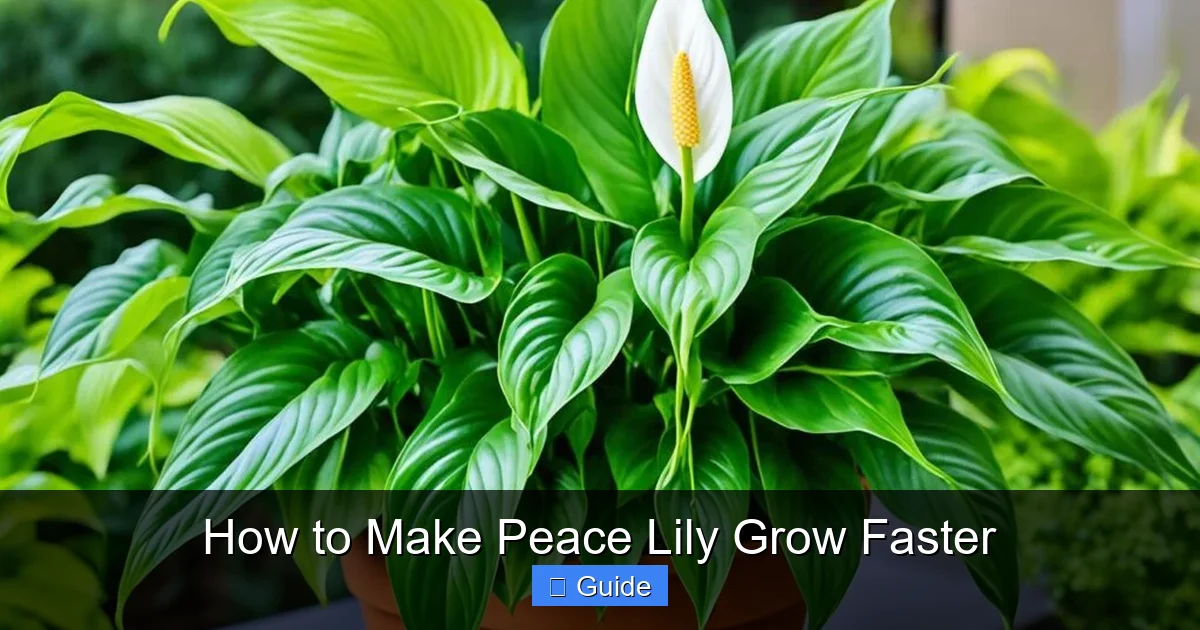
How to Make Peace Lily Grow Faster
Want a thriving peace lily? This guide reveals the exact steps to accelerate growth using proper lighting, consistent watering, and the right fertilizer schedule. Follow these proven techniques and watch your plant transform into a lush, blooming beauty in record time.
Key Takeaways
- Bright indirect light is essential: Peace lilies grow fastest in filtered sunlight near east or north-facing windows.
- Water consistently but avoid soggy soil: Keep the top inch of soil moist, not wet, to prevent root rot while supporting rapid growth.
- Feed monthly during growing season: Use a balanced liquid fertilizer at half strength from spring through early fall.
- Repot every 1-2 years: Fresh soil and a slightly larger pot give roots room to expand and absorb nutrients efficiently.
- Maintain 65-85°F temperatures: Warm, stable conditions mimic their tropical origins and fuel faster leaf and flower production.
- Boost humidity to 50% or higher: Use a pebble tray, humidifier, or group plants together to prevent brown tips and encourage growth.
- Remove spent blooms and yellow leaves: Pruning redirects energy to new growth instead of maintaining dying foliage.
Quick Answers to Common Questions
How often should I water my peace lily for fastest growth?
Water when the top inch of soil feels dry. This usually means every 5-7 days in summer and every 10-14 days in winter. Always check with your finger first rather than following a rigid schedule.
What is the best fertilizer to make peace lily grow faster?
A balanced liquid fertilizer (10-10-10 or 20-20-20) applied at half strength monthly during spring through early fall provides the ideal nutrient boost for rapid leaf and flower production.
Can I put my peace lily in direct sunlight to speed up growth?
No. Direct sun scorches peace lily leaves within hours. Bright indirect light near an east or north-facing window, or filtered through a sheer curtain, drives the fastest photosynthesis without damage.
Why are my peace lily leaves turning brown at the tips?
Brown tips usually indicate low humidity, inconsistent watering, or fertilizer salt buildup. Increase humidity to 50%+, water evenly, and flush the soil monthly with plain water to prevent this.
When should I repot my peace lily for maximum growth?
Repot in spring every 1-2 years, or when roots circle the pot bottom or grow from drainage holes. Use a pot only 1-2 inches larger with well-draining mix to prevent waterlogging.
📑 Table of Contents
- Why Your Peace Lily Might Be Growing Slowly
- Give Your Peace Lily the Light It Craves
- Master the Watering Rhythm for Explosive Growth
- Feed Your Peace Lily for Maximum Velocity
- Repot at the Right Time to Unlock Root Potential
- Create a Tropical Microclimate for Peak Performance
- Prune and Groom to Redirect Energy
- Troubleshoot Common Growth Stoppers
- Advanced Tips for the Fastest Growth Possible
- Seasonal Growth Calendar
- Peace Lily Varieties and Their Growth Rates
- Common Myths That Slow You Down
- Measuring Your Success
- Conclusion
Why Your Peace Lily Might Be Growing Slowly
You brought home a gorgeous peace lily. It looked full and vibrant at the store. But weeks later, it just sits there. No new leaves. No flowers. Maybe a few yellow tips. Sound familiar?
You are not alone. Many plant parents wonder how to make peace lily grow faster when their plant seems stuck in neutral. The good news? Peace lilies are actually fast growers when their needs are met. They come from tropical rainforests where warmth, humidity, and dappled light create perfect growing conditions. Recreate that environment, and your plant will reward you with lush foliage and those iconic white blooms.
This guide walks you through every factor that controls growth speed. Light. Water. Soil. Fertilizer. Temperature. Humidity. Pot size. Pruning. We will cover it all with practical, easy-to-follow steps. No guesswork. Just results.
Give Your Peace Lily the Light It Craves
Why Light Drives Growth Speed
Light is the engine of plant growth. Through photosynthesis, your peace lily converts light energy into the sugars that fuel new leaves, roots, and flowers. Too little light means slow metabolism. Too much direct sun means scorched leaves. The sweet spot? Bright, indirect light.
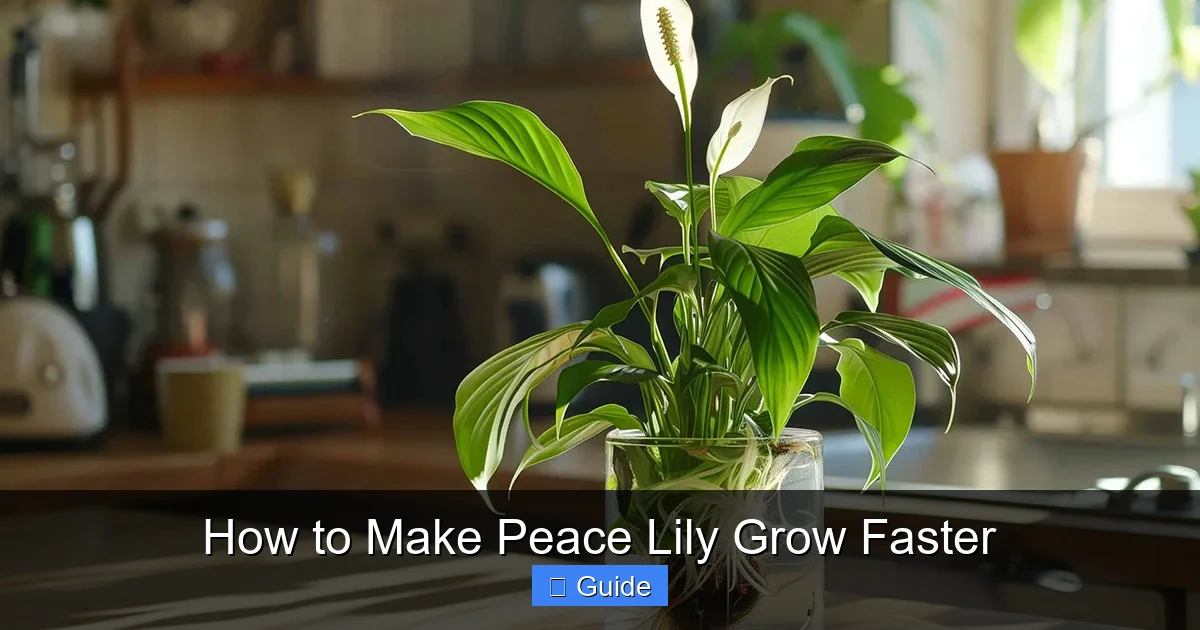
Visual guide about How to Make Peace Lily Grow Faster
Image source: plantglossary.com
In their native habitat, peace lilies grow on the forest floor beneath a canopy of taller trees. They receive filtered sunlight all day. That is exactly what you want to mimic indoors.
Best Window Placements
- East-facing windows: Ideal. Gentle morning sun followed by bright indirect light all day.
- North-facing windows: Good consistent light, though growth may be slightly slower in winter.
- South or west-facing windows: Use only with a sheer curtain or place the plant 3-5 feet back from the glass.
Signs Your Light Is Wrong
Too little light: Leggy stems, small leaves, no flowers, dark green foliage (the plant produces extra chlorophyll to compensate).
Too much direct sun: Bleached or brown patches on leaves, curled edges, crispy tips.
Pro Tip: Rotate Weekly
Turn your pot a quarter turn each time you water. This ensures even light exposure on all sides and prevents lopsided growth. A balanced plant grows faster because every leaf contributes to photosynthesis.
Supplemental Lighting for Dark Corners
If your home lacks bright windows, a full-spectrum LED grow light works wonders. Position it 12-18 inches above the plant and run it 12-14 hours daily. This single change can double growth speed in low-light homes.
Master the Watering Rhythm for Explosive Growth
The Goldilocks Rule: Not Too Wet, Not Too Dry
Watering mistakes are the number one reason peace lilies stall. These plants like consistently moist soil but they hate sitting in water. Think of a wrung-out sponge. That is your target moisture level.
How to Check Before You Water
- Finger test: Stick your index finger 1-2 inches into the soil. If it feels dry at your fingertip, water. If moist, wait.
- Weight test: Lift the pot. Light pot means dry soil. Heavy means wet.
- Moisture meter: Inexpensive and takes the guesswork out. Aim for a reading of 3-4 on a 1-10 scale.
Watering Technique Matters
When you water, do it thoroughly. Pour slowly until water flows from the drainage holes. This ensures the entire root ball gets hydrated and flushes out fertilizer salts. Empty the saucer after 15 minutes. Never let the pot sit in standing water.
Water Quality Counts
Peace lilies are sensitive to chemicals in tap water. Chlorine, fluoride, and hard minerals build up in soil and damage roots. This slows growth dramatically.
Best options:
- Filtered water
- Rainwater (collect it!)
- Distilled water
- Tap water left out overnight (lets chlorine evaporate)
Seasonal Adjustments
Your plant drinks more in summer when actively growing. In winter, growth slows naturally. Reduce frequency but never let the soil bone-dry. A thirsty peace lily dramatically droops. It perks up fast after watering, but repeated drought stress permanently slows growth.
Feed Your Peace Lily for Maximum Velocity
Why Fertilizer Accelerates Growth
Potting soil nutrients deplete within 2-3 months. Without replenishment, your plant survives but cannot thrive. Regular feeding during the growing season is the fastest way to see new leaves and flowers.
Choosing the Right Fertilizer
- Balanced liquid fertilizer (20-20-20 or 10-10-10): Easy to control dosage. Apply at half strength.
- Slow-release granules: Convenient but harder to adjust. Mix into top inch of soil in spring.
- Organic options: Fish emulsion, seaweed extract, or worm casting tea. Gentler, great for long-term soil health.
The Ideal Feeding Schedule
Spring through early fall: Feed every 4 weeks at half the label strength.
Late fall through winter: Stop fertilizing. The plant rests. Feeding now causes weak, leggy growth and salt buildup.
Signs of Over-Fertilizing
Brown leaf tips, white crust on soil surface, stunted new growth, root burn. If you see these, flush the soil thoroughly with plain water (run water through for 2-3 minutes) and pause feeding for 6-8 weeks.
Pro Tip: Foliar Feeding for a Quick Boost
Once a month, spray diluted liquid fertilizer (quarter strength) directly on leaves in the morning. Leaves absorb nutrients faster than roots. This trick works especially well when you want to make peace lily grow faster before a special event or after repotting stress.
Repot at the Right Time to Unlock Root Potential
Why Pot Size Controls Growth Speed
Roots need room. When they circle the pot bottom and sides (root-bound), they cannot absorb water or nutrients efficiently. The plant puts energy into survival, not new growth. Repotting gives fresh soil and space to expand.
How to Know It Is Time
- Roots growing from drainage holes
- Water runs straight through without absorbing
- Plant dries out in 1-2 days
- Visible roots circling soil surface
- Stunted new leaves despite good care
- It has been 12-18 months since last repot
Step-by-Step Repotting Guide
- Timing: Spring is best. The plant enters active growth and recovers fast.
- Pot selection: Choose a pot 1-2 inches wider in diameter. No bigger. Too much soil stays wet too long.
- Soil mix: 2 parts peat-based potting mix, 1 part perlite, 1 part orchid bark or coconut coir. This drains well but holds moisture.
- Process: Water plant day before. Gently remove. Loosen root ball. Trim any black, mushy roots. Place in new pot at same depth. Fill with mix. Water thoroughly.
Aftercare for Fast Recovery
Keep the repotted plant in slightly lower light for 3-5 days. Hold off on fertilizer for 4-6 weeks. The fresh soil has nutrients. Keep soil evenly moist. New growth usually appears within 2-3 weeks.
Dividing Large Plants
If your peace lily is huge with multiple crowns, divide it during repotting. Each section gets its own pot. This rejuvenates the plant and gives you free new plants. Divided sections often grow faster than the original crowded clump.
Create a Tropical Microclimate for Peak Performance
Temperature: The Hidden Growth Accelerator
Peace lilies thrive between 65°F and 85°F. Below 60°F, growth essentially stops. Below 50°F, cold damage occurs. Keep your plant away from drafty windows, AC vents, and exterior doors in winter.
Consistency matters more than the exact number. A steady 70°F beats fluctuating 65-80°F. Stable warmth keeps metabolism humming.
Humidity: The Secret Weapon
Rainforest humidity runs 70-90%. Most homes sit at 30-40%. That gap causes brown leaf tips, crispy edges, and slower growth. Raising humidity is one of the fastest ways to make peace lily grow faster.
Easy Humidity Hacks
- Pebble tray: Fill a tray with pebbles and water. Set pot on top (not in water). Evaporation creates a humidity bubble.
- Group plants: Plants transpire. Clustering them raises local humidity 5-10%.
- Humidifier: Best for consistent results. Run near plants, especially in winter.
- Bathroom placement: If you have a bright bathroom, this is peace lily paradise.
- Misting: Temporary boost. Do it morning so leaves dry by night (prevents fungal issues).
Air Circulation Prevents Problems
Stagnant humid air breeds fungus. A small fan on low, running a few hours daily, keeps air moving without drying the plant. This mimics natural forest breezes.
Prune and Groom to Redirect Energy
Why Removing Old Growth Sparks New Growth
Every yellow leaf and spent flower still draws resources. Removing them tells the plant: invest in the future. This is a simple but powerful way to accelerate growth.
What to Remove and When
- Yellow or brown leaves: Cut at base with clean scissors. They will not turn green again.
- Spent flowers: Snip the stalk at the base once the white spathe turns green or brown.
- Damaged leaves: Trim brown tips at an angle to mimic natural shape.
Cleaning Leaves Boosts Photosynthesis
Dust blocks light. Wipe leaves monthly with a damp cloth. Top and bottom. This single habit can increase light absorption by 20-30%. For large plants, a lukewarm shower works great. Let drain fully before returning to its spot.
Strategic Pruning for Shape
If your plant is lopsided or leggy, prune back the longest stems in spring. Cut just above a leaf node. New growth emerges from that node, creating a fuller, bushier plant faster than waiting for natural branching.
Troubleshoot Common Growth Stoppers
Pests That Slow Growth
Spider mites, mealybugs, and scale suck sap and weaken the plant. Check leaf undersides weekly. Treat immediately with insecticidal soap or neem oil. A pest-free plant grows 2-3x faster than an infested one.
Root Rot: The Silent Killer
Overwatering causes roots to turn black and mushy. The plant cannot drink, so it wilts despite wet soil. If caught early, repot in fresh dry mix, trim rotten roots, and reduce watering. Recovery takes months but is possible.
Nutrient Deficiencies
- Nitrogen: Older leaves yellow first. New growth pale and small.
- Magnesium: Yellow edges on older leaves, green center.
- Iron: New leaves yellow with green veins (chlorosis).
A balanced fertilizer prevents most deficiencies. For iron, use a chelated iron supplement if soil pH is too high.
Salt Buildup from Fertilizer or Tap Water
White crust on soil or pot rim means excess salts. Flush monthly: run room-temperature water through soil for 3-5 minutes. Let drain completely. This resets the root zone for optimal uptake.
Advanced Tips for the Fastest Growth Possible
CO2 Enrichment (Yes, Really)
Plants use CO2 for photosynthesis. Indoor air has ~400 ppm. Greenhouses often boost to 800-1200 ppm for 30-50% faster growth. You can mimic this by placing your peace lily in a room where people gather (we exhale CO2) or near a kitchen while cooking. Not practical for everyone, but it works.
Mycorrhizal Inoculants
Beneficial fungi form partnerships with roots, extending their first, expanding nutrient and water absorption dramatically. Add a mycorrhizal powder when repotting. One application lasts the life of the plant.
Seaweed Extract as a Growth Stimulant
Not a fertilizer. A biostimulant. Contains natural hormones (cytokinins, auxins) that trigger cell division and root growth. Apply monthly as a soil drench or foliar spray. Especially helpful after repotting or stress.
Hydroponic or Semi-Hydroponic Culture
Growing in LECA (clay pebbles) with a nutrient reservoir eliminates soil variables. Roots get perfect oxygen and moisture 24/7. Many growers report 2x growth speed in semi-hydro. Steep learning curve but maximum results.
Seasonal Growth Calendar
Spring (March-May): The Growth Sprint
- Repot if needed
- Begin fertilizing at half strength monthly
- Increase watering as days lengthen
- Move to brighter spot if winter was dim
- Divide overcrowded plants
- Apply mycorrhizae if repotting
Summer (June-August): Peak Production
- Maintain monthly feeding
- Water most frequently
- Monitor for pests weekly
- Provide shade from intense afternoon sun
- Boost humidity in AC environments
- Enjoy maximum flowering
Fall (September-November): Wind Down
- Reduce fertilizing by half in September
- Stop fertilizing by November
- Gradually reduce watering frequency
- Bring outdoor plants in before 55°F nights
- Check for hitchhiking pests
Winter (December-February): Maintenance Mode
- Water only when top inch dry
- No fertilizer
- Maximize light (move closer to windows)
- Run humidifier daily
- Keep away from heat vents
- Expect minimal growth this is normal
Peace Lily Varieties and Their Growth Rates
Not all peace lilies grow at the same speed. Knowing your variety sets realistic expectations.
Fast Growers (12-18 inches per year)
- Spathiphyllum ‘Mauna Loa’: Classic large variety. Vigorous.
- Spathiphyllum ‘Sensation’: Giant leaves up to 20 inches. Fast when happy.
- Spathiphyllum ‘Supreme’: Compact but prolific.
Moderate Growers (6-12 inches per year)
- Spathiphyllum ‘Domino’: Variegated. Slower due to less chlorophyll.
- Spathiphyllum ‘Picasso’: Heavily variegated. Slowest of all.
- Spathiphyllum ‘Wallisii’: Small, compact variety.
Variegated varieties need brighter light to compensate for reduced green leaf area. They will never grow as fast as solid green types, but the same care principles apply.
Common Myths That Slow You Down
Myth: Peace Lilies Like Low Light
They tolerate low light. They do not thrive there. In low light, they survive but grow glacially. For speed, give bright indirect light.
Myth: Let It Wilt Before Watering
Some say wait for the dramatic droop. Bad idea. Each drought stress event damages root tips and sets growth back weeks. Water before the wilt.
Myth: Coffee Grounds Are Great Fertilizer
Used grounds are fine in compost. Fresh grounds are acidic and nitrogen-poor. They can stunt growth. Stick to proper fertilizer.
Myth: Misting Replaces Humidity
Misting lasts 10 minutes. A humidifier or pebble tray works all day. Do not rely on misting alone.
Myth: Bigger Pot Means Faster Growth
Over-potting leads to wet soil and root rot. Only go up 1-2 inches. Roots fill the space first, then top growth follows.
Measuring Your Success
Track These Metrics Monthly
- Number of new leaves unfurled
- Leaf size (length x width of largest new leaf)
- Flower count
- Plant height and spread
- Root visibility at drainage holes (check during watering)
Photo Journal
Take a photo the first of each month from the same angle. In 6 months, you will see dramatic progress that daily observation misses. This also helps you spot problems early.
When to Expect Results
With optimal care, you should see noticeable acceleration within 3-4 weeks. New leaves appear larger. Color deepens. Flower buds form. Full transformation to a specimen plant takes 6-12 months depending on starting size.
Conclusion
Learning how to make peace lily grow faster is not about one magic trick. It is about consistently meeting every need: bright indirect light, consistent moisture, regular feeding, proper pot size, warm temperatures, high humidity, and timely pruning. Each factor compounds the others.
Start with the basics. Fix your light situation first. Then dial in watering. Add fertilizer. Check the roots. Boost humidity. Prune the old. Do one thing per week if overwhelmed. In a month, your plant will look different. In three months, your friends will ask for your secret.
Peace lilies want to grow. They are programmed for it. Your job is simply to remove the brakes. Give them what they evolved for, and they will explode with lush, glossy leaves and elegant white blooms faster than you thought possible.
Now go check your plant. Finger in the soil. Look at the light. Make one improvement today. Your future jungle thanks you.
Frequently Asked Questions
How long does it take for a peace lily to grow to full size?
With optimal care, a small peace lily reaches mature size (2-3 feet tall and wide) in 2-3 years. Fast-growing varieties like ‘Mauna Loa’ can hit full size in 18 months. Growth slows naturally after maturity.
Can peace lilies grow in water only?
Yes, peace lilies can grow hydroponically in water with liquid fertilizer. Change water weekly and add fertilizer monthly. Growth speed matches soil-grown plants when nutrients and oxygen are managed correctly.
Why is my peace lily not flowering?
Lack of flowers usually means insufficient light. Peace lilies need bright indirect light to bloom. Move to a brighter spot, ensure consistent feeding, and the plant will typically flower within 2-3 months.
Is it okay to cut all the leaves off a peace lily?
Never remove all leaves. The plant needs foliage for photosynthesis. You can trim yellow or damaged leaves at the base. If the plant is severely damaged, leave at least 2-3 healthy leaves for recovery.
Do peace lilies like to be root bound?
No. While they tolerate being slightly root-bound, growth slows significantly. Repotting into a slightly larger container with fresh soil stimulates a new growth flush within weeks.
Can I use tap water for my peace lily?
Tap water works if left out 24 hours to dissipate chlorine. However, fluoride and hard minerals still accumulate. Filtered, rain, or distilled water produces noticeably faster growth and prevents brown tips.