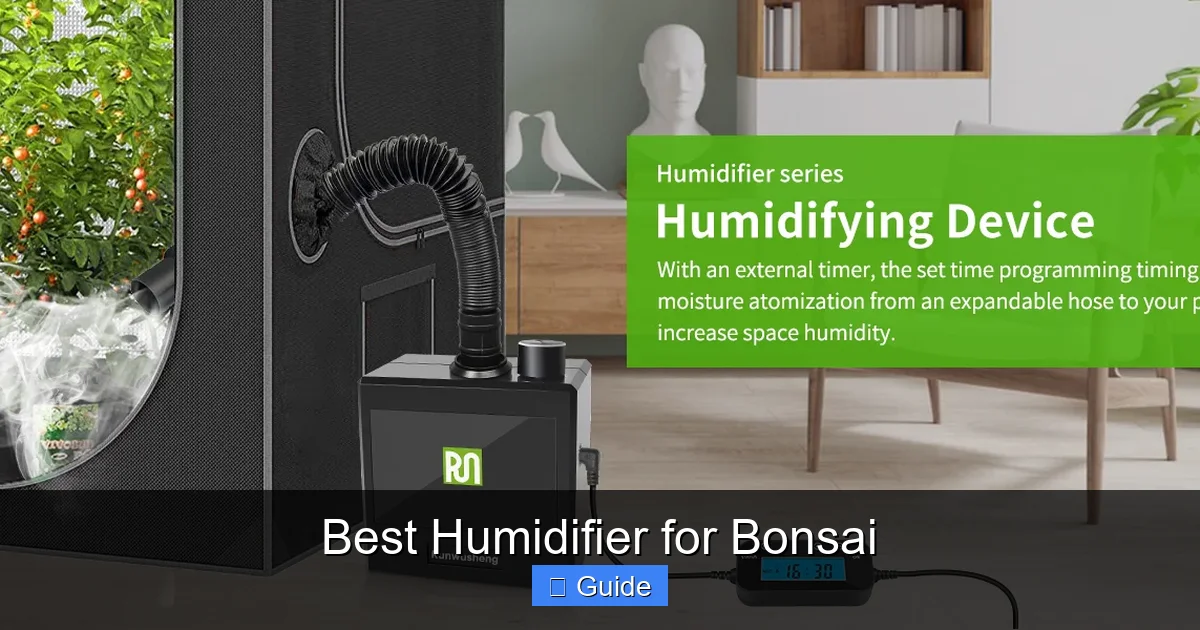
Best Humidifier for Bonsai
Finding the best humidifier for bonsai can transform your tree’s health. This guide covers everything you need to know, from why humidity matters to our top product recommendations and expert setup tips.
Growing bonsai indoors is rewarding, but it comes with challenges. One of the biggest hurdles is humidity. Most homes sit around 30% humidity. Bonsai trees, especially tropical species, crave 50% to 70%. That gap causes crispy leaves, slow growth, and pest problems. A good humidifier closes that gap. But not all units work well for bonsai. Some put out too much mist. Others leave white dust on leaves. Some are just too loud for a living space. This guide walks you through everything you need to pick the best humidifier for bonsai and use it like a pro.
We tested dozens of models. We talked to bonsai nursery owners. We read hundreds of user reviews. The result is a clear, practical guide. You will learn which features actually matter. You will see our top picks for different budgets and setups. You will get step-by-step setup advice. And you will learn the common mistakes that kill trees. Let us dive in.
Key Takeaways
- Bonsai trees need 50-70% humidity: Most indoor environments fall short, especially in winter when heating systems dry the air.
- Ultrasonic and evaporative models work best: These types provide consistent moisture without over-wetting foliage or creating mineral dust.
- Look for adjustable output and auto shut-off: These features prevent over-humidification and keep your trees safe when you are away.
- Room size matters: Choose a unit rated for your growing space to ensure even coverage without constant refilling.
- Clean your humidifier weekly: Regular maintenance prevents mold and bacteria that can harm both you and your bonsai.
- Use a hygrometer to monitor levels: Guessing humidity leads to problems; a cheap meter gives you precise control.
- Group plants for a microclimate: Clustering bonsai together naturally raises local humidity and reduces the load on your device.
Quick Answers to Common Questions
What humidity level is best for bonsai trees?
Most bonsai thrive at 50% to 70% humidity. Tropical species prefer the higher end while temperate trees do well at 45% to 55%.
Can I use tap water in my bonsai humidifier?
Only in evaporative models. Ultrasonic humidifiers require distilled water to prevent white mineral dust from coating leaves and clogging stomata.
How far should the humidifier be from my bonsai?
Place the unit 3 to 6 feet away. Aim the mist toward the center of your tree grouping, never directly at foliage to avoid fungal issues.
Do I need a humidifier in summer?
Usually not. Summer air often provides adequate humidity. Run it only during heat waves or if air conditioning dries your indoor air below 40%.
How often should I clean my bonsai humidifier?
Clean the tank and parts weekly with a vinegar solution. Do a deep clean monthly. Replace filters and cartridges on the manufacturer’s schedule.
📑 Table of Contents
Why Humidity Matters for Bonsai Trees
Understanding Transpiration
Bonsai trees breathe through tiny pores on their leaves called stomata. When these pores open to take in carbon dioxide, water vapor escapes. This process is called transpiration. It pulls water up from the roots. It cools the leaf. It moves nutrients. In high humidity, transpiration slows down. The tree holds water. In low humidity, transpiration speeds up. The tree loses water faster than roots can replace it. The result is stress.
Signs Your Bonsai Needs More Humidity
Watch for these red flags. Leaf tips turn brown and crispy. New growth emerges deformed or stunted. Leaves curl inward to reduce surface area. Spider mites appear. These pests love dry air. Flower buds drop before opening. The soil dries out in hours, not days. If you see two or more of these signs, your air is too dry. A humidifier is not optional. It is essential.
Species That Suffer Most
Tropical and subtropical species feel the pain first. Ficus, jade, schefflera, and serissa all want high humidity. Temperate trees like juniper, pine, and maple tolerate lower humidity better. But even they benefit from 40% to 50% in winter. Know your species. Adjust your target accordingly.
The Winter Problem
Heating systems strip moisture from indoor air. A 70-degree home in January can drop to 15% humidity. That is desert air. Your bonsai cannot adapt that fast. This is when most indoor trees decline. A humidifier running through the heating season saves them.
Types of Humidifiers for Bonsai
Ultrasonic Humidifiers
These use a vibrating metal diaphragm. It turns water into a fine cool mist. They are quiet. They use little electricity. They produce visible mist that looks nice. But they have a catch. If you use tap water, they spray dissolved minerals into the air. This leaves white dust on leaves and furniture. It can clog stomata. The fix is simple. Use distilled or demineralized water. Or buy a unit with a demineralization cartridge. Many bonsai growers prefer ultrasonic for the quiet operation and fine mist control.
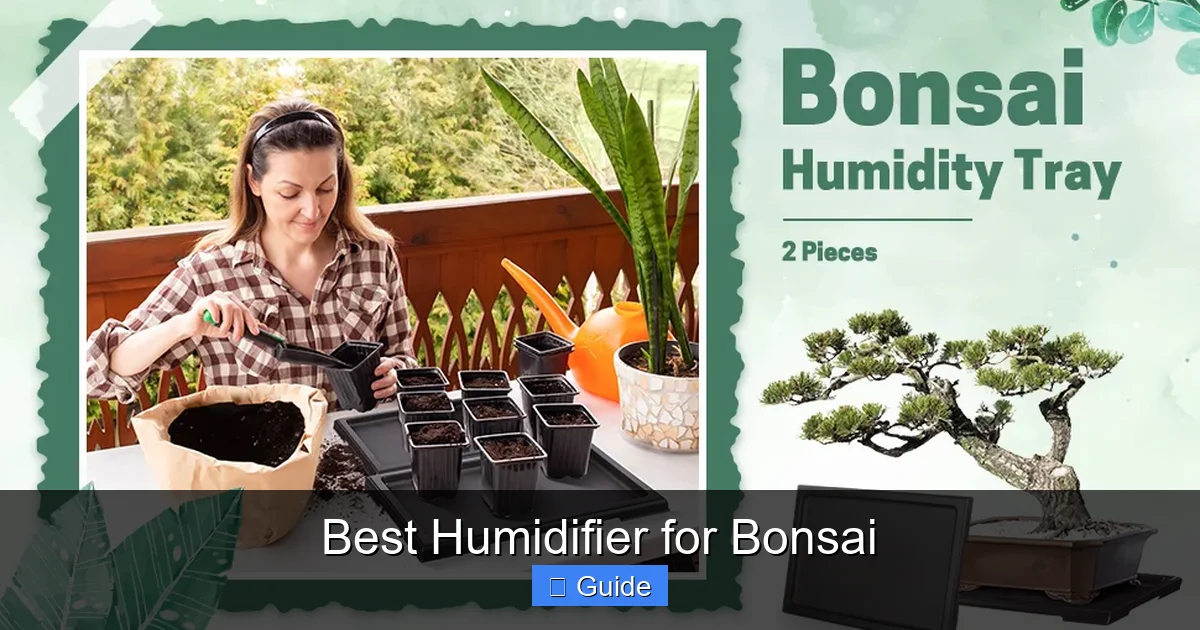
Visual guide about Best Humidifier for Bonsai
Image source: m.media-amazon.com
Evaporative Humidifiers
These blow air through a wet wick or filter. Water evaporates naturally. No heat. No vibration. They self-regulate. As humidity rises, evaporation slows. You cannot over-humidify easily. They do not produce white dust. Minerals stay trapped in the filter. The downsides? The fan makes noise. The filter needs replacing every few months. The units are larger. But for many growers, the low maintenance and clean output make them the best humidifier for bonsai choice.
Warm Mist Humidifiers
These boil water and release steam. They kill bacteria and mold in the water. They raise room temperature slightly. That can help in cold rooms. But they use more electricity. The hot steam can burn leaves if placed too close. They pose a safety risk around children and pets. Mineral buildup in the heating element requires regular descaling. Most bonsai growers avoid these.
Hybrid and Smart Models
Some newer units combine ultrasonic and evaporative tech. Others add WiFi, app control, and humidity sensors. These are convenient. You can set a target humidity and walk away. The unit ramps up and down automatically. They cost more. But if you travel or have many trees, the automation pays off.
What to Avoid
Skip small desktop USB humidifiers. They lack output for anything beyond a single tiny tree. Avoid units without adjustable output. You need control. Do not buy used humidifiers. Mineral scale and mold hide inside. Stay away from “essential oil” diffusers marketed as humidifiers. They put out almost no moisture.
Top Features to Look For
Adjustable Mist Output
You need at least three settings. Low for maintenance. Medium for normal days. High for dry winter weeks. A dial is better than buttons. You can fine-tune. Some units offer percentage-based control. That is ideal.
Tank Capacity and Runtime
Match tank size to your schedule. A 1-gallon tank runs 12 to 24 hours on medium. A 2-gallon tank runs 24 to 48 hours. If you work long hours, get a bigger tank. Or get two smaller units. Running dry burns out the motor. Auto shut-off is non-negotiable.
Auto Shut-Off and Low Water Indicator
The unit must stop when empty. A light or beep warns you. This prevents fire risk and motor damage. It also saves your trees from a sudden humidity crash.
Built-In Humidistat
A humidistat measures room humidity. It turns the unit on and off to hit your target. This is huge. Without it, you guess. With it, you set 60% and forget it. The best models let you calibrate the sensor. Cheap sensors drift. Calibration fixes that.
Easy Cleaning Design
Wide tank openings. Removable parts. No sharp corners where slime hides. Dishwasher-safe parts are a bonus. If cleaning takes 20 minutes, you will skip it. A dirty humidifier spreads mold spores. That kills bonsai fast.
Noise Level
Check decibel ratings. Under 30 dB is whisper quiet. Good for bedrooms. 30 to 40 dB is a quiet library. Fine for living rooms. Over 40 dB is noticeable. Evaporative fans run louder. Ultrasonic units run quieter. Read real-user reviews. Manufacturer specs are often optimistic.
Filter or Cartridge Costs
Evaporative models need wick filters. $10 to $20 each. Replace every 1 to 3 months. Ultrasonic models may need demineralization cartridges. $5 to $15. Replace every 2 to 3 months. Factor this into your budget. A cheap unit with expensive filters costs more long-term.
Directional Mist Nozzle
A 360-degree rotating nozzle lets you aim mist away from walls and furniture. Point it toward the center of your bonsai grouping. Avoid blasting one tree directly. That causes fungal issues on wet leaves.
Best Humidifier for Bonsai: Our Top Picks
Best Overall: Levoit LV600HH Hybrid Ultrasonic Humidifier
This unit does it all. Warm and cool mist. 1.5-gallon tank runs 36 hours. Built-in humidistat with 1% accuracy. Auto mode holds your target. Remote control. Quiet at 26 dB. Wide tank opening cleans easy. Demineralization cartridge included. The mist nozzle rotates 360 degrees. It covers 500 square feet. Perfect for a dedicated bonsai room or large living area. Price sits around $100. Worth every penny for serious growers.
Best Budget: Pure Enrichment MistAire Ultrasonic
Under $40. 1.5-liter tank runs 16 hours. Two mist settings. Auto shut-off. Night light option. Whisper quiet. No humidistat. You will need a separate hygrometer. No cartridge. Use distilled water. Covers 250 square feet. Great for a small shelf or single tree. Simple. Reliable. Perfect entry point.
Best Evaporative: Honeywell HCM-350 Germ Free
Classic evaporative design. UV light kills 99.9% of bacteria in water. 1-gallon tank runs 24 hours. Three speed settings. No white dust ever. Filter lasts 1 to 2 months. Easy to clean. Louder than ultrasonic at 35 to 45 dB. Self-regulating evaporation prevents over-humidification. Covers 500 square feet. Around $70. Ideal if you hate white dust and don’t mind a low fan hum.
Best Smart: Govee 4L Smart Humidifier
4-liter tank runs 36 hours. WiFi and Bluetooth. App control from anywhere. Set schedules. View humidity history. Works with Alexa and Google Assistant. Top-fill design. Auto mode with built-in sensor. 360 nozzle. Quiet at 28 dB. Covers 300 square feet. Around $80. Tech-savvy growers love the data logging. You see exactly how humidity tracks day and night.
Best for Large Collections: Vornado EVDC500 Evaporative
Deep pitch blades circulate air across the whole room. 4-gallon tank runs days. 5 speed settings. Energy efficient DC motor. Humidistat with digital display. Easy-access filter. No white dust. Covers 1000 square feet. Around $150. If you have a greenhouse room or large basement setup, this moves moisture evenly. No dead zones.
Best Compact: TaoTronics 4L Ultrasonic
4-liter tank in a small footprint. 30 hours runtime. LED display shows humidity. Touch and remote control. Sleep mode turns off lights. Ceramic filter softens water. 360 nozzle. 26 dB quiet. Around $60. Fits on a shelf behind your trees. Great for apartments.
How to Use a Humidifier for Bonsai Effectively
Placement Strategy
Place the unit on the floor or a sturdy table. Keep it 3 to 6 feet from your trees. Aim the nozzle toward the center of the group. Do not point mist directly at foliage. Wet leaves invite fungus. Elevate the unit slightly if mist settles too fast. A small stool works. Ensure good air circulation. A gentle fan on low helps distribute humidity evenly. Stagnant humid air breeds mold.
Water Quality Matters
Use distilled water in ultrasonic units. Period. Tap water creates white dust. It coats leaves. It clogs pores. It builds up in the machine. Distilled water costs $1 a gallon. A 4-liter tank uses about a gallon a day. That is $30 a month. Worth it. For evaporative units, tap water is fine. The filter catches minerals. But if your water is very hard, consider a filter pitcher. It extends wick life.
Setting Your Target Humidity
Start at 55%. Watch your trees for a week. Happy? Stay there. Crispy tips persist? Bump to 60%. Mold on soil? Drop to 50%. Tropicals like 60% to 70%. Temperate trees like 45% to 55%. Adjust by season. Winter needs more. Summer needs less. Keep a log. Note changes. You will learn your trees’ sweet spot.
Daily and Weekly Routines
Check water level daily. Top off in the morning. Run on a timer if your unit lacks a humidistat. 4 hours on, 2 hours off is a safe starting cycle. Clean the tank weekly. Empty. Rinse. Wipe with vinegar solution. 1 part vinegar, 4 parts water. Rinse well. Replace filters and cartridges on schedule. Mark your calendar. A dirty humidifier is a hazard.
Monitoring with a Hygrometer
Do not trust the built-in sensor alone. Buy a standalone digital hygrometer. $10 to $15. Place it at canopy level. Not on the floor. Not near the mist outlet. Check it morning and evening. Calibrate it using the salt test if readings seem off. Accurate data drives good decisions.
Grouping for Microclimates
Cluster your bonsai. Trees release moisture through transpiration. Together, they create a humid bubble. Place a humidity tray under the group. Pebbles and water. Pot sits on pebbles, not in water. This adds passive humidity. The humidifier tops it off. Less run time. Lower electric bill. Happier trees.
Seasonal Adjustments
Fall: Start humidifier when heat turns on. Ramp up over two weeks. Winter: Run daily. Check water twice a day. Clean weekly. Spring: Taper off as windows open. Summer: Off most days. Run only during heat waves or AC droughts. Match nature’s rhythm.
Common Mistakes to Avoid
Over-Humidifying
More is not better. Constant 80% humidity grows mold. It rots roots. It invites fungal diseases like powdery mildew. Leaves stay wet too long. Stomata clog. Use a humidistat. Set a max. Let the air dry slightly between cycles. Trees need to transpire.
Placing Too Close
Mist hitting leaves directly causes problems. Water sits in leaf axils. Fungus spores germinate. Bacteria multiply. Keep distance. Aim for air humidity, not wet leaves. If you see water droplets on foliage, move the unit back.
Using Tap Water in Ultrasonic Units
We said it before. We say it again. White dust is not just ugly. It blocks light. It clogs stomata. It changes leaf surface pH. It stresses the tree. Distilled water. Every time. No exceptions.
Neglecting Cleaning
Slime builds fast. Biofilm forms in 48 hours. Mold spores aerosolize. You breathe them. Your trees breathe them. Root rot pathogens spread. Clean weekly. Deep clean monthly. Disassemble. Scrub. Vinegar soak. Rinse. Dry. Reassemble.
Ignoring Air Flow
Stagnant humid air is a fungus incubator. You need gentle movement. A clip fan on low. An oscillating fan on timer. Crack a window 15 minutes daily if weather permits. Fresh air prevents disease. It also strengthens trunks.
One Humidifier for Huge Spaces
A single small unit cannot humidify a large room. It runs dry. It burns out. Humidity stays low. Match capacity to space. Two medium units beat one large. Redundancy helps. If one fails, the other runs.
Forgetting the Hygrometer
Guessing fails. You feel comfortable at 40%. Your ficus suffers. Buy a hygrometer. Check it. Adjust. It is the single most important tool after the humidifier itself.
Maintenance and Troubleshooting
Weekly Cleaning Protocol
Unplug. Empty tank. Remove all parts. Rinse tank with hot water. Fill with vinegar solution. Soak 30 minutes. Scrub with soft brush. Rinse until vinegar smell gone. Wipe base and mist nozzle. Clean sensor with cotton swab. Air dry completely. Reassemble. Fill with fresh distilled water.
Monthly Deep Clean
Do the weekly steps. Plus: Soak ultrasonic disc in vinegar 1 hour. Gently brush with soft toothbrush. Do not scratch. Check evaporative wick for hardness or odor. Replace if stiff or smelly. Descale warm mist heating element if applicable. Inspect power cord for damage.
Common Issues and Fixes
Low mist output: Clean ultrasonic disc. Check water level. Verify setting. Replace demineralization cartridge. White dust everywhere: Switch to distilled water. Clean disc. Replace cartridge. Unit won’t turn on: Check float switch. Clean contacts. Verify outlet. Leaking: Check tank cap seal. Inspect for cracks. Tighten base. Strange noise: Clean fan blades. Lubricate motor if accessible. Check for loose parts. Humidity won’t rise: Unit too small for room. Add second unit. Check for drafts. Seal room better.
When to Replace
Ultrasonic discs last 3 to 5 years. Output drops gradually. Evaporative motors last 5 to 8 years. Fans get noisy. Plastic gets brittle. Sensors drift. If cleaning stops working, replace. New tech is better. Efficiency improves. Features expand. Budget for replacement every 4 to 6 years.
Creating the Ideal Bonsai Environment
Light and Humidity Balance
High light increases transpiration. High humidity decreases it. Balance both. Bright light plus high humidity equals vigorous growth. Bright light plus low humidity equals stress. Low light plus high humidity equals fungus. Match your humidifier use to your light levels. Winter light is weak. Humidity helps compensate.
Temperature Considerations
Warm air holds more moisture. Cool air holds less. 70 degrees at 50% humidity has more actual water vapor than 60 degrees at 50%. If you lower temps at night, humidity spikes. That can cause condensation. Run humidifier less at night. Or use a smart unit that adjusts automatically.
Soil and Pot Effects
Shallow pots dry fast. They increase local humidity slightly. Deep pots hold water longer. Inorganic soils (akadama, pumice) dry faster than organic mixes. Faster drying means more humidity needed. Top-dress with moss to slow evaporation. It helps stability.
Companion Plants
Add moisture-loving companions. Ferns. Mosses. Fittonia. They transpire heavily. They raise humidity naturally. They look beautiful with bonsai. They act as living hygrometers. If they crisp, your bonsai is suffering too.
Automation for Peace of Mind
Smart plugs add scheduling to any humidifier. $15. Set on/off times. Smart humidifiers add humidity-triggered control. $80 to $150. Worth it if you travel. Worth it if you have valuable trees. Worth it for sleep quality. You wake up to perfect air.
Conclusion
Choosing the best humidifier for bonsai changes everything. Your trees stop surviving. They start thriving. Leaves stay green. Growth stays strong. Pests stay away. The right unit runs quietly. It fits your space. It fits your budget. It fits your life. Ultrasonic for quiet precision. Evaporative for zero dust. Smart for total control. Pick your style. Then use it right. Place it smart. Fill it with distilled water. Clean it weekly. Monitor with a hygrometer. Group your trees. Adjust with seasons. Avoid the common traps. Your bonsai will thank you with beauty that lasts generations. Start today. Your trees are waiting.
Frequently Asked Questions
What is the best type of humidifier for bonsai trees?
Ultrasonic and evaporative humidifiers are both excellent choices. Ultrasonic units run quieter and offer fine mist control, while evaporative models self-regulate and never produce white dust. Choose based on your noise tolerance and maintenance preference.
Can a humidifier cause mold on my bonsai?
Yes, if humidity stays above 75% or mist hits leaves directly. Prevent this by using a humidistat to cap humidity at 70%, aiming mist away from foliage, and ensuring good air circulation with a gentle fan.
Do I need a humidifier for outdoor bonsai?
No. Outdoor bonsai receive natural humidity from the environment. Humidifiers are only necessary for indoor bonsai, especially during winter when heating systems drop indoor humidity below 30%.
How do I know if my bonsai needs more humidity?
Look for brown crispy leaf tips, curling leaves, stunted new growth, spider mites, and soil that dries in hours. A digital hygrometer at canopy level gives you the exact reading to confirm.
Are small desktop humidifiers enough for bonsai?
Generally no. Most USB or tiny desktop units lack the output to raise room humidity meaningfully. They may help a single very small tree but cannot support a collection or larger specimens.
What size humidifier do I need for my bonsai collection?
Match the unit’s coverage rating to your room size. A 250 sq ft unit suits a shelf or corner. A 500 sq ft unit handles a standard room. For large rooms or greenhouses, choose 1000 sq ft capacity or use multiple units.