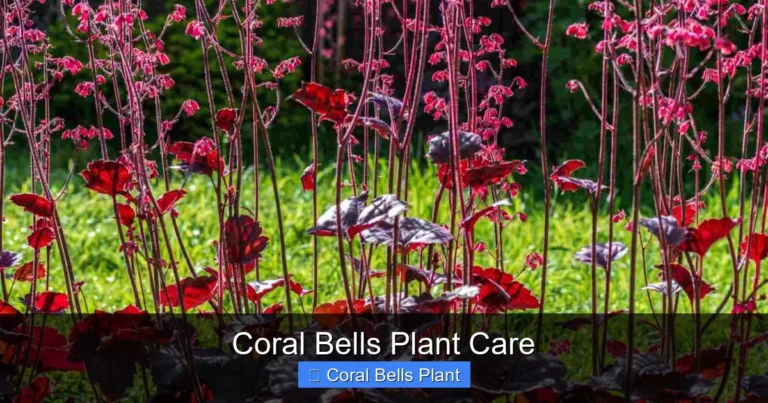
Coral Bells Plant
Coral bells (Heuchera) are versatile perennial plants prized for their colorful foliage and delicate bell-shaped flowers. These low-maintenance shade lovers thrive in zones 4-9 and offer year-round interest with leaves in shades of purple, silver, green, and caramel.
If you have ever wandered through a shade garden and spotted mounds of ruffled leaves in shades of deep plum, electric lime, or shimmering silver, chances are you were admiring coral bells. These charming perennials have undergone a renaissance in recent decades, transforming from humble native wildflowers into the darlings of modern garden design. Their botanical name, Heuchera, honors Johann Heinrich von Heucher, an 18th-century German physician and botanist, but most gardeners simply call them coral bells or alumroot.
What makes coral bells so special? It is not just their tolerance for shade — though that is a huge plus for anyone struggling with dark corners of the yard. It is the incredible diversity of foliage color, texture, and form that breeders have coaxed from a handful of North American species. Whether you want a sophisticated monochromatic scheme or a riot of contrasting hues, there is a coral bells variety to match your vision. And the best part? They ask for very little in return.
Key Takeaways
- Foliage is the star: Coral bells are grown primarily for their stunning, colorful leaves that provide year-round garden interest.
- Shade tolerant: These plants thrive in partial to full shade, making them perfect for difficult garden spots under trees or on north-facing walls.
- Low maintenance: Once established, coral bells require minimal care — just occasional watering and division every few years.
- Huge variety: Hundreds of cultivars exist with foliage colors ranging from deep purple to bright lime, silver, caramel, and near-black.
- Attracts pollinators: The delicate flower spikes draw hummingbirds, bees, and butterflies to the garden in late spring and summer.
- Versatile uses: Perfect for borders, containers, rock gardens, woodland settings, and as ground cover in shaded areas.
- Deer resistant: Their slightly fuzzy, bitter-tasting foliage makes them unappealing to deer and rabbits.
Quick Answers to Common Questions
What are coral bells plants?
Coral bells (Heuchera) are perennial plants native to North America, grown primarily for their colorful, ruffled foliage in shades of purple, silver, caramel, gold, and green, with delicate bell-shaped flowers on tall stems.
Do coral bells like sun or shade?
Coral bells prefer partial shade — morning sun with afternoon shade is ideal. In cooler zones they tolerate more sun; in hot zones they need protection from intense afternoon sun to prevent leaf scorch.
How often should I water coral bells?
Water newly planted coral bells deeply once or twice weekly for the first season. Established plants are drought-tolerant but look best with regular moisture during dry spells. Always water at the base, not on foliage.
When should I divide coral bells?
Divide coral bells every 3-4 years in early spring as new growth emerges, or in early fall at least 6 weeks before the ground freezes. This rejuvenates woody centers and produces new plants.
Are coral bells deer resistant?
Yes, coral bells are generally deer and rabbit resistant due to their astringent, slightly fuzzy foliage. However, very hungry animals may still browse them, especially young plants.
📑 Table of Contents
- Understanding the Coral Bells Plant
- Choosing the Right Variety for Your Garden
- Planting Coral Bells Successfully
- Ongoing Care and Maintenance
- Common Problems and Solutions
- Designing with Coral Bells
- Seasonal Care Calendar
- Propagating Coral Bells
- Coral Bells in Different Climate Zones
- Companion Plants for Coral Bells
- Frequently Asked Questions About Coral Bells
- Conclusion
Understanding the Coral Bells Plant
Botanical Background and Native Range
Coral bells belong to the Saxifragaceae family, which includes other garden favorites like foamflower (Tiarella) and astilbe. The genus Heuchera contains roughly 50 species, all native to North America. You will find them growing wild from the cool, moist woodlands of the Pacific Northwest to the rocky outcrops of the Appalachian Mountains and the canyons of the Southwest.
In their natural habitats, these plants have adapted to a surprising range of conditions. Some species cling to sheer cliff faces with barely a handful of soil. Others spread as ground cover beneath towering conifers. This adaptability is exactly why they perform so well in cultivated gardens — they are tough, resilient, and used to making do with less-than-perfect conditions.
Foliage: The Main Attraction
While coral bells do produce lovely flowers, it is the foliage that steals the show. The leaves emerge from a central crown in a basal rosette, forming neat mounds that typically reach 8 to 18 inches tall and wide, depending on the variety. Leaf shapes vary from rounded to deeply lobed, with edges that can be smooth, ruffled, or dramatically cut.
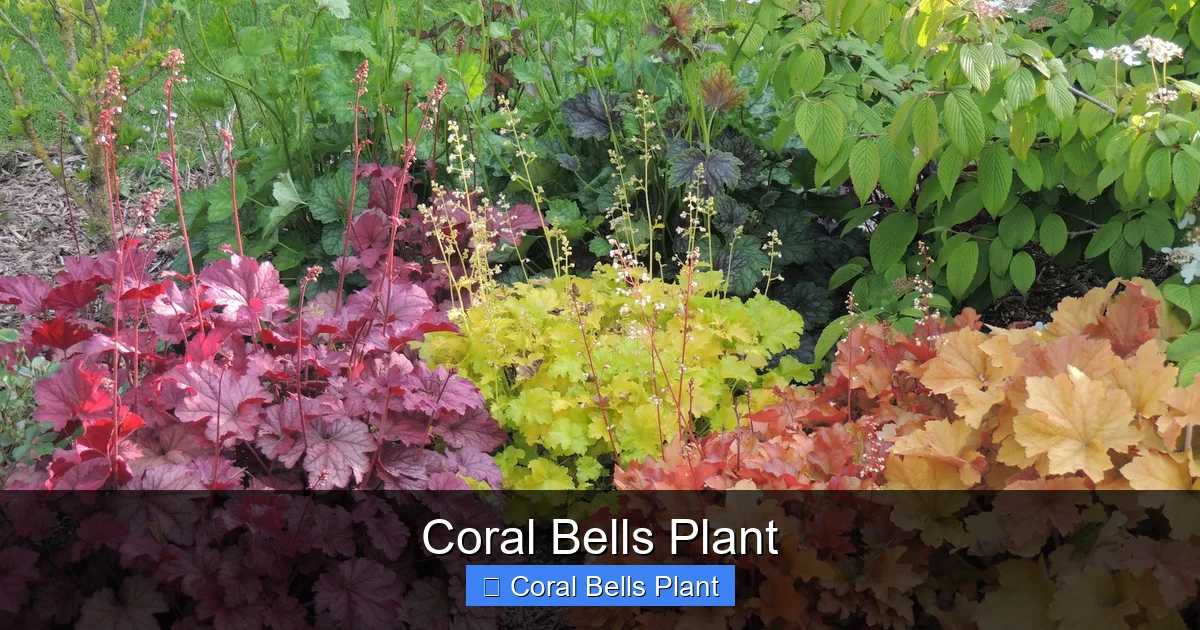
The color palette is staggering. You will find cultivars in deep burgundy, nearly black, rich purple, bronze, caramel, peach, amber, gold, chartreuse, silver, and countless variegated combinations. Many varieties change color through the seasons — emerging one shade in spring, deepening or shifting in summer heat, and often intensifying again with autumn’s cooler temperatures. Some even hold their color through winter in milder climates, providing rare cold-season interest.
Flowers: Delicate and Charming
Do not overlook the flowers entirely. In late spring to early summer, slender wiry stems rise above the foliage, bearing clusters of tiny bell-shaped blooms. These flowers range from white and pale pink to coral red — hence the common name. While individually small, they create a lovely airy effect en masse and are excellent for cutting. Hummingbirds adore them, and they add a vertical dimension to shade plantings that are often dominated by horizontal foliage mounds.
Choosing the Right Variety for Your Garden
Classic Heuchera Species and Their Traits
Understanding the parent species helps you pick varieties suited to your specific conditions. Heuchera americana, the American alumroot, is native to eastern woodlands and contributes cold hardiness and shade tolerance. Its leaves are typically green with silver veining. Heuchera micrantha, from the West Coast, brings larger leaves and a more vigorous habit. Heuchera sanguinea, the true coral bells of the Southwest, offers the brightest red flowers and exceptional heat and drought tolerance.
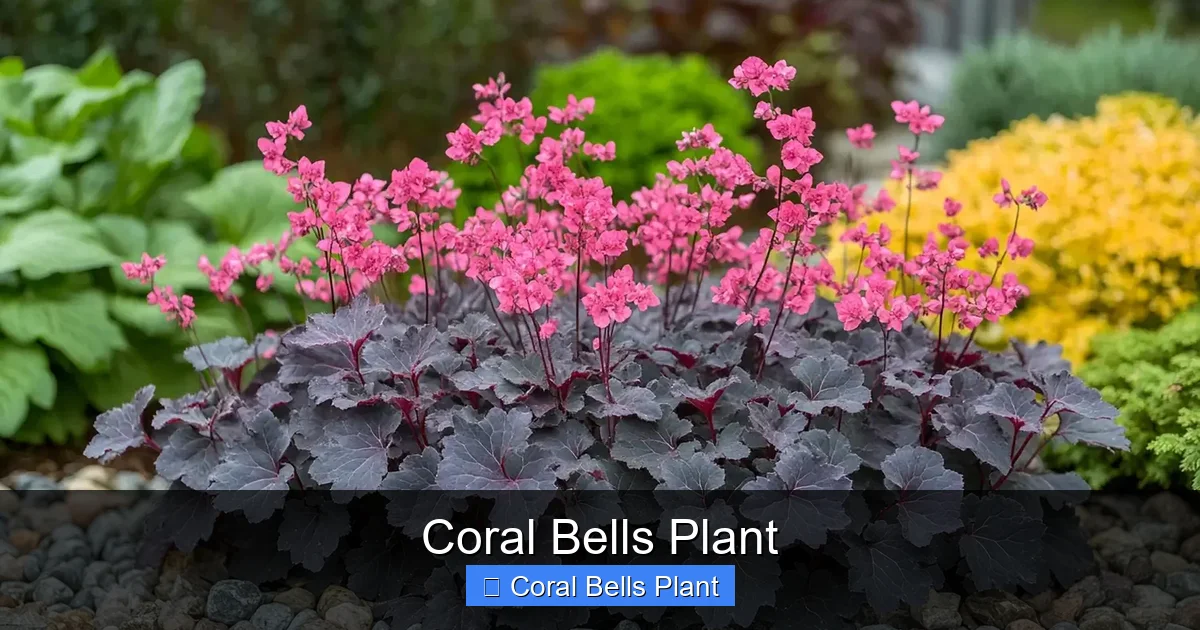
Visual guide about Coral Bells Plant
Image source: growcycle.com
Heuchera villosa, the hairy alumroot from the Appalachians, is a game-changer for southern gardeners. Its large, fuzzy leaves handle heat and humidity far better than other species, and it is the backbone of many modern heat-tolerant cultivars. Heuchera cylindrica contributes a compact, tidy habit and unique cylindrical flower spikes.
Popular Modern Cultivars by Color Group
The explosion of breeding since the 1990s has given us hundreds of named varieties. Here are standout choices organized by foliage color:
- Purple to Near-Black: ‘Obsidian’ (glossy, jet-black leaves), ‘Palace Purple’ (the classic that started the craze, deep bronze-purple), ‘Black Pearl’ (intensely ruffled, almost black), ‘Forever Purple’ (holds color all season).
- Silver and Pewter: ‘Silver Scrolls’ (metallic silver with dark veins), ‘Looking Glass’ (mirror-like silver overlay), ‘Appletini’ (silver with green edges).
- Caramel, Peach, and Amber: ‘Caramel’ (the gold standard for this color group, large fuzzy leaves), ‘Peach Flambe’ (bright peach turning plum in fall), ‘Georgia Peach’ (heat-tolerant, peach with silver overlay), ‘Fire Alarm’ (red new growth maturing to amber).
- Chartreuse, Lime, and Gold: ‘Lime Rickey’ (ruffled lime green), ‘Electra’ (gold with shocking red veins), ‘Citronelle’ (bright yellow-green, very vigorous), ‘Delta Dawn’ (gold with red center).
- Green with Dramatic Veining: ‘Green Spice’ (silver-green with dark purple veins), ‘Rave On’ (green with pink flowers and silver overlay), ‘Peppermint Spice’ (green with silver and pink tones).
Heucherellas: The Best of Both Worlds
You will often see plants labeled x Heucherella (sometimes written as Heucherella). These are intergeneric hybrids between Heuchera and Tiarella (foamflower). They combine the colorful foliage of coral bells with the more prolific, showier flower spikes of foamflower. Popular varieties like ‘Sweet Tea’, ‘Alabama Sunrise’, and ‘Solar Eclipse’ offer stunning foliage patterns and better flower power than many pure Heuchera cultivars.
Planting Coral Bells Successfully
When to Plant
Spring and fall are the ideal planting times. Spring planting gives roots a full growing season to establish before winter. Fall planting takes advantage of cooler temperatures and reliable rainfall, with less stress on the plant. Avoid planting in the heat of summer unless you can provide consistent moisture and temporary shade. In zones 7 and warmer, fall planting is often more successful because roots continue growing through mild winters.
Selecting the Perfect Site
Most coral bells prefer partial shade — morning sun with afternoon shade is the sweet spot. In cooler northern climates (zones 4-6), they can handle more sun, even full sun if moisture is consistent. In hot southern zones (7-9), they need protection from intense afternoon sun, which can scorch leaves and fade colors. Deep shade is tolerated but may reduce foliage vibrancy and flower production.
Consider the mature size when spacing. Most varieties need 12 to 18 inches between plants. For a quick ground cover effect, you can plant closer and divide later. Avoid low spots where water collects — crown rot is the number one killer of coral bells.
Soil Preparation and Planting Technique
Coral bells want well-drained, humus-rich soil with a slightly acidic to neutral pH (6.0-7.0). Heavy clay is problematic unless amended generously with compost, leaf mold, or aged bark. Sandy soils benefit from organic matter to improve moisture retention. Work 2-3 inches of compost into the top 8-10 inches of soil before planting.
Here is the critical planting detail: set the crown at or slightly above soil level. The crown is where leaves emerge from the roots. Burying it leads to rot. If your plant arrives with the crown buried in the pot, gently remove soil until you see the crown. Plant in a hole wide enough to spread roots, backfill, firm gently, and water thoroughly. Apply a thin layer of mulch — shredded leaves, pine straw, or bark — keeping it away from the crown.
Container Planting
Coral bells are superb container plants. Their tidy mounds and year-round foliage make them perfect for shaded porches, patios, and entryways. Choose a pot at least 12 inches wide with drainage holes. Use a high-quality potting mix amended with perlite or coarse sand for extra drainage. Container plants need more frequent watering and feeding than in-ground plants. In cold zones, move pots to an unheated garage or bury them in the ground for winter protection.
Ongoing Care and Maintenance
Watering Wisdom
Newly planted coral bells need consistent moisture for the first growing season. Water deeply once or twice a week, depending on rainfall and temperature. Established plants are surprisingly drought-tolerant, especially varieties with H. villosa or H. sanguinea parentage. However, they look their best with regular moisture during dry spells. Water at the base of the plant — wet foliage encourages fungal diseases. A soaker hose or drip irrigation is ideal.
Fertilizing: Less Is More
Coral bells are light feeders. Too much nitrogen produces lush, soft growth that is prone to disease and winter damage. In spring, apply a slow-release balanced fertilizer (like 10-10-10 or 5-5-5) at half the recommended rate, or top-dress with an inch of compost. That is usually all they need. Container plants benefit from a diluted liquid fertilizer monthly during the growing season.
Mulching Matters
A 1-2 inch layer of organic mulch conserves moisture, suppresses weeds, and keeps soil temperatures stable. Shredded leaves, pine needles, and bark fines are excellent choices. The key rule: keep mulch away from the crown. Piling mulch against the base of the plant creates a moist, dark environment perfect for crown rot. Leave a 1-inch gap around each plant.
Deadheading and Grooming
Remove spent flower stems at the base once blooms fade. This tidies the plant and may encourage a light rebloom. Throughout the season, pull or snip off any damaged, diseased, or unsightly leaves at the base. In late winter or early spring, before new growth emerges, do a thorough cleanup — remove all old, tattered foliage. This eliminates overwintering pests and diseases and makes way for fresh growth.
Division: The Secret to Longevity
Coral bells tend to become woody and heave out of the ground after 3-4 years. The center of the clump dies out, leaving a ring of growth. Division rejuvenates them. The best time is early spring as new growth appears, or early fall (at least 6 weeks before ground freeze). Dig the entire clump, shake off soil, and pull or cut apart into sections, each with healthy roots and several growth points. Discard the woody center. Replant divisions at the proper depth, water well, and mulch.
Common Problems and Solutions
Crown Rot: The Silent Killer
This fungal disease (usually Phytophthora or Rhizoctonia) strikes when soil stays soggy around the crown. Symptoms include yellowing, wilting leaves that do not recover after watering, and a mushy, dark crown. Prevention is everything: plant high, ensure excellent drainage, avoid overwatering, and keep mulch off the crown. If caught very early, you can sometimes save a plant by digging it, cutting away rotted tissue, dusting with fungicide, and replanting in a drier spot. Usually, though, affected plants should be removed and destroyed.
Heuchera Rust
This fungal disease appears as small, rust-colored pustules on the undersides of leaves, with corresponding yellow spots on top. It thrives in humid, crowded conditions. Improve air circulation by spacing plants properly and dividing crowded clumps. Remove and destroy infected leaves. Avoid overhead watering. Fungicides labeled for rust can help if applied early. Some cultivars show better resistance — ‘Caramel’, ‘Citronelle’, and the villosa hybrids are notably rust-resistant.
Foliar Nematodes
These microscopic worms live inside leaves, creating angular brown patches between veins. Damage appears in late summer. There is no effective chemical control for home gardeners. Remove and destroy affected leaves. Do not compost them. Hot water treatment (immersing dormant divisions in 110°F water for 30 minutes) can clean planting stock, but it is tricky to get right.
Vine Weevils
Adult weevils notch leaf edges at night. The real damage comes from larvae eating roots, causing sudden wilting and plant collapse. Check roots if a plant fails inexplicably. Beneficial nematodes (Steinernema kraussei) applied as a soil drench in spring and fall control larvae effectively. Adults can be trapped at night with a flashlight and soapy water.
Deer and Rabbits
Good news: coral bells are generally deer and rabbit resistant due to their astringent, slightly fuzzy foliage. However, hungry animals will eat almost anything. In high-pressure areas, use repellents or physical barriers, especially on young plants.
Designing with Coral Bells
Shade Garden Combinations
Coral bells shine in shade gardens where their colorful foliage lights up dim corners. Pair purple-leaved varieties like ‘Obsidian’ with golden hostas, Japanese forest grass (Hakonechloa ‘Aureola’), or golden creeping Jenny for high contrast. Silver cultivars like ‘Looking Glass’ glow beside deep green ferns, hellebores, and brunnera. For a monochromatic sophisticated look, combine several caramel and amber varieties with different leaf textures — ruffled, smooth, large, small.
Woodland and Naturalistic Plantings
In a woodland setting, plant coral bells in drifts of 5-7 or more, intermingled with native spring ephemerals like trillium, bloodroot, and Virginia bluebells. The coral bells’ evergreen foliage covers the dying foliage of ephemerals. Add foamflower, wild ginger, and Solomon’s seal for a layered, naturalistic tapestry. Choose cultivars with species parentage suited to your region — villosa hybrids for the Southeast, micrantha types for the Northwest.
Rock Gardens and Slopes
Compact varieties excel in rock gardens and on slopes where their drainage needs are naturally met. ‘Petite Pearl Fairy’, ‘Little Cutie’ series, and ‘Canyon’ series stay under 10 inches and tuck beautifully between stones. Their evergreen foliage provides winter structure when alpine plants are dormant. Pair with sedums, creeping thyme, dwarf conifers, and small bulbs.
Container Recipes
For a stunning shade container, use the thriller-filler-spiller formula. A tall, architectural plant like Japanese painted fern or carex serves as thriller. Coral bells in a bold color (chartreuse ‘Electra’ or deep ‘Black Pearl’) fill the middle. Trailing plants like creeping Jenny, ivy, or sweet potato vine spill over edges. In a single large pot, you can plant 3-5 different coral bells varieties for a foliage-only display that lasts all season.
Border Edging and Pathway Plantings
The neat, mounding habit makes coral bells ideal for edging shady borders or lining pathways. Plant them 12-15 inches apart in a gentle curve. Their foliage stays attractive all season, unlike many perennials that look tired by August. Choose varieties that complement adjacent plants — silver foliage echoes stone pavers, while caramel tones warm up cool green hedges.
Seasonal Care Calendar
Spring (March-May)
- Remove winter mulch from crowns as temperatures rise
- Clean up dead foliage before new growth emerges
- Apply slow-release fertilizer or compost top-dressing
- Divide crowded or woody clumps (early spring)
- Plant new purchases after danger of hard freeze
- Watch for vine weevil notching on new leaves
Summer (June-August)
- Deadhead spent flower stems
- Water deeply during dry spells
- Monitor for rust in humid weather
- Remove any diseased foliage promptly
- Enjoy hummingbirds visiting flowers
- Plan fall divisions and new plantings
Fall (September-November)
- Divide and transplant (early fall, 6+ weeks before freeze)
- Plant new coral bells — excellent establishment time
- Reduce watering as temperatures cool
- Apply fresh mulch after ground cools, keeping off crowns
- Remove any diseased foliage before winter
- Mark locations of dormant plants in cold zones
Winter (December-February)
- In zones 6 and colder, ensure snow cover or apply evergreen boughs for protection
- Check container plants in unheated garage — water lightly if dry
- Do not cut back foliage — it protects the crown
- Browse catalogs and plan next year’s additions
- Order bare-root divisions for early spring planting
Propagating Coral Bells
Division: The Reliable Method
As described earlier, division is the easiest and most reliable way to propagate coral bells. It produces mature plants identical to the parent, and you get multiple plants from one. Do it every 3-4 years to maintain vigor anyway, so propagation is a bonus.
Seed: For the Patient Experimenter
Coral bells grow readily from seed, but named cultivars will not come true — seedlings vary widely. This is fun if you enjoy surprise and selection, but not if you want a specific variety. Sow fresh seed on the surface of moist seed-starting mix (light aids germination). Keep at 65-70°F. Germination takes 2-8 weeks. Transplant seedlings to individual pots when they have true leaves. They reach flowering size in 1-2 years.
Leaf Cuttings: Advanced Technique
Some gardeners propagate from leaf cuttings. Remove a healthy leaf with a short piece of petiole (leaf stem). Dip in rooting hormone and insert into moist perlite-vermiculite mix. Cover with a humidity dome. Roots and a new plantlet may form at the base in 4-8 weeks. Success rates vary by cultivar. This works best with vigorous, large-leaved varieties.
Coral Bells in Different Climate Zones
Zones 3-4: Cold Climate Strategies
In the coldest zones, choose varieties with H. americana and H. richardsonii parentage for maximum hardiness. ‘Palace Purple’, ‘Dale’s Strain’, and the Northern Exposure series are bred for zone 3. Plant in spring only. Provide winter protection — a 4-6 inch layer of straw or evergreen boughs applied after the ground freezes. Snow cover is the best insulator. Avoid fall planting unless you can mulch heavily. Site in a spot with reliable snow cover, not where snow blows away.
Zones 5-6: The Sweet Spot
This is prime coral bells territory. Nearly all cultivars thrive here. Spring or fall planting works. Winter mulch is helpful but not essential if snow cover is reliable. The full color range performs well. This is where you can experiment with the newest, most colorful introductions.
Zones 7-8: Heat and Humidity Challenges
In the mid-South and lower Midwest, summer heat and humidity stress many coral bells. Prioritize villosa hybrids (‘Caramel’, ‘Citronelle’, ‘Mocha’, ‘Brownies’, ‘Georgia Peach’, ‘Fire Alarm’) and sanguinea types. Plant in fall for best establishment. Site in bright shade or morning sun only. Ensure excellent drainage and air circulation. Mulch to keep roots cool. Expect some summer dormancy — foliage may decline but rebounds in fall.
Zone 9 and Warmer: Pushing the Limits
In the deep South and Southwest, coral bells are often grown as cool-season annuals or in containers that can be moved to shade. Villosa hybrids and ‘Canyon’ series (bred from southwestern species) have the best heat tolerance. Provide dense shade, consistent moisture, and excellent drainage. Afternoon sun is fatal. In zone 9b and warmer, they may not survive summer. Treat as winter-to-spring color, replacing in fall.
Companion Plants for Coral Bells
Best Perennial Partners
- Hostas: Bold, broad leaves contrast beautifully with ruffled coral bells. Blue hostas make purple heucheras pop.
- Ferns: Japanese painted fern, autumn fern, lady fern, and Christmas fern add fine texture and movement.
- Hellebores: Early bloomers with leathery evergreen foliage. Their nodding flowers complement coral bells’ airy spikes.
- Brunnera: ‘Jack Frost’ and ‘Looking Glass’ brunnera echo silver heucheras; their forget-me-not flowers are a spring bonus.
- Astilbe: Feathery plumes in pink, red, white rise above ferny foliage — perfect vertical accent.
- Pulmonaria: Spotted foliage and early blue-pink flowers. ‘Silver Bouquet’ is nearly all silver.
- Tiarella (Foamflower): Native companion with similar needs. ‘Spring Symphony’, ‘Sugar and Spice’ are standouts.
- Epimedium: Tough, deer-proof ground cover with heart-shaped leaves and delicate flowers.
- Japanese Forest Grass: ‘Aureola’ (gold-striped) and ‘All Gold’ cascade like water beside mounded heucheras.
- Carex (Sedges): Evergreen grassy texture. ‘Ice Dance’, ‘Evergold’, ‘Blue Zinger’ add structure.
Bulbs and Ephemerals
Plant spring bulbs among coral bells. The heuchera foliage emerges as bulb foliage fades, hiding the yellowing leaves. Snowdrops, crocus, species tulips, daffodils, and alliums all work. Native ephemerals like trillium, bloodroot, and Virginia bluebells create a true woodland vignette.
Shrubs for Backdrop
Small shade-tolerant shrubs provide height and winter structure. Oakleaf hydrangea, fothergilla, sweet pepperbush (Clethra), mountain laurel, rhododendrons, and azaleas frame coral bells plantings beautifully. Their coarse texture contrasts with the perennials’ finer foliage.
Frequently Asked Questions About Coral Bells
Do coral bells spread aggressively?
No, coral bells are clump-forming perennials that slowly increase in size but do not run or spread aggressively. They stay where you plant them. Over many years, a clump may reach 18-24 inches wide, but it will not invade neighboring plants or lawn areas. If a clump gets too large, simply divide it.
Why are my coral bells losing their color?
Several factors cause color fading. Too much sun bleaches pigments, especially on dark varieties. Too much shade reduces color intensity, particularly on gold and red types. Excess nitrogen fertilizer produces greener, less colorful growth. Heat stress can cause color washout in summer — many varieties look best in spring and fall. Some cultivars naturally change through the seasons.
Can coral bells grow in full sun?
In zones 4-6, many varieties tolerate full sun if soil moisture is consistent. Light-colored foliage (chartreuse, gold, silver) burns more easily than dark foliage. In zones 7+, full sun is generally too stressful. Morning sun with afternoon shade is the safest bet everywhere. If you must plant in sun, choose villosa hybrids, ‘Caramel’, ‘Citronelle’, ‘Palace Purple’, or the Canyon series.
Are coral bells evergreen?
In zones 6 and warmer, most coral bells are evergreen or semi-evergreen, holding foliage through winter. In zones 4-5, they are often semi-evergreen — foliage may look tattered by late winter but persists. In zone 3, they are usually herbaceous, dying back to the ground. Even when evergreen, the old foliage should be removed in early spring to make way for fresh growth.
How long do coral bells live?
Individual plants can live 5-10 years or more, but they tend to become woody and decline after 3-4 years without division. Regular division every 3-4 years essentially makes them perennial indefinitely — you are continually renewing the plant. Some of the oldest cultivars in gardens have been maintained for decades through division.
Can I grow coral bells indoors?
Coral bells are not ideal houseplants. They need a winter dormancy period triggered by cold temperatures and short days. Without it, they weaken and decline. However, you can overwinter container plants in an unheated garage or cold frame (35-45°F) with minimal light. Bring them out in early spring. Some people enjoy them as temporary indoor displays for a few weeks, but they will not thrive long-term indoors.
Conclusion
Coral bells have earned their place as shade garden royalty. Few plants offer such a dazzling array of foliage colors, such adaptability to difficult sites, and such low maintenance requirements — all while supporting pollinators and resisting deer. Whether you are a novice gardener looking for reliable color in a shady corner or a seasoned plantsman building sophisticated foliage tapestries, there is a coral bells variety (or ten) that belongs in your garden.
The key to success is simple: give them well-drained soil, plant the crown high, provide the right amount of shade for your climate, and divide them every few years. Do that, and they will reward you with year-round beauty for decades. Start with one or two varieties that catch your eye. Tuck them into a shady spot. Watch them settle in. Before you know it, you will be dividing them to share with friends — and planning where to put the next collection.
Your shade garden is waiting. Go find your perfect coral bells.
Frequently Asked Questions
What is the best fertilizer for coral bells?
Coral bells are light feeders. Apply a slow-release balanced fertilizer at half strength in spring, or top-dress with an inch of compost. Avoid high-nitrogen fertilizers which cause soft growth prone to disease.
Can coral bells grow in full shade?
Coral bells tolerate full shade but may have reduced foliage color intensity and fewer flowers. Deep shade can also lead to leggy growth. Bright shade or dappled light produces the best color and form.
Why are my coral bells dying in the center?
This is natural aging — the crown becomes woody and dies out after 3-4 years. The solution is division: dig the plant, discard the dead center, and replant the healthy outer sections with roots attached.
Do coral bells bloom all summer?
Most coral bells bloom in late spring to early summer for 3-4 weeks. Some varieties may produce a light rebloom if deadheaded promptly. The foliage provides the main season-long interest.
Can I plant coral bells under trees?
Yes, coral bells are excellent under deciduous trees where they get spring sun before leaves emerge and summer shade. Avoid dense evergreen shade and areas with aggressive tree roots that compete for moisture.
What causes holes in coral bells leaves?
Vine weevil adults notch leaf edges at night. Slugs and snails also chew holes, especially in damp conditions. Check at night with a flashlight for weevils; use beer traps or diatomaceous earth for slugs.