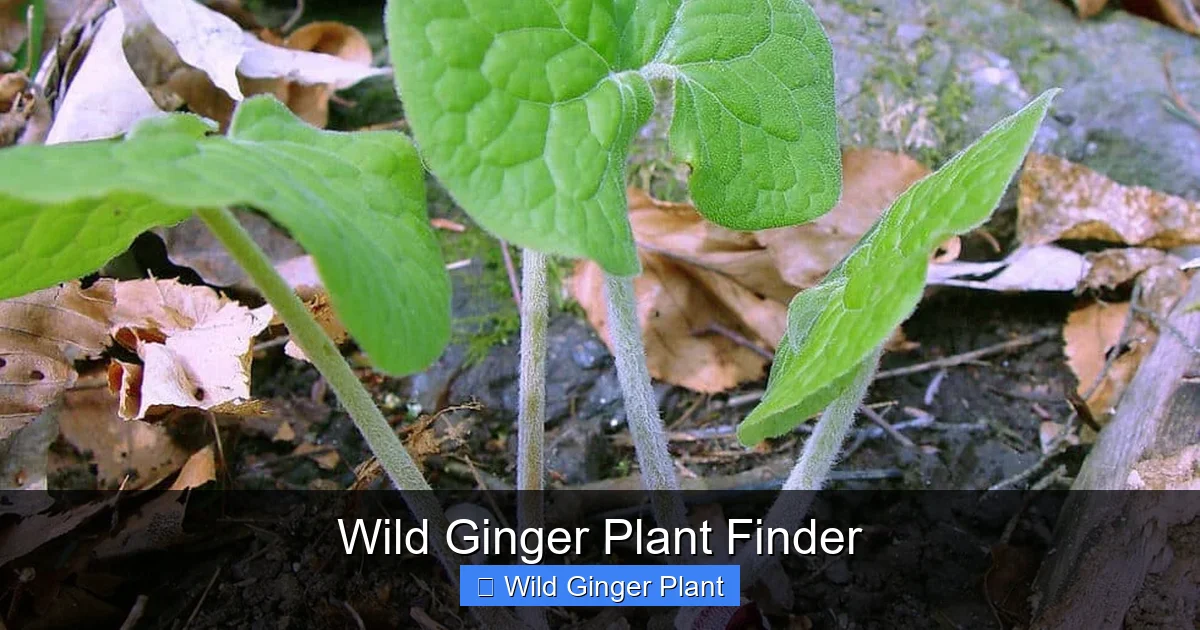
Wild Ginger Plant Finder
Wild ginger (Asarum canadense) is a native North American groundcover prized for its heart-shaped leaves and hidden bell-shaped flowers. This comprehensive guide teaches you how to find, identify, and responsibly harvest wild ginger using a wild ginger plant finder approach that respects local ecosystems and regulations.
Have you ever wandered through a spring woodland and wondered about those low-growing plants with heart-shaped leaves carpeting the forest floor? Chances are you’ve encountered wild ginger, a fascinating native perennial that has captured the attention of foragers, herbalists, and native plant enthusiasts for generations. This unassuming groundcover holds secrets beneath its foliage – quite literally – with unusual flowers that bloom at soil level, hidden from casual view.
Finding wild ginger in its natural habitat requires knowledge, patience, and respect for the ecosystems where it thrives. Whether you’re a seasoned forager looking to expand your wild edible repertoire or a nature lover hoping to photograph this botanical treasure, understanding where and how to locate wild ginger transforms a simple walk in the woods into a rewarding adventure. This guide covers everything you need to become an effective wild ginger plant finder while practicing responsible stewardship of our natural heritage.
Key Takeaways
- Habitat matters: Wild ginger thrives in rich, moist deciduous forests with dappled shade and neutral to slightly acidic soil.
- Identification is key: Look for pairs of heart-shaped leaves and distinctive jug-shaped flowers hiding at ground level.
- Timing improves success: Spring through early summer offers the best visibility for locating colonies before dense undergrowth appears.
- Ethical foraging protects populations: Never harvest more than 10% of a colony and always leave roots intact for regeneration.
- Legal awareness prevents fines: Check state regulations and obtain permits before foraging on public lands.
- Technology aids discovery: Plant identification apps and GPS mapping tools enhance your wild ginger plant finder capabilities.
- Cultivation offers sustainability: Growing wild ginger at home reduces pressure on wild populations while providing reliable harvests.
Quick Answers to Common Questions
What is wild ginger plant finder?
wild ginger plant finder refers to essential knowledge and techniques.
📑 Table of Contents
Understanding Wild Ginger Basics
What Is Wild Ginger?
Wild ginger (Asarum canadense) belongs to the birthwort family (Aristolochiaceae) and shares no botanical relationship with culinary ginger (Zingiber officinale). This native North American perennial forms dense colonies through rhizomatous spread, creating beautiful groundcover in suitable woodland conditions. The plant earns its common name from the ginger-like aroma released when roots are crushed, though the flavor profile differs significantly from its tropical namesake.
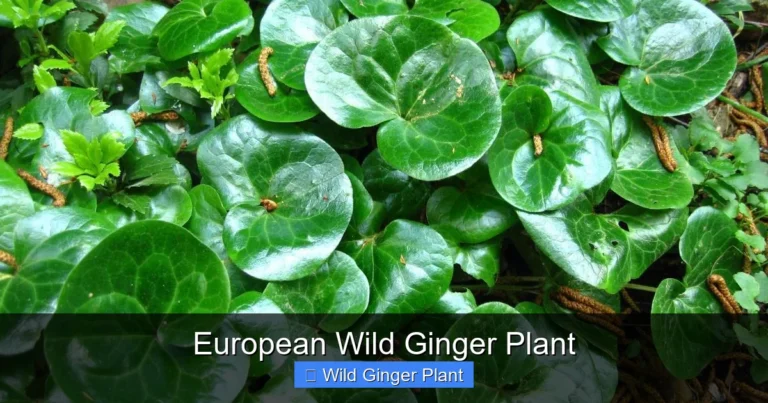
Each plant produces a pair of large, heart-shaped (cordate) leaves that emerge in early spring. These leaves measure 3-6 inches across and feature prominent veins with a soft, slightly hairy texture. The foliage remains attractive throughout the growing season, turning golden yellow in autumn before dying back for winter dormancy.
The Hidden Flowers
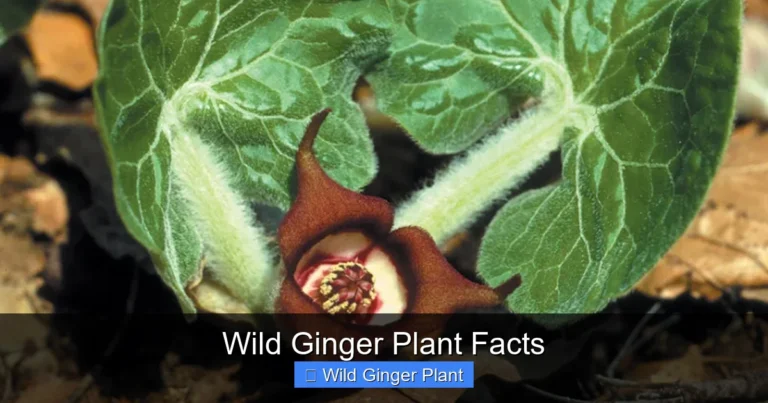
Perhaps the most intriguing feature of wild ginger is its unusual flowering strategy. Unlike most plants that display blooms prominently to attract pollinators, wild ginger produces solitary, bell-shaped flowers at ground level, often partially buried in leaf litter. These flowers measure about 1 inch across with three pointed sepals in shades of brownish-purple to maroon.
This ground-level flowering adaptation attracts early spring pollinators like small flies and beetles that crawl across the forest floor. The flowers emit a faint fungal odor that mimics decaying matter, drawing in these specialized pollinators. After pollination, the plant develops a fleshy capsule containing numerous seeds, each with an elaiosome – a nutrient-rich appendage that attracts ants for seed dispersal.
Native Range and Distribution
Wild ginger naturally occurs across eastern North America, from Manitoba and Quebec south to Georgia and west to Missouri and Oklahoma. The plant thrives in USDA hardiness zones 3-8, demonstrating remarkable cold tolerance. Within this range, it occupies specific microhabitats that meet its particular requirements for moisture, shade, and soil chemistry.
Several related species exist in western North America, including Asarum caudatum (long-tailed wild ginger) in the Pacific Northwest and Asarum hartwegii in California. While these share similar growth habits, they differ in flower morphology and specific habitat preferences. This guide focuses primarily on Asarum canadense, the most widespread and commonly sought species.
Ideal Habitats for Your Wild Ginger Plant Finder Search
Forest Type Preferences
Successful wild ginger location begins with understanding forest ecology. This plant strongly prefers mature deciduous forests dominated by sugar maple, basswood, white ash, and red oak. These forest types create the perfect combination of spring ephemeral light conditions before canopy closure and rich, neutral soils from leaf litter decomposition.
Mixed hardwood-conifer forests can also support wild ginger, particularly where deciduous species create sufficient leaf litter. However, pure coniferous stands typically lack the soil conditions wild ginger requires. The acidic needle litter and dense year-round shade create unfavorable conditions for this species.
When scouting locations, prioritize forests with minimal recent disturbance. Old-growth or mature second-growth stands (80+ years) typically harbor the most robust populations. Recent logging, heavy deer browsing, or invasive species infestations often correlate with reduced or absent wild ginger populations.
Soil and Moisture Requirements
Soil conditions play a crucial role in wild ginger distribution. The plant thrives in deep, rich, well-drained soils with high organic matter content. Soil pH between 6.0 and 7.0 (slightly acidic to neutral) supports optimal growth. Areas with limestone or dolomite bedrock often produce exceptional populations due to the calcium-rich soils derived from these parent materials.
Consistent moisture without waterlogging defines the ideal moisture regime. Wild ginger flourishes on lower slopes, ravines, and stream terraces where groundwater maintains soil moisture through dry periods. However, it avoids poorly drained depressions, floodplains with frequent inundation, and excessively dry ridge tops.
When evaluating a potential site, dig a small test hole to assess soil texture and moisture. Loamy soils that hold together when squeezed but crumble easily indicate favorable conditions. Sandy soils drain too quickly, while heavy clays may become waterlogged or excessively hard when dry.
Topographic Position and Aspect
Topography influences wild ginger distribution through its effects on moisture, temperature, and light. North and east-facing slopes typically support larger populations due to cooler temperatures, higher moisture retention, and protection from intense afternoon sun. These aspects also delay spring warming slightly, which can protect early emerging foliage from late frosts.
Lower slope positions and coves collect moisture and nutrients through gravitational movement, creating prime habitat. However, the very bottom of steep ravines may experience cold air drainage and frost pockets that can damage emerging leaves. The “sweet spot” often occurs on mid-slope benches or gentle lower slopes with good air drainage.
When using a wild ginger plant finder approach, topographic maps or GPS apps with terrain layers help identify promising areas before you even enter the woods. Look for north-facing coves, gentle slopes near perennial streams, and terraces above floodplains in mature hardwood stands.
Indicator Species and Plant Communities
Experienced foragers use companion plants as reliable indicators of suitable wild ginger habitat. Certain species share nearly identical ecological requirements, making them excellent signposts. When you encounter these associates, wild ginger likely grows nearby:
- Spring ephemerals: Trilliums (especially Trillium grandiflorum), bloodroot (Sanguinaria canadensis), Dutchman’s breeches (Dicentra cucullaria), and trout lily (Erythronium americanum)
- Ferns: Maidenhair fern (Adiantum pedatum), Christmas fern (Polystichum acrostichoides), and lady fern (Athyrium filix-femina)
- Woody understory: Spicebush (Lindera benzoin), pawpaw (Asimina triloba), and bladdernut (Staphylea trifolia)
- Other herbs: Blue cohosh (Caulophyllum thalictroides), goldenseal (Hydrastis canadensis), and black cohosh (Actaea racemosa)
These indicator species form what ecologists call a “mesic forest herb layer” – a community adapted to moist, nutrient-rich conditions. Learning to recognize just a few of these companions dramatically increases your efficiency as a wild ginger plant finder.
Seasonal Timing for Optimal Location
Early Spring: The Prime Window
April through early May represents the absolute best time for locating wild ginger in most of its range. During this period, the forest canopy remains open, allowing maximum light to reach the forest floor. Wild ginger leaves emerge early, often before tree leaf-out, creating conspicuous patches of bright green against the brown leaf litter.
This early emergence strategy allows wild ginger to photosynthesize and store energy before dense shade limits light availability. The leaves reach full size within 2-3 weeks of emergence, forming the characteristic dense groundcover. Flowers appear simultaneously with or slightly after leaf expansion, though they require careful searching to locate.
Early spring also offers practical advantages for the searcher. Tick populations remain low, undergrowth hasn’t reached full height, and comfortable temperatures make extended woodland walks pleasant. Mosquitoes and deer flies haven’t emerged yet in most regions.
Late Spring Through Summer
As the canopy closes in late May through June, light levels on the forest floor drop dramatically. Wild ginger continues growing but becomes less conspicuous among the expanding herbaceous layer. Ferns, jack-in-the-pulpit, and other mid-story plants create visual competition that makes spotting wild ginger colonies more challenging.
However, summer searches offer their own rewards. The foliage remains lush and attractive, and you can assess colony size and vigor more accurately when plants reach full seasonal development. Seed capsules mature in mid to late summer, providing opportunities for ethical seed collection if propagation interests you.
Summer also reveals the plant’s shade tolerance dramatically. While many spring ephemerals go dormant by July, wild ginger maintains its leaves throughout the growing season, demonstrating its adaptation to low-light conditions. This persistence makes it identifiable even in dense shade where other species have disappeared.
Fall and Winter Considerations
Autumn brings a final show of color as wild ginger leaves turn clear golden yellow before senescence. This color change can make colonies visible from a distance in late October, especially on slopes where the yellow patches contrast with darker forest floor. However, the window is brief – usually just 1-2 weeks before leaves collapse.
Winter identification relies on recognizing the persistent rhizomes at or just below the soil surface. The rhizomes are thick (1/4 to 1/2 inch diameter), aromatic when scratched, and bear distinctive leaf scars from previous years’ growth. However, winter searching disturbs dormant plants and risks damage, so this approach is discouraged except for research purposes.
Identification Skills for Confident Finding
Key Visual Characteristics
Mastering wild ginger identification prevents confusion with similar species and ensures you’re harvesting the correct plant. Focus on these diagnostic features:
- Leaf arrangement: Two leaves per flowering stem, emerging from a single point on the rhizome
- Leaf shape: Broadly heart-shaped (cordate) with a deep basal sinus and pointed tip
- Leaf size: Mature leaves 3-6 inches wide, roughly as wide as long
- Leaf texture: Soft pubescence (fine hairs) on both surfaces, especially prominent on veins beneath
- Leaf venation: Palmately veined with 7-9 primary veins radiating from the base
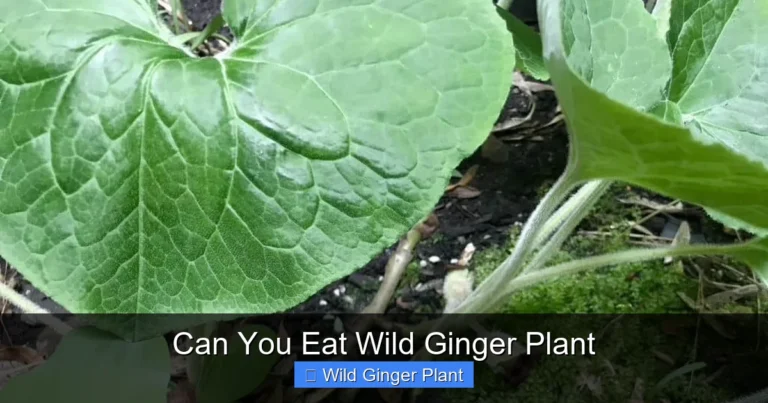
- Petioles: Long (4-12 inches), hairy, emerging directly from rhizome
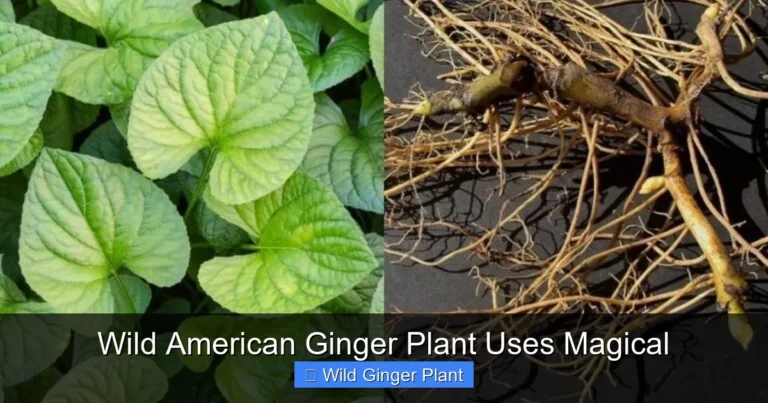
- Rhizomes: Thick, branching, aromatic, growing at or just below soil surface
The combination of paired heart-shaped leaves with hairy petioles and aromatic rhizomes provides near-certain identification. No other common eastern woodland plant shares this exact suite of characteristics.
Common Look-Alikes and How to Distinguish Them
Several plants might initially resemble wild ginger to the untrained eye. Learning these distinctions prevents misidentification:
Wild Ginger vs. Violets
Several violet species (Viola spp.) produce heart-shaped leaves that could confuse beginners. Key differences: violets have leaves with toothed margins (wild ginger margins are entire/smooth), stipules at the leaf base (wild ginger lacks stipules), and distinctive five-petaled flowers on separate stalks (not hidden at ground level). Violet rhizomes are thin and lack the strong ginger aroma.
Wild Ginger vs. Coltsfoot
Coltsfoot (Tussilago farfara) produces large heart-shaped leaves after flowering, but these leaves have angular, shallowly lobed margins and white woolly undersides. Coltsfoot grows in disturbed, often sunny habitats like roadsides and gravel pits – not the deep shade wild ginger prefers. The flowers appear in early spring on scaly stalks before any leaves emerge, resembling dandelions.
Wild Ginger vs. Golden Ragwort
Golden ragwort (Packera aurea) basal leaves are heart-shaped but have coarse teeth and a more elongated shape. The plant produces tall flowering stalks with yellow daisy-like flowers in spring. It tolerates more sun and wetter conditions than wild ginger, often growing in meadow edges and wet woods rather than deep mesic forests.
Wild Ginger vs. Kidney-Leaf Buttercup
Kidney-leaf buttercup (Ranunculus abortivus) has small kidney to heart-shaped basal leaves, but they’re much smaller (1-2 inches), glossy, and lack pubescence. The plant remains small (6-12 inches tall) with tiny yellow flowers. It grows in a wider range of habitats including disturbed areas.
Using Technology as a Wild Ginger Plant Finder Aid
Modern technology enhances traditional botanical knowledge. Several tools prove valuable:
- Plant identification apps: iNaturalist, Seek, PictureThis, and PlantNet use computer vision to suggest identifications from photos. These work best with clear images of leaves, flowers, and habitat context.
- GPS mapping: Gaia GPS, OnX Hunt, or Avenza Maps allow marking locations, tracking routes, and overlaying topographic, soil, and land ownership layers.
- Herbarium databases: SEINet, Consortium of Northeastern Herbaria, and state natural heritage programs provide verified occurrence records.
Frequently Asked Questions
What is wild ginger plant finder?
wild ginger plant finder is an important topic with many practical applications.