Identifying Wild Ginger Plant
Identifying wild ginger plant is easier than you think once you know the telltale signs. This guide covers heart-shaped leaves, unique flowers, and scent clues to help you spot it with confidence.
Have you ever wandered through a shady forest and spotted a low-growing plant with heart-shaped leaves that smelled surprisingly like your kitchen spice rack? You might have found wild ginger. Identifying wild ginger plant in the wild is a rewarding skill for foragers, hikers, and nature lovers alike. This native perennial hides in plain sight across woodland floors, offering both culinary intrigue and ecological value.
In this guide, we will walk through everything you need to know. You will learn the key visual markers, the scent test that seals the deal, where to search, and how to tell it apart from common lookalikes. We will also cover safe and ethical harvesting practices so you can enjoy this forest treasure responsibly. Let us get started.
Key Takeaways
- Heart-shaped leaves: Wild ginger has paired, kidney-to-heart-shaped leaves with a matte finish and fine hairs.
- Hidden flowers: The jug-shaped, brownish-purple flowers sit at ground level, often hidden under leaf litter.
- Distinct ginger scent: Crush a leaf or root to release a clear ginger-spice aroma that confirms identity.
- Shade-loving habit: Look for it in rich, moist deciduous forests across eastern and central North America.
- Rhizome growth: Plants spread via shallow, branching rhizomes that form loose colonies over time.
- Key lookalikes: Distinguish from violet leaves, Canada wild ginger, and European wild ginger by flower shape and leaf texture.
- Sustainable harvest: Take only what you need from large patches, leaving plenty for regrowth and wildlife.
Quick Answers to Common Questions
What does wild ginger smell like?
Wild ginger smells strongly of culinary ginger—warm, spicy, and slightly citrusy—when you crush a leaf or scratch the rhizome.
Where is the best place to find wild ginger?
Look in rich, moist deciduous forests on north- or east-facing slopes, often near streams or in ravines with maple, beech, and oak trees.
How can I tell wild ginger apart from violets?
Wild ginger has paired, smooth-edged, velvety leaves on a creeping rhizome and a strong ginger scent; violets have solitary, often toothed leaves in a basal rosette and no ginger smell.
Is wild ginger safe to eat?
In small culinary amounts as a spice or occasional tea, it is generally considered safe, but it contains aristolochic acid, so avoid large, frequent, or long-term use, especially during pregnancy or with kidney issues.
When does wild ginger flower?
Wild ginger flowers in early to mid-spring (typically April to May), producing a single hidden, jug-shaped, brownish-purple flower at ground level beneath the leaf litter.
📑 Table of Contents
- Getting to Know Wild Ginger Basics
- Key Identification Features
- Where and When to Find Wild Ginger
- Common Lookalikes and How to Tell Them Apart
- Sustainable Harvesting and Ethical Foraging
- Culinary Uses and Safety Notes
- Cultivating Wild Ginger in Your Shade Garden
- Wild Ginger in Ecology and Culture
- Conclusion
Getting to Know Wild Ginger Basics
What Is Wild Ginger?
Wild ginger (Asarum canadense) is a low-growing, herbaceous perennial native to eastern North America. Despite the name, it is not related to the tropical ginger (Zingiber officinale) you buy at the grocery store. Both share a similar spicy, warm aroma, which is how wild ginger earned its common name. The plant belongs to the birthwort family, Aristolochiaceae.
It grows in loose colonies on the forest floor. Each plant produces a pair of leaves each spring. The leaves rise on hairy stalks from a shallow, branching rhizome. The rhizome is the part that carries the strongest ginger scent and flavor. Wild ginger thrives in rich, moist, well-drained soils under a canopy of deciduous trees like maple, beech, and oak.
Why Learn to Identify It?
Learning identifying wild ginger plant skills opens up a deeper connection to the forest. For foragers, the rhizome offers a unique wild spice for teas, syrups, and baked goods. For naturalists, it is a fascinating example of plant-insect relationships. The flowers are pollinated by early spring flies and beetles attracted to their fleshy, carrion-like appearance. Ants disperse the seeds, a process called myrmecochory. Knowing this plant helps you read the health of a woodland ecosystem.
Key Identification Features
Leaf Shape and Texture
The leaves are the most obvious feature. Each plant typically has two leaves. They are broadly heart-shaped to kidney-shaped. The leaf base forms a deep notch where the stalk attaches. The tip is usually rounded or slightly pointed. Mature leaves reach 4 to 8 inches wide.
The upper surface is a medium to dark green with a matte, velvety finish. It is covered in fine, soft hairs. The underside is paler and more densely hairy. The leaf margins are smooth, not toothed. The veins are palmate, radiating from the base like fingers on a hand. When you run a finger over the leaf, it feels soft, almost like suede.
The Hidden Flower
Wild ginger flowers are easy to miss. They bloom in early to mid-spring, often before the leaves fully expand. The flower sits on a very short stalk at ground level, tucked beneath the leaf litter and the base of the leaf stems. It is jug-shaped or urn-shaped, about 1 inch long.
The color is a deep brownish-purple to maroon. The three sepals are fused into a tube with three flared, pointed tips. There are no petals. The interior is often lighter, sometimes with a whitish throat. The flower has a faint, musty odor that attracts small flies and gnats. Because they are hidden, you often need to gently pull back the leaf litter to find them.
The Scent Test
This is the most reliable confirmation. Gently scratch or crush a small piece of leaf or, better yet, a tiny section of rhizome. A strong, unmistakable ginger aroma should rise immediately. It smells warm, spicy, and slightly citrusy. It is very similar to commercial ginger but often described as earthier or woodier.
If there is no scent, or if it smells musty, grassy, or unpleasant, it is not wild ginger. Always wash your hands after handling any wild plant. Do a small scratch test first rather than ripping up a whole plant.
Rhizome and Root Structure
The rhizome grows horizontally just below the soil surface, often under a thin layer of duff. It is slender, about 1/4 to 1/2 inch thick. The outer skin is light brown to tan. The interior flesh is creamy white. It branches frequently, forming a network that connects multiple leaf pairs.
Fine, fibrous roots extend downward from the rhizome nodes. The rhizome is the part traditionally used for flavor. It is tender enough to chew raw when young but becomes fibrous with age. The rhizome scent is much stronger than the leaves.
Growth Habit and Colony Formation
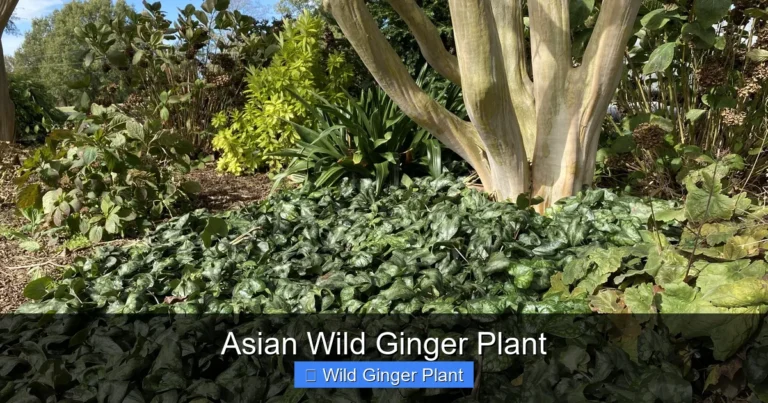
Wild ginger does not grow as isolated single plants for long. It spreads vegetatively by its rhizomes. Over years, a single plant expands into a loose colony or mat. The leaf pairs emerge in a somewhat scattered but dense pattern. In ideal conditions, it can form a beautiful, continuous ground cover.
It is a spring ephemeral in the sense that it emerges early, flowers, and photosynthesizes heavily before the tree canopy closes. The leaves persist through summer but may look tattered by late August. They die back completely after the first hard frost.
Where and When to Find Wild Ginger
Preferred Habitat
Wild ginger is a plant of high-quality, mature deciduous forests. It loves deep shade. Look for it on north- and east-facing slopes where moisture lingers. The soil should be rich in organic matter, loose, and well-drained but consistently moist. It often grows near streams, in ravines, and on terraces above floodplains.
Common tree associates include sugar maple, American beech, basswood, red oak, and white ash. The presence of other spring wildflowers like trillium, bloodroot, Dutchman’s breeches, and blue cohosh is a good sign you are in the right spot. It rarely grows in coniferous plantations, open fields, or disturbed, compacted soils.
Geographic Range
Asarum canadense ranges widely across eastern and central North America. Its range extends from southern Manitoba and Quebec south to Georgia and Alabama. It reaches west to the eastern edges of the Great Plains, including eastern Kansas, Oklahoma, and Texas. It is absent from the deep coastal plain of the Southeast and the arid West.
Several other Asarum species exist in western North America, such as Asarum caudatum (long-tailed wild ginger) in the Pacific Northwest. They share similar traits but have distinct flower shapes. This guide focuses on the widespread eastern species.
Seasonal Timing
The best time for identifying wild ginger plant is mid-spring, typically April through May in most of its range. This is when the fresh leaves are fully expanded but still pristine, and the flowers are present. The scent is strongest in the actively growing rhizome.
In summer, the leaves are still recognizable but may be insect-eaten or faded. The flowers are long gone. In fall, the leaves yellow and die back. Winter identification is nearly impossible as no above-ground parts remain. Mark productive patches in spring for a potential fall rhizome harvest if that is your goal.
Common Lookalikes and How to Tell Them Apart
Violets (Viola spp.)
Violets are the most frequent confusion. They also have heart-shaped leaves and grow in similar shady woods. However, violet leaves are usually solitary, not in pairs. The leaf margins are often toothed or scalloped, not smooth. Violet leaves arise from a basal rosette on individual stalks, not from a creeping rhizome with paired leaves.
Violet flowers are the classic five-petaled shape, held above the leaves on slender stalks. They are often purple, blue, yellow, or white. Crush a violet leaf; it smells green and vegetal, with zero ginger aroma. Violet roots are fibrous, not rhizomatous.
Canada Wild Ginger (Asarum canadense var. acuminatum)
This is a botanical variety of the same species, sometimes treated separately. It is found in the northern parts of the range. The main difference is the leaf tip. It is distinctly elongated and pointed (acuminate), whereas the typical variety has a rounded or blunt tip. The flower and scent are identical. For practical foraging purposes, they are the same plant.
European Wild Ginger (Asarum europaeum)
This is an introduced ornamental that sometimes escapes into woods near old homesteads or gardens. It is evergreen. The leaves are leathery, glossy, and darker green. They are also kidney-shaped but much thicker and shinier than our native species. The flowers are similar but smaller.
It also smells of ginger when crushed. It is not considered invasive in most areas but is not native. If you find a patch of glossy, evergreen ginger-scented leaves in late winter, it is likely this species. Treat it similarly but prioritize the native plant.
Hexastylis Species (Little Brown Jugs / Heartleaf)
In the southeastern U.S., several Hexastylis species (formerly Asarum) grow. They are evergreen with leathery, often mottled or patterned leaves. The flowers are jug-shaped but often have dramatically flared, elongated tips. They also have a ginger scent.
They are generally smaller and more clump-forming than the colonizing A. canadense. If you are in the Deep South or lower Midwest, consult a regional guide to distinguish the specific Hexastylis species. All are considered safe for the same uses.
Golden Ragwort (Packera aurea) Basal Leaves
In early spring, the basal rosette of golden ragwort can resemble wild ginger. The leaves are rounded to heart-shaped with a purplish underside. However, the leaf texture is thinner and smoother, not velvety-hairy. The leaf margins are often toothed.
Crucially, golden ragwort sends up a tall, leafy flower stalk with bright yellow daisy-like flowers in late spring. Wild ginger never produces a tall flower stalk. Ragwort contains pyrrolizidine alkaloids and is toxic. Always verify the ginger scent and low growth habit.
Sustainable Harvesting and Ethical Foraging
The Golden Rule: Leave Plenty Behind
Wild ginger grows slowly. A colony takes years to establish. Never harvest from a small patch or a single plant. Only harvest from large, vigorous colonies where hundreds of leaf pairs are visible. Take no more than 10 to 15 percent of the rhizomes in a given area.
Use a small hand trowel or hori-hori knife. Gently expose the rhizome. Cut a segment, leaving the growing tips and plenty of rhizome attached to each remaining leaf pair. Refill the hole and replace the leaf litter carefully. This minimizes disturbance to the soil community and protects the remaining plants from drying out.
Timing Your Harvest
Traditional harvest time is fall, after the leaves die back but before the ground freezes. The plant has stored energy in the rhizome. The flavor is often considered best then. However, spring harvest is possible if you are careful. The rhizome is more tender but the plant needs its energy for the growing season.
If you harvest in spring, take even less. Only dig what you will use immediately. Never harvest the flowers or seeds. The plant needs them to reproduce. Ants disperse the seeds; taking them breaks a vital ecological link.
Processing and Storage
Wash harvested rhizomes thoroughly in cold water. Scrub gently with a vegetable brush to remove soil. They do not need peeling unless the skin is tough. Use fresh within a few days. Store in a paper bag in the refrigerator crisper.
For long-term storage, dry them. Slice thinly and dry in a dehydrator at 95-115°F until brittle. Grind into powder for a potent wild ginger spice. You can also make a tincture with vodka or vinegar. A simple syrup infused with fresh rhizome is delicious on pancakes or in cocktails.
Culinary Uses and Safety Notes
Flavor Profile
Wild ginger rhizome tastes like a cross between commercial ginger and black pepper, with earthy, woodsy undertones. It is less fibrous than store-bought ginger. The leaves have a much milder flavor but can be used to wrap foods for steaming or added to broth.
A little goes a long way. The flavor is potent. Start with small amounts. It pairs well with maple, honey, citrus, squash, and game meats. It makes a warming tea, especially combined with mint or lemon balm.
Important Safety Considerations
Wild ginger contains aristolochic acid, a compound found in the birthwort family. This compound is known to be nephrotoxic (kidney-damaging) and carcinogenic in high doses or with long-term use. The concentration in Asarum canadense is generally considered low compared to some tropical Aristolochia species used in traditional medicine.
However, caution is warranted. Culinary use in small amounts as a spice or occasional tea is widely practiced and considered low risk by many foragers and herbalists. But regular, high-dose, or long-term medicinal use should be avoided. Pregnant and nursing women should avoid it entirely. People with kidney issues should avoid it.
Do not confuse wild ginger with other Aristolochia species like Virginia snakeroot (A. serpentaria), which has much higher aristolochic acid levels. Identifying wild ginger plant correctly is a safety issue, not just a culinary one.
Preparation Reduces Risk
Traditional preparation methods often involve boiling or drying. Some sources suggest that heat and drying may degrade aristolochic acid,istolochic acid, though scientific data on Asarum canadense specifically is limited. Making a tea (decoction) and discarding the solids, or using the rhizome as a flavoring agent removed before eating, reduces exposure compared to eating the raw rhizome in quantity.
Always err on the side of moderation. Treat it as a special condiment, not a daily staple vegetable. If you have any doubts, enjoy it as a scent experience in the woods and leave the rhizome in the ground.
Cultivating Wild Ginger in Your Shade Garden
Why Grow Your Own?
Growing wild ginger at home takes pressure off wild populations. It makes a superb, low-maintenance ground cover for shady areas where grass fails. It is deer-resistant, largely pest-free, and provides early nectar for pollinators. Plus, you have a sustainable, personal supply right outside your door.
Site Selection and Soil Prep
Mimic its native habitat. Choose a spot with full to dappled shade. Morning sun is okay; hot afternoon sun will scorch the leaves. The soil must be rich, humusy, and moisture-retentive but not waterlogged. Amend the planting area generously with compost, leaf mold, or well-rotted wood chips.
Test drainage. Dig a hole, fill with water. It should drain in an hour or two. If it sits, add more coarse organic matter or plant on a slight mound. Wild ginger hates heavy, compacted clay.
Planting and Establishment
Buy nursery-propagated plants or bare-root divisions from a reputable native plant nursery. Never dig from the wild for garden transplanting. Spring or early fall are the best planting times. Space plants 12 to 18 inches apart. They will fill in over a few years.
Plant the rhizome horizontally, just below the surface, with the growing buds pointing up. Cover with 1/2 inch of soil. Water well. Mulch heavily with shredded leaves. Keep consistently moist the first season. Once established, it is remarkably drought-tolerant for a moisture-lover, but it looks best with occasional watering in dry spells.
Long-Term Care
There is almost no maintenance. Do not fertilize; rich soil is enough. Leave the leaves in place over winter; they protect the rhizomes and decompose to feed the soil. In spring, gently rake off any matted leaves if they are smothering new growth.
Divide colonies every 4-5 years in early spring or fall to rejuvenate them and share with friends. Dig a clump, tease apart the rhizomes, and replant the vigorous outer sections. Discard the woody, old center. This is also your chance to harvest a few rhizomes for the kitchen guilt-free.
Wild Ginger in Ecology and Culture
Pollination: A Fly’s Delight
The strange, ground-level flowers are a masterpiece of deception. They mimic the look and smell of decaying flesh or fungi. This attracts small flies (especially fungus gnats and phorid flies) and some beetles. The insects enter the flower tube seeking a place to lay eggs or feed.
The interior of the tube has downward-pointing hairs that trap the insect temporarily. The flower is protogynous: the female stigma is receptive first. The trapped insect deposits pollen from a previous flower. Then the male anthers mature and dust the insect with fresh pollen. The hairs wither, and the insect escapes, fooled but useful. No nectar reward is offered.
Seed Dispersal by Ants
After pollination, the flower develops into a fleshy capsule. It splits open at ground level when ripe. The seeds have a fatty, protein-rich appendage called an elaiosome. This is ant candy. Ants carry the seeds back to their nests, eat the elaiosome, and discard the intact seed in their nutrient-rich midden piles.
This is myrmecochory. It disperses the seeds a short distance (usually a few feet to yards) into a perfect germination microsite. It also protects seeds from mice and other predators. This mutualism is why wild ginger forms tight, slowly expanding colonies rather than popping up across the forest.
Indigenous Uses
Many Native American tribes across the plant’s range used wild ginger extensively. The rhizome was used as a seasoning for meats, fish, and stews. It was dried and powdered for storage. Medicinally, it was used for a wide range of ailments: colds, fevers, coughs, sore throats, digestive upset, and as a general tonic.
Some tribes used it as a contraceptive or to induce menstruation, highlighting its physiological potency. The leaves were sometimes used as a poultice for wounds or headaches. The Cherokee, Iroquois, Ojibwe, Menominee, and many others had specific names and preparations for it. This deep history underscores its value and the importance of respecting the plant.
Early European Adoption
Early European settlers quickly adopted wild ginger as a substitute for the expensive imported tropical ginger. They candied the rhizomes, made syrups, and brewed beer with it. It was a staple in colonial herb gardens. Its popularity waned as trade routes improved and true ginger became cheap and available. Today, it is enjoying a revival among foragers and native plant enthusiasts.
Conclusion
Mastering the art of identifying wild ginger plant connects you to the forest floor in a new way. You have learned to spot the paired, velvety heart-shaped leaves. You know to search the leaf litter for the secretive, jug-shaped maroon flowers. You have the ultimate tool: the scratch-and-sniff test that reveals that warm, spicy aroma.
You understand where it lives, in the rich, moist shade of mature woods. You can distinguish it from violets, ragwort, and its evergreen cousins. You know the ethics: harvest sparingly, only from abundance, and always with gratitude. You even have the option to grow your own patch, creating a haven for pollinators and a pantry for your kitchen.
Wild ginger is more than a wild spice. It is a teacher of ecology, a link to indigenous knowledge, and a quiet beauty of the spring woods. Next time you hike a shady trail in April or May, slow down. Lift the leaves. Take a sniff. The forest has a secret flavor waiting for you. Happy hunting, and tread lightly.
Frequently Asked Questions
Can I grow wild ginger in my home garden?
Yes, wild ginger makes an excellent shade ground cover. Plant nursery-propagated rhizomes in rich, moist, well-drained soil under full to dappled shade. Mulch with leaves and keep moist until established.
What part of wild ginger is used for cooking?
The shallow, branching rhizome (rootstalk) is the primary part used. It has the strongest ginger flavor. The leaves can be used for wrapping or mild flavoring but are much less potent.
Does wild ginger spread aggressively?
No, it spreads slowly via rhizomes to form loose colonies over many years. It is not considered aggressive or invasive in garden settings and is easily controlled by division.
Are there any poisonous lookalikes for wild ginger?
Golden ragwort basal leaves can look similar in early spring but lack the ginger scent, have toothed margins, and later produce tall yellow flower stalks. Ragwort is toxic. Always verify the scent.
How do I sustainably harvest wild ginger rhizomes?
Only harvest from large, healthy colonies. Take less than 15% of rhizomes. Use a small tool to expose and cut segments, leaving growing tips attached to remaining leaves. Re-cover with soil and leaf litter.
What is the difference between wild ginger and store-bought ginger?
They are unrelated plants. Wild ginger (Asarum canadense) is a North American forest perennial. Store-bought ginger (Zingiber officinale) is a tropical Asian rhizome. They share a similar aroma due to convergent chemistry but differ in flavor, texture, and botany.