Canadian Wild Ginger Plant
The Canadian Wild Ginger Plant (Asarum canadense) is a low-growing native perennial that thrives in shaded woodland gardens across eastern North America. Its heart-shaped leaves and unique bell-shaped flowers make it a beautiful ground cover, while its aromatic rhizomes have a long history of culinary and medicinal use by Indigenous peoples.
If you have ever walked through a rich, deciduous forest in eastern North America in late spring, you might have missed one of the most fascinating plants growing right at your feet. The Canadian Wild Ginger Plant hugs the forest floor, its broad, velvety leaves forming a lush green carpet that many hikers pass without a second glance. But kneel down, gently lift a leaf, and you will discover a secret — a strange, jug-shaped flower hiding in the shadows, smelling faintly of earth and spice.
This unassuming perennial has a big story to tell. It is a plant of deep cultural significance, a valuable garden ally for shady spots, and a species that reminds us why conservation matters. Whether you are a native plant enthusiast, a shade gardener looking for reliable ground cover, or someone curious about ethnobotany, the Canadian Wild Ginger Plant deserves your attention. Let us dig into everything you need to know about this remarkable woodland native.
Key Takeaways
- Native Range: The Canadian Wild Ginger Plant grows naturally across eastern Canada and the United States, from Manitoba to Nova Scotia and south to Georgia.
- Shade Lover: This plant thrives in deep to partial shade with rich, moist, well-drained soil — perfect for woodland gardens.
- Distinctive Flowers: Hidden beneath the leaves, the purplish-brown jug-shaped flowers bloom in spring and are pollinated by beetles and flies.
- Not True Ginger: Despite its name and ginger-like aroma, it is not related to culinary ginger (Zingiber officinale) and contains aristolochic acid.
- Indigenous Heritage: First Nations peoples used the rhizome for flavoring, medicine, and as a preservative for centuries.
- Slow Spreader: The Canadian Wild Ginger Plant forms colonies slowly via rhizomes, making it a well-behaved ground cover.
- Conservation Matters: Wild populations face pressure from habitat loss and over-harvesting; always source plants ethically from nurseries.
Quick Answers to Common Questions
Is Canadian Wild Ginger Plant edible?
The rhizome has a ginger-like aroma and was used historically as a flavoring, but it contains aristolochic acid which can cause kidney damage and cancer with prolonged use. Modern herbalists recommend against regular consumption. Use true ginger (Zingiber officinale) for cooking instead.
How fast does Canadian Wild Ginger Plant spread?
It spreads slowly via creeping rhizomes, typically expanding a colony by 6 to 12 inches per year under ideal conditions. It is not aggressive and will not take over a garden.
Can Canadian Wild Ginger Plant grow in full sun?
No. This plant requires full to partial shade. Full sun will scorch the leaves and dry out the rhizomes, leading to plant death. Plant it under deciduous trees or on the north side of structures.
When is the best time to divide Canadian Wild Ginger Plant?
Early spring (as leaves emerge) or early fall (4 to 6 weeks before hard frost) are the optimal times for division. The plant recovers quickly in cool, moist conditions.
Does Canadian Wild Ginger Plant attract pollinators?
Yes. Its unusual ground-level flowers are pollinated by small flies, beetles, and ants in early spring. It also serves as a larval host for some butterfly species and provides habitat for beneficial insects.
📑 Table of Contents
- What Is the Canadian Wild Ginger Plant?
- Natural Habitat and Distribution
- How to Identify Canadian Wild Ginger Plant
- Growing Canadian Wild Ginger Plant in Your Garden
- Traditional and Modern Uses
- Conservation and Ethical Harvesting
- Companion Plants and Design Ideas
- Propagation Deep Dive
- Troubleshooting Common Problems
- Conclusion
What Is the Canadian Wild Ginger Plant?
Scientific Classification
The Canadian Wild Ginger Plant bears the botanical name Asarum canadense. It belongs to the birthwort family, Aristolochiaceae, a group known for unusual flower structures and aromatic tissues. The genus Asarum contains roughly 60 to 70 species spread across the temperate zones of the Northern Hemisphere, but Asarum canadense is the only species native to eastern North America. Some botanists recognize a variety, Asarum canadense var. acuminatum, which has slightly more pointed leaf tips and a more southern distribution.
Common Names
You will hear this plant called by many names. Canadian Wild Ginger Plant is the most widely used common name in Canada and the northern United States. Other names include wild ginger, Canada wild ginger, broad-leaved wild ginger, and heart-leaf wild ginger. In French-speaking regions, it is known as gingembre sauvage or asaret du Canada. Indigenous languages have their own names, reflecting the plant’s long history of use. The Anishinaabe call it namewashk, while the Haudenosaunee refer to it as ononhkwá:ra.
Physical Description
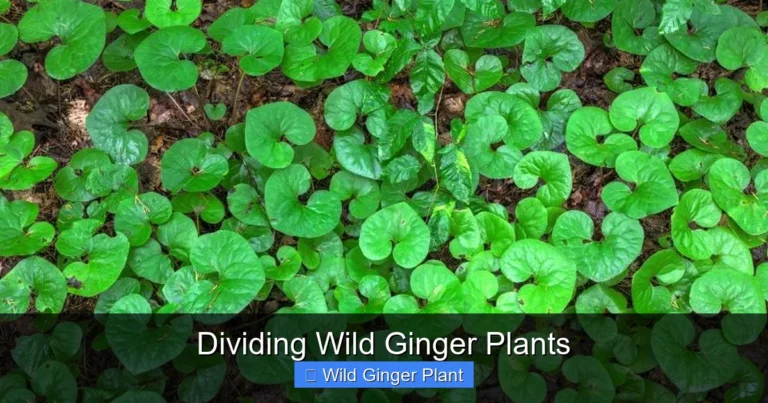
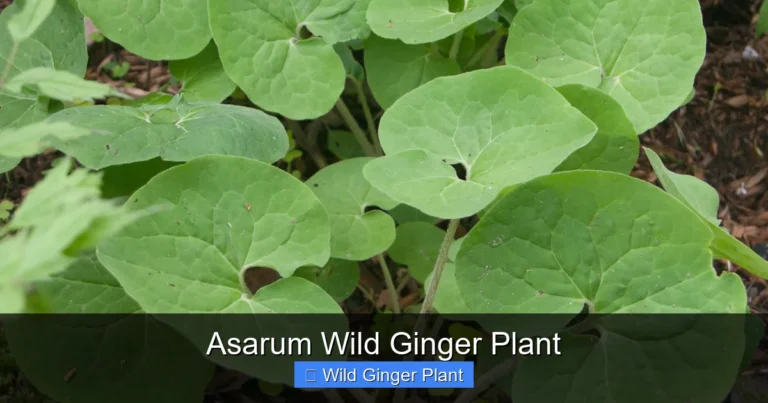
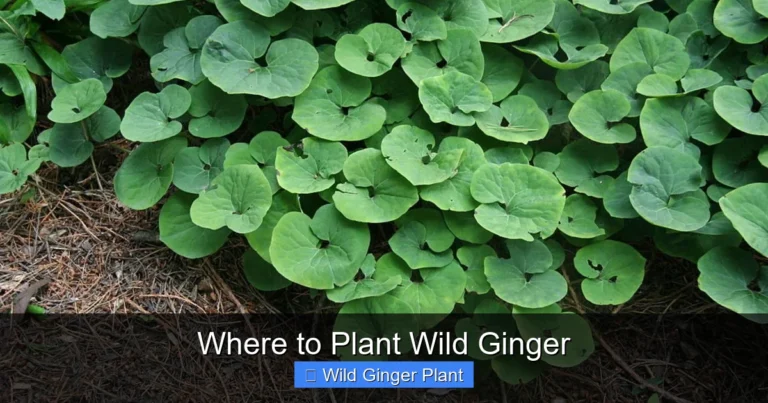
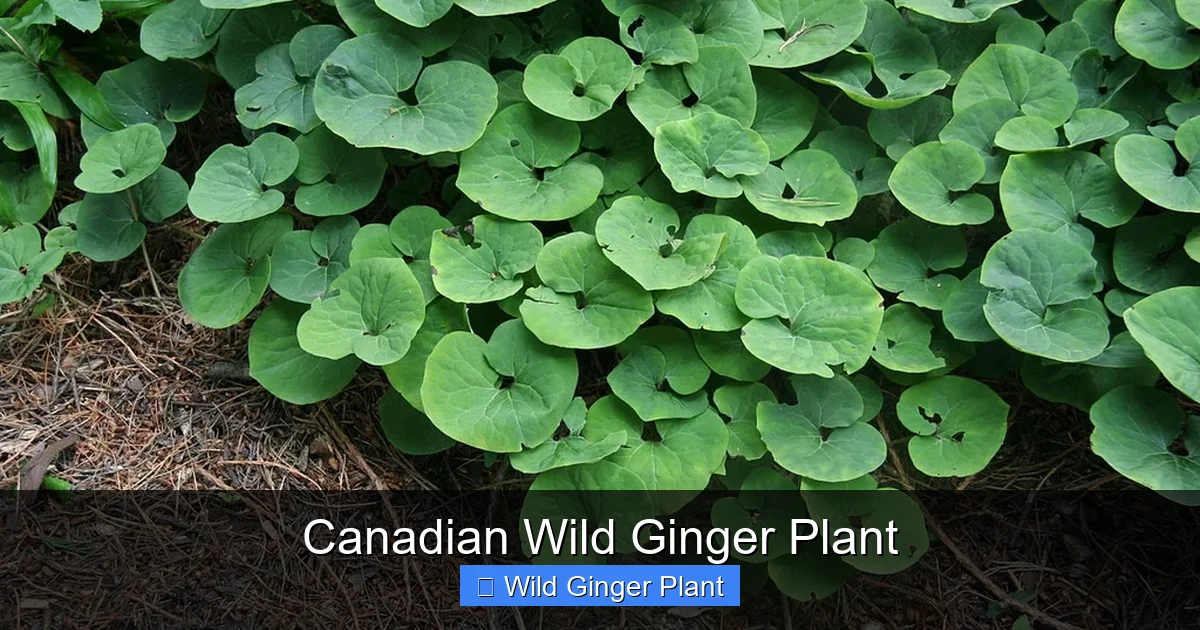
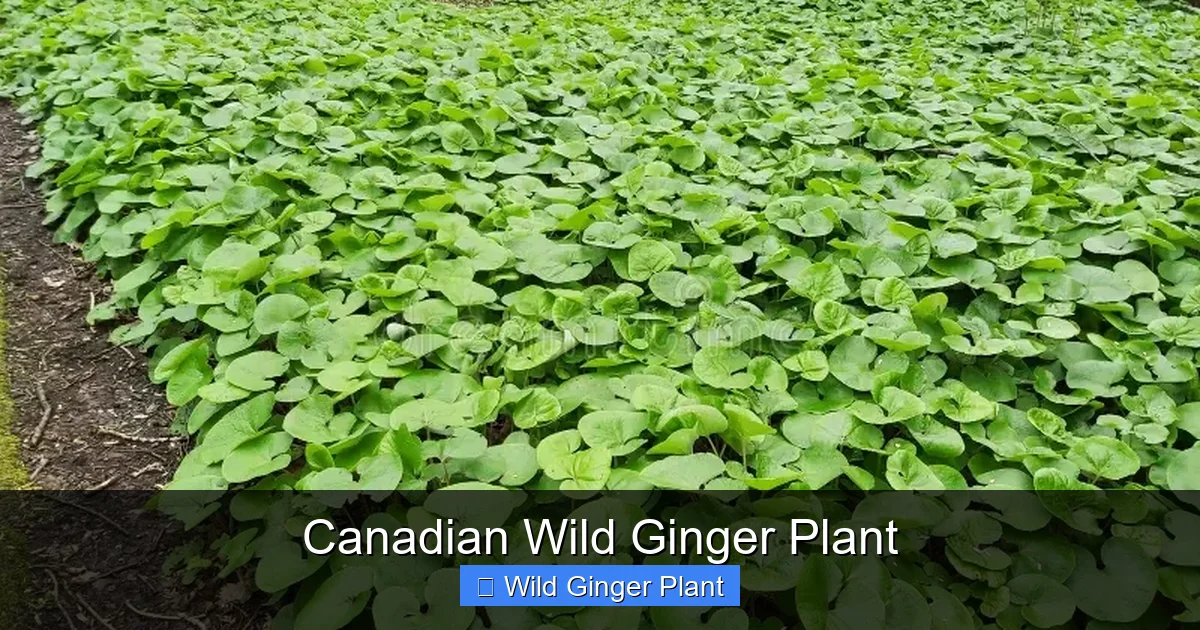
The Canadian Wild Ginger Plant is a low, colony-forming perennial that typically reaches 6 to 12 inches in height. Each plant produces a pair of large, basal leaves that emerge on long, hairy petioles directly from a branching rhizome. The leaves are kidney-shaped to heart-shaped, 4 to 8 inches wide, with a deep notch at the base where the petiole attaches. The upper surface is a rich, matte green and softly pubescent — covered in fine hairs that give it a velvety feel. The underside is paler and more densely hairy.
The rhizome is the plant’s most distinctive feature below ground. It creeps horizontally just beneath the soil surface, about 1/4 to 1/2 inch thick, with a brown, papery outer skin and a white, fleshy interior. When crushed or scratched, it releases a strong, spicy fragrance unmistakably reminiscent of commercial ginger. This aroma comes from volatile oils, primarily bornyl acetate and other terpenes, though the chemical profile differs significantly from true ginger.
Natural Habitat and Distribution
Geographic Range
The Canadian Wild Ginger Plant has a broad native range covering much of eastern North America. In Canada, it occurs from southern Manitoba eastward through Ontario, Quebec, New Brunswick, and Nova Scotia. In the United States, its range extends from Minnesota and the Dakotas east to Maine, and southward through the Great Lakes region, New England, and the Appalachian Mountains into northern Georgia, Alabama, and Mississippi. It is largely absent from the coastal plain of the southeastern states and the arid prairies of the west.
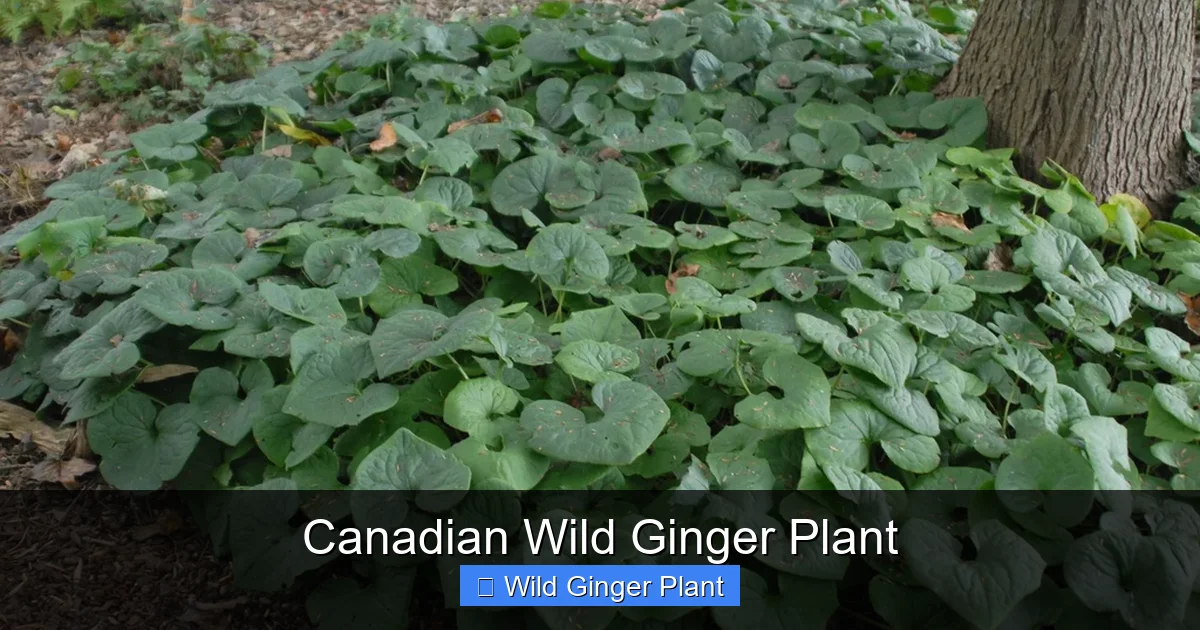
Visual guide about Canadian Wild Ginger Plant
Image source: s3.amazonaws.com
Preferred Growing Conditions
This species is a classic denizen of mesic, deciduous forests. It thrives in deep, humus-rich soils that remain consistently moist but well-drained. You will most often find it on north- or east-facing slopes, in ravines, along stream banks, and in bottomland forests where the canopy is dominated by sugar maple, American beech, basswood, red oak, and white ash. The soil pH typically ranges from slightly acidic to neutral (5.5 to 7.0).
Light is a critical factor. The Canadian Wild Ginger Plant requires shade — deep shade in the southern parts of its range, partial to full shade farther north. It cannot tolerate full sun, which scorches the leaves and dries the rhizomes. In cultivation, it performs best under mature trees or on the north side of buildings where it receives dappled light or morning sun only.
Ecological Role
In its native habitat, the Canadian Wild Ginger Plant plays several ecological roles. Its dense foliage helps stabilize soil on slopes and retains moisture in the forest floor. The flowers, though inconspicuous, provide an early-season nectar and pollen source for small beetles, flies, and ants — particularly species of Drosophila and Phoridae that are attracted to the flower’s faint, yeasty odor. Ants also disperse the seeds, which bear a fleshy appendage called an elaiosome. The ants carry seeds to their nests, eat the elaiosome, and discard the intact seed in nutrient-rich waste piles, effectively planting the next generation.
The plant serves as a larval host for the pipevine swallowtail butterfly (Battus philenor) in parts of its range, though this butterfly is more commonly associated with other Aristolochiaceae members. Deer and rabbits generally avoid browsing the foliage, likely due to the aromatic compounds in the leaves.
How to Identify Canadian Wild Ginger Plant
Leaf Characteristics
Identification begins with the leaves. The Canadian Wild Ginger Plant produces two leaves per flowering stem (sometimes one on non-flowering stems). Each leaf is broadly heart-shaped or kidney-shaped, with a deep, narrow sinus at the base. The margins are entire — smooth, not toothed. The upper surface is medium to dark green with a matte finish and fine, appressed hairs. The lower surface is lighter green and more conspicuously hairy, especially along the veins. The petioles are long, up to 12 inches, and densely covered in spreading white hairs.
Visual guide about Canadian Wild Ginger Plant
Image source: thumbs.dreamstime.com
In spring, the emerging leaves are tightly folded along the midrib, resembling a pair of praying hands. As they unfurl, they lie nearly flat, creating the characteristic ground-cover effect. By late summer, the leaves may show some wear — insect damage, fungal spots, or drought stress — but they persist until hard frost.
Flower Features
The flower of the Canadian Wild Ginger Plant is one of the most unusual in the North American flora. It appears in April to June, depending on latitude and elevation. The flower sits on a short, curved pedicel at ground level, nestled in the leaf axils and usually hidden beneath the leaf litter. It has no petals. Instead, the calyx forms a fleshy, urn-shaped tube about 1/2 to 3/4 inch long, flaring into three triangular, reflexed lobes. The exterior is purplish-brown to maroon, often with a whitish bloom. The interior is paler, sometimes yellowish, with 12 stamens surrounding a central, 6-lobed stigma.
The flower emits a faint, musty odor — sometimes described as fungal or like fermenting fruit — which attracts its primary pollinators: small flies and beetles. These insects enter the tube, feed on pollen and nectar secreted by the inner surface, and inadvertently transfer pollen. The flower is protogynous — the stigma matures before the anthers release pollen — which promotes cross-pollination. After pollination, the flower develops into a fleshy, many-seeded capsule that splits open at maturity.
Root and Rhizome
The rhizome is the key to confirming identity. Gently brush away soil at the base of a clump to reveal the creeping, segmented rhizome. It is typically 1/4 to 1/2 inch in diameter, with distinct nodes spaced 1 to 2 inches apart. Each node bears a pair of leaf scars and a tuft of fibrous roots. The outer skin is thin, brown, and papery; the inner tissue is white, crisp, and strongly aromatic. Break a piece — the scent is immediate and unmistakable: sweet, spicy, warm, with a hint of camphor. This is the signature of the Canadian Wild Ginger Plant.
Seasonal Changes
Understanding the plant through the seasons helps with identification and cultivation. In early spring, the rhizome tips swell and the first leaf pairs emerge, often before the canopy leafs out. Flowering follows quickly, usually while the leaves are still expanding. By early summer, the leaves are full-sized and the seeds are developing. Mid to late summer is a period of rhizome extension — the plant stores energy and expands its colony. In autumn, the leaves yellow and die back after frost. The rhizome remains alive underground, dormant until the next spring. In mild winters, some leaves may persist in a semi-evergreen state, especially in sheltered spots.
Growing Canadian Wild Ginger Plant in Your Garden
Site Selection
Success with the Canadian Wild Ginger Plant starts with the right location. Choose a site that mimics its native habitat: full to partial shade, protected from afternoon sun. The north or east side of a building, under mature deciduous trees, or in a shaded border backed by shrubs all work well. Avoid sites under dense conifers — the year-round deep shade and needle litter create conditions that are too acidic and dry. Also avoid low spots where water pools after rain; the rhizomes will rot in standing water.
If you are designing a woodland garden, plant the Canadian Wild Ginger Plant in drifts of 5 to 15 plants, spaced 12 to 18 inches apart. It pairs beautifully with other shade-loving natives: Christmas fern (Polystichum acrostichoides), maidenhair fern (Adiantum pedatum), wild geranium (Geranium maculatum), bloodroot (Sanguinaria canadensis), trilliums (Trillium spp.), and foamflower (Tiarella cordifolia). Its bold foliage provides a textural contrast to finer-textured ferns and grasses.
Soil Preparation
The Canadian Wild Ginger Plant demands rich, organic soil. Before planting, amend the area generously with well-rotted leaf compost, composted manure, or peat-free humus. Work amendments into the top 8 to 10 inches of soil. If your soil is heavy clay, incorporate coarse sand or fine grit along with organic matter to improve drainage. If it is sandy, add extra compost and consider a top dressing of leaf mold annually to build moisture retention. Aim for a soil pH between 5.5 and 7.0. A simple soil test from your local extension service will guide any pH adjustments.
Planting Methods
You can establish the Canadian Wild Ginger Plant from container-grown plants, bare-root divisions, or seed. Container plants are the easiest and most reliable. Plant in early spring or early fall. Dig a hole wide enough to accommodate the rhizome horizontally. Position the rhizome so the growing tips are just below the soil surface — no deeper than 1 inch. Spread the roots outward and downward. Backfill with amended soil, firm gently, and water thoroughly. Mulch with 2 inches of shredded leaves or pine needles to conserve moisture and suppress weeds.
Bare-root divisions are often available from native plant nurseries in spring. Treat them the same way, but take extra care to keep the rhizomes moist before and during planting. Soak them in cool water for an hour if they appear dry.
Growing from seed requires patience. The seeds have a double dormancy — they need a warm-moist period followed by a cold-moist period to germinate. Sow fresh seeds in summer in a shaded cold frame or outdoor nursery bed. They may not germinate until the second spring. Seedlings grow slowly and may take 3 to 4 years to reach flowering size. For most gardeners, buying established plants is the practical choice.
Care and Maintenance
Once established, the Canadian Wild Ginger Plant is remarkably low-maintenance. Water regularly during the first growing season to encourage deep root development. After that, supplemental water is only needed during prolonged droughts. The plant does not tolerate drying out — leaf scorch and dieback will occur.
Mulch annually in autumn with shredded leaves. This mimics the natural forest floor, feeds the soil, and protects the shallow rhizomes from freeze-thaw cycles. Avoid heavy wood chip mulches, which can impede the creeping rhizomes.
Fertilizer is rarely needed if the soil is rich in organic matter. If growth seems weak, a light application of balanced, slow-release organic fertilizer in early spring is sufficient. Do not use high-nitrogen fertilizers, which promote lush but weak foliage.
Division is the best way to propagate and rejuvenate colonies. In early spring or early fall, dig a section of the clump, tease apart the rhizomes, and replant divisions with at least one growing tip and a good root system. Water well and mulch. Divisions establish quickly and often flower the next spring.
Pests and diseases are minimal. Slugs and snails may nibble young leaves in wet springs — use beer traps, copper barriers, or diatomaceous earth if damage is severe. Fungal leaf spots can occur in humid, stagnant air; improve air circulation by thinning nearby plants. Root rot from Phytophthora or Pythium is a risk in poorly drained soils — prevention through proper site selection is the only cure.
Traditional and Modern Uses
Indigenous Medicinal Uses
The Canadian Wild Ginger Plant holds a place of honor in the pharmacopeias of many First Nations and Native American peoples. The Anishinaabe, Haudenosaunee, Meskwaki, Potawatomi, Cherokee, and many others used the rhizome for a wide range of ailments. It was prepared as a decoction, infusion, poultice, or powder.
Common medicinal applications included treating colds, coughs, sore throats, and fevers. The rhizome was considered a warming stimulant, promoting sweating and breaking fevers. It was used for digestive complaints — indigestion, gas, stomach cramps, and lack of appetite. Externally, a poultice of mashed fresh rhizome was applied to wounds, sores, and skin infections. Some groups used it as a contraceptive or to induce menstruation, a use that warrants extreme caution given modern toxicological knowledge.
The plant also had ceremonial and spiritual significance. It was included in medicine bundles, used in smudging, and offered as a gift in diplomatic exchanges. The knowledge of its preparation and dosage was held by trained healers who understood its potency and risks.
Culinary Applications
Early European settlers learned from Indigenous peoples to use the Canadian Wild Ginger Plant as a ginger substitute. The rhizome was dried, ground, and used to flavor baked goods, puddings, and teas. It was also candied — boiled in sugar syrup until translucent, then dried and rolled in sugar. The resulting candy was a treat and a remedy for nausea.
In the 18th and 19th centuries, commercial “wild ginger” was harvested in quantity and sold in eastern markets. Cookbooks of the era include recipes for wild ginger cookies, cakes, and syrups. The flavor is similar to true ginger but more floral, less pungent, with a distinct camphoraceous note.
Important caution: Modern research has identified aristolochic acid in Asarum canadense, a compound linked to kidney damage and cancer with long-term or high-dose use. While traditional use involved small, occasional doses, regular culinary consumption is not recommended. If you wish to experience the flavor, use a tiny amount of fresh rhizome as a one-time garnish or infusion, and never consume it during pregnancy or if you have kidney issues. True ginger (Zingiber officinale) is a safe, widely available alternative for daily cooking.
Modern Herbal Medicine
Contemporary herbalists generally avoid internal use of the Canadian Wild Ginger Plant due to aristolochic acid concerns. Some use it topically in very small amounts in salves for its antimicrobial and warming properties, but even this is debated. The plant is not approved by the FDA or Health Canada for any medicinal use. If you are interested in herbal medicine, consult a qualified clinical herbalist or naturopathic doctor who can assess risks and benefits for your specific situation.
Ornamental Value
Today, the primary value of the Canadian Wild Ginger Plant in cultivation is ornamental. It is one of the best native ground covers for deep shade. Its dense, weed-suppressing foliage remains attractive from spring through fall. The hidden flowers are a delight for curious gardeners and children. It naturalizes politely, forming colonies that can be divided and shared. It is deer-resistant, low-maintenance, and ecologically valuable — supporting native pollinators and providing habitat for beneficial insects. For shade gardeners committed to native plants, it is an essential species.
Conservation and Ethical Harvesting
Threats to Wild Populations
While the Canadian Wild Ginger Plant is not globally endangered — it is ranked G5 (secure) by NatureServe — local populations face significant pressures. Habitat loss from urbanization, agriculture, and logging is the primary threat. The plant’s requirement for intact, mature forest with rich soil makes it vulnerable to fragmentation. Invasive species like garlic mustard (Alliaria petiolata) and Japanese stiltgrass (Microstegium vimineum) outcompete it in disturbed woodlands. Over-browsing by deer in areas with unnaturally high populations can prevent flowering and seed set. Climate change poses a long-term threat, as the species’ southern range edge may become too warm and dry.
Commercial wild-harvesting for the herbal trade has historically impacted populations. The rhizome is the harvested part, which kills the plant. Recovery is slow — a colony may take decades to re-establish from seed after a harvesting event. Some states and provinces list the species as “special concern” or “vulnerable” at the regional level, and regulations on wild collection vary.
Sustainable Harvesting Practices
If you have a large, healthy population on your own land and wish to harvest a small amount for personal use, follow these ethical guidelines. First, positively identify the plant. Second, harvest only a tiny fraction — no more than 5% of the rhizomes in a given area. Third, harvest in late summer or fall after seed set, when the plant has stored energy for the next year. Fourth, use a digging fork to gently lift rhizome segments, leaving the majority of the colony intact. Fifth, replant a few segments with growing tips to encourage regrowth. Sixth, never harvest from public lands, parks, or private property without explicit permission.
Better yet: do not harvest from the wild at all. Purchase plants from reputable native plant nurseries that propagate their stock from seed or division. This supports conservation and ensures you get healthy, nursery-adapted plants.
Legal Considerations
Before collecting any wild plant, know the law. In Canada, the Canadian Wild Ginger Plant is protected in some provinces under endangered species or flora protection acts. Collection on federal lands (national parks, national wildlife areas) is prohibited without a permit. Provincial parks and conservation areas typically ban all plant collection. On private land, you need the landowner’s permission. In the United States, state laws vary — some states list it as threatened or exploitably vulnerable, restricting collection. The Lacey Act makes it a federal crime to transport illegally collected plants across state lines. When in doubt, leave it be and buy nursery-propagated stock.
Companion Plants and Design Ideas
Spring Ephemerals
The Canadian Wild Ginger Plant shines in a layered woodland garden. Plant it alongside spring ephemerals that bloom and fade before the ginger’s leaves reach full size. Good partners include spring beauty (Claytonia virginica), trout lily (Erythronium americanum), bloodroot (Sanguinaria canadensis), Dutchman’s breeches (Dicentra cucullaria), and trilliums (Trillium grandiflorum, T. erectum). The ginger’s emerging leaves provide a green backdrop for the ephemerals’ flowers, and its mature foliage covers the bare ground after the ephemerals go dormant.
Ferns and Sedges
Ferns add vertical interest and textural contrast. Christmas fern (Polystichum acrostichoides) is evergreen, providing winter structure. Maidenhair fern (Adiantum pedatum) offers delicate, fan-shaped fronds on wiry black stems. Lady fern (Athyrium filix-femina) and ostrich fern (Matteuccia struthiopteris) are taller, creating a canopy over the ginger. Native sedges like Carex plantaginea (plantain-leaved sedge) and Carex laxiculmis (spreading sedge) echo the ginger’s bold foliage while adding grassy movement.
Summer and Fall Bloomers
Extend the season with shade-tolerant perennials that flower after the ginger’s spring show. Wild geranium (Geranium maculatum) blooms in late spring with pink-purple flowers. White wood aster (Eurybia divaricata) and heart-leaved aster (Symphyotrichum cordifolium) provide clouds of small white or blue flowers in late summer. Goldenrod species like Solidago caesia (bluestem goldenrod) and Solidago flexicaulis (zigzag goldenrod) bloom in fall, supporting late-season pollinators. Black cohosh (Actaea racemosa) sends up tall, fragrant white spires in midsummer.
Design Tips
Plant the Canadian Wild Ginger Plant in sweeping drifts rather than isolated clumps. A mass of 20 or more plants creates a powerful visual impact and suppresses weeds more effectively. Use it to edge a shaded path, where you can easily lift a leaf to show visitors the hidden flower. Plant it at the base of a stone wall or large boulder — the rhizomes will creep into crevices, softening the hardscape. In a rain garden’s shaded zone, it tolerates periodic wetness better than many ground covers. Avoid planting it where aggressive spreaders like English ivy, periwinkle, or goutweed will smother it.
Propagation Deep Dive
Division Step-by-Step
Division is the fastest, most reliable way to multiply your Canadian Wild Ginger Plant. Here is a detailed method. In early spring (just as leaves emerge) or early fall (4 to 6 weeks before hard frost), water the colony deeply the day before. Use a spade or digging fork to lift a section of the clump, starting 6 to 8 inches outside the visible leaf crowns to avoid severing rhizomes. Shake or rinse off excess soil to reveal the rhizome network. Identify healthy segments — each should have at least one growing tip (a pointed bud at the rhizome end) and a good tuft of fibrous roots. Using a clean, sharp knife or pruners, cut the rhizome into 3 to 4 inch segments. Dust cut ends with powdered sulfur or cinnamon to discourage fungal infection. Replant immediately at the same depth, water well, and mulch. Keep soil consistently moist for 4 to 6 weeks until new roots establish.
Seed Propagation Details
For the patient gardener, seed propagation preserves genetic diversity. Collect seeds in mid to late summer when the capsules split open. The seeds are large (about 1/8 inch), brown, and have a white, fleshy elaiosome. Sow immediately in a shaded cold frame or outdoor nursery bed in a mix of 2 parts leaf mold, 1 part coarse sand, and 1 part compost. Press seeds onto the surface — do not bury deeply. Cover with a thin layer of fine grit. Keep moist. The warm temperatures of late summer satisfy the first dormancy requirement. Winter cold satisfies the second. Germination occurs the following spring, or sometimes the spring after. Transplant seedlings to individual pots when they have two true leaves. Grow on in shade for 1 to 2 years before planting out.
Rhizome Cuttings
An alternative to full division is taking rhizome cuttings. In early spring, expose a section of rhizome without lifting the whole plant. Cut 2 to 3 inch segments, each with a node and preferably a small root tuft. Pot horizontally in a deep tray of moist, well-draining mix. Cover with 1/2 inch of mix. Place in a shaded cold frame or unheated greenhouse. Keep moist. Shoots emerge in 4 to 8 weeks. Once leaves are well-developed, harden off and transplant.
Troubleshooting Common Problems
Leaf Scorch and Browning
If your Canadian Wild Ginger Plant develops brown, crispy leaf edges or entire leaves that wither, the cause is almost always too much sun or too little water. Relocate to a shadier spot or increase irrigation. Mulch heavily to retain soil moisture. In extreme heat waves, provide temporary shade with a shade cloth or even a lawn chair draped with burlap.
Yellowing Leaves
Yellow leaves can indicate several issues. If the yellowing is uniform and the plant is in very deep shade, it may be nitrogen deficiency — apply a light feed of fish emulsion or compost tea. If yellowing is accompanied by wilting in wet soil, suspect root rot — improve drainage immediately. If only older leaves yellow in late summer, it may be natural senescence — no action needed.
Failure to Spread
The Canadian Wild Ginger Plant is naturally slow. If a colony shows no expansion after 3 years, check soil conditions. Compacted, poor, or dry soil will stall growth. Amend with compost, ensure consistent moisture, and be patient. Sometimes a light application of mycorrhizal inoculant at planting helps establishment.
Flower Absence
If your plants are healthy but never flower, they may be too young (seedlings take 3 to 4 years), too deeply shaded, or too crowded. Thin dense colonies by division. Ensure they get at least some dappled light in spring before the canopy closes.
Conclusion
The Canadian Wild Ginger Plant is a quiet marvel of the eastern woodland. It asks for little — shade, moisture, rich soil — and gives much: a lush, weed-smothering carpet, a curious hidden flower, a connection to centuries of Indigenous knowledge, and a haven for native insects. In a world of showy, high-maintenance garden plants, it stands out by blending in, doing its ancient work on the forest floor.
Whether you plant a single clump under a maple tree or design an entire woodland garden around it, you are participating in a restoration of sorts — bringing a piece of the native ecosystem back to your corner of the world. You are also joining a long line of people who have knelt in the spring woods, lifted a velvety leaf, and smiled at the strange little jug-flower hiding there.
So go ahead. Make room for the Canadian Wild Ginger Plant. Your shade garden will thank you. The ants and beetles will thank you. And somewhere, the spirit of the forest nods in approval.
Frequently Asked Questions
What is the difference between Canadian Wild Ginger Plant and true ginger?
The Canadian Wild Ginger Plant (Asarum canadense) is a North American woodland perennial in the birthwort family, while true ginger (Zingiber officinale) is a tropical Asian plant in the ginger family. They are not related. Wild ginger’s rhizome smells similar but contains aristolochic acid, making it unsafe for regular consumption.
How do I identify Canadian Wild Ginger Plant in the wild?
Look for pairs of large, heart-shaped, velvety leaves on hairy petioles forming a low carpet in rich woods. Gently lift a leaf in spring to find a single purplish-brown, jug-shaped flower at ground level. Scratch the rhizome — it smells strongly of ginger.
Is Canadian Wild Ginger Plant deer resistant?
Yes, deer and rabbits generally avoid browsing this plant due to its aromatic compounds. It is an excellent choice for shade gardens in areas with high deer pressure.
Can I grow Canadian Wild Ginger Plant in a container?
Yes, use a wide, shallow pot at least 12 inches across with rich, moisture-retentive potting mix. Keep it in full shade and evenly moist — never let it dry out. Repot or divide every 2 to 3 years as the rhizomes fill the container.
Where can I buy Canadian Wild Ginger Plant?
Purchase from reputable native plant nurseries that propagate their own stock from seed or division. Never dig plants from the wild. Many native plant societies hold spring sales, and online native nurseries ship bare-root or potted plants.
What soil conditions does Canadian Wild Ginger Plant prefer?
It thrives in rich, humusy, well-drained soil with a pH of 5.5 to 7.0. Amend planting areas generously with leaf compost or well-rotted manure. Consistent moisture is essential — the rhizomes cannot tolerate drying out.