Wild Ginger Plant Identification
Wild ginger (Asarum canadense) is a low-growing woodland perennial native to eastern North America. Identify it by its heart-shaped leaves, unique jug-shaped flowers hiding at ground level, and distinctive ginger-like aroma when crushed. This guide covers everything you need for confident wild ginger plant identification in the field.
If you have ever wandered through a moist, shady forest in eastern North America and caught a whiff of something spicy and familiar rising from the forest floor, you may have stumbled upon wild ginger. This unassuming little plant is a favorite among foragers, native plant enthusiasts, and anyone who loves a good botanical treasure hunt. But confident wild ginger plant identification takes more than just a lucky sniff. You need to know the leaves, the flowers, the growth habit, and the impostors that could trick you.
I have spent many springs kneeling in the duff, brushing aside last year’s leaves to find those strange little jug-shaped flowers. I have also made the beginner mistake of confusing young wild ginger with wild violet or even the toxic bloodroot. In this guide, I will walk you through every detail you need for reliable wild ginger plant identification. We will cover habitat, seasonal changes, key features, look-alikes, and how to interact with this plant respectfully. By the end, you will feel ready to spot it on your next woodland walk.
Key Takeaways
- Heart-shaped leaves: Wild ginger has pairs of large, fuzzy, heart-shaped leaves that grow 4 to 8 inches wide on short stems.
- Hidden flowers: The unusual jug-shaped flowers bloom at ground level beneath leaf litter in early spring.
- Ginger scent: Crushing a leaf or root releases a strong ginger-like fragrance, a key identification clue.
- Shade-loving habitat: Look for it in rich, moist deciduous forests across eastern North America.
- Colonial growth: Plants spread by rhizomes to form dense mats, rarely growing alone.
- Distinct from toxic look-alikes: Know how to separate it from wild violet, bloodroot, and European ginger.
- Harvest with care: Sustainable foraging means taking only leaves, leaving roots and colonies intact.
Quick Answers to Common Questions
What does wild ginger smell like?
Crushing a leaf or scratching the rhizome releases a strong, spicy ginger aroma with earthy, citrusy notes similar to culinary ginger but more complex.
When is the best time to identify wild ginger?
Early spring (April to May) is ideal when the unique jug-shaped flowers are visible at ground level and new leaves are emerging.
Is wild ginger related to store-bought ginger?
No, wild ginger (Asarum canadense) belongs to the birthwort family, while culinary ginger (Zingiber officinale) is in the ginger family. They are unrelated but share a similar scent.
Can I eat wild ginger safely?
Occasional culinary use of leaves or small rhizome pieces is generally considered safe, but it contains aristolochic acid. Avoid frequent or large doses, especially during pregnancy or with kidney issues.
How do I tell wild ginger from wild violet?
Wild ginger has smooth leaf margins, velvety hairy leaves, ground-level jug flowers, and a ginger scent. Violets have toothed margins, smoother leaves, showy above-ground flowers, and no ginger scent.
📑 Table of Contents
- What Is Wild Ginger? Getting to Know the Plant
- Where to Find Wild Ginger: Habitat and Range
- Key Identification Features: The Heart of Wild Ginger Plant Identification
- Common Look-Alikes and How to Tell Them Apart
- Seasonal Changes in Appearance
- Ethical Foraging and Conservation Tips
- Using Wild Ginger: Culinary and Traditional Notes
- Photography Tips for Field Identification
- Building Your Identification Confidence
- Conclusion
What Is Wild Ginger? Getting to Know the Plant
Before we dive into the nitty-gritty of identification, let us meet the plant itself. Wild ginger (Asarum canadense) is a perennial herb native to the deciduous forests of eastern North America. It ranges from Manitoba and Quebec south to Georgia and west to Missouri and Oklahoma. Despite the common name, it is not related to the tropical ginger (Zingiber officinale) you buy at the grocery store. That ginger is a monocot in the Zingiberaceae family. Wild ginger belongs to the Aristolochiaceae family, the birthwort family.
Taxonomy and Naming
The genus name Asarum comes from the Greek word asaron, used by the ancient physician Dioscorides for a similar European plant (Asarum europaeum). The species name canadense simply means “of Canada,” reflecting its northern range. You may hear it called Canadian wild ginger, wood ginger, or colic root. Indigenous peoples across its range have long used the rhizome as a flavoring and medicine, and early European settlers adopted it as a ginger substitute.
Growth Habit and Life Cycle
Wild ginger is a spring ephemeral in spirit, though its leaves persist through summer. It emerges early, often before the tree canopy fully leafs out. The plant grows from a shallow, branching rhizome that creeps just below the soil surface. Each year, the rhizome extends, sending up new leaf pairs. Over time, a single plant forms a colony, a dense mat of heart-shaped leaves that can cover several square feet. The flowers appear in early spring, usually April to May depending on latitude, and are pollinated by small flies and beetles attracted to their faint, musty odor. Seeds are dispersed by ants, a process called myrmecochory, thanks to a fleshy appendage called an elaiosome.
Where to Find Wild Ginger: Habitat and Range
Knowing where to look is half the battle in wild ginger plant identification. This plant is picky about its address. You will not find it in open fields, dry ridges, or pine plantations. It demands specific conditions.
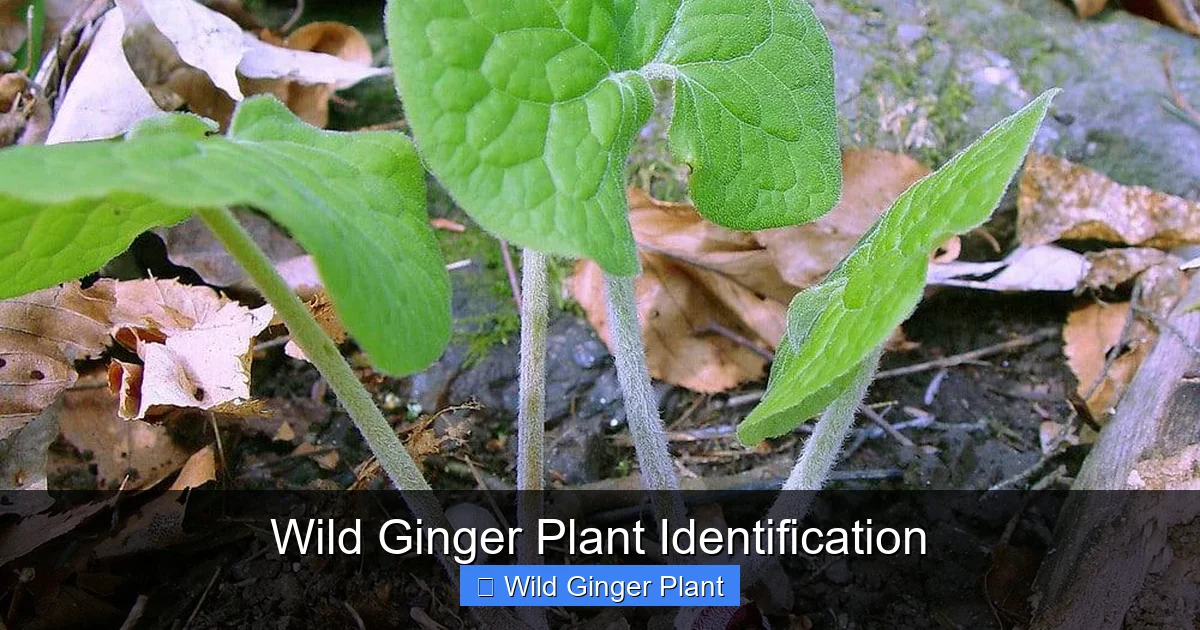
Visual guide about Wild Ginger Plant Identification
Image source: mainenativeplants.org
Preferred Soil and Moisture
Wild ginger thrives in rich, mesic soils. Think deep, loamy, humus-rich ground that holds moisture but drains well. It loves the base of slopes, ravines, and stream terraces where nutrients accumulate. The soil pH tends toward neutral to slightly acidic. If the ground is sandy, rocky, or bone-dry, keep walking. You want that black-gold forest soil that smells like mushrooms and rain.
Light Requirements
This is a true shade plant. It grows under a closed canopy of deciduous trees — sugar maple, basswood, beech, red oak, tulip poplar. It needs the spring sun before leaf-out to photosynthesize and flower, but summer shade to prevent scorching. You might see it at the edge of a woods road where the canopy opens slightly, but it rarely ventures into full sun. Coniferous forests are generally too acidic and dark for it.
Geographic Distribution
The core range stretches from the Great Lakes region through the Appalachians and into the upper Midwest. It reaches its southern limit in the mountains of Georgia and Alabama. In the west, it peters out around eastern Kansas and Oklahoma. There are scattered populations in the Black Hills of South Dakota. If you are in the Pacific Northwest, you have a different species, Asarum caudatum (long-tailed wild ginger), which has similar habits but longer flower tips. For this guide, we focus on Asarum canadense.
Plant Community Associates
When you see certain neighbors, you are in the right neighborhood. Common companions include bloodroot (Sanguinaria canadensis), Dutchman’s breeches (Dicentra cucullaria), trilliums (Trillium spp.), blue cohosh (Caulophyllum thalictroides), jack-in-the-pulpit (Arisaema triphyllum), and various ferns like maidenhair (Adiantum pedatum) and Christmas fern (Polystichum acrostichoides). If you spot these spring wildflowers, slow down and scan the ground. Wild ginger is likely nearby.
Key Identification Features: The Heart of Wild Ginger Plant Identification
Now we get to the core of the matter. Reliable wild ginger plant identification rests on a combination of leaf shape, flower structure, scent, and growth pattern. No single trait is enough on its own. Let us break down each feature in detail.
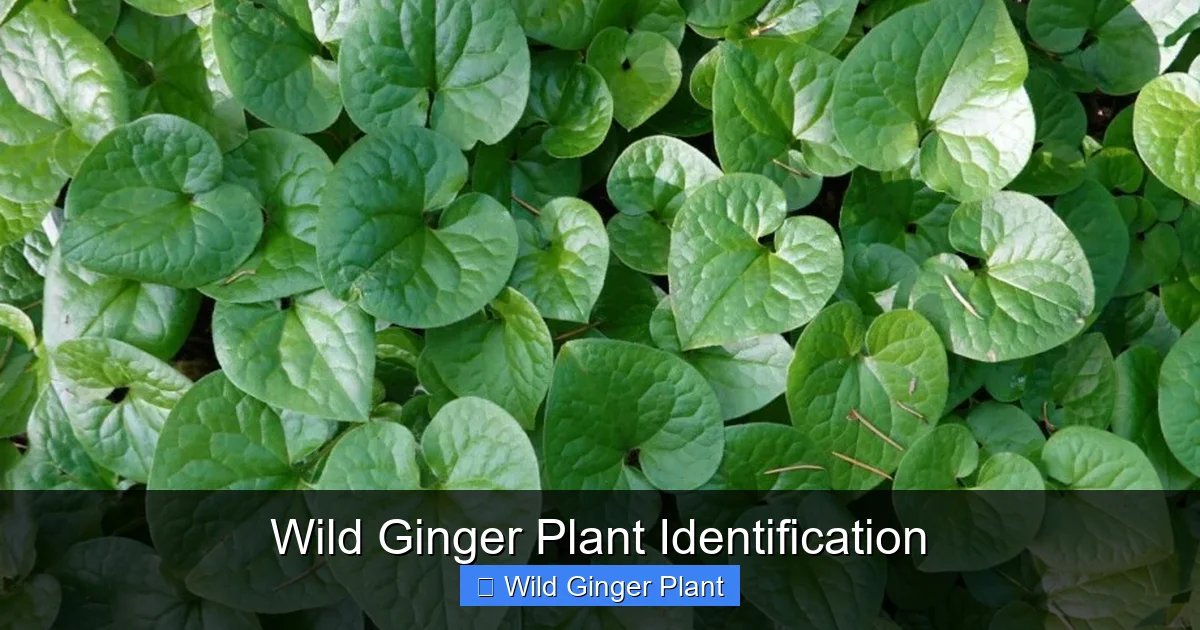
Visual guide about Wild Ginger Plant Identification
Image source: epicgardening.com
Leaves: The Most Visible Clue
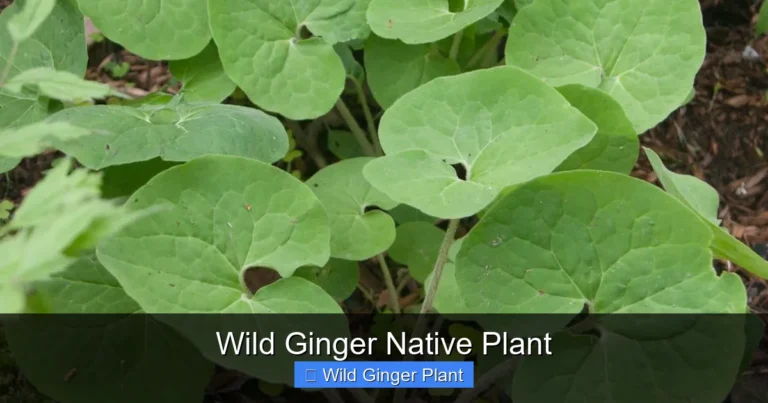
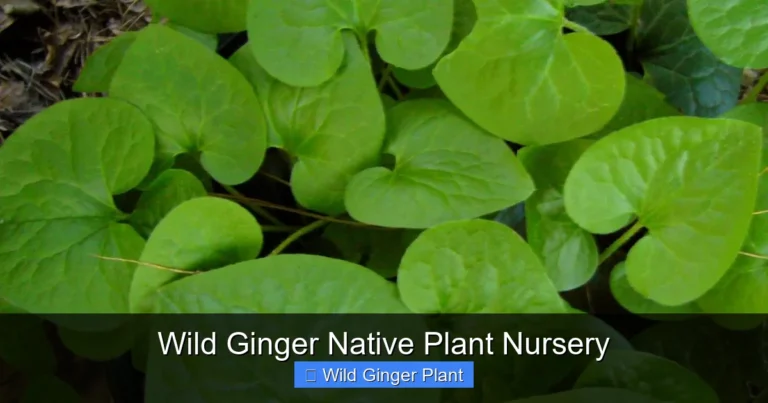
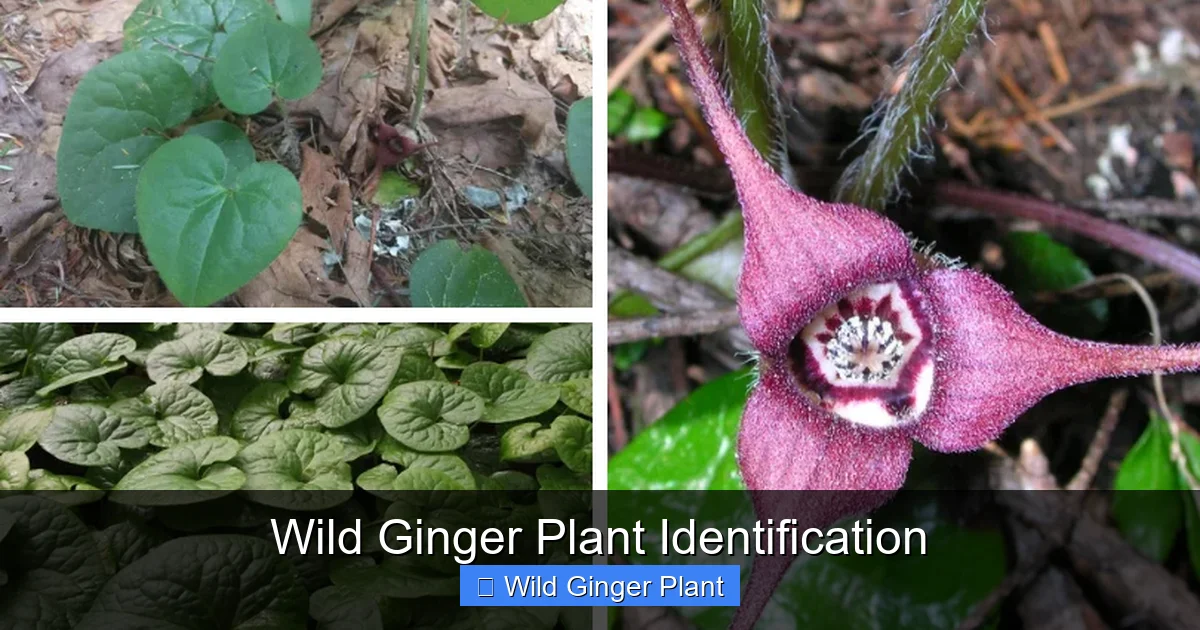
The leaves are what you will notice first. Each plant produces a pair of basal leaves. They are broadly heart-shaped (cordate) to kidney-shaped (reniform), 4 to 8 inches wide and nearly as long. The leaf margins are entire, meaning smooth, not toothed or lobed. The surface is softly pubescent — covered in fine, short hairs — giving it a velvety feel. The upper surface is medium to dark green. The underside is paler, often whitish-green, and more densely hairy.
The leaf venation is palmate. Several main veins radiate from the base like fingers on a hand. The petiole (leaf stalk) is 3 to 6 inches long, also hairy, and arises directly from the rhizome. The two leaves of a pair are usually slightly different in size, one a bit larger. They lie nearly flat or angle slightly upward. In deep shade, leaves grow larger and thinner. In sunnier spots, they are smaller, thicker, and darker.
Flowers: The Hidden Jewel
This is the feature that makes wild ginger plant identification so satisfying. The flower is solitary, borne on a short stalk (peduncle) that emerges from the base of the leaf pair, right at ground level. It often sits hidden beneath the leaf litter or the leaves themselves. You have to get down on your knees and gently pull back the duff to see it.
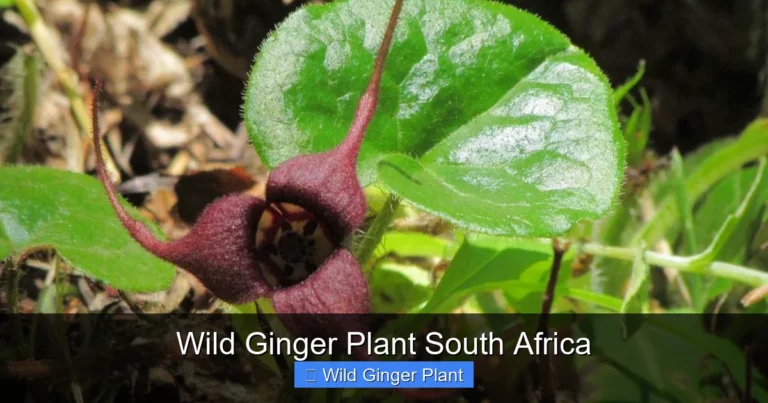
The flower has no petals. Instead, it has a calyx (sepals fused into a tube) shaped like a little jug or urn, about 0.5 to 1 inch long. The color is brownish-purple to maroon, sometimes with a greenish base. The rim of the jug flares into three triangular lobes that curve backward. Inside, the surface is often whitish or mottled. There are 12 stamens and 6 styles. The ovary is inferior. The whole thing looks like a tiny ceramic pot half-buried in the soil.
Why so weird? The flower mimics a fungus. It emits a faint, musty odor that attracts fungus gnats and small flies. They crawl inside, pick up pollen, and move to the next flower. It blooms April through June, earlier in the south, later in the north.
Rhizome and Roots: The Ginger Connection
The rhizome is a slender, branching stem that grows horizontally just under the soil surface, often exposed by erosion or leaf litter. It is 0.25 to 0.5 inches thick, brown on the outside, creamy white inside. Nodes are spaced every inch or two, each giving rise to a leaf pair and roots. The roots are fine and fibrous.
Here is the kicker: scratch the rhizome or crush a leaf, and you get that unmistakable ginger aroma. Spicy, warm, slightly citrusy. It is the same compound, aristolochic acid derivatives and essential oils, that gives tropical ginger its zing. This scent is a powerful confirmation tool for wild ginger plant identification. But do not go ripping up plants just to smell them. Scratch a tiny piece of exposed rhizome or crush a single leaf between your fingers.
Growth Pattern: Colonial Mats
Wild ginger rarely grows as isolated individuals. It spreads vegetatively by rhizomes to form colonies. A patch may be a few feet across or, in ideal conditions, cover hundreds of square feet. The leaves overlap, creating a continuous green carpet. This colonial habit is a great search image. If you see one pair of leaves, look around. You will almost always find more nearby.
Common Look-Alikes and How to Tell Them Apart
This is where wild ginger plant identification gets real. Several plants share the same habitat and have vaguely similar leaves. Mistaking them could range from disappointing to dangerous. Let us go through the main culprits.
Wild Violet (Viola spp.)
Violets are the most common confusion. They grow in the same woods, often right alongside wild ginger. Young violet leaves are heart-shaped and can be similar in size.
Key differences: Violet leaves have distinct teeth along the margins (crenate). Wild ginger margins are smooth. Violet flowers are the classic five-petaled violet shape, usually purple, white, or yellow, held well above the leaves on long stalks. Wild ginger flowers are jug-shaped and ground-level. Violet leaves are usually glabrous (smooth) or sparsely hairy, not velvety. Crush a violet leaf — it smells green, not gingery.
Bloodroot (Sanguinaria canadensis)
Bloodroot emerges at the same time in the same rich woods. Its leaf is also broadly lobed and can look heart-shaped when young.
Key differences: Bloodroot leaves are deeply lobed, usually 5 to 9 lobes, not a simple heart. The leaf wraps around the flower stalk initially. The flower is showy, white with 8 to 12 petals and yellow stamens, held above the leaf. The rhizome is thick, orange-red, and bleeds red sap when cut. Wild ginger rhizome is pale and smells like ginger. Bloodroot is toxic — do not eat it.
European Ginger (Asarum europaeum)
This is the Old World cousin, sometimes planted in shade gardens and occasionally escaped.
Key differences: European ginger leaves are evergreen, leathery, and glossy, not velvety. They are smaller, 2 to 3 inches wide, and the leaf sinus (the notch at the base) is very deep, almost closed. The flowers are similar but smaller. It lacks the strong ginger scent of the native species. If you are in a wild forest far from old homesteads, it is almost certainly the native.
Heartleaf Ginger (Hexastylis spp.)
In the southeastern US, several Hexastylis species (often called little brown jugs or heartleaf) grow in similar habitats. They were once included in Asarum.
Key differences: Hexastylis leaves are evergreen, leathery, and often mottled with silver or white patterns. The flowers are similar jug-shapes but usually smaller and more elongated. They are not strongly gingery. Range overlap occurs in the Appalachians. If leaves are deciduous, velvety, and strongly scented, it is Asarum canadense.
Twinleaf (Jeffersonia diphylla)
Twinleaf has a leaf that looks like two leaflets fused at the base, roughly heart-shaped overall.
Key differences: The leaf is deeply divided into two symmetrical halves, like butterfly wings. The flower is white, cup-shaped, with 8 petals, on a separate stalk. The rhizome is yellow. No ginger scent.
Mayapple (Podophyllum peltatum)
Young mayapple shoots pushing up can look like a folded leaf pair.
Key differences: Mayapple leaves are peltate (stem attaches in the center of the leaf) and deeply lobed like an umbrella. Mature plants have one or two large leaves on a 12 to 18 inch stem. Wild ginger leaves are basal, cordate, on short petioles. Mayapple forms large colonies too, but the leaf architecture is totally different.
Seasonal Changes in Appearance
Wild ginger plant identification changes through the year. Knowing what to expect each season prevents false negatives — and false positives.
Early Spring (March to April)
This is prime time. The leaf pairs are just emerging, often still folded like praying hands. They are smaller, brighter green, and very hairy. The flowers are at their peak, easy to find if you search the base of each pair. The rhizomes are active, pale, and aromatic. This is the easiest season for positive ID.
Late Spring (May to June)
Leaves reach full size. The canopy closes overhead. Flowers fade, replaced by the developing capsule, a fleshy, many-seeded pod that splits open at ground level. Ants are busy carrying seeds. Leaves are fully expanded, velvety, dark green. Colonies are obvious.
Summer (July to August)
Leaves persist but may show wear — insect holes, fungal spots, drought stress. In dry summers, leaves may yellow and die back early. The rhizome goes dormant. No flowers. Scent remains strong if you crush a leaf. This is a decent time for ID if you know the leaf well.
Fall (September to October)
Leaves die back completely. The plant disappears underground. You cannot identify it by foliage. You could dig for rhizomes, but please don’t. Mark the spot and return in spring.
Winter
No above-ground parts. Identification is impossible without digging, which harms the colony. Learn the habitat and return in April.
Ethical Foraging and Conservation Tips
Wild ginger is not rare globally, but local populations face pressure from habitat loss, invasive species (especially garlic mustard and earthworms), and overharvest. If you want to use it, do so responsibly.
Leave the Roots
The rhizome is the plant’s lifeline. Digging it kills the individual and damages the colony. The ginger flavor is in the leaves too. Harvest one or two leaves per plant, no more than 10% of a colony. The plant will regrow leaves next year. If you must taste the root, scratch a tiny piece of an exposed rhizome at the colony edge and rebury it.
Know the Law
Check local regulations. In some states, wild ginger is listed as exploitably vulnerable or of special concern. Harvesting on public land may require a permit or be prohibited. Private land requires owner permission. National parks and most nature preserves forbid all collecting.
Spread the Love, Not the Plant
Do not transplant wild ginger into your garden from the wild. Buy nursery-propagated plants from reputable native plant nurseries. This protects wild genetics and prevents introducing pathogens or invasive hitchhikers like jumping worms.
Watch for Invasives
Garlic mustard (Alliaria petiolata) and Japanese stiltgrass (Microstegium vimineum) invade the same rich woods. They outcompete wild ginger. If you forage, consider pulling a few invasives as thanks. Earthworms (non-native in glaciated regions) destroy the duff layer wild ginger needs. There is no easy fix, but avoiding soil disturbance helps.
Seed Collection for Propagation
If you want to grow it, collect seeds in June when capsules split. Sow immediately in pots with rich, moist soil. They need cold stratification. Germination is slow. It takes 3 to 4 years to reach a decent size. Patience rewards you with your own ethical patch.
Using Wild Ginger: Culinary and Traditional Notes
This guide focuses on wild ginger plant identification, but a brief word on use adds context. The rhizome and leaves have a long history as a flavoring and medicine among Indigenous peoples and early settlers.
Flavor Profile
The taste is ginger-like but more complex — earthy, slightly bitter, with a citrus-pine top note. The leaves are milder than the rhizome. Use fresh or dried. A little goes a long way.
Culinary Uses
Steep leaves for tea. Simmer rhizome bits in syrup for ginger ale base. Chop fresh leaves into salad or stir-fry. Dry and powder for spice blends. Candied rhizome is a treat. Always use sparingly.
Safety and Moderation
Wild ginger contains aristolochic acid, a compound linked to kidney damage and cancer with long-term or high-dose use. The concentration in Asarum canadense is lower than in some Asian Asarum species used in traditional medicine, but it is present. Occasional culinary use is generally considered safe by herbalists, but avoid daily consumption, large doses, or use during pregnancy. Do not use if you have kidney issues. This is not medical advice. Consult a qualified practitioner.
Traditional Uses
Many tribes used it for colds, fevers, digestive upset, and as a contraceptive. The Cherokee used a root decoction for coughs. The Iroquois used it for heart palpitations. Early doctors used it as a stimulant and diaphoretic. These historical uses inform modern interest but do not prove efficacy or safety.
Photography Tips for Field Identification
Sometimes you cannot key it out on the spot. Good photos let you confirm later or ask experts. Here is what to capture for solid wild ginger plant identification.
Shoot the Whole Plant
Stand back and photograph the colony. Show the growth habit, the leaf carpet, the forest context.
Leaf Detail
Get close. Top and bottom of a leaf. Show the venation, the hairiness, the petiole attachment. Include a hand or coin for scale.
Flower Close-Up
This is critical. Gently clear the leaf litter. Shoot straight down and from the side. Show the jug shape, the three lobes, the interior. Use a flash or phone light — it is dark down there.
Rhizome (If Exposed)
If erosion reveals a rhizome, photograph it. Show the nodes, roots, color. Do not dig for this shot.
Habitat Shot
Capture the tree canopy, the slope, the companion plants. This helps confirm the ecological niche.
Metadata Matters
Enable GPS and date on your camera or phone. Note the county, state, and soil type if you know it. This turns a pretty picture into a scientific record.
Building Your Identification Confidence
Wild ginger plant identification is a skill. Like any skill, it grows with practice. Here is a pathway from novice to confident.
Start with a Mentor or Group
Join a native plant society walk. Go with an experienced forager. Nothing beats seeing it in person with someone who can say “yes, that is it” or “no, feel this leaf.”
Use Multiple Field Guides
No single guide has perfect photos or keys. Cross-reference. Good regional guides include Newcomb’s Wildflower Guide, Wildflowers of the Appalachians, and state-specific books. Apps like iNaturalist help but verify with experts.
Visit the Same Patch Year-Round
Pick a colony near you. Visit monthly. Sketch or photograph. Watch it emerge, flower, fruit, senesce. You will learn the gestures of the plant in a way no book teaches.
Teach Someone Else
Explaining the ID features to a friend forces you to articulate them clearly. If you can teach it, you know it.
Keep a Field Journal
Record date, location, weather, what you saw, what confused you. Over years, this becomes a personal atlas.
Conclusion
Wild ginger plant identification opens a door to a deeper relationship with the forest floor. It is not just about naming a plant. It is about noticing the texture of a leaf, the scent of a crushed stem, the hidden flower that fools a fly, the ant carrying a seed, the colony that has persisted for decades under the maples. When you know wild ginger, you know the rich, moist, deciduous woods. You know the rhythm of spring. You know a flavor that connects you to generations of people who knelt in this same duff.
Take this guide with you on your next walk. Go slow. Get low. Use all your senses. Respect the colony. And when you find that heart-shaped pair and catch the ginger zing on your fingertips, smile. You have met a quiet neighbor who has been waiting for you to notice.
Frequently Asked Questions
What is the scientific name for wild ginger?
The scientific name for North American wild ginger is Asarum canadense. It belongs to the Aristolochiaceae (birthwort) family.
Where does wild ginger grow naturally?
Wild ginger grows in rich, moist deciduous forests across eastern North America, from Manitoba to Georgia and west to Missouri, preferring shady slopes and stream terraces.
How can I identify wild ginger flowers?
Look for solitary, jug-shaped brownish-purple flowers about half an inch long at ground level, often hidden under leaf litter, with three flared triangular lobes.
Does wild ginger spread aggressively?
Wild ginger spreads slowly by rhizomes to form dense colonial mats over many years. It is not considered aggressive or invasive in its native range.
Can I grow wild ginger in my garden?
Yes, wild ginger makes an excellent shade groundcover for woodland gardens. Purchase nursery-propagated plants rather than digging from the wild.
What are the main toxic look-alikes to avoid?
The main toxic concern is bloodroot (Sanguinaria canadensis), which has lobed leaves, showy white flowers, and orange-red sap. Always confirm ginger scent and smooth leaf margins.