Best Industrial for Mint Longevity
Finding the best industrial for mint longevity means choosing the right drying equipment, storage systems, and processing methods to preserve essential oils and flavor. This guide covers top industrial solutions from freeze dryers to vacuum sealers that keep mint fresh for months.
If you work with mint at scale, you know the struggle. That bright, punchy flavor fades fast. The color turns dull. The oils evaporate. By the time your product reaches customers, it’s a shadow of what it was at harvest. Finding the best industrial for mint longevity isn’t just about buying a machine. It’s about understanding the entire chain from field to package.
I’ve spent years watching processors lose money on spoiled batches. I’ve seen beautiful mint turn to hay in poorly designed dryers. I’ve watched essential oil content drop by half because someone cranked the heat too high. The good news? The right equipment changes everything. Modern industrial systems can lock in 97% of those precious oils. They can keep mint green and aromatic for two years. But you have to know what to buy and how to use it.
Key Takeaways
- Freeze drying preserves 97% of mint’s essential oils: This method removes moisture through sublimation, keeping color, flavor, and aroma intact better than any other industrial process.
- Vacuum microwave drying cuts processing time by 80%: Combining vacuum pressure with microwave energy delivers rapid, uniform drying without degrading sensitive compounds.
- Modified atmosphere packaging extends shelf life to 24 months: Replacing oxygen with nitrogen or CO2 prevents oxidation and microbial growth in finished mint products.
- Temperature control below 95°F protects volatile oils: Industrial dehydrators with precise thermostats prevent the thermal degradation that ruins mint’s signature flavor profile.
- Stainless steel construction prevents contamination: Food-grade 304 or 316 stainless equipment eliminates metal leaching and meets strict hygiene standards for herb processing.
- Automated monitoring systems reduce labor costs by 60%: IoT-enabled sensors track humidity, temperature, and moisture content in real-time for consistent batch quality.
- Proper pre-treatment boosts yield by 15-20%: Blanching or osmotic dehydration before primary drying reduces cellular damage and improves rehydration quality.
Quick Answers to Common Questions
What is the single most effective industrial method for preserving mint’s essential oils?
Freeze drying preserves up to 97% of mint’s essential oils by removing moisture through sublimation at low temperatures, preventing thermal degradation of volatile compounds like menthol and menthone.
How much does a complete industrial mint processing line cost?
A complete installed line ranges from $500,000 to $1.5 million depending on capacity and technology, with the dryer itself representing 30-40% of total capital expenditure.
What temperature range should industrial mint dryers maintain for optimal quality?
Industrial mint dryers should maintain 85-105°F (29-40°C) with ±2°F precision to prevent volatilization of essential oils while achieving efficient moisture removal.
Which packaging method provides the longest shelf life for dried mint?
Modified atmosphere packaging with nitrogen flushing to <2% residual oxygen, combined with high-barrier metallized films and oxygen scavengers, achieves 24-month shelf life for dried mint products.
Can heat pump dryers match freeze drying quality for mint?
Heat pump dryers achieve 85-90% oil retention versus freeze drying’s 97%, but at 40-50% lower capital cost and 50% lower operating cost, making them the best value for most mid-scale processors.
📑 Table of Contents
- Understanding What Destroys Mint Quality
- Top Industrial Drying Technologies Compared
- Critical Equipment Features for Mint Processing
- Pre-Treatment and Post-Drying Handling
- Packaging and Storage for Maximum Shelf Life
- Automation and Process Control Systems
- Economic Analysis: Sizing Your Investment
- Common Mistakes and How to Avoid Them
- Selecting the Right Vendor Partner
- Future Trends in Industrial Mint Processing
- Conclusion
Understanding What Destroys Mint Quality
Before we talk solutions, let’s talk enemies. Mint is fragile. Those lovely menthol and menthone compounds? They start degrading the moment you cut the stem. Heat accelerates it. Light accelerates it. Oxygen accelerates it. Even the enzymes inside the leaf keep working after harvest, breaking down the very flavors you want to save.
The Three Main Degradation Pathways
Thermal degradation hits first. Menthol boils at 412°F, but it starts volatilizing much lower. At 140°F, you’re already losing measurable amounts. At 180°F, the profile shifts permanently. The top notes vanish. What’s left tastes flat, almost medicinal.
Oxidative degradation follows. Cut cells release enzymes. Polyphenol oxidase turns green to brown. Lipoxygenase creates off-flavors. Oxygen from the air drives both reactions. This is why fresh mint wilts and darkens within hours.
Hydrolytic degradation rounds out the trio. Residual moisture lets enzymes keep working. It feeds microbes. It enables Maillard reactions that create cooked, grassy notes. Even “dry” mint at 12% moisture can degrade if stored wrong.
Why Industrial Scale Makes It Harder
Small batches are forgiving. You can spread leaves on screens. You can monitor each tray. You can adjust on the fly. Industrial volumes change the physics. Deep beds create temperature gradients. The bottom cooks while the top stays wet. Airflow channels unevenly. Edge leaves dry fast; center leaves mold.
Throughput demands speed. But speed often means heat. Heat means loss. The best industrial for mint longevity balances throughput against quality. It uses physics, not just temperature, to remove water.
Top Industrial Drying Technologies Compared
Not all dryers are created equal. The method you choose defines your final product. Let’s break down the main contenders.
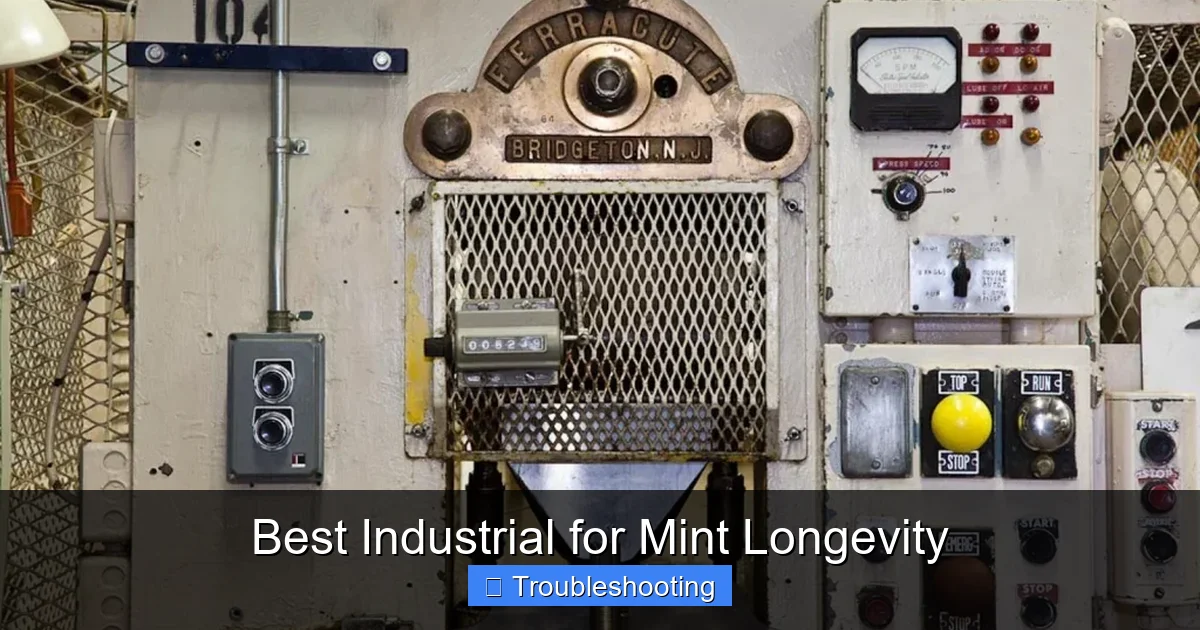
Visual guide about Best Industrial for Mint Longevity
Image source: cncbul.com
Freeze Drying: The Gold Standard
Freeze drying, or lyophilization, works by sublimation. Frozen water goes straight to vapor. No liquid phase means no cellular collapse. The leaf structure stays intact. The oils stay trapped.
Industrial freeze dryers run in batches. You load trays onto shelves. The chamber pulls vacuum. Shelves warm slowly. Ice sublimates. A condenser captures the vapor. Cycle times range from 20 to 48 hours depending on load density.
Energy costs run high. Capital costs run higher. A 500kg batch unit starts around $180,000. But the product commands premium pricing. Pharmaceutical-grade mint. High-end culinary markets. Nutraceutical extracts. The ROI works if your margins support it.
Key specs to compare: condenser capacity (kg per cycle), shelf area (square meters), vacuum pump type (oil-sealed vs dry screw), and control system sophistication. Look for programmable recipes. You want different curves for peppermint versus spearmint versus chocolate mint.
Vacuum Microwave Drying: The Speed King
Vacuum microwave combines two mechanisms. Vacuum lowers water’s boiling point. Microwaves heat volumetrically. The result? Drying at 95-115°F in minutes instead of hours.
Continuous systems feed product on a conveyor through a microwave tunnel. Vacuum pumps maintain 50-100 mbar. Magnetrons pulse power based on moisture sensors. Throughput hits 200-500 kg/hour depending on inlet moisture.
Quality rivals freeze drying. Color retention exceeds 90%. Oil retention hits 93-95%. The rapid cycle limits thermal exposure. But capital cost sits around $300,000 for a mid-size line. And you need 3-phase power plus water cooling.
Maintenance matters here. Magnetrons degrade. Waveguides need cleaning. Vacuum seals wear. Budget 5% of equipment cost annually for upkeep.
Heat Pump Dehumidification: The Workhorse
Heat pump dryers recirculate air. A refrigeration cycle pulls moisture out. The same cycle puts heat back in. Efficiency hits 3-4 kWh per kg water removed. That’s half the energy of conventional hot air.
Temperatures stay low. 85-105°F typical. Drying takes 8-16 hours. Quality sits between freeze dry and vacuum microwave. Oil retention 85-90%. Color good but not perfect.
Capital cost is friendly. $50,000-$120,000 for 500-1000 kg batch capacity. Operating cost is low. Maintenance is standard HVAC stuff. This is where most mid-size processors start.
Look for variable speed fans. Staged temperature profiles. Humidity control within ±2% RH. Data logging for traceability.
Infrared Assisted Convection: The Hybrid
IR panels penetrate the leaf. Convection carries moisture away. The combo cuts drying time 30-40% versus convection alone. Temperatures stay moderate because IR heats the product, not just the air.
Systems range from batch cabinets to continuous tunnels. IR zones can be zoned for different power densities. Good for high-throughput lines where freeze dry is too slow and vacuum microwave too expensive.
Watch for uneven heating. IR creates hot spots. Rotation or product agitation helps. Quality data shows 88-92% oil retention with proper setup.
Critical Equipment Features for Mint Processing
Beyond the drying method, certain features separate professional gear from hobby equipment. These aren’t optional. They’re the price of admission for consistent quality.
Precise Temperature Control
Mint needs ±2°F stability. Not ±10°F. Not “low, medium, high.” Industrial controllers use PID loops with RTD sensors. Multiple zones. Ramp/soak profiles. You program the curve: 95°F for 2 hours, ramp to 105°F over 30 minutes, hold 4 hours, cool down.
Why it matters: a 15°F spike for 20 minutes can vaporize 30% of your menthol. That spike happens when a compressor cycles or a burner modulates. Good control prevents it.
Uniform Airflow Distribution
Uneven airflow creates uneven drying. The fan curve must match the system resistance. Perforated plates, air straighteners, and plenum design all matter. CFM per square foot of product area should be 150-300 depending on bed depth.
Variable frequency drives let you dial airflow for each product. Peppermint leaves are thin. Spearmint is thicker. Chocolate mint is fuzzy. Each needs different velocity.
Food-Grade Construction Throughout
304 stainless minimum. 316 for contact surfaces if you’re doing organic or pharmaceutical. No galvanized. No painted steel. No plastic that isn’t FDA-listed. Welds ground smooth. Radiused corners. No traps for product or bacteria.
Gaskets: silicone or EPDM. No Buna-N. It degrades with essential oils. Fasteners: tri-clamp or threaded sanitary. No bolts through product zones.
Clean-in-Place Capability
Mint oils are sticky. They build up. They cross-contaminate batches. CIP means spray balls, solution tanks, heat exchangers, and automated sequences. 30-minute turnaround between varieties. Manual cleaning takes 4 hours and misses spots.
Real-Time Moisture Monitoring
Don’t guess. Near-infrared sensors on the discharge. Microwave resonance probes in the bed. Load cells weighing the batch continuously. Data feeds the controller. The dryer stops when target moisture hits. Not when the timer says so.
Pre-Treatment and Post-Drying Handling
The dryer is the star, but the supporting cast matters. What happens before and after determines whether your investment pays off.
Pre-Treatment Options
Blanching: 90-95°F water for 30-60 seconds. Inactivates polyphenol oxidase. Locks in green color. Costs you some water-soluble oils. Best for visual-grade product.
Osmotic dehydration: 40-50°Brix sucrose or glycerol solution. 30-60 minutes at room temp. Pulls out 30-40% moisture before the dryer. Reduces thermal load. Improves rehydration. Adds solids though. Label implications.
Pulsed electric field: Non-thermal. Electroporates cell membranes. Moisture leaves easier. Energy use is tiny. Equipment is niche. Promising for high-value oils.
Simple washing and spin-drying: Often enough. Remove field dirt. Spin to 65-70% moisture. Load the dryer. Skip fancy steps if your market doesn’t pay for them.
Post-Dry Cooling and Conditioning
Hot dry mint is brittle. It shatters. It also reabsorbs moisture fast. Cool gradually. 2-3 hours in a conditioning bin with slow air circulation. Target 68-72°F. Equalizes moisture between leaves and stems.
Sift after conditioning. Remove dust. Separate stems if your spec requires leaf-only. Fines carry disproportionate oil loss. Capture them for oil extraction instead of wasting them.
Size Reduction: To Mill or Not to Mill
Whole leaf stores best. Surface area drives oxidation. But customers want cut sizes. Tea cut (2-4mm). Fine cut (0.5-1mm). Powder (100-200 mesh).
Mill cold. Cryogenic if possible. Liquid nitrogen embrittles. Hammer mill at -100°F preserves oils that room-temp milling destroys. If cryo isn’t feasible, mill in a nitrogen-purged system. Keep oxygen below 2%.
Packaging and Storage for Maximum Shelf Life
You dried it perfectly. Now don’t ruin it in the bag. Packaging is where many processors lose the game.
Modified Atmosphere Packaging (MAP)
Flush with nitrogen. Target <2% residual oxygen. Carbon dioxide at 5-10% inhibits microbes. Barrier films: metallized PET, EVOH, or aluminum foil laminates. OTR <0.5 cc/m²/day. WVTR <0.5 g/m²/day.
Rigid containers work too. Nitrogen-flushed tins. Glass with oxygen-scavenging caps. Vacuum-sealed pouches for bulk. Each has a place in the product lineup.
Oxygen Scavengers and Desiccants
Iron-based scavengers in sachets. They react with headspace oxygen. Capacity: 15-30 cc O2 per gram of scavenger. Size them for 3x the calculated headspace oxygen. Safety margin matters.
Desiccants: molecular sieve 3A or 4A. Not silica gel. Sieve holds water at low RH. Silica releases it. Target 2-3% of product weight in desiccant for long-term storage.
Storage Environment Control
Cool. Dark. Dry. 50-60°F ideal. 40-50% RH. No light exposure. UV destroys chlorophyll and oils. Warehouse layout: mint away from spices, away from heat sources, away from dock doors.
Inventory rotation: FIFO religiously. Lot tracking mandatory. Shelf life validation: accelerated aging at 95°F/75% RH for 6 weeks simulates 12 months real time. Test quarterly.
Automation and Process Control Systems
Modern industrial lines don’t just run. They report. They adjust. They predict. The best industrial for mint longevity includes brains, not just steel.
SCADA and HMI Integration
Supervisory Control and Data Acquisition. Touchscreen HMIs on each dryer. Central historian logging every parameter every 10 seconds. Batch reports auto-generated. Alarm notification via SMS/email.
Recipe management: 50+ stored profiles. Operator selects “Peppermint – Tea Cut – Organic.” System loads temps, times, airflow, endpoint moisture. No manual entry errors.
IoT Sensor Networks
Wireless nodes throughout the facility. Ambient temp/RH. Product temp (relative humidity. Dew point. Differential pressure across filters. Vibration on motors. Power quality.
Data feeds predictive maintenance. Bearing temp trending up? Schedule replacement before failure. Filter delta-P climbing? Change it before airflow drops.
Quality Integration
NIR analyzers inline. Moisture, oil content, color values every 30 seconds. Out-of-spec triggers automatic divert valve. Bad product never reaches packaging.
Lab system integration. LIMS pulls dryer data. Correlates process params with lab results. Builds models. “When inlet humidity exceeds 65%, oil retention drops 3%.” Now you know.
Economic Analysis: Sizing Your Investment
Equipment is expensive. Downtime is expensive. Bad product is expensive. Let’s talk numbers.
Capital Cost Breakdown
Freeze dryer (500kg/batch): $180K-$350K. Vacuum microwave (300kg/hr): $280K-$500K. Heat pump (1000kg/batch): $80K-$150K. IR-convection tunnel (500kg/hr): $120K-$250K.
Ancillary: washing/spin system $25K-$60K. Milling/sifting $40K-$100K. Packaging line $60K-$200K. CIP system $30K-$80K. Controls/automation $40K-$120K. Installation/validation $50K-$150K.
Total installed: $500K-$1.5M for a complete line. Phase it. Start with dryer + packaging. Add automation year two. Add pre-treatment year three.
Operating Cost Drivers
Energy: freeze dry 1.2-1.5 kWh/kg water. Vacuum microwave 0.8-1.1. Heat pump 0.6-0.9. IR-convection 0.9-1.3. At $0.10/kWh, that’s $0.06-$0.15 per kg water removed.
Labor: automated line 1 operator per shift. Manual line 3-4. At $25/hr loaded, that’s $150K-$200K/year difference.
Maintenance: 3-5% of equipment cost annually. Freeze dry higher (vacuum pumps, refrigeration). Heat pump lower.
Yield loss: every 1% oil loss on $50/kg oil value = $0.50/kg product. On 500,000 kg/year, that’s $250K. Quality pays.
ROI Scenarios
Scenario A: Heat pump line, $750K installed. 500,000 kg/year. $8/kg margin over raw. $4M revenue. $2.2M operating cost. $1.8M EBITDA. 2.5 year payback.
Scenario B: Freeze dry line, $1.3M installed. 200,000 kg/year. $25/kg margin. $5M revenue. $2.8M operating cost. $2.2M EBITDA. 3 year payback. Higher risk, higher reward.
Scenario C: Vacuum microwave, $1.1M installed. 400,000 kg/year. $15/kg margin. $6M revenue. $3.1M operating cost. $2.9M EBITDA. 2.3 year payback. Best balance for many.
Common Mistakes and How to Avoid Them
I’ve seen every mistake in the book. Here are the ones that cost real money.
Overloading the Dryer
“Just one more tray.” “Deeper bed saves space.” Result: center stays wet. Edges burn. Mold in the middle. Oil loss on the edges. Follow manufacturer loading specs. They’re not suggestions.
Skipping Validation
“It worked in the lab.” Lab is 1kg. Production is 500kg. Physics scales differently. Validate at scale. Map temperature. Map moisture. Map airflow. Document everything.
Ignoring Inlet Variability
Morning harvest: 78% moisture. Afternoon harvest: 72%. Rain yesterday: 82%. Same dryer recipe fails. Measure every lot. Adjust recipe. Or install pre-dry equalization.
Cheaping Out on Packaging
$0.03/bag savings. $50/kg product loss. Do the math. Barrier packaging pays for itself in one prevented recall.
No Preventive Maintenance
Vacuum pump oil changed yearly? It should be quarterly. Condenser defrosted manually? Automate it. Fan belts tensioned? Check monthly. Unplanned downtime costs 10x planned.
Selecting the Right Vendor Partner
Equipment is a 15-20 year relationship. Choose the company, not just the box.
Technical Support Depth
Do they have process engineers? Or just sales engineers? Can you call at 2 AM when the dryer trips? Is there a local service tech? Spare parts inventory on your continent?
Testing Facilities
Can you run trials at their lab? With your mint? At your volumes? Good vendors have pilot plants. They’ll run 50kg tests. They’ll give you data. They’ll help optimize before you buy.
Reference Installations
Talk to three current users. Not the ones the vendor gives you. Find them yourself. Ask about uptime. Ask about support. Ask if they’d buy again.
Customization Willingness
Standard machines fit standard needs. Mint isn’t standard. Need special tray design? Modified airflow? Custom recipe structure? The right vendor says “let’s figure it out.” The wrong one says “that’s not standard.”
Future Trends in Industrial Mint Processing
The technology keeps moving. Here’s what’s coming.
AI-Driven Process Optimization
Machine learning on historical data. Predicts optimal recipe for each incoming lot. Adjusts in real-time. Reduces energy 10-15%. Improves consistency.
Supercritical CO2 Integration
Extract oils first. Then dry the spent leaf. Two revenue streams. Equipment costs more but utilization doubles. Emerging for high-value varieties.
Solar-Assisted Heat Pumps
PV thermal collectors preheat dryer intake air. Cuts compressor runtime. Great for sunny climates. Payback 4-6 years on the solar portion.
Blockchain Traceability
Field-to-package data on distributed ledger. Buyers scan QR code. See harvest date, dryer profile, storage temp, transport conditions. Premium markets demand it.
Conclusion
Finding the best industrial for mint longevity isn’t a single decision. It’s a series of them. Dryer type. Pre-treatment. Packaging. Controls. Vendor. Each choice compounds. Get them right, and you ship mint that tastes like it was picked this morning. Get them wrong, and you ship hay at premium prices.
Start with your market. What do your customers pay for? Color? Oil content? Organic certification? Shelf life? Match the technology to the value proposition. Don’t buy a Ferrari engine for a tractor pull.
Pilot before you commit. Run your mint through candidate systems. Measure everything. Taste everything. The data will tell you what the sales brochures won’t.
And remember: the best equipment poorly operated loses to good equipment well operated. Train your people. Document your processes. Maintain your assets. The machine is only as good as the system around it.
Your mint deserves the best. Your customers deserve the best. Your bottom line demands the best. Now you know what that looks like. Go build it.
Frequently Asked Questions
What is the best industrial drying method for mint longevity?
Freeze drying is the best industrial method for mint longevity, preserving 97% of essential oils and maintaining color, flavor, and aroma for 24+ months. However, vacuum microwave drying offers comparable quality at higher throughput, while heat pump dehumidification provides the best cost-to-quality ratio for most commercial operations.
How long does industrial mint drying take?
Drying time varies by technology: freeze drying takes 20-48 hours per batch, vacuum microwave completes in 10-30 minutes continuous, heat pump dehumidification requires 8-16 hours, and IR-assisted convection takes 6-10 hours. The choice depends on your volume requirements and quality targets.
What temperature destroys mint essential oils?
Mint essential oils begin degrading at 104°F (40°C) with significant losses above 122°F (50°C). Menthol volatilizes rapidly above 140°F (60°C). Industrial dryers must maintain precise temperature control below 105°F with ±2°F stability to preserve oil content and flavor profile.
How do you prevent mint from turning brown during industrial drying?
Prevent browning by blanching leaves at 90-95°F for 30-60 seconds to inactivate polyphenol oxidase, using low-temperature drying below 105°F, minimizing oxygen exposure with nitrogen-purged systems, and packaging immediately in modified atmosphere packaging with oxygen scavengers.
What is the ideal moisture content for dried mint storage?
The ideal moisture content for dried mint storage is 8-10% wet basis. Below 8% leaves become excessively brittle and shatter; above 12% risks microbial growth and enzymatic degradation. Condition dried mint at 68-72°F for 2-3 hours before packaging to equalize moisture distribution.
How much does industrial mint processing equipment cost per kg of capacity?
Equipment cost per kg/hour capacity: freeze drying $600-1,200/kg/hr, vacuum microwave $900-1,700/kg/hr, heat pump dehumidification $160-300/kg/hr, IR-convection $240-500/kg/hr. Total installed line cost adds 2-3x the dryer cost for ancillary systems, installation, and validation.