Best Fertilizer for Sedum
Sedum plants thrive with minimal fertilization. A light application of balanced, slow-release fertilizer in early spring is all these hardy succulents need. Over-fertilizing causes weak, floppy growth and fewer flowers.
Hey there, fellow plant lover! If you are reading this, you probably have some sedum growing in your garden or maybe in pots on your patio. These tough little plants are often called stonecrop. They are famous for being low maintenance. But even low maintenance plants need a little food sometimes. The question is: what is the best fertilizer for sedum? And how do you use it without killing your plants with kindness?
I have grown sedum for years. I have made every mistake in the book. I have overfed them. I have underfed them. I have used the wrong stuff at the wrong time. Today, I want to share everything I have learned. We will talk about what sedums actually need. We will cover the best products to buy. We will go over the exact steps for applying fertilizer. And we will troubleshoot the common problems that pop up. Grab a cup of coffee. Let us dig in.
Key Takeaways
- Less is more: Sedums need very little fertilizer to thrive and bloom well.
- Timing matters: Apply fertilizer once in early spring when new growth appears.
- Choose balanced formulas: A 10-10-10 or 5-5-5 slow-release fertilizer works best for sedum.
- Avoid high nitrogen: Too much nitrogen creates leggy, weak stems that flop over.
- Container plants need more: Potted sedums benefit from diluted liquid fertilizer monthly during growing season.
- Watch for signs: Yellow leaves may mean nutrient deficiency; brown tips often mean fertilizer burn.
- Soil test first: Check your soil before adding any fertilizer to avoid nutrient imbalances.
Quick Answers to Common Questions
What is the best fertilizer for sedum?
A balanced, slow-release granular fertilizer with an NPK ratio like 10-10-10 or 5-10-10 applied once in early spring.
When should I fertilize my sedum?
Fertilize in early spring when new growth appears. Do not fertilize in fall or winter.
Can I use Miracle-Gro on sedum?
Only at quarter strength and only for container plants. Avoid using standard Miracle-Gro on in-ground sedum.
Why is my sedum floppy and falling over?
Too much nitrogen fertilizer, too much water, or not enough sun causes weak, leggy growth that flops.
Do sedums need fertilizer every year?
Most in-ground sedums in decent soil need no fertilizer at all. A light compost top-dressing every few years is sufficient.
📑 Table of Contents
- Understanding Sedum Nutritional Needs
- When to Fertilize Sedum for Best Results
- Types of Fertilizers That Work for Sedum
- How to Apply Fertilizer to Sedum Properly
- Common Fertilizing Mistakes to Avoid
- Troubleshooting Sedum Fertilizer Problems
- Best Fertilizer for Sedum: Product Recommendations
- Seasonal Fertilizer Calendar for Sedum
- Sedum Varieties and Their Specific Needs
- DIY Fertilizer Options for the Thrifty Gardener
- Frequently Asked Questions About Fertilizing Sedum
- Conclusion
Understanding Sedum Nutritional Needs
Before we talk about products, we need to understand the plant. Sedums are succulents. They store water in their thick leaves. They evolved in rocky, poor soil. They grow on cliffs and in gravel. Their roots are used to scavenging for nutrients. They do not expect a rich feast.
Why Sedums Are Different
Most garden plants want rich, loamy soil. They want compost and manure and regular feeding. Sedums are the opposite. If you plant them in rich soil, they get lazy. They grow tall and weak. The stems get soft. Then the first rain or wind storm knocks them flat. This is called lodging. A floppy sedum is a sad sedum.
In their native habitat, nutrients are scarce. The plant adapts by growing slow and steady. It builds strong cell walls. It stays compact. This is why you often see sedum thriving in cracks in a driveway. It does not need much. When we fertilize, we are basically supplementing a very lean diet. A little goes a long way.
The Big Three Nutrients
You see three numbers on every fertilizer bag. N-P-K. Nitrogen, Phosphorus, Potassium. Here is what they do for sedum:
- Nitrogen (N): Makes green leaves. Too much makes weak, stretchy growth. Sedum needs very little.
- Phosphorus (P): Helps roots and flowers. This is good for sedum. It encourages those pretty star-shaped blooms.
- Potassium (K): Overall health. Disease resistance. Water regulation. Very important for succulents.
The best fertilizer for sedum has a low first number. Look for ratios like 5-10-10 or 10-10-10. Avoid lawn fertilizers. Those are often 30-0-3 or similar. That much nitrogen will turn your sedum into a floppy mess.
Micronutrients Matter Too
Sedums also need trace minerals. Iron, magnesium, calcium. These usually exist in your soil. But if your soil is very sandy or very alkaline, they might be locked up. A good quality fertilizer includes micros. Or you can use a kelp meal or azomite once a year. It is like a multivitamin for your plants.
When to Fertilize Sedum for Best Results
Timing is everything. Fertilize at the wrong time and you do more harm than good. Sedums have a distinct growth cycle. We need to work with it, not against it.
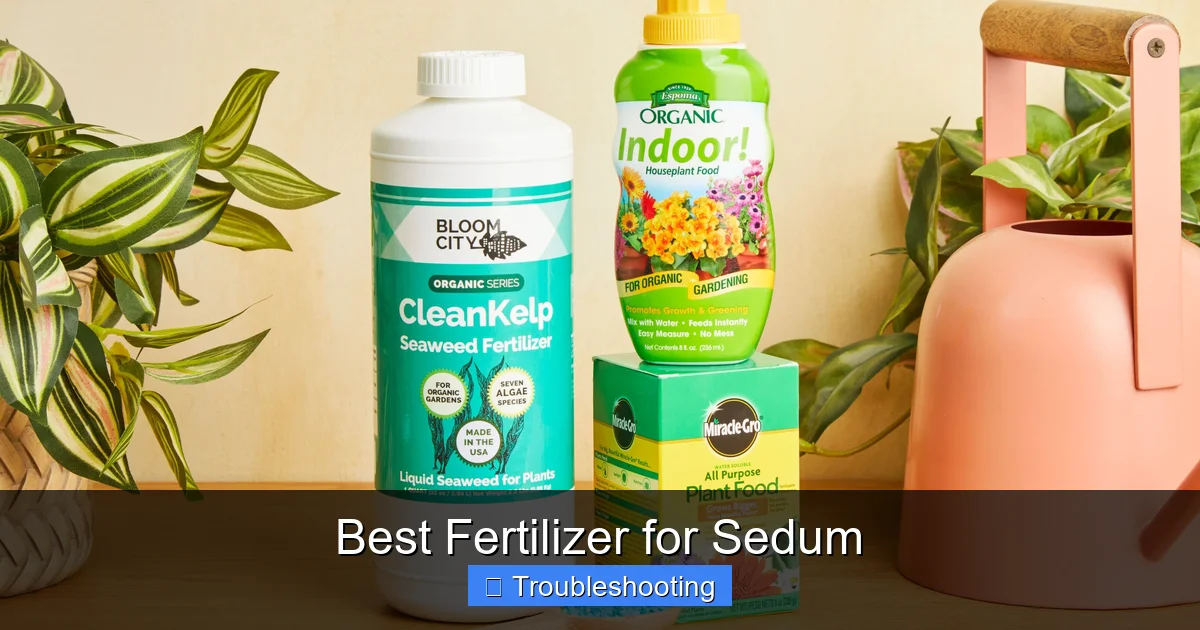
Visual guide about Best Fertilizer for Sedum
Image source: bhg.com
Early Spring: The Golden Window
The absolute best time to fertilize is early spring. Wait until you see new growth emerging. This is usually March or April depending on your zone. The soil has warmed up. The roots are waking up. They are ready to take up nutrients.
Apply your slow-release granules now. Scratch them into the soil surface. Water well. That is it. One application. Done for the year. This feeds the plant through the main growing season. It supports the spring flush and the summer bloom.
Why Not Fall?
Do not fertilize in fall. I know it is tempting. You want to “put the garden to bed.” But fertilizing in fall stimulates new growth. That new growth is tender. It will not harden off before winter. The first freeze kills it. This weakens the plant. It can even kill the crown. Let your sedum go dormant naturally. It knows what it is doing.
What About Summer?
Generally, no summer feeding for in-ground plants. The spring slow-release is enough. But there is an exception. Container plants. Pots leach nutrients every time you water. By mid-summer, the soil is exhausted. You can give potted sedum a very dilute liquid feed. Once a month. June and July only. Stop by August. Let them toughen up for winter.
New Plantings
Did you just plant a new sedum? Do not fertilize right away. The roots are damaged from transplanting. They cannot absorb nutrients well. Fertilizer salts can burn the tender new roots. Wait four to six weeks. Let the plant establish. Then give a light feed if it is spring. If it is fall, wait until next spring.
Types of Fertilizers That Work for Sedum
Walk down the fertilizer aisle and your head spins. Liquid. Granular. Spikes. Organic. Synthetic. Slow release. Fast release. Let us cut through the noise. Here are the types that actually work for sedum.
Slow-Release Granular (Top Pick)
This is the gold standard. The best fertilizer for sedum is almost always a balanced, slow-release granular fertilizer. Brands like Osmocote, Espoma Garden-tone, or a generic 10-10-10 coated fertilizer. The coating breaks down over three to four months. It feeds a little bit every time it rains or you water.
Why it wins: No surge of growth. No burning. Low labor. One application per year. It mimics the slow trickle of nutrients in nature. Look for a “flower and vegetable” or “all purpose” formula. Avoid “lawn” or “high nitrogen” formulas.
Organic Granular Options
If you prefer organic, you have great choices. Espoma Plant-tone (5-3-3) is good. Dr. Earth Flower Girl (3-9-4) is excellent for blooms. Bone meal adds phosphorus. Blood meal adds nitrogen (use sparingly). Compost is not really a fertilizer but a soil conditioner. A half-inch top dressing of compost in spring is a fantastic slow feed. It also improves soil structure.
Organic fertilizers feed the soil microbes. The microbes feed the plant. This is a slower, gentler process. It builds long-term soil health. The downside: they can smell. Dogs love to dig them up. And they are bulkier to apply.
Liquid Fertilizers (For Containers Only)
Liquid fertilizers act fast. They are absorbed through roots and leaves. Miracle-Gro, fish emulsion, seaweed extract. These are great for pots. But they are risky in the ground. It is too easy to overdose. If you use liquid on in-ground sedum, dilute to quarter strength. Apply to damp soil. Never on dry soil. Never on foliage in hot sun.
For containers: Mix at half the label rate. Apply once a month in spring and early summer. Water first with plain water. Then apply fertilizer water. This prevents root burn.
Fertilizer Spikes
You hammer these into the ground near the plant. They are convenient. But I do not recommend them for sedum. The nutrient concentration is very high right at the spike. It creates a “hot spot” that can burn roots. The rest of the root zone gets nothing. Sedum roots spread wide and shallow. Spikes do not match that pattern. Stick with broadcast granules.
What to Avoid
- Weed and feed products: Herbicides kill broadleaf plants. Sedum is a broadleaf plant.
- Fresh manure: Too hot. Burns roots. Contains weed seeds.
- High nitrogen lawn food: Causes floppy growth.
- Epsom salt as a cure-all: Only helps if you have a magnesium deficiency. Test soil first.
- Coffee grounds directly on plants: Can mat down and repel water. Compost them first.
How to Apply Fertilizer to Sedum Properly
You have the right product. You have the right time. Now let us talk technique. Proper application makes the difference between a happy plant and a crispy one.
Step-by-Step for In-Ground Plants
- Read the label. I know, boring. But the label is the law. It tells you the rate. Usually 1 to 2 pounds per 100 square feet for 10-10-10.
- Weed first. Remove weeds so they do not steal the food.
- Water the day before. Moist soil accepts fertilizer better. Dry soil repels water and creates salt pockets.
- Measure accurately. Use a cup or scale. Do not guess. A handful varies wildly.
- Broadcast evenly. Sprinkle around the plant. Stay 2 to 3 inches away from the crown. Do not dump a pile at the base.
- Scratch it in. Use a hand cultivator or rake. Lightly mix into the top half-inch of soil. This prevents runoff and keeps birds from eating it.
- Water thoroughly. This activates the granules. It washes dust off leaves. It moves nutrients into the root zone.
- Mulch if needed. A light layer of gravel or shredded bark helps retain moisture. Keep mulch off the crown.
Step-by-Step for Containers
- Choose a water-soluble fertilizer. Balanced ratio. 20-20-20 or similar.
- Mix at quarter to half strength. If label says 1 tablespoon per gallon, use 1 teaspoon.
- Water with plain water first. Saturate the soil. Let it drain.
- Apply fertilizer solution. Water until it runs out the bottom.
- Do not let the pot sit in runoff. Empty the saucer. Salts build up and burn roots.
- Flush monthly. Once a month, water heavily with plain water to flush accumulated salts.
Special Situations
Rock Gardens: Sedums in rock gardens are hard to fertilize without feeding weeds. Use a liquid feed at quarter strength. Apply carefully at the base of each plant. Or use fertilizer spikes buried deep, but only if you cannot broadcast.
Green Roofs: These have engineered soil. Very low organic matter. They need a specific slow-release fertilizer designed for extensive green roofs. Usually a 6-month or 9-month release. Apply once a year in spring. Follow the manufacturer specs exactly.
Living Walls: Similar to containers. Liquid feed through irrigation system. Very dilute. Constant feed or weekly pulse. This is advanced. Consult your system installer.
Common Fertilizing Mistakes to Avoid
We all learn by messing up. Here are the big ones I see over and over. Save yourself the heartache.
Mistake 1: Over-Fertilizing
This is number one. “If a little is good, more is better.” Wrong. Sedums store water. They also store salts. Excess fertilizer builds up in the leaves. The plant gets soft. The color goes from deep green or blue-green to a pale, sickly yellow-green. The stems stretch. The plant flops open in the center. This is the classic “fertilizer look.” It ruins the architectural beauty of sedum.
Fix: Stop fertilizing. Water heavily to leach salts. Wait. The plant will harden off eventually. But you lost that season’s form.
Mistake 2: Fertilizing Stressed Plants
Your sedum looks bad. Yellow leaves. Droopy. You think “It needs food!” You fertilize. It dies. Why? Because the problem was not hunger. It was root rot. Or drought. Or disease. Fertilizer adds salts. Salts pull water out of roots. A stressed root system cannot handle the osmotic pressure. It collapses.
Rule: Never fertilize a sick plant. Diagnose first. Fix the stress. Then feed lightly when it recovers.
Mistake 3: Wrong Formulation
Using bloom booster (10-30-20) on sedum. Or tomato food. Or rose food. These are high phosphorus or high potassium. Sedum does not need that much P or K. It unbalances the soil. It can induce micronutrient deficiencies. Stick to balanced. 1-1-1 ratio. Or slightly higher P and K like 5-10-10.
Mistake 4: Ignoring Soil pH
Sedums prefer slightly acidic to neutral soil. 6.0 to 7.0 pH. If your soil is 5.0 (acid) or 8.0 (alkaline), nutrients lock up. Iron becomes unavailable in high pH. Phosphorus locks up in low pH. You can fertilize all you want. The plant cannot eat. Test your soil. Amend pH first. Then fertilize.
Mistake 5: Fertilizing Wet Foliage
Granular fertilizer lands on wet leaves. It sticks. It dissolves in the dew. It burns the leaf tissue. You get brown spots. Brown tips. It looks like disease. It is chemical burn. Always apply to dry foliage. Water immediately after to wash off any dust.
Mistake 6: Not Adjusting for Age
A mature, established clump of ‘Autumn Joy’ needs almost nothing. A young plug needs a tiny bit more. A divided transplant needs zero for a month. Adjust your rate. Mature plants in good soil often need zero fertilizer. Let them be.
Troubleshooting Sedum Fertilizer Problems
Even with the best intentions, things go wrong. Here is how to read the signs and fix the problem.
Symptom: Floppy, Leggy Growth
Cause: Too much nitrogen. Too much water. Too much shade. Usually a combo.
Fix: Stop fertilizing. Cut back on water. If in shade, move to sun (sedums need 6+ hours). You can stake them with grow-through supports. Or do the “Chelsea Chop” – cut back by half in late May. They will regrow shorter and sturdier.
Symptom: Yellow Leaves (Chlorosis)
Cause: Several possibilities. Nitrogen deficiency (older leaves yellow first). Iron deficiency (new leaves yellow, veins stay green). Magnesium deficiency (older leaves yellow between veins). Overwatering/root rot (general yellow, mushy stems).
Fix: Check soil moisture first. If wet, stop watering. If dry, water. If moisture is good, test soil. If high pH, add sulfur or iron chelate. If low nitrogen, apply a light feed. But be careful. Yellow leaves on sedum are often just the plant shedding old leaves. That is normal.
Symptom: Brown Leaf Tips and Edges
Cause: Fertilizer burn. Salt buildup. Or fluoride in tap water. Or low humidity.
Fix: Flush the soil. Water heavily three times in a row. Let drain fully each time. For pots, repot in fresh mix if severe. Switch to rainwater or distilled water. Stop fertilizing for the rest of the season.
Symptom: No Flowers
Cause: Too much nitrogen. Not enough sun. Plant is too young. Wrong variety for your zone.
Fix: Ensure 6+ hours direct sun. Stop high-nitrogen feeds. Use a bloom formula (lower N, higher P) next spring. Be patient – some sedums take two years to bloom well.
Symptom: White Crust on Soil Surface
Cause: Salt buildup from fertilizer and tap water.
Fix: Scrape off the top half-inch of soil. Replace with fresh. Flush heavily. Reduce fertilizer rate. Use rainwater.
Symptom: Sudden Collapse / Mushy Stems
Cause: Root rot. Often triggered by fertilizer salts damaging roots, then fungus moves in.
Fix: Unpot / dig up. Cut away all mushy roots. Dust with cinnamon or sulfur. Replant in fresh, dry, gritty mix. Do not water for a week. Do not fertilize for months.
Best Fertilizer for Sedum: Product Recommendations
Okay, let us get specific. You want names. Here are my tried-and-true favorites. I have used all of these. They work.
Best All-Around: Osmocote Smart-Release Plant Food Plus (15-9-12)
This is the industry standard for a reason. The coating technology is reliable. It feeds for 6 months. The ratio is good for sedum – moderate nitrogen, decent phosphorus and potassium. It includes micros. One application in spring. Done. A 2-pound jug lasts forever for a home garden.
Best Organic: Espoma Garden-tone (3-4-4)
Great for organic gardeners. Low numbers mean gentle feed. Contains Bio-tone microbes. Smells earthy, not stinky like some organics. Apply a handful per plant in spring. Scratch in. Water. The microbes improve your soil over time. Good for the garden ecosystem.
Best for Blooms: Dr. Earth Flower Girl Bud & Bloom Booster (3-9-4)
If your sedum is shy about flowering, try this. Higher phosphorus. Probiotic beneficial microbes. Mycorrhizae. TruBiotic technology. It is pricey but potent. A little goes a long way. Use half the recommended rate for sedum.
Best for Containers: Jack’s Classic All Purpose (20-20-20) or Dyna-Gro Foliage Pro (9-3-6)
Jack’s is the professional greenhouse standard. Cheap. Dissolves instantly. Use at quarter strength. Dyna-Gro is complete with all micros including calcium. No urea. Very low salt index. Excellent for succulents. I alternate these for my potted collection.
Best Budget: Generic 10-10-10 Slow Release
Farm supply stores sell 50-pound bags of coated 10-10-10 for $30. If you have a large area, this is the way. Same tech as Osmocote, cheaper coating. Works fine. Just wear a mask when spreading – the dust is fine.
Best Soil Builder: Compost + Worm Castings
Not a fertilizer per se. But a half-inch of compost topped with a sprinkle of worm castings in spring feeds slowly all year. Adds organic matter. Holds moisture. Inoculates soil biology. This is how nature does it. If your soil is decent, this is all you need.
Seasonal Fertilizer Calendar for Sedum
Let us put it all together in a simple timeline. Print this. Stick it on your fridge.
Late Winter (Feb-March)
- Clean up dead foliage.
- Check for heaved plants. Press back down.
- Do NOT fertilize yet.
Early Spring (March-April) – MAIN FEEDING
- Wait for new growth tips.
- Apply slow-release granular.
- Or top dress with compost + worm castings.
- Water well.
Late Spring (May)
- Chelsea Chop if plants get tall (optional).
- No fertilizer.
- Watch for aphids on new growth.
Summer (June-August)
- In-ground: No fertilizer.
- Containers: Dilute liquid feed monthly (June, July only).
- Water deeply but infrequently.
- Deadhead spent blooms if desired.
Fall (Sept-Oct)
- Stop all fertilizer by September 1.
- Reduce watering.
- Leave seed heads for winter interest and birds.
- Mulch new plantings after ground freezes.
Winter (Nov-Feb)
- Rest.
- Plan next year’s garden.
- Read seed catalogs.
Sedum Varieties and Their Specific Needs
Not all sedums are the same. There are hundreds of species. They fall into rough groups. The best fertilizer for sedum varies slightly by type.
Upright Border Sedums (Hylotelephium)
Examples: ‘Autumn Joy’, ‘Matrona’, ‘Purple Emperor’, ‘Brilliant’.
These are the tall, clumping types. They bloom late summer. They are the hungriest of the sedums. They benefit from the full recommended rate of slow-release fertilizer. They put on a lot of biomass. But still – do not overdo it. Floppy ‘Autumn Joy’ is the classic over-fertilized look.
Low Creeping Sedums (Groundcovers)
Examples: ‘Angelina’, ‘Dragon’s Blood’, ‘Blue Spruce’, ‘John Creech’, Sedum spurium varieties.
These spread horizontally. They root as they go. They need almost zero fertilizer. A light dusting of compost in spring. That is it. If you fertilize these, they grow fast but thin. They get sparse in the middle. They lose their tight mat habit. Lean and mean is the goal.
Tender / Houseplant Sedums
Examples: Sedum morganianum (Burro’s Tail), Sedum rubrotinctum (Jelly Bean), Sedum nussbaumerianum.
These are not cold hardy. They live indoors or come in for winter. They grow year-round if warm and bright. They need more consistent feeding. Dilute liquid fertilizer every 4-6 weeks all year. Or slow-release in the potting mix. But still half strength. They are succulents first.
Green Roof Sedums
Specially bred mixes. Very low nutrient needs. The substrate is engineered. Fertilize once a year with green roof specific slow-release. Usually 5-6 month release. Low nitrogen. Follow the roof system specs exactly. This is not a DIY guess situation.
DIY Fertilizer Options for the Thrifty Gardener
Maybe you don’t want to buy bags. Maybe you like making things. Here are homemade options that work for sedum.
Compost Tea
Steep finished compost in water for 24 hours. Strain. Dilute until it looks like weak tea. Water your sedum. This adds microbes and gentle nutrients. Great for containers. Use within 4 hours of brewing. Smells good (earthy).
Weed Tea (Nettle or Comfrey)
Pack a bucket with nettles or comfrey leaves. Fill with water. Cover. Let rot for 2 weeks. It stinks. Bad. Dilute 1:10 or 1:20. High in potassium and trace minerals. Good for blooms. Use monthly in spring. Not for indoor use – the smell lingers.
Banana Peel Water
Soak banana peels in water for 48 hours. Remove peels. Water plants. Adds potassium. Very gentle. Good for a little bloom boost. Do not overdo – it can attract fungus gnats indoors.
Eggshell Powder
Rinse eggshells. Dry. Bake at 200F for 10 mins. Grind to powder in blender. Sprinkle around plants. Adds calcium. Helps prevent blossom end rot (not an issue for sedum but good for cell walls). Very slow release. Basically free.
Wood Ash
From clean wood only. No treated lumber. No coal. Sprinkle lightly. Adds potassium and raises pH. Use only if your soil is acidic. Test first. A dusting once a year max.
What NOT to DIY
- Coffee grounds directly – too acidic, mats down.
- Epsom salt routine – only if Mg deficient.
- Beer / soda / milk – sugars feed bad microbes.
- Urine – way too high nitrogen. Dilution is tricky.
- Fish tank water – good but variable. Use on outdoor only.
Frequently Asked Questions About Fertilizing Sedum
I get these questions all the time. Here are the straight answers.
Can I use Miracle-Gro on sedum?
Yes, but dilute it. The standard blue stuff is 24-8-16. Too much nitrogen. Mix at 1/4 teaspoon per gallon. Use only on containers. Only monthly in spring/summer. Never on in-ground plants. There are better options.
Do sedums need fertilizer at all?
Honestly? Most in-ground sedums in decent soil need zero fertilizer. They are adapted to poverty. If your soil is pure sand or construction fill, then yes, a little helps. But in average garden soil, they are fine without. Compost mulch every few years is plenty.
Why is my sedum flopping open in the middle?
Three causes: Too much fertilizer (nitrogen). Too much water. Not enough sun. Usually all three. Fix: Full sun. Water only when dry 2 inches down. Stop fertilizing. Do the Chelsea Chop next May.
When should I fertilize sedum in zone 5 / zone 9 / etc?
The calendar dates change. The plant signals don’t. Fertilize when you see new growth emerging in spring. That is March in zone 8. May in zone 3. Watch the plant, not the calendar.
Can I fertilize sedum in winter?
No. The plant is dormant. It cannot uptake nutrients. The fertilizer sits in the soil. It leaches away. It pollutes groundwater. It wastes money. Wait for spring.
My sedum has yellow leaves. Should I fertilize?
Not necessarily. Yellow leaves can mean overwatering, underwatering, root rot, sunburn, or old age. Check the roots. Check the soil moisture. Fix the cultural issue first. Fertilizer is not medicine.
Is bone meal good for sedum?
Bone meal is high phosphorus (0-12-0). Good for roots and blooms. But it attracts dogs and raccoons. They dig up your plants. If you use it, bury it well and water heavily. Rock phosphate is a less smelly alternative.
Can I use succulent fertilizer on sedum?
Yes. Most succulent fertilizers are low nitrogen, balanced micros. Something like 2-7-7 or similar. They are formulated for the low-nutrient needs of succulents. Perfect for sedum. Just follow the label.
How do I fertilize sedum in a rock wall?
Very carefully. Liquid feed at 1/4 strength. Use a spray bottle or syringe. Target the root zone. Do not spray the rocks – algae will grow. Or skip it. Rock wall sedums usually survive on atmospheric deposition and bird droppings. Seriously.
What is the NPK ratio for sedum?
Ideal is 1-1-1 or 1-2-2. Examples: 10-10-10, 5-10-10, 5-5-5. Avoid high first number (nitrogen). The best fertilizer for sedum keeps nitrogen modest.
Conclusion
Wow. We covered a lot of ground. Let me boil it down to the essentials. Sedums are tough, beautiful, generous plants. They ask for so little. Sun. Drainage. A tiny bit of food once a year. That is the deal.
The best fertilizer for sedum is a balanced, slow-release granular applied in early spring. Or a half-inch of compost. That is 90% of what you need to know. The other 10% is watching. Observing. Noticing when your plant talks to you. Floppy stems? Too much food. Yellow leaves? Check water first. No flowers? More sun, less nitrogen.
Resist the urge to pamper. These are not roses. They are not tomatoes. They are survivors. They want to be lean. When you treat them lean, they reward you with perfect architecture. Stems like steel. Colors like jewels. Flowers that feed bees in October.
So put down the fertilizer spreader. Pick up a trowel. Top dress with compost. Water it in. Walk away. Your sedums will thank you by being their best selves. And isn’t that what gardening is all about?
Happy growing, my friend. May your sedums stand tall and your blooms be plenty.
Frequently Asked Questions
What NPK ratio is best for sedum?
A balanced ratio like 10-10-10 or a bloom-boosting ratio like 5-10-10 works best. Avoid high-nitrogen formulas (like 30-0-3) which cause weak, floppy growth.
Can I fertilize sedum in the fall?
No. Fall fertilizing stimulates tender new growth that will not harden off before winter. This weakens the plant and can lead to winter kill.
How do I fix fertilizer burn on sedum?
Flush the soil heavily with water three times in a row to leach out excess salts. Remove any visible fertilizer granules. Do not fertilize again for the rest of the season.
Is compost good fertilizer for sedum?
Yes, a half-inch layer of compost applied in spring is an excellent slow-release fertilizer that also improves soil structure and microbial life.
Should I fertilize newly planted sedum?
No. Wait 4-6 weeks after planting for roots to establish. Fertilizing too soon can burn tender new roots and cause transplant shock.
What fertilizer should I use for potted sedum?
Use a water-soluble balanced fertilizer (like 20-20-20) diluted to half or quarter strength. Apply monthly in spring and early summer only. Flush pots monthly to prevent salt buildup.