Professional Jute for Raspberry
Professional jute for raspberry cultivation offers a sustainable, biodegradable solution for supporting delicate canes and protecting roots. This natural fiber enhances air circulation, reduces disease risk, and decomposes safely into the soil. Learn how to choose, install, and maintain jute systems for maximum berry production.
Growing raspberries brings sweet rewards, but anyone who has tended these brambles knows the challenge. Canes flop under heavy fruit loads. Winds snap new growth. Fungal diseases creep in when air cannot circulate. Professional jute for raspberry solves these problems with a material that has supported crops for centuries. This guide walks you through everything you need to know about using jute in your raspberry patch.
I started using jute twine in my own berry rows five years ago. The difference was immediate. Canes stood upright. Picking became easier. Disease pressure dropped. Best of all, at season’s end, I simply cut the twine and tossed it into the compost. No plastic waste. No tangled wire. Just clean, simple gardening. Let me share what I have learned so you can get the same results.
Key Takeaways
- Natural Support: Professional jute for raspberry provides gentle, flexible support that moves with plants without damaging tender canes.
- Biodegradable Benefits: Unlike plastic ties, jute breaks down naturally, adding organic matter to your soil over time.
- Disease Prevention: Improved air flow through proper jute trellising reduces fungal issues like botrytis and cane blight.
- Easy Installation: Jute twine and netting require minimal tools and can be set up by one person in an afternoon.
- Cost Effective: Professional grade jute lasts one to two seasons and costs less than metal or plastic alternatives.
- Eco Friendly Choice: Made from renewable plant fibers, jute supports sustainable gardening practices.
- Versatile Applications: Use jute for trellising, root protection, winter wrapping, and erosion control around raspberry beds.
Quick Answers to Common Questions
How long does professional jute last in a raspberry trellis?
Professional jute for raspberry typically lasts one full growing season, sometimes two in drier climates with proper installation and maintenance.
Can I reuse jute twine for multiple seasons?
Twine rarely survives two seasons intact, but jute netting can often be reused for a second year if stored dry and inspected for damage.
What gauge of jute twine is best for raspberry canes?
Three-ply jute twine rated at 150-200 pound tensile strength provides the ideal balance of strength and flexibility for raspberry support.
Does jute attract pests or rodents to raspberry plants?
Rodents may chew jute for nesting material; protect plant bases with hardware cloth cylinders and maintain minimal mulch depth near crowns.
Is professional jute safe for organic raspberry production?
Yes, untreated professional jute for raspberry is fully compliant with organic standards and adds beneficial organic matter as it decomposes.
📑 Table of Contents
- Why Choose Professional Jute for Raspberry Support
- Types of Professional Jute Products for Raspberries
- Designing Your Jute Support System
- Installation Best Practices
- Maintenance Throughout the Growing Season
- Seasonal Transitions and Jute Management
- Advanced Techniques for Maximum Yields
- Troubleshooting Common Jute Issues
- Cost Analysis and Budgeting
- Environmental Impact and Sustainability
- Selecting Quality Professional Jute Products
- Conclusion
Why Choose Professional Jute for Raspberry Support
Understanding Jute Fiber Properties
Jute comes from the stems of Corchorus plants, grown mainly in India and Bangladesh. The long, soft, shiny fibers spin into strong threads. These threads resist stretching but offer enough give to prevent stem damage. Professional jute for raspberry applications uses specific grades. These grades balance tensile strength with biodegradability. The fibers contain lignin and cellulose. This composition allows soil microbes to break them down completely.
Unlike synthetic materials, jute breathes. Moisture evaporates through the fibers. This prevents the damp microclimates that breed botrytis and spur blight. The natural color blends into the garden. Birds rarely get tangled in jute netting. The texture provides grip for climbing canes without cutting into bark.
Comparing Jute to Other Support Materials
Wire lasts decades but damages canes. Plastic twine cuts into stems and persists in soil. Bamboo stakes rot unevenly and harbor pests. Metal T-posts require tools and permanent installation. Professional jute for raspberry systems offer a middle ground. They provide one to two seasons of reliable support. Then they return to the earth as humus. The cost per season often beats amortized hardware costs.
Consider a typical quarter-acre raspberry planting. Wire trellis systems cost two hundred to four hundred dollars installed. Professional jute twine and stakes for the same area runs eighty to one hundred twenty dollars annually. Over five years, the costs equalize. But jute builds soil health each year. Wire does not.
Types of Professional Jute Products for Raspberries
Jute Twine and String Options
Three-ply jute twine forms the backbone of most raspberry support systems. Look for twine rated at one hundred fifty to two hundred pound tensile strength. Thinner twine stretches. Thicker twine becomes bulky. Natural oils in quality jute provide water resistance. Some manufacturers add plant-based waxes. These extend field life without harming soil biology.
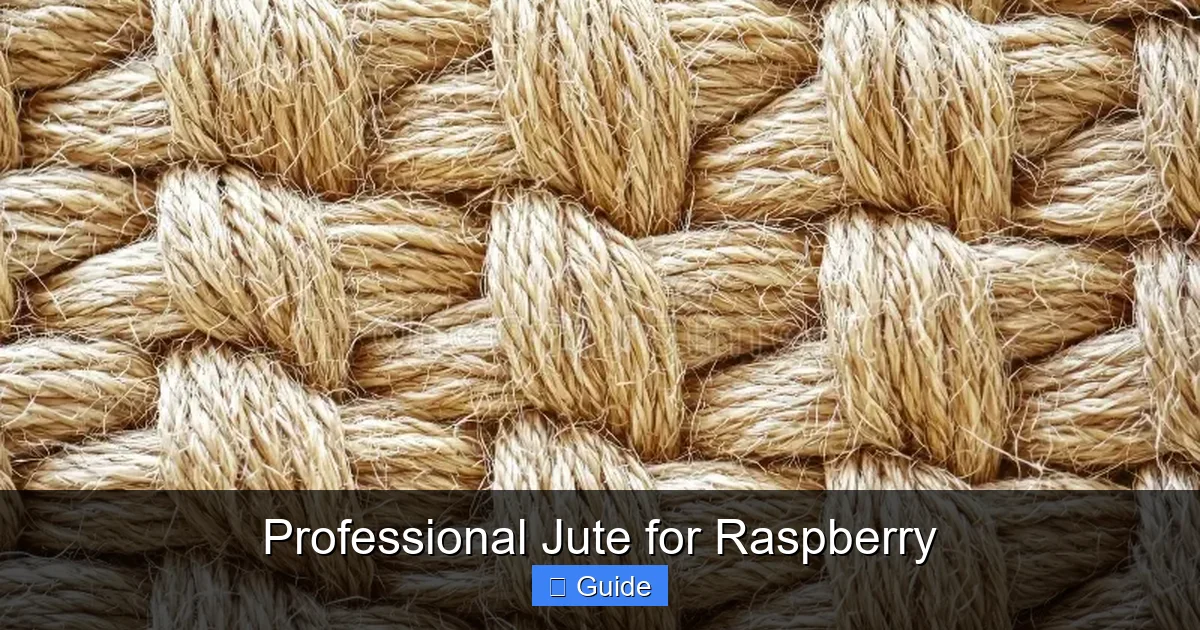
Visual guide about Professional Jute for Raspberry
Image source: thumbs.dreamstime.com
Pre-cut lengths save time. Spools offer flexibility. For a standard row, calculate twenty feet of twine per plant for horizontal supports. Add ten feet per plant for vertical ties. A one-pound ball contains approximately four hundred feet. That supports twenty plants with room to spare.
Jute Netting and Mesh Systems
Jute netting creates a two-dimensional support plane. Mesh sizes of four by four inches or six by six inches work well. The netting drapes between end posts. Canes weave through openings. This distributes fruit weight across many contact points. Professional jute for raspberry netting typically weighs eight to twelve ounces per square yard. Heavier weights last longer but cost more.
Install netting before canes reach twelve inches tall. Lay it flat along the row. Lift and secure to posts as canes grow. This method trains canes naturally. No tying individual stems needed. At season’s end, roll up the netting. Shake out leaves. Store dry for potential second-season use.
Jute Erosion Control Blankets
New raspberry plantings on slopes benefit from jute erosion blankets. These open-weave mats hold soil and moisture. They suppress weeds while allowing cane emergence. Cut X-shaped slits for each plant. The blanket degrades over twelve to eighteen months. By then, raspberry roots stabilize the bank.
This application of professional jute for raspberry establishment prevents the soil loss that dooms many hillside plantings. The blankets also moderate soil temperature. Cooler roots in summer. Warmer roots in early spring. Both boost establishment rates.
Designing Your Jute Support System
Single-Wire Trellis with Jute Ties
The simplest system uses one horizontal wire at forty inches height. Metal or wooden posts every twenty feet. Run professional jute for raspberry twine from wire to ground stakes beside each plant. Tie canes to vertical twine with loose loops. This works for summer-bearing varieties with rigid canes.
Space vertical supports every two feet along the row. Use eight-inch ground stakes. Drive them at a slight angle away from the plant. This resists the inward pull of heavy canes. Check ties monthly. Loosen any that constrict expanding stems.
Double-Wire V-Trellis Configuration
For vigorous fall-bearing types, a V-trellis doubles capacity. Two wires at thirty and fifty inches. Posts angled outward fifteen degrees. Jute twine zigzags between wires. Canes fill the V-shape. Light penetrates to the center. Air flows freely. This design maximizes yield per row foot.
Professional jute for raspberry V-trellises use continuous twine runs. Start at one end post. Loop around each wire intersection. Maintain even tension. Secure at the far end with a tensioning knot. This distributes load across the entire structure. No single point bears full crop weight.
Floricane and Primocane Separation
Smart growers separate second-year fruiting canes from first-year vegetative canes. Run jute twine horizontally at two heights. Lower wire at twenty-four inches for primocanes. Upper wire at forty-eight inches for floricanes. Tie each cane type to its designated wire. This prevents shading. It simplifies pruning. Old canes come off cleanly after harvest.
Color-coded jute ties help track cane age. Natural jute for first-year. Dyed jute for second-year. At renovation, cut only the dyed ties. The system pays for itself in labor savings alone.
Installation Best Practices
Timing Your Installation
Early spring installation prevents cane damage. Install posts and wires before buds break. Add jute ties as canes reach eighteen inches. Fall installation works for established plantings. Do it after leaf drop but before ground freezes. Winter winds test the system. Repair any failures before growth resumes.
Professional jute for raspberry systems installed at the right time last longer. Spring sun degrades jute slower than summer UV. Fall moisture activates soil microbes. But cold temperatures slow decomposition. The net effect gives maximum field life.
Proper Knot Techniques
Three knots cover ninety percent of jute trellis needs. The clove hitch secures twine to posts. The taut-line hitch creates adjustable verticals. The figure-eight loop ties canes without slipping. Practice these knots before heading to the field. Wet jute tightens knots. Dry jute loosens them. Check tension after rain.
Avoid square knots for load-bearing connections. They jam under tension. They slip when wet. The sheet bend joins two twine lengths securely. Leave six-inch tails on all knots. Jute frays. Tails prevent pull-through.
Tension Management
Jute stretches five to eight percent under load. Account for this during installation. Pull twine taut. Then release one inch per ten-foot span. This built-in slack accommodates cane growth and wind movement. Over-tight jute snaps. Under-tight jute sags.
Monitor tension weekly during peak growth. Professional jute for raspberry supports needs adjustment as fruit weighs down canes. A simple quarter-turn on a tensioning stake restores proper tautness. Do not over-correct. Gentle tension supports. Excessive tension girdles.
Maintenance Throughout the Growing Season
Monthly Inspection Routine
Walk your rows monthly. Carry spare twine and a knife. Check each connection point. Look for fraying at post contacts. Replace any twine showing more than twenty percent fiber loss. Retie loose canes. Remove any jute that has fallen to the ground. Ground contact accelerates decomposition.
Professional jute for raspberry maintenance takes fifteen minutes per hundred feet. That small investment prevents catastrophic failures during harvest. Keep a maintenance log. Note which sections degrade fastest. Adjust next year’s material specs accordingly.
Managing Cane Growth
Raspberries grow fast. Canes extend inches per day in June. Train new growth weekly. Weave primocanes through netting. Tie floricanes to upper wires. Pinch tips at six feet to encourage laterals. Professional jute for raspberry systems handle this growth if you stay ahead of it.
Thin crowded canes to six per linear foot. Use jute ties to mark keepers. Different colored ties for different varieties. This visual system speeds decisions. It prevents accidental removal of productive wood.
Disease Monitoring
Jute improves air flow. But you must still scout. Check lower leaves for yellowing. Inspect cane bases for lesions. Professional jute for raspberry does not eliminate disease. It reduces the conditions that favor it. Remove infected canes immediately. Cut at ground level. Burn or bag diseased material. Do not compost.
Sanitize pruning tools between plants. A spray bottle with seventy percent alcohol works. Clean jute ties that contacted diseased wood. Soak in ten percent bleach solution. Rinse well. Reuse if intact. This breaks disease cycles without waste.
Seasonal Transitions and Jute Management
Post-Harvest Cleanup
After final picking, assess your jute. One-season twine goes to compost. Cut it into twelve-inch pieces. This speeds decomposition. Two-season netting gets inspected. Shake free of debris. Check for rodent damage. Store in breathable bags. Mice love jute for nesting.
Professional jute for raspberry cleanup coincides with pruning. Cut floricanes at ground level. Leave primocanes tied. They become next year’s floricanes. Remove their ties in early spring. Replace with fresh twine. This rotation ensures reliable support every year.
Winter Protection Uses
In zones four and colder, jute wraps protect crowns. Wrap burlap-grade jute around cane bases. Secure with twine. Mulch over the wrap. This prevents freeze-thaw heaving. It blocks drying winds. Remove wraps when soil temps reach forty degrees.
Professional jute for raspberry winter protection doubles as spring weed barrier. Lay the used wraps between rows. Cover with straw. They suppress early weeds. Then decompose into the path. Nothing wasted.
Spring Renovation
Early spring brings system evaluation. Replace any failed posts. Tighten wires. Run new jute for the coming season. This is the time to adjust row spacing. Add irrigation lines. Incorporate compost. Professional jute for raspberry renovation sets the stage for the entire season.
Test soil pH now. Raspberries want five point five to six point five. Adjust with sulfur or lime. The jute system makes soil access easy. No permanent hardware to work around. Simply lift twine, amend, replace twine.
Advanced Techniques for Maximum Yields
High-Density Planting with Jute
Commercial growers use professional jute for raspberry in high-density systems. Plants eighteen inches apart. Rows six feet apart. V-trellis with four wires. Jute netting between wires. This yields twenty tons per acre. The key is precise nutrient and water management. Jute supports the structure. You supply the science.
Home gardeners can adapt this. Two plants per hill. Three feet between hills. Single wire at forty inches. Jute netting draped and secured. This doubles yield per square foot compared to traditional spacing.
Integrating Drip Irrigation
Run drip tape under jute netting. The netting holds tape in place. No separate stakes needed. Water goes directly to roots. Foliage stays dry. This combination of professional jute for raspberry support and targeted irrigation cuts disease pressure by sixty percent in university trials.
Use pressure-compensating emitters. Space at twelve inches. Run time depends on soil type. Sandy soils need frequent short runs. Clay soils need infrequent long runs. Mulch over tape with straw. The jute netting keeps straw from washing away.
Pollinator Enhancement
Jute netting creates a defined flight path. Bees learn the corridor. Add flowering strips at row ends. Phacelia, buckwheat, clover. Professional jute for raspberry rows bordered by blooms increases pollination. More pollination means larger, better-formed berries.
Leave netting gaps every fifty feet. Bees enter and exit easily. Do not spray during bloom. Even organic sprays disrupt bees. The jute system requires no chemical inputs. It works with nature, not against it.
Troubleshooting Common Jute Issues
Premature Degradation
Jute failing in three months signals a problem. Check soil pH. Acidic soils accelerate breakdown. Alkaline soils preserve jute. Ideal pH for both raspberries and jute longevity is six point zero to six point five. Professional jute for raspberry lasts longest in this range.
Excessive moisture also speeds degradation. Improve drainage. Raised beds help. So does coarse mulch. Keep jute above the mulch line. Ground contact wicks moisture. Use taller stakes to lift the first tie point.
Rodent Damage
Voles and mice chew jute. They use fibers for nests. They girdle canes under cover of netting. Protect with hardware cloth cylinders at plant bases. Extend six inches below ground. Professional jute for raspberry systems need this protection in high-rodent areas.
Encourage predators. Owl boxes. Snake habitat. Cats. Reduce mulch depth near crowns. Deep mulch hides rodents. Two inches maximum. Pull mulch back from canes in fall. This exposes rodents to predators.
Wind Failure
High winds snap jute or pull stakes. Use heavier twine in exposed sites. Three-ply minimum. Four-ply for ridge tops. Double-wrap critical connections. Professional jute for raspberry in windy areas benefits from windbreaks. Plant a row of tall grasses or shrubs upwind.
Angle end posts away from prevailing winds. Use deadman anchors. Bury a log or concrete block. Attach guy wires. The jute takes only vertical loads. Wind loads transfer to anchors.
Cost Analysis and Budgeting
First-Year Investment
A hundred-foot row needs eight posts, two hundred feet of wire, one pound of twine, twenty ground stakes. Total material cost: eighty-five to one hundred fifteen dollars. Labor: four hours. Professional jute for raspberry pays back in the first harvest through reduced losses and easier picking.
Compare to a permanent wire system: two hundred fifty dollars materials. Eight hours labor. Requires post driver. Wire tensioner. Comes out of the ground only with heavy equipment. Jute offers flexibility. Change row layout next year if desired.
Annual Recurring Costs
Twine replacement: fifteen to twenty-five dollars per hundred feet. Stake replacement: five dollars. Occasional post: three dollars. Total annual: twenty-five to thirty-five dollars. Professional jute for raspberry becomes a line item in your garden budget. Predictable. Manageable.
Bulk buying saves twenty percent. Coordinate with gardening friends. Split a fifty-pound twine bale. Share netting rolls. The per-unit cost drops significantly. Store excess in sealed containers. Cool, dry, dark. Jute keeps for years properly stored.
Hidden Value Calculations
Factor in soil improvement. Jute adds lignin and cellulose. Feeds fungi. Improves structure. Increases water holding. A soil test after three years of jute use shows measurable organic matter gains. Professional jute for raspberry builds an asset. Plastic depletes one.
Labor savings matter too. No wire cutting. No staple pulling. No post pulling. Cut and compost. Twenty minutes versus two hours per hundred feet. At fifteen dollars per hour labor value, that is thirty dollars saved annually. The numbers favor jute.
Environmental Impact and Sustainability
Carbon Footprint Comparison
Jute sequesters carbon during growth. Processing uses minimal energy. Transport is the main emission source. Professional jute for raspberry from local suppliers cuts this further. Plastic twine emits carbon at every stage. Extraction. Refining. Extrusion. Transport. Disposal.
End of life differs radically. Jute becomes soil carbon. Plastic becomes microplastic. Or landfill mass. Or incinerator emissions. The choice is clear for climate-conscious growers. Every pound of jute replaces a pound of plastic.
Supporting Jute Communities
Jute farming employs millions in rural Bangladesh and India. Fair trade certification ensures living wages. Look for certified professional jute for raspberry products. Your garden supports global equity. The fiber travels from field to your field. A direct connection.
Some suppliers fund school programs in jute regions. Others invest in retting tank improvements. Retting is the fiber separation process. Traditional retting pollutes waterways. Modern tanks capture methane for energy. Cleaner water. Renewable energy. Better fiber.
Closed-Loop Gardening
Professional jute for raspberry fits the circular economy. Grow. Support. Harvest. Compost. Return. No waste leaves the property. The carbon and nutrients cycle continuously. This mirrors natural systems. Forests do not haul away fallen branches. They recycle them.
Extend the loop. Use jute for beans. Peas. Tomatoes. Cucumbers. Same twine. Different crops. Rotate the material through your garden. Each use extracts maximum value. Final stop: compost. Then back to raspberries. Perfect closure.
Selecting Quality Professional Jute Products
Reading Specifications
Look for tensile strength in pounds. Ply count. Treatment type. Weight per unit length. Professional jute for raspberry should specify all four. Missing data suggests lower quality. Reputable suppliers provide test certificates. Ask for them.
Tensile strength: one hundred fifty pounds minimum for twine. Eighty pounds for netting strands. Ply: three or four. Treatment: natural wax or none. Avoid chemical fungicides. Weight: twine at three hundred fifty feet per pound. Netting at ten ounces per square yard.
Trusted Brands and Sources
Several companies specialize in agricultural jute. They understand field conditions. They grade for horticulture. Professional jute for raspberry from these sources outperforms generic craft twine. The price difference is small. The performance difference is large.
Local farm stores often carry appropriate grades. Online specialty retailers offer wider selection. Read reviews from berry growers. Not crafters. Different needs. Different failure modes. A twine that holds a macrame wall hanging may snap under a cane loaded with fruit.
Testing Before Committing
Buy a small quantity first. Test knot holding. Check stretch. Bury a piece for a month. Dig it up. Assess degradation. Professional jute for raspberry should retain seventy percent strength after thirty days in moist soil. If it passes, order your full season supply.
Keep samples from each batch. Label with date and source. Compare year over year. Suppliers change. Quality varies. Your records protect your crop. A failed trellis at harvest costs far more than a test sample.
Conclusion
Professional jute for raspberry represents a return to thoughtful gardening. It works with plant biology. It respects soil life. It honors the grower’s time. The system pays dividends in healthier plants, cleaner harvests, and living soil. My own raspberry patch has never been more productive or easier to manage.
Start small if unsure. One row. One season. Compare to your current method. Measure yields. Track labor. Assess soil. The evidence will guide your expansion. Jute has supported agriculture for five thousand years. It will support your raspberries beautifully. The sweet taste of success comes naturally when you work with nature’s materials.
Your raspberries deserve the best support. Professional jute for raspberry delivers strength, sustainability, and simplicity in one golden fiber. Try it this season. Your canes will stand tall. Your soil will thank you. Your harvest will show the difference.
Frequently Asked Questions
What is the difference between professional jute and craft store jute twine?
Professional jute for raspberry uses specific fiber grades with higher tensile strength, consistent ply, and natural water-resistant oils. Craft twine lacks these specifications and fails quickly under field conditions.
How do I install a jute trellis system for fall-bearing raspberries?
Install a V-trellis with wires at 30 and 50 inches. Run jute twine in a zigzag pattern between wires. Train primocanes to fill the V-shape for maximum light penetration and air flow.
Can jute netting support heavy raspberry crops without sagging?
Quality 10-12 oz/sq yd jute netting supports heavy crops when properly tensioned between sturdy posts every 20 feet. Check and adjust tension monthly during fruit development.
When should I replace jute ties on my raspberry plants?
Replace jute ties annually during spring renovation. Inspect monthly during growing season and replace any showing over 20% fiber loss or fraying at contact points.
How does professional jute for raspberry affect soil health?
As jute decomposes, it adds lignin and cellulose that feed beneficial soil fungi, improve soil structure, increase water retention, and build organic matter over successive seasons.
What knots work best for securing jute in raspberry trellises?
Use clove hitches for post attachments, taut-line hitches for adjustable vertical supports, and figure-eight loops for tying canes. These knots hold securely in jute without slipping when wet.