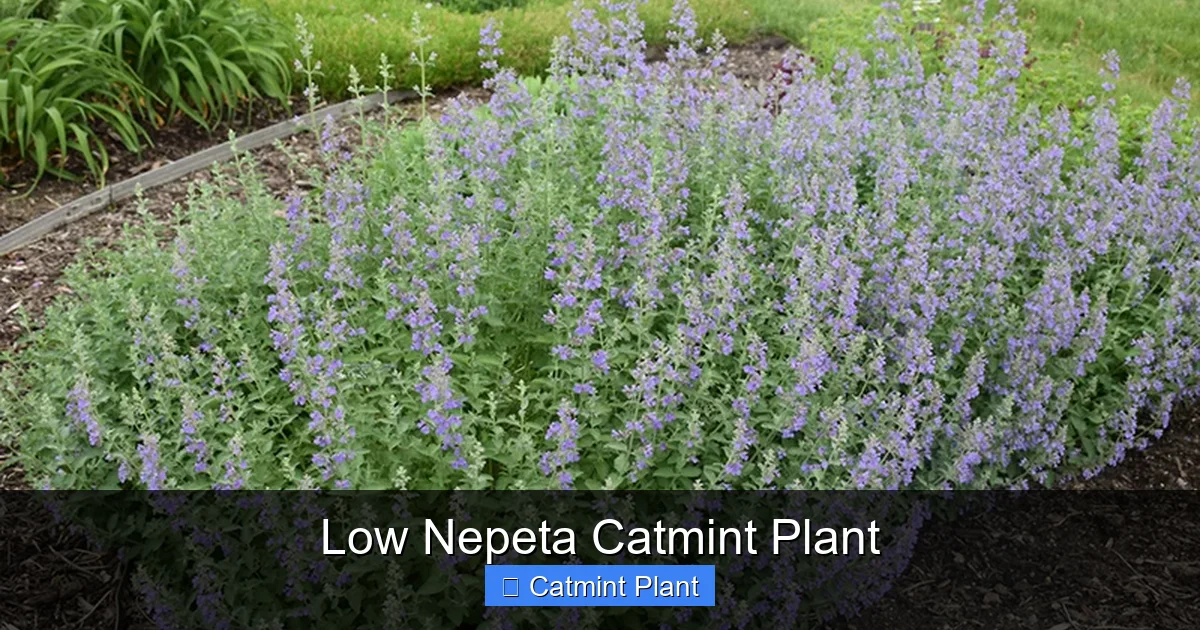
Low Nepeta Catmint Plant
The low nepeta catmint plant is a compact, drought-tolerant perennial that delivers months of lavender-blue flowers with minimal care. It thrives in sunny spots, attracts bees and butterflies, and resists deer and rabbits. Perfect for edging, rock gardens, and containers, this tidy mound-former stays under 18 inches tall while blooming from late spring through fall.
If you have ever walked past a garden buzzing with bees and butterflies, chances are you have seen a low nepeta catmint plant stealing the show. This little powerhouse packs a serious punch for its size. It brings months of color, incredible fragrance, and wildlife activity without demanding much in return. I remember the first time I planted a row along my front walkway. Within weeks, it became the most visited spot in the yard. The hum of happy pollinators was constant from morning to dusk.
Gardeners love this plant for good reason. It solves so many common landscape problems. Got a hot, dry slope? This plant handles it. Need something the deer will not eat? This is it. Want a tidy edge for a messy perennial bed? Look no further. The low nepeta catmint plant checks every box for a high-performance, low-effort perennial. Today we will dig into everything you need to know to grow it like a pro.
Key Takeaways
- Compact growth habit: Low nepeta catmint plant forms neat mounds 12-18 inches tall and wide, ideal for front-of-border planting.
- Long bloom season: Expect flowers from late spring to frost with a simple mid-season shear.
- Pollinator magnet: Bees, butterflies, and hummingbirds flock to the nectar-rich lavender-blue spikes.
- Drought tolerant once established: Deep roots handle dry spells beautifully after the first growing season.
- Deer and rabbit resistant: Aromatic foliage deters browsing animals naturally.
- Low maintenance: No deadheading required; just one annual cutback in early spring.
- Versatile design uses: Works in rock gardens, containers, pathway edges, and mass plantings.
Quick Answers to Common Questions
How tall does low nepeta catmint plant grow?
Most low cultivars reach 10-18 inches tall and wide, depending on the variety. ‘Kit Cat’ and ‘Little Trudy’ stay around 10-12 inches, while ‘Junior Walker’ and ‘Cat’s Pajamas’ reach 15-18 inches.
When should I cut back my catmint?
Shear back by half after the first flush fades in early summer (the Chelsea Chop). Cut dead stems to the ground in early spring before new growth emerges.
Does low nepeta catmint plant attract bees?
Yes, it is a magnet for bees, butterflies, and hummingbirds. The nectar-rich lavender-blue flowers provide food from late spring through fall.
Can I grow low nepeta catmint plant in a container?
Absolutely. Use a 12-inch or larger pot with well-draining soil. Water when the top inch is dry. It makes a excellent long-blooming filler in mixed containers.
Is low nepeta catmint plant deer resistant?
Yes. The aromatic foliage contains compounds that deer and rabbits find unpalatable. It is rarely browsed, even in high-pressure areas.
📑 Table of Contents
- What Makes Low Nepeta Catmint Plant Special
- Choosing the Right Spot for Success
- Planting Your Low Nepeta Catmint Plant
- Care and Maintenance Made Simple
- Design Ideas and Companion Plants
- Propagation: Make More Plants for Free
- Common Problems and Solutions
- Seasonal Interest Through the Year
- Buying Guide: Choosing Healthy Plants
- Frequently Asked Questions From Gardeners
- Conclusion: Why Every Garden Needs This Plant
What Makes Low Nepeta Catmint Plant Special
Understanding the Nepeta Genus
Nepeta is a large genus in the mint family, Lamiaceae. Most people know the tall, floppy catmint varieties that sprawl three feet wide. The low nepeta catmint plant is different. Breeders selected compact forms that keep a tight, mounded shape. They do not flop open in the center. They do not swallow their neighbors. They stay polite and pretty all season long.
The most popular low-growing cultivars include ‘Walker’s Low’ (ironically not the shortest), ‘Junior Walker’, ‘Kit Cat’, ‘Blue Wonder’, and ‘Little Trudy’. Each offers slightly different heights and bloom times. ‘Junior Walker’ tops out around 15 inches. ‘Kit Cat’ stays a petite 10 to 12 inches. ‘Little Trudy’ is a standout with silvery foliage and a tight 10-inch mound. All share the same essential charm: aromatic gray-green leaves and clouds of lavender-blue flowers.
Key Characteristics at a Glance
Let us break down the basics. The low nepeta catmint plant is a herbaceous perennial. It dies back to the ground in winter and returns fresh each spring. It grows in USDA zones 3 through 8, sometimes 9 with afternoon shade. The foliage forms a dense mound of small, scalloped leaves. When crushed, they release a minty, slightly citrusy scent that cats find irresistible and pests find offensive.
Flowers appear on short spikes above the foliage. Each tiny bloom is two-lipped and tubular, perfectly shaped for bee tongues. The color ranges from soft lavender to deep violet-blue depending on the cultivar. Bloom starts in late spring. With a quick haircut after the first flush, you get a second and even third wave of flowers right up to frost. That is three to four months of color from one plant.
Choosing the Right Spot for Success
Sun Requirements
Full sun is non-negotiable for the best show. The low nepeta catmint plant needs at least six hours of direct sunlight daily. Eight hours is even better. In hot southern climates, a little afternoon shade prevents leaf scorch. Too much shade leads to leggy growth, fewer flowers, and floppy stems. The plant stretches toward the light, losing its compact charm. If your garden is shady, this is not the plant for you.
Soil Preferences
Here is the good news: this plant is not picky. Average, well-drained soil is perfect. Sandy soil? Great. Rocky soil? Even better. Clay soil works if it drains. The one dealbreaker is wet feet. Standing water rots the crown in winter. If your soil is heavy, amend with compost and grit before planting. A slightly alkaline to neutral pH (6.5 to 7.5) is ideal, but the plant tolerates a wide range. Fertile soil actually reduces flowering and encourages floppy growth. Lean soil keeps it tight and floriferous.
Spacing and Airflow
Give each plant room to breathe. Space them 18 to 24 inches apart depending on the cultivar’s mature width. Good airflow prevents fungal issues like powdery mildew. Crowded plants stay damp after rain, inviting disease. Proper spacing also lets the natural mound shape develop fully. You will see the pretty silhouette instead of a tangled mass.
Planting Your Low Nepeta Catmint Plant
When to Plant
Spring and early fall are the sweet spots. Spring planting gives roots all season to establish before winter. Fall planting works well in zones 5 and warmer, provided you plant at least six weeks before the ground freezes. Summer planting is possible but requires diligent watering. Avoid planting during heat waves. The stress can set the plant back significantly.
Step-by-Step Planting Guide
Start by watering the plant thoroughly in its pot. Dig a hole twice as wide as the root ball and just as deep. Loosen the soil at the bottom and sides. Gently remove the plant from its container. If roots are circling, tease them apart with your fingers. Place the plant so the crown sits level with the soil surface. Backfill with native soil, firming gently to remove air pockets. Water deeply to settle the soil. Apply a thin layer of mulch, keeping it away from the crown.
Container Planting Tips
The low nepeta catmint plant thrives in pots. Choose a container at least 12 inches wide with drainage holes. Use a gritty, well-draining potting mix. A blend of two parts potting soil, one part perlite, and one part coarse sand works beautifully. Water when the top inch of soil feels dry. Feed with a slow-release fertilizer in spring. In cold zones, move pots to an unheated garage for winter or sink them in the ground.
Care and Maintenance Made Simple
Watering Wisely
New plants need regular water for the first growing season. Water deeply once or twice a week depending on rain. This encourages deep roots. Once established, the low nepeta catmint plant is remarkably drought tolerant. In most regions, rainfall alone suffices. During extended dry spells, a deep soak every two weeks keeps it blooming. Overwatering is a bigger risk than underwatering. Soggy soil leads to root rot and weak growth.
The Chelsea Chop and Deadheading
This is the secret to months of blooms. After the first big flush fades in early summer, shear the whole plant back by half. Use hedge shears or scissors. It looks drastic, but within two weeks, fresh growth emerges loaded with flower buds. You will get a second heavy bloom in late summer. In long-season areas, you can repeat this in late July for a third flush. No fussy deadheading of individual spent flowers needed. One big chop does it all.
Fertilizing: Less Is More
Skip the fertilizer. Really. Rich soil makes weak, floppy stems and fewer flowers. The low nepeta catmint plant evolved in poor, rocky soils. It performs best when slightly stressed. If your soil is extremely sandy or you see pale leaves, a light side-dressing of compost in spring is plenty. Avoid high-nitrogen fertilizers. They produce lush leaves at the expense of flowers.
Winter Care
In late fall, after a few hard freezes, cut stems back to 2-3 inches above ground. Or leave them standing for winter interest and cut in early spring. The dried seed heads catch frost beautifully. In zones 3-4, a light mulch of straw or shredded leaves after the ground freezes helps prevent heaving. Remove mulch in early spring. That is it. No special wrapping or coddling required.
Design Ideas and Companion Plants
Front-of-Border Star
The low nepeta catmint plant shines at the front of a sunny border. Its tidy mound creates a clean edge. The soft lavender-blue flowers blend with almost anything. Plant it in drifts of three, five, or seven for impact. The repetition draws the eye through the garden. It hides the bare legs of taller perennials behind it. Think of it as the perfect skirt for your garden beds.
Rock Garden Reliability
Rock gardens demand tough, compact plants. This one delivers. It thrives in the sharp drainage and lean soil of a rockery. The gray-green foliage echoes the stones. The flowers soften hard edges. Tuck it between boulders or along a dry stack wall. It will spill gently over edges without becoming a nuisance.
Pathway and Walkway Edging
Line a garden path with low nepeta catmint plant for a fragrant journey. Brushing against the foliage releases its scent as you pass. It stays low enough not to obstruct the walkway. The soft mound shape contrasts beautifully with straight pavers or flagstone. It tolerates occasional foot traffic recovery well.
Perfect Plant Partners
Combine with other sun-loving, drought-tolerant perennials. Some winning combos:
- Salvia nemorosa: Spiky purple blooms echo the catmint’s color and form.
- Echinacea: Bold coneflowers rise above the low mound.
- Sedum ‘Autumn Joy’: Succulent foliage and late pink flowers extend the season.
- Perovskia (Russian Sage): Airy lavender spires create a haze behind the catmint.
- Achillea (Yarrow): Flat flower heads in yellow, pink, or white add texture.
- Ornamental grasses: Small grasses like Bouteloua or Sporobolus add movement.
- Roses: Classic pairing. Catmint hides rose knees and deters pests.
Container Combinations
In a large pot, use low nepeta catmint plant as the “filler” around a taller “thriller” like a dwarf grass or upright salvia. Add a trailing “spiller” like calibrachoa or verbena. The catmint’s long bloom ties the combo together all season. Its drought tolerance forgives missed waterings.
Propagation: Make More Plants for Free
Division
Every three to four years, the center of the mound may get woody and flower less. That is your cue to divide. Early spring is best, just as new growth emerges. Dig up the whole clump. Use a sharp spade or knife to cut into sections, each with roots and shoots. Replant immediately at the same depth. Water well. Divisions establish fast and often bloom the same year.
Stem Cuttings
Take softwood cuttings in late spring or early summer. Snip 4-inch tips from non-flowering stems. Strip lower leaves. Dip in rooting hormone. Stick in moist perlite or sand. Cover with a plastic bag. Keep bright but out of direct sun. Roots form in 3-4 weeks. Pot up and grow on until fall planting.
Self-Seeding
Some cultivars self-sow modestly. Seedlings appear near the mother plant. They are easy to transplant or share. Note that named cultivars do not come true from seed. Seedlings may vary in height and flower color. If you want exact clones, stick to division or cuttings.
Common Problems and Solutions
Powdery Mildew
This fungal disease shows as white powder on leaves. It happens in humid weather with poor airflow. Prevention is easy: space plants properly, water at the base not overhead, and choose resistant cultivars like ‘Walker’s Low’. If it appears, remove affected leaves. Spray with neem oil or a baking soda solution (1 tsp per quart water). Severe cases warrant cutting the plant to the ground. It will regrow clean.
Root Rot
Yellowing leaves, wilting despite moist soil, and a foul smell signal root rot. Caused by poor drainage or overwatering. Dig up the plant. Trim away black, mushy roots. Replant in improved soil or a raised bed. Sometimes the plant is too far gone. Prevention through good drainage is far easier than cure.
Flopping Open Center
Even compact varieties can split open if grown too rich or too wet. The Chelsea Chop prevents this. If it happens mid-season, shear hard. The plant recovers fast. Avoid mulch piled against the crown. Keep nitrogen low. Full sun keeps growth tight.
Cat Damage
Yes, cats love nepeta. They may roll on young plants, crushing stems. Mature plants usually recover. Protect new plantings with a temporary cage of chicken wire. Or plant a sacrificial patch of catnip (Nepeta cataria) elsewhere to distract them. Most gardeners find the damage minor and the cats’ enjoyment entertaining.
Seasonal Interest Through the Year
Spring Awakening
In early spring, silvery-green shoots emerge from the crown. The foliage forms a neat dome quickly. By mid-spring, the mound is full and lush. First flower buds appear in late spring. The anticipation builds.
Summer Glory
June brings the first major bloom. Lavender-blue spikes cover the plant. Bees work the flowers from dawn to dusk. The scent fills the air on warm evenings. After the Chelsea Chop, a brief rest period follows. Then come waves two and three, carrying color through August.
Autumn Encore
In fall, the low nepeta catmint plant often produces a final flush of flowers. The foliage may take on purple tints in cool weather. Seed heads add texture. The mound holds its shape beautifully.
Winter Structure
Leave stems standing for winter interest. Frost outlines the seed heads. Snow caps the dried mounds. Birds perch on the stiff stems. In early spring, cut back to make way for fresh growth. The cycle begins again.
Buying Guide: Choosing Healthy Plants
At the Nursery
Look for compact, well-branched plants with healthy gray-green leaves. Avoid leggy, stretched specimens. Check the root ball. Roots should be white and firm, not brown and circling. Pass on plants with yellowing lower leaves or signs of mildew. Choose plants in bud rather than full bloom for a longer show at home.
Online Ordering
Reputable online nurseries ship healthy plugs or potted plants. Order early for best selection. Spring shipments arrive at proper planting time. Fall shipments need immediate planting. Unpack immediately. Water if dry. Harden off for a few days before planting if they have been in a greenhouse.
Cultivar Selection Cheat Sheet
- ‘Junior Walker’: 15-18 inches, sterile (no seeding), long bloom.
- ‘Kit Cat’: 10-12 inches, very compact, great for pots.
- ‘Little Trudy’: 10 inches, silvery leaves, heat tolerant.
- ‘Blue Wonder’: 12-15 inches, intense blue flowers.
- ‘Walker’s Low’: 24-30 inches (taller but still mounded), Perennial Plant of the Year 2007.
- ‘Cat’s Pajamas’: 12-14 inches, dense habit, early bloom.
Frequently Asked Questions From Gardeners
Is low nepeta catmint plant the same as catnip?
No. Catnip is Nepeta cataria. It is a different species. Catnip is grown for cats. It is weedy, less ornamental, and spreads aggressively. Low nepeta catmint plant refers to ornamental Nepeta x faassenii hybrids and similar compact cultivars. They have much showier flowers and better garden manners. Cats like both, but catnip drives them wild.
Will it spread and take over my garden?
No. These are clump-forming perennials. They do not run by rhizomes. They may self-sow lightly, but seedlings are easy to remove. Named cultivars are often sterile or nearly so. They stay where you put them.
Can I grow it in part shade?
It will survive in part shade (4-6 hours sun) but will not thrive. Expect fewer flowers, looser habit, and more disease issues. For a similar look in shade, try Nepeta ‘Blue Dragon’ or switch to a shade-tolerant groundcover like Brunnera.
Why is my plant not flowering?
Usually too much shade, too much fertilizer, or too much water. Also, very young plants may spend their first year establishing roots. Give it full sun, lean soil, and patience. The Chelsea Chop in early summer can also stimulate buds on reluctant plants.
Is it safe for pets?
Yes. The ASPCA lists Nepeta as non-toxic to dogs, cats, and horses. Cats may get a mild euphoric reaction from rolling in it, but it is harmless. Dogs generally ignore it.
How long does it live?
With division every few years, a low nepeta catmint plant can live indefinitely. Individual clumps may decline after 4-5 years without division. The woody center dies out. Division rejuvenates them completely.
Conclusion: Why Every Garden Needs This Plant
After years of growing perennials, I can say honestly: the low nepeta catmint plant is one of the few I would never garden without. It asks for so little. Sun. Decent drainage. A haircut in July. In return, it gives months of color, feeds countless pollinators, resists pests, and looks tidy doing it. It plays well with others. It fits in containers. It edges paths. It softens rocks. It hides rose knees. It survives neglect.
If you are new to gardening, this plant builds confidence. It is hard to fail with. If you are experienced, you appreciate its reliability and design versatility. There is a cultivar for every sunny spot. Plant a drift this spring. Shear it in summer. Enjoy the buzz of life it brings. You will wonder how you ever gardened without the low nepeta catmint plant.
Frequently Asked Questions
What is the difference between catmint and catnip?
Catmint (Nepeta x faassenii and hybrids) is an ornamental perennial grown for its flowers and tidy habit. Catnip (Nepeta cataria) is a weedy herb grown for cats. Catmint has showier blooms, better garden behavior, and is less attractive to cats than true catnip.
How often should I water established low nepeta catmint plant?
Once established, water deeply only during extended dry spells of two weeks or more. In most climates, rainfall is sufficient. Overwatering causes more problems than underwatering for this drought-tolerant perennial.
Why is my catmint flopping open in the middle?
Flopping usually results from too much shade, rich soil, excessive water, or skipping the mid-season shear. Ensure full sun, lean soil, and cut back by half after the first bloom to maintain a tight mound.
Can low nepeta catmint plant be divided in fall?
Spring division is preferred as plants establish before winter. In zones 6 and warmer, early fall division works if done 6 weeks before frost. Mulch well after fall division to prevent heaving.
Does low nepeta catmint plant need fertilizer?
No. Fertilizer reduces flowering and causes weak, floppy growth. This plant thrives in lean soil. A light compost side-dressing in spring is only needed in extremely poor soil.
Will low nepeta catmint plant survive winter in zone 3?
Yes, most cultivars are hardy to USDA zone 3 (-40°F). Provide good drainage and a light winter mulch after the ground freezes for best survival in the coldest zones.