Complete Guide to Perlite for Basil
Perlite is a game-changer for growing basil. This lightweight volcanic glass improves drainage, prevents root rot, and creates the airy soil structure basil loves. Master the right mixing ratios and avoid common mistakes to grow lush, flavorful basil all season long.
Key Takeaways
- Perfect drainage: Perlite creates air pockets in soil that prevent waterlogging and root rot in basil plants.
- Ideal mixing ratio: Use 1 part perlite to 2 parts potting soil for container basil, or 1 part perlite to 3 parts soil for garden beds.
- Prevents compaction: Perlite keeps soil loose over time, allowing basil roots to spread and access nutrients easily.
- Sterile and pH neutral: Unlike some amendments, perlite won’t introduce diseases or alter soil pH, making it safe for sensitive basil.
- Better than vermiculite for basil: Perlite drains faster, which basil prefers, while vermiculite holds more moisture.
- Reusable and long-lasting: Perlite doesn’t break down, so you can reuse it season after season with proper cleaning.
- Watch for fluoride sensitivity: Some basil varieties may show tip burn from perlite’s trace fluoride; rinse before use if concerned.
Quick Answers to Common Questions
What is the best perlite to soil ratio for basil in pots?
Use one part perlite to two parts potting soil for most container basil. Adjust to 1:1 in hot, dry climates or terracotta pots, and 1:3 in humid areas or plastic pots.
Can I use perlite alone to grow basil?
No, perlite holds no nutrients and dries too fast alone. Always mix it with potting soil, compost, or coconut coir to provide water retention and nutrition.
Does perlite change soil pH?
Perlite is pH neutral (7.0) and does not alter soil acidity. It is safe for basil, which prefers slightly acidic to neutral soil (6.0 to 7.0).
How often should I water basil in a high-perlite mix?
Water when the top inch of soil feels dry. High-perlite mixes drain fast, so check daily in summer. Water thoroughly until it drains from the bottom.
Can I reuse perlite from old basil pots?
Yes. Remove roots, soak in 10 percent bleach solution for 20 minutes, rinse well, and dry in sun. It lasts indefinitely with proper cleaning.
📑 Table of Contents
- Why Perlite Matters for Your Basil Plants
- Understanding Perlite: What It Is and How It Works
- Benefits of Using Perlite for Basil
- How to Mix Perlite for Basil: Ratios and Recipes
- Common Problems and Troubleshooting with Perlite for Basil
- Perlite vs. Other Soil Amendments for Basil
- Best Practices for Long-Term Success
- Special Situations: Hydroponics, Cuttings, and Indoor Growing
- Conclusion: Your Basil Deserves the Best
Why Perlite Matters for Your Basil Plants
If you have ever grown basil, you know the struggle. One day your plants look vibrant and green. The next day they wilt, turn yellow, or develop mushy stems. Most of the time, the culprit is not pests or disease. It is the soil. Basil hates wet feet. It needs soil that drains fast but still holds enough moisture for steady growth. That is where perlite comes in.
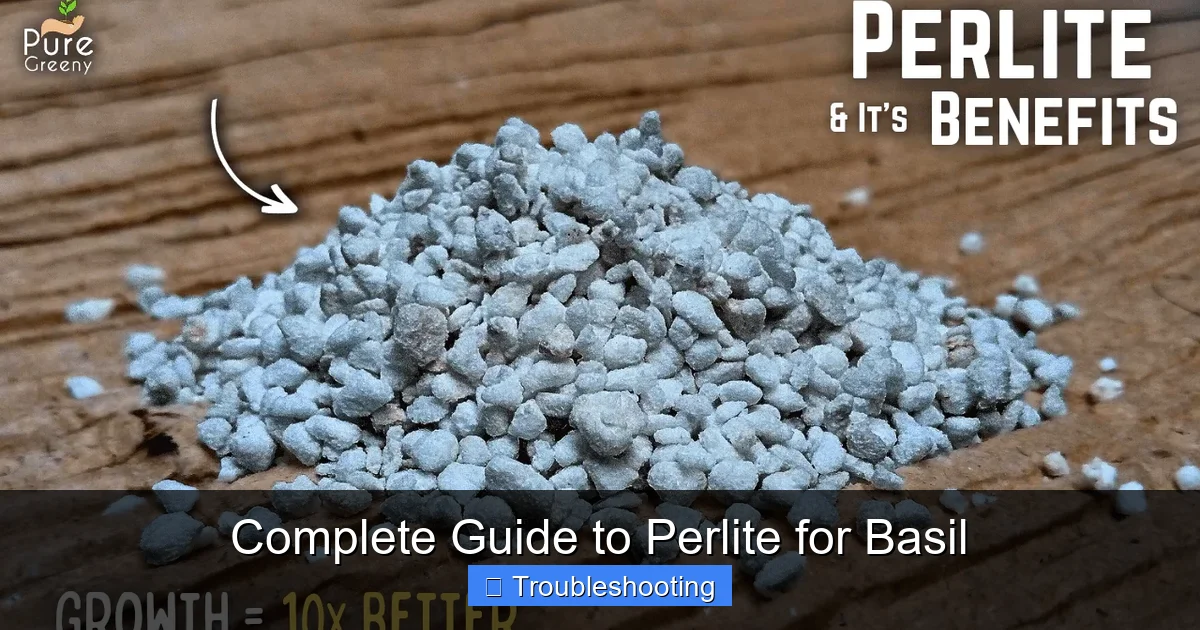
Perlite is that white, granular stuff you see in almost every bag of quality potting mix. It looks like tiny Styrofoam balls, but it is actually volcanic glass heated until it pops like popcorn. The result is a lightweight, porous particle that holds air and water on its surface while letting excess moisture drain away. For basil, this is pure gold. In this complete guide to perlite for basil, we will cover everything you need to know. You will learn what perlite is, why basil loves it, how to mix it correctly, and how to troubleshoot common problems. Let us dig in.
Understanding Perlite: What It Is and How It Works
The Science Behind the Pop
Perlite starts as obsidian, a natural volcanic glass with high water content. When heated to around 1,600 degrees Fahrenheit, the trapped water vaporizes and expands the glass up to 20 times its original volume. This creates a honeycomb structure of tiny air channels. Each particle is sterile, pH neutral, and incredibly light. A cubic foot of perlite weighs only 5 to 8 pounds.
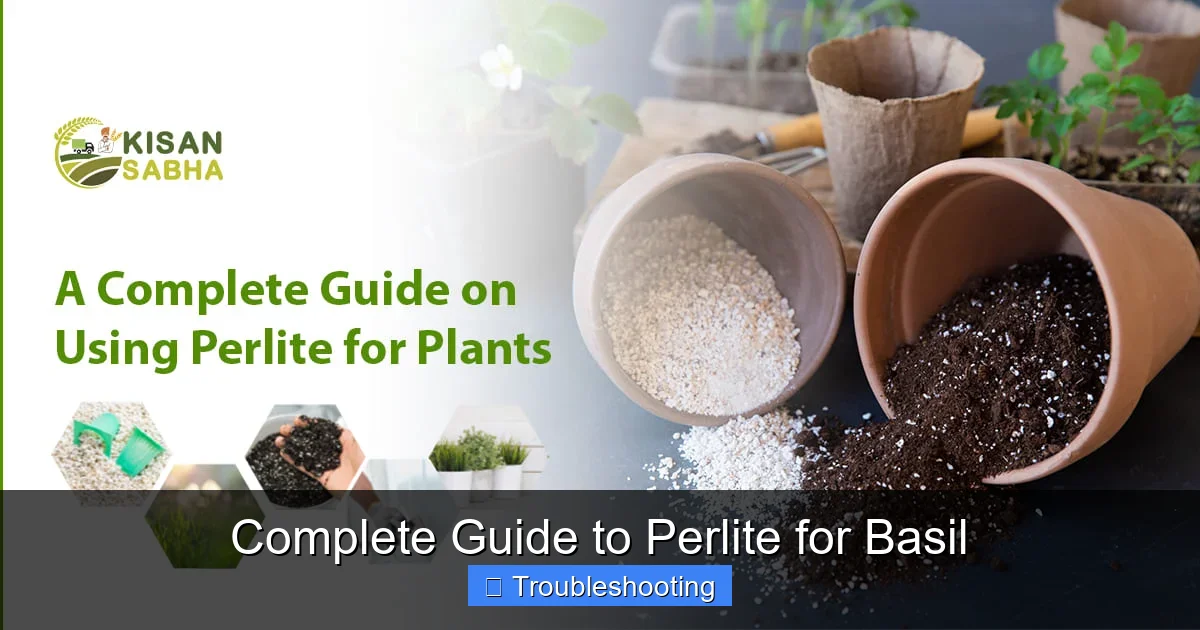
Visual guide about Complete Guide to Perlite for Basil
Image source: blog.kisansabha.in
Why Structure Matters for Basil Roots
Basil roots need oxygen as much as they need water. In dense soil, water fills every pore space and pushes air out. Roots suffocate. They rot. Perlite particles create rigid pathways that stay open even when the soil is wet. Think of perlite as the rebar in concrete. It gives the soil structure so it cannot collapse. This means your basil roots always have access to the oxygen they need for respiration and nutrient uptake.
Perlite vs. Vermiculite: Know the Difference
Gardeners often confuse perlite and vermiculite. Both are heated minerals. Both are lightweight. But they behave differently. Vermiculite acts like a sponge. It absorbs water and holds it tight. Perlite acts like a colander. It holds water on its surface but lets gravity pull the excess through. Basil prefers the colander approach. If you use vermiculite alone, your basil sits in moisture too long. If you use perlite alone, the soil dries too fast. The sweet spot is a blend, but perlite should be the star for basil.
Benefits of Using Perlite for Basil
Superior Drainage Prevents Root Rot
Root rot is the number one killer of basil. It strikes when soil stays soggy. Fungi like Pythium and Phytophthora move in and destroy roots within days. Perlite creates macro-pores that let water exit the pot quickly. Even if you overwater slightly, the excess drains out the bottom. Your basil roots stay firm, white, and healthy.
Visual guide about Complete Guide to Perlite for Basil
Image source: puregreeny.com
Improved Aeration Boosts Growth
Oxygen in the root zone drives nutrient absorption. When soil is well-aerated, basil grows faster, produces more leaves, and develops stronger stems. You will notice the difference within weeks. Plants in perlite-amended soil often outpace those in straight potting mix by 20 to 30 percent in leaf production.
Prevents Soil Compaction Over Time
Organic matter breaks down. Peat moss and compost shrink. Soil particles settle. After a few months, a once-fluffy mix becomes dense. Perlite does not decompose. It maintains its structure for years. Your basil enjoys consistent drainage from planting day to harvest day.
Lightweight for Container Gardening
If you grow basil in pots on a balcony or windowsill, weight matters. Wet soil is heavy. Replacing 20 to 30 percent of that soil with perlite cuts the weight significantly. This makes large containers easier to move and reduces stress on shelves and railings.
Sterile and Disease-Free
Perlite is heated to temperatures that kill all pathogens, weed seeds, and insects. You never introduce problems when you add it to your mix. This is especially valuable when starting basil from seed, where damping-off fungus can wipe out a whole tray overnight.
How to Mix Perlite for Basil: Ratios and Recipes
The Golden Ratio for Containers
For potted basil, use one part perlite to two parts quality potting soil. This 33 percent perlite blend gives excellent drainage while retaining enough moisture for daily watering in summer. If you live in a very hot, dry climate or use terracotta pots that breathe, bump it to a 1:1 ratio. If you use plastic pots in a humid area, you can drop to one part perlite to three parts soil.
Garden Bed Amendment
For basil in raised beds or in-ground gardens, spread a one-inch layer of perlite over the soil and work it into the top six inches. This roughly equals one part perlite to three parts native soil. It lightens clay soils dramatically and adds structure to sandy soils.
Seed Starting Mix
Basil seeds are tiny and sensitive. For germination, use a finer grade of perlite (often labeled “fine” or “propagation grade”) mixed one part perlite to one part peat moss or coconut coir. This holds moisture evenly without crusting over. Once seedlings have true leaves, transplant them into the standard container mix.
DIY Potting Mix Recipe
Want total control? Make your own basil blend. Combine two parts compost or aged manure, two parts peat moss or coconut coir, one part perlite, and a handful of worm castings per gallon of mix. Add a slow-release organic fertilizer according to package directions. This mix feeds basil for months while staying perfectly aerated.
Adjusting for Your Watering Habits
Be honest about how you water. If you water daily and generously, use more perlite. If you forget for days, use less. The mix should dry to the touch on top within 24 hours after watering. If it stays wet longer, add more perlite next time. If it is bone dry by evening, reduce perlite or add more organic matter.
Common Problems and Troubleshooting with Perlite for Basil
Problem: Soil Dries Out Too Fast
You water in the morning. By noon the soil is crisp. Basil wilts every afternoon. This means too much perlite or not enough organic matter. Fix it by top-dressing with a half-inch of compost or coconut coir. Mulch with straw or shredded leaves. Next repotting, reduce perlite to 20 percent of the mix.
Problem: Perlite Floats to the Surface
After a few waterings, white perlite particles cover the soil surface. It looks messy and can blow away. This happens because perlite is lighter than water. Prevent it by wetting the perlite before mixing. Or cover the soil surface with a thin layer of fine bark mulch or compost. The mulch holds perlite down and reduces evaporation.
Problem: Fluoride Sensitivity and Tip Burn
Some basil varieties, especially sweet basil, can show brown leaf tips from fluoride. Perlite contains trace amounts of fluoride that can leach into water. If you see tip burn and have ruled out fertilizer burn and low humidity, rinse your perlite before use. Place it in a bucket, cover with water, stir, let settle, and drain. Repeat once. This removes most surface fluoride.
Problem: Algae Growth on Perlite
In humid greenhouses or indoor setups with grow lights, green algae may colonize surface perlite. It is mostly cosmetic but can attract fungus gnats. Scrape off the top layer and replace with fresh mulch. Improve air circulation. Let the soil surface dry between waterings.
Problem: Nutrient Deficiency Despite Fertilizing
Perlite has zero cation exchange capacity. It does not hold nutrients. If your mix is high in perlite and low in organic matter, nutrients wash right through. Solution: Use slow-release fertilizer in the mix and supplement with liquid feed every two weeks. Or increase the compost portion of your mix to 30 percent.
Problem: Dust Irritation When Handling
Dry perlite creates fine dust that irritates lungs and eyes. Always wet perlite before pouring. Wear a dust mask. Work outdoors or in a ventilated area. Once moistened, the dust settles and the risk disappears.
Perlite vs. Other Soil Amendments for Basil
Perlite vs. Sand
Sand improves drainage but adds weight. It can also compact over time, especially if the sand particles are fine. Perlite is lighter, stays rigid, and creates better air porosity. For containers, perlite wins. For in-ground beds in very heavy clay, a combination of coarse sand and perlite works well.
Perlite vs. Rice Hulls
Rice hulls are a renewable byproduct that also lightens soil. They break down slowly over a season, adding silica. They are cheaper than perlite but less consistent in size and drainage ability. Good for short-season basil, but perlite is better for perennial or long-season grows.
Perlite vs. Pumice
Pumice is another volcanic rock, heavier than perlite but with similar porosity. It does not float. It adds mineral content. Excellent for succulents and cacti. For basil, perlite is usually preferred because it keeps the mix lighter and holds a bit more accessible water on its surface.
Perlite vs. Biochar
Biochar holds nutrients and microbes. It improves soil biology. But it does not create the same large air pores as perlite. Use biochar as a supplement, not a replacement. A mix with 10 percent biochar and 20 percent perlite gives you the best of both worlds.
Best Practices for Long-Term Success
Reusing Perlite Safely
At season end, do not throw away your perlite. Shake roots free. Spread perlite on a tarp. Pick out large debris. Soak in a 10 percent bleach solution for 20 minutes. Rinse thoroughly. Dry in the sun. It is ready for next year. This saves money and reduces waste.
Choosing the Right Grade
Perlite comes in coarse, medium, and fine grades. Coarse (⅜ to ½ inch) is best for large containers and garden beds. Medium (⅛ to ⅜ inch) is the standard for general potting mixes. Fine (under ⅛ inch) is for seed starting and cuttings. Match the grade to your pot size and plant stage.
Storing Perlite Properly
Keep perlite in a sealed bag or bin. It absorbs moisture from air and can grow mold if stored damp. If the bag gets wet, spread it out to dry before use. Dry perlite flows freely and mixes evenly.
Combining with Organic Fertilizers
Because perlite does not hold nutrients, pair it with organic fertilizers that release slowly. Blood meal, feather meal, and composted poultry manure feed soil microbes, which then feed basil. Avoid synthetic salts that can accumulate in low-CEC mixes and burn roots.
Monitoring Soil Moisture Accurately
With high-perlite mixes, the surface looks dry while the root zone is moist. Do not water by sight. Use your finger. Push it two inches deep. If it feels cool and damp, wait. If dry, water thoroughly until it runs out the bottom. This prevents both underwatering and overwatering.
Special Situations: Hydroponics, Cuttings, and Indoor Growing
Perlite in Hydroponic Systems
Perlite is a classic hydroponic medium. It works in drip systems, ebb-and-flow, and Dutch buckets. For basil, use coarse perlite in net pots. Irrigate frequently with nutrient solution. The perlite anchors roots and provides perfect oxygenation. Yields can be double soil-grown basil with proper management.
Rooting Basil Cuttings in Perlite
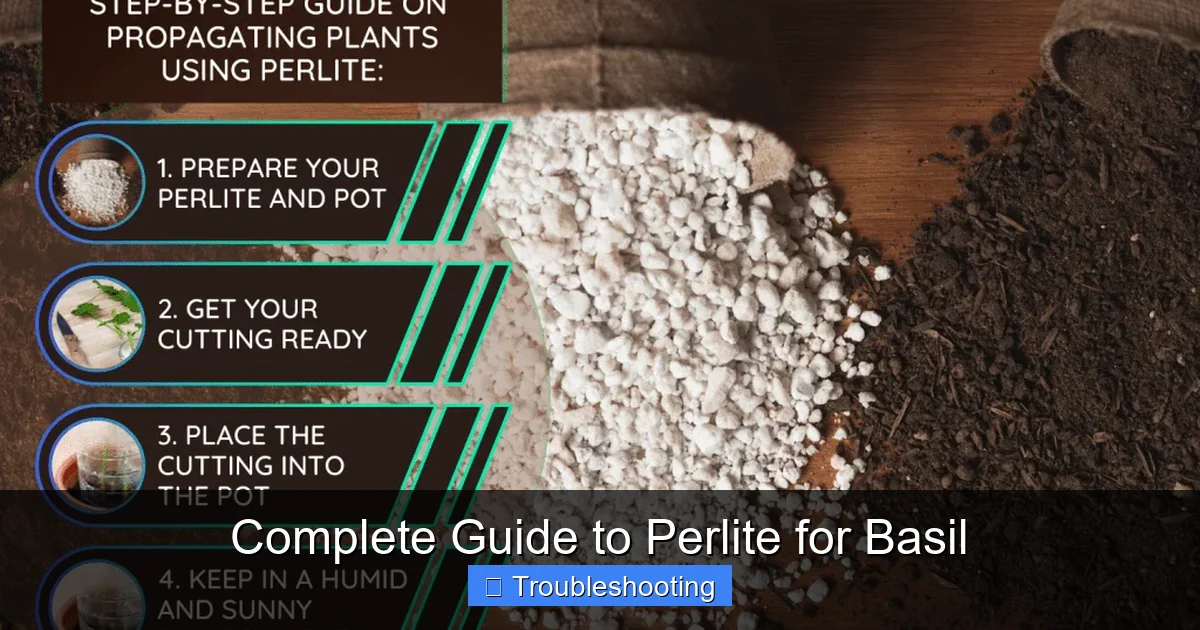
Basil roots easily from cuttings. Fill a tray with moist fine perlite. Take four-inch cuttings just below a node. Strip lower leaves. Dip in rooting hormone if desired. Insert into perlite. Cover with a humidity dome. Keep at 70 to 75 degrees Fahrenheit. Roots appear in 7 to 10 days. Transplant to standard mix once roots are an inch long.
Indoor Basil Under Lights
Indoor basil often suffers from low light and stagnant air. A high-perlite mix (up to 50 percent) helps by maximizing root oxygen in low-transpiration conditions. Use a small fan to move air. Water only when the top inch is dry. Fertilize at half strength weekly. You can harvest fresh basil all winter this way.
Growing Basil in Fabric Pots with Perlite
Fabric pots air-prune roots and prevent circling. They also dry faster. Pair them with a 1:1 perlite-to-soil mix. The extra drainage matches the pot’s breathability. You get massive root systems and huge plants. Just water more often.
Conclusion: Your Basil Deserves the Best
Perlite is not magic. It is simple physics. Air plus water equals healthy roots. Healthy roots equal vigorous basil. Vigorous basil equals pesto all summer. By understanding how perlite works and how to use it right, you remove the guesswork from watering. You prevent the heartbreak of root rot. You give your basil the foundation it needs to thrive.
Start with the basic 1:2 perlite-to-soil ratio. Observe your plants. Adjust for your climate, your pots, and your habits. Rinse the perlite if you see tip burn. Mulch the surface if it floats. Reuse it next year. These small steps compound into big results. Your basil will reward you with armloads of fragrant leaves, sturdy stems, and the kind of flavor that makes store-bought herbs taste like cardboard.
Now you have the complete guide to perlite for basil. You know the science. You know the ratios. You know the fixes. Get your hands dirty. Mix a batch. Plant some basil. And enjoy the best harvest you have ever grown.
Frequently Asked Questions
What grade of perlite is best for basil?
Medium grade perlite (⅛ to ⅜ inch) is ideal for most basil growing situations. Use fine grade for seed starting and coarse grade for large containers or garden beds.
Is perlite organic?
Perlite is a mined mineral, not organic matter. However, it is allowed in certified organic production as a natural, non-synthetic soil amendment.
Why does my basil have brown leaf tips with perlite?
Brown tips can indicate fluoride sensitivity from perlite. Rinse perlite thoroughly before mixing, or switch to pumice or rice hulls if the problem persists.
Can I mix perlite with garden soil for basil?
Yes. Work one inch of perlite into the top six inches of garden soil. This improves drainage in clay and adds structure to sand.
Does perlite attract fungus gnats?
Perlite itself does not attract fungus gnats, but algae growing on wet surface perlite can. Let the soil surface dry between waterings and add a mulch layer.
How much perlite do I add to a 5-gallon pot for basil?
For a 5-gallon pot, mix about 1.5 gallons of perlite with 3 gallons of potting soil. This maintains the 1:2 ratio for optimal drainage and moisture retention.