Catmint Plant Perennial or Annual
Catmint (Nepeta) is a hardy perennial herb that returns year after year in zones 3-8, unlike its annual cousin catnip. This drought-tolerant, pollinator-friendly plant blooms from late spring through fall with minimal care, making it perfect for beginner and experienced gardeners alike.
If you have ever wandered through a garden center in late spring, you have likely seen those gorgeous mounds of lavender-blue flowers spilling over pathways and buzzing with bees. That plant is catmint, and it is one of the most rewarding perennials you can grow. But here is the thing: many gardeners get confused about whether catmint is a perennial or an annual. The short answer? It is a perennial. A tough, reliable, come-back-every-year perennial. But the confusion is totally understandable, especially since its famous cousin catnip often acts like an annual. Let us clear up the confusion once and for all and help you grow the best catmint patch on the block.
Understanding the difference between catmint and catnip is the first step to success. Both belong to the genus Nepeta, and both drive cats wild. But they have very different growth habits. Catnip (Nepeta cataria) is a rangy, somewhat weedy plant that self-seeds aggressively. In many climates, it behaves like an annual or a short-lived perennial. Catmint, on the other hand, refers to the ornamental hybrids like Nepeta x faassenii, Nepeta racemosa, and Nepeta subsessilis. These are bred for garden performance. They form tidy mounds, bloom for months, and live for many years. When people ask about the catmint plant perennial or annual question, they are almost always talking about these ornamental hybrids. And the answer is a resounding perennial.
Key Takeaways
- Catmint is a true perennial: It survives winter in USDA zones 3-8 and returns each spring from its root system.
- Not to be confused with catnip: Catnip (Nepeta cataria) is often grown as an annual or short-lived perennial, while catmint (Nepeta x faassenii and other hybrids) is reliably perennial.
- Long blooming season: Expect flowers from late spring through early fall with proper deadheading.
- Drought tolerant once established: Deep roots make it perfect for water-wise gardens and xeriscaping.
- Deer and rabbit resistant: The aromatic foliage deters browsing animals naturally.
- Attracts beneficial pollinators: Bees, butterflies, and hummingbirds love the nectar-rich blooms.
- Low maintenance: Requires minimal fertilizer, tolerates poor soil, and only needs annual pruning.
Quick Answers to Common Questions
Is catmint a perennial or annual plant?
Catmint (Nepeta x faassenii and related hybrids) is a true perennial that returns year after year in USDA zones 3-8. It dies back in winter and regrows from its root system each spring.
What is the difference between catmint and catnip?
Catmint refers to ornamental, sterile hybrids like Nepeta x faassenii that are long-lived perennials with showy flowers. Catnip (Nepeta cataria) is a short-lived perennial or biennial that reseeds aggressively and is grown primarily for cats.
How do I keep catmint from getting floppy?
Plant in full sun with lean, well-drained soil. Avoid fertilizing. Perform the “Chelsea Chop” in early July by shearing the plant back by half after the first bloom flush to promote compact, sturdy regrowth.
When should I divide my catmint plant?
Divide catmint every 3-4 years in early spring when new growth emerges, or in early fall at least 6 weeks before the ground freezes. Discard the woody center and replant vigorous outer sections.
Can catmint grow in containers year-round?
Yes, catmint grows well in containers with gritty, well-drained potting mix. In zones 5 and colder, move pots to an unheated garage for winter. In zones 6+, cluster pots against a protected wall with heavy mulch.
📑 Table of Contents
- Understanding Catmint Botany and Life Cycle
- Popular Catmint Varieties for Perennial Gardens
- Planting Catmint for Long-Term Success
- Seasonal Care for Thriving Perennial Catmint
- Maintaining Perennial Vigor: Division and Propagation
- Designing with Catmint in the Perennial Garden
- Troubleshooting Common Catmint Problems
- Catmint vs Catnip: The Perennial vs Annual Confusion
- Harvesting and Using Catmint
- Conclusion
Understanding Catmint Botany and Life Cycle
What Makes a Plant Perennial vs Annual
Before we dive deeper into catmint specifics, let us quickly cover the basics. An annual plant completes its entire life cycle in one growing season. It germinates, grows, flowers, sets seed, and dies all in one year. A perennial plant lives for three or more years. It grows and blooms during the growing season, dies back to the ground in winter (in cold climates), and regrows from its root system the following spring. Some perennials are short-lived, lasting three to five years. Others, like peonies, can live for decades. Catmint falls into the long-lived perennial category. Once established, a clump can thrive for ten years or more with minimal care.
The Nepeta Genus: Catmint vs Catnip
The genus Nepeta contains about 250 species. The two most common in gardens are Nepeta cataria (catnip) and the hybrid Nepeta x faassenii (catmint). Catnip is native to Europe and Asia. It has naturalized across North America. It grows two to three feet tall with gray-green, fuzzy leaves and white flowers with purple spots. Cats go crazy for it. But in the garden, it can look a bit messy. It reseeds heavily. Many gardeners treat it as an annual because it often dies out after a year or two, only to pop up from seed elsewhere.
Catmint hybrids are a different story. Nepeta x faassenii is a cross between Nepeta racemosa and Nepeta nepetella. It was developed in the Netherlands by J.H. Faassen in the 1930s. The result is a sterile hybrid that does not set viable seed. This means no unwanted seedlings popping up everywhere. Instead, you get a well-behaved clump that expands slowly. The leaves are smaller, greener, and more aromatic than catnip. The flowers are showier, typically lavender-blue, though pink and white cultivars exist. This is the plant most gardeners mean when they say catmint. And it is 100% perennial.
Hardiness Zones and Winter Survival
Catmint is hardy in USDA zones 3 through 8. Some cultivars push zone 9 in cooler summer areas. In zone 3, winter temperatures can drop to -40 degrees Fahrenheit. Catmint handles this with ease. The key to winter survival is drainage. Wet, heavy clay soil that stays soggy in winter will rot the crown. But in well-drained soil, catmint laughs at winter. The top growth dies back after hard frost. The roots remain alive underground. In early spring, new shoots emerge from the crown. If you are in a borderline zone, a light mulch of straw or shredded leaves after the ground freezes provides extra insurance. Remove it in early spring so the crown does not stay too wet.
Popular Catmint Varieties for Perennial Gardens
Classic Nepeta x faassenii Cultivars
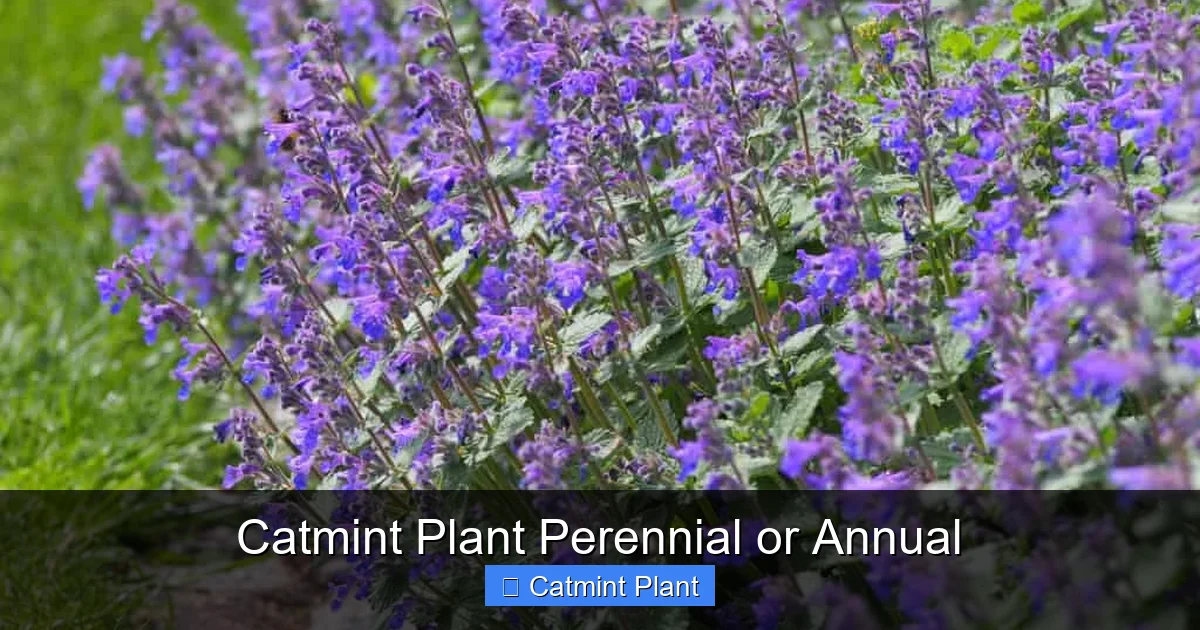
The original catmint hybrid has given us several outstanding cultivars. ‘Walker’s Low’ is perhaps the most famous. Despite the name, it is not low growing. It reaches 24 to 30 inches tall and wide. It was named Perennial Plant of the Year in 2007. The flowers are deep lavender-blue. The bloom season is incredibly long, often from May through September with a mid-summer shear. ‘Six Hills Giant’ is another classic. It is larger, reaching 36 inches tall and wide, with a more open habit. The flowers are a softer blue. It makes a fantastic informal hedge. ‘Dropmore’ is a Canadian hybrid with deep blue flowers and excellent cold hardiness. It is a bit more compact at 18 to 24 inches.
Visual guide about Catmint Plant Perennial or Annual
Image source: a-z-animals.com
Compact and Dwarf Varieties
If you have a small garden or want catmint for the front of the border, look at the dwarf selections. ‘Junior Walker’ is a sport of ‘Walker’s Low’ that stays 15 to 18 inches tall. It has the same long bloom time and vigor in a smaller package. ‘Blue Wonder’ (also sold as ‘Blauwunder’) forms a tight mound 12 to 15 inches high. The flowers are an intense violet-blue. It is perfect for rock gardens and containers. ‘Cat’s Meow’ is a newer introduction from Proven Winners. It stays neat and compact at 17 to 20 inches with a dense, rounded habit. The flower color is a rich sky blue. These compact varieties are every bit as perennial as their larger cousins.
Other Nepeta Species Worth Growing
Beyond the faassenii hybrids, several species make great perennials. Nepeta racemosa ‘Little Titch’ is tiny, only 8 to 10 inches tall. It forms a perfect little bun of foliage covered in blue flowers. Great for trough gardens. Nepeta subsessilis (Japanese catmint) prefers more moisture and partial shade. It has larger, glossier leaves and tubular blue flowers. It blooms later, in mid to late summer. ‘Candy Cat’ is a pink-flowered selection of Nepeta racemosa. ‘Pink Cat’ and ‘Dawn to Dusk’ offer soft pink blooms. ‘Snowflake’ and ‘White Wonder’ give you pure white flowers. All of these are perennial in their recommended zones.
Planting Catmint for Long-Term Success
Choosing the Right Location
Catmint wants full sun. That means at least six hours of direct sun per day. Eight is even better. In hot southern climates (zones 7-8), a little afternoon shade is appreciated. The plant will survive in part shade, but it gets leggy and floppy. Flower production drops dramatically. Choose a spot with good air circulation. This helps prevent fungal issues like powdery mildew, though catmint is generally quite resistant. Think about the mature size. ‘Walker’s Low’ needs a three-foot diameter space. ‘Junior Walker’ needs about two feet. Space plants accordingly. Crowding leads to poor air flow and reduced blooming.
Soil Preparation and Drainage
Here is the secret to perennial catmint success: drainage. Catmint hates wet feet, especially in winter. It thrives in average to lean soil. Rich, heavily amended soil encourages floppy growth. If you have heavy clay, amend it with coarse sand, fine gravel, or expanded shale. Do not use fine sand; it makes concrete. Raised beds are ideal. A slope works beautifully. If your soil is sandy or gravelly, consider yourself lucky. Catmint will love it. The pH preference is neutral to slightly alkaline (6.5 to 7.5). But honestly, catmint is not fussy. It grows in poor, rocky, alkaline soils where little else thrives. That is why it is a staple of Mediterranean and xeriscape gardens.
When and How to Plant
Spring and fall are the best planting times. In spring, wait until the soil has warmed and danger of hard frost has passed. In fall, plant at least six weeks before the ground freezes. This gives roots time to establish. Dig a hole twice as wide as the pot and the same depth. Gently loosen the roots if they are circling. Set the plant so the crown (where stems meet roots) is level with the soil surface. Backfill with native soil. Do not amend the planting hole with compost or fertilizer. This creates a “bathtub effect” where water collects in the amended hole. Water thoroughly after planting. Mulch with an inch of gravel, crushed stone, or pine bark. Keep mulch away from the crown.
Container Growing for Perennial Catmint
Yes, you can grow catmint in pots! And it will remain perennial if you choose the right container and provide winter protection. Use a pot at least 12 inches wide and deep. Larger is better. Ensure excellent drainage holes. Use a gritty potting mix. A cactus/succulent mix works well. Or make your own: two parts potting soil, one part perlite or pumice, one part coarse sand. Water when the top inch of soil is dry. Fertilize once in spring with a slow-release balanced fertilizer. In winter, move the pot to an unheated garage or shed in zones 5 and colder. In zones 6-7, cluster pots against a protected wall and mulch heavily. In zone 8+, they can stay out in the open. Water sparingly in winter, just enough to keep roots from desiccating.
Seasonal Care for Thriving Perennial Catmint
Spring: Cleanup and First Flush
Early spring is cleanup time. Once you see new green shoots emerging at the base (usually March or April depending on your zone), cut back all the dead stems to about two inches above the ground. Use clean, sharp pruners. Be careful not to damage the new growth. This is also the time to apply a light top-dressing of compost around the plant, not on the crown. A half-inch layer is plenty. If the clump has a dead center (common after three to four years), spring is the time to divide. We will cover division in detail later. Water if spring is dry. The first flush of flowers usually appears in late May to early June.
Summer: Deadheading and the Chelsea Chop
Catmint blooms heavily in late spring to early summer. By July, the first flush is fading. The plant looks a bit tired. This is where the “Chelsea Chop” comes in. Around early July (coinciding with the Chelsea Flower Show in England), shear the entire plant back by one-half to two-thirds. Yes, it looks drastic. But within two weeks, you will have fresh, compact growth. And within four weeks, a second massive flush of flowers that lasts into fall. If you cannot bring yourself to shear the whole plant, at least deadhead spent flower spikes. Cut them back to a leaf node. This encourages rebloom, though not as dramatically as a full shear. Water during extended dry spells. Established catmint is drought tolerant, but it blooms better with occasional deep watering.
Fall: Preparing for Winter
After the second flush fades in September or October, you have a choice. You can leave the foliage standing for winter interest and to protect the crown. The dried seed heads catch frost beautifully. Or you can cut it back to the ground after a few hard frosts. In wet climates, cutting back reduces rot risk. In dry, cold climates, leaving it standing helps trap insulating snow. Either way, do not mulch heavily over the crown. A light, airy mulch of pine needles or straw is fine if you are in a borderline zone. Stop fertilizing by August. You want the plant to harden off before winter. Fall is also a great time to plant new catmint. The soil is warm, roots establish quickly, and you get a head start on next year.
Winter: Dormancy and Protection
Catmint is fully dormant in winter. The roots are alive but inactive. In zones 3-5, a reliable snow cover is the best insulation. If snow is unreliable, apply a loose mulch of evergreen boughs or straw after the ground freezes. The key phrase is “after the ground freezes.” Mulching too early keeps the soil warm and prevents proper dormancy. It also invites rodents. In zones 6-8, no special winter care is needed. Container plants need the protection mentioned earlier. That is it. Catmint asks for almost nothing in winter.
Maintaining Perennial Vigor: Division and Propagation
When and Why to Divide
After three to five years, you may notice your catmint clump developing a dead center. The outer edges are vigorous, but the middle is woody and bare. This is the classic “donut” effect. It means the plant is ready for division. Division rejuvenates the plant. It gives you free plants. And it prevents the clump from outgrowing its space. The best time to divide is early spring, just as new growth emerges. Fall division works too, but do it at least six weeks before ground freeze. Avoid dividing in summer heat.
Step-by-Step Division Process
Water the plant well the day before. Cut the foliage back to six inches. Dig around the clump with a sharp spade, about six inches out from the outer stems. Lever the entire clump out. Shake off excess soil. You will see a mass of roots and crowns. Use a sharp knife, an old pruning saw, or two forks back-to-back to cut the clump into sections. Each division needs at least three to five healthy shoots and a good root system. Discard the woody, dead center. Replant divisions immediately at the same depth they were growing. Water well. Mulch lightly. They may look sad for a week. Then they take off.
Other Propagation Methods
Since most catmint hybrids are sterile, they do not come true from seed. But you can propagate from cuttings. Take softwood cuttings in late spring or early summer. Cut four-inch stems just below a leaf node. Strip the lower leaves. Dip in rooting hormone (optional but helpful). Stick in a gritty mix. Keep humid and in bright, indirect light. Roots form in two to three weeks. You can also take basal cuttings in spring. These are the new shoots emerging from the crown. Cut them with a bit of crown tissue attached. Root the same way. Layering works too. Pin a low stem to the ground, cover with soil, weight with a stone. Roots form at the node. Sever and transplant in fall or spring.
Designing with Catmint in the Perennial Garden
Companion Planting Ideas
Catmint plays well with others. Its soft blue flowers and gray-green foliage complement almost everything. Classic pairing: catmint and roses. The catmint hides the bare legs of rose bushes. The blue contrasts beautifully with pink, red, yellow, or white roses. Plus, catmint attracts beneficial insects that eat rose pests. Catmint and salvia (perennial sage) are a match made in heaven. Both love sun and drainage. The spiky salvia flowers contrast with catmint’s billowy clouds. Try ‘May Night’ salvia with ‘Walker’s Low’. Catmint and ornamental grasses create lovely texture contrast. The fine grass blades against catmint’s soft mounds. ‘Karl Foerster’ feather reed grass, little bluestem, or blue fescue all work. Catmint and coneflowers (Echinacea) bloom together. The daisy-like coneflowers stand above the catmint haze. Yellow, orange, pink, or white coneflowers all look great.
Using Catmint in Different Garden Styles
Cottage garden? Essential. Let it spill over paths. Mix with foxgloves, delphiniums, and lady’s mantle. Mediterranean garden? Perfect. Pair with lavender, rosemary, thyme, and sedum. Mulch with gravel. Rock garden? Use dwarf varieties like ‘Little Titch’ or ‘Blue Wonder’. Tuck them between stones. Pollinator garden? Plant in drifts of five or more. Bees and butterflies forage more efficiently in masses. Formal garden? Shear ‘Walker’s Low’ into low hedges. Edge a knot garden or parterre. Container garden? ‘Junior Walker’ or ‘Cat’s Meow’ in a large pot with trailing verbena and a thriller grass. Hellstrip (the strip between sidewalk and street)? Catmint thrives in this tough spot. Heat, salt, compaction, dog visits – it handles it all.
Catmint as a Lawn Alternative
Here is a fun idea. In low-traffic areas, you can use catmint as a flowering ground cover. Space plants 18 inches apart in a grid. They will knit together in two years. Mow once a year in early spring (highest setting) or shear after first bloom. It tolerates occasional foot traffic. It stays green with minimal water. It blooms for months. It feeds pollinators. It smells amazing when brushed. It is not a replacement for a play lawn. But for a sunny slope, a parking strip, or a “hellstrip,” it is a fantastic low-maintenance alternative to turf grass. Just do not plant it where you need to walk daily. The stems break, and bees love it.
Troubleshooting Common Catmint Problems
Floppy, Leggy Growth
This is the number one complaint. The plant splits open in the middle, stems flop onto neighbors. Causes: too much shade, too rich soil, too much water, too much fertilizer, or lack of pruning. Fix: move to full sun. Stop fertilizing. Water less. Do the Chelsea Chop in early July. If it is a chronic issue, the variety may be too large for the space. Switch to a compact cultivar. Or plant it where flopping is attractive, like over a wall.
Powdery Mildew
Catmint is generally resistant, but in humid climates with poor air circulation, you may see white powdery coating on leaves. Fix: improve air flow. Thin surrounding plants. Water at the base, not overhead. Apply a preventive spray of neem oil or potassium bicarbonate in early summer. Remove badly affected leaves. The plant usually outgrows it.
Root Rot and Crown Rot
This is the killer. Wet, poorly drained soil, especially in winter. The plant wilts, turns yellow, and dies. Fix: prevention only. Plant in well-drained soil. Amend clay. Use raised beds. Do not overwater. Do not mulch over the crown. If a plant gets it, remove it. Do not replant catmint in the same spot for a year.
Pests: Aphids, Spider Mites, and Cats
Aphids sometimes cluster on new growth. Blast with water. Or spray insecticidal soap. Spider mites appear in hot, dry, dusty conditions. Increase humidity. Spray with water regularly. Neem oil helps. Cats? They may roll on young plants and flatten them. Protect new plantings with chicken wire cages for a few weeks. Once established, catmint recovers quickly from cat damage. Some gardeners plant a sacrificial catnip plant nearby to distract the felines.
Short Lifespan or Decline
If your catmint dies out after a year or two, check drainage first. Heavy soil is the usual culprit. Also, some varieties are shorter-lived. Nepeta subsessilis cultivars may only last three to four years. The faassenii hybrids are the longest-lived. Divide every three to four years to maintain vigor. And remember: catmint does not like to be crowded. Give it space.
Catmint vs Catnip: The Perennial vs Annual Confusion
Why the Confusion Exists
Let us address the catmint plant perennial or annual question head-on. The confusion stems from three things. First, the names. Catmint and catnip sound similar. They are both Nepeta. They both attract cats. Second, catnip (Nepeta cataria) often behaves as an annual or biennial. It seeds around. The original plant may die after one or two years. Gardeners assume all Nepeta are annuals. Third, some annual bedding plants are sold as “catmint” in spring. These are usually tender Nepeta species or completely different plants like Calamintha. They die at frost. True ornamental catmint (Nepeta x faassenii, N. racemosa, N. subsessilis hybrids) is perennial. Period.
Key Differences at a Glance
Catnip (Nepeta cataria): grows 2-3 feet tall, sprawling habit, gray-fuzzy leaves, white flowers with purple spots, reseeds aggressively, often short-lived, high nepetalactone content (cat attractant), leaves used for tea. Catmint (Nepeta x faassenii etc.): grows 1-3 feet tall, mounding habit, green aromatic leaves, lavender-blue/pink/white flowers, sterile (no seeding), long-lived perennial, lower nepetalactone, primarily ornamental. If you want a tidy, long-blooming, perennial garden plant that comes back reliably every year, choose catmint. If you want to grow cat toys or tea, grow catnip in a pot where you can control its spread.
Can You Grow Both?
Absolutely. Many gardeners grow both. Catnip in a container or a dedicated “cat corner.” Catmint in the ornamental beds. Just do not plant catnip in your perennial border unless you want it everywhere. And do not expect catnip to look as pretty as catmint. It has a place, but it is not a showy ornamental. Catmint is the perennial powerhouse. Catnip is the cat-pleasing annual/biennial herb. Know the difference, and you will never be confused again.
Harvesting and Using Catmint
For Cats: Fresh and Dried
While catmint has less nepetalactone than catnip, many cats still enjoy it. Harvest stems just as flowers open. This is when essential oils peak. Hang bundles upside down in a dark, airy place. When crisp-dry, strip leaves and flowers. Store in airtight jars. Stuff into toys. Sprinkle on scratchers. Offer fresh sprigs as a treat. Some cats prefer catmint over catnip. It varies by individual cat. Kittens under six months usually do not react. The sensitivity is genetic.
For Humans: Tea and Culinary Uses
Catmint makes a pleasant, mildly minty tea. It is relaxing, not stimulating. Use fresh or dried leaves. Steep one tablespoon fresh or one teaspoon dried per cup of boiling water for five minutes. It blends well with lemon balm, chamomile, or mint. The flowers are edible. Sprinkle on salads, desserts, or drinks. The flavor is subtle, floral, slightly minty. Do not consume large quantities. Pregnant women should avoid it. As with any herb, moderation is key.
For the Garden: Cut Flowers and Dried Arrangements
Catmint stems last five to seven days in a vase. Cut in the morning when flowers are half-open. Strip lower leaves. The blue color holds well. For drying, hang small bundles upside down in a dark, dry place. The color fades to a soft gray-blue. Use in wreaths, potpourri, or dried bouquets. The seed heads (on species that produce them) add texture.
Conclusion
So there you have it. The answer to the catmint plant perennial or annual question is clear: catmint is a perennial. A tough, beautiful, long-blooming, pollinator-feeding, cat-pleasing, deer-resisting, drought-tolerant perennial. It asks for so little – sun, drainage, a yearly haircut – and gives so much in return. Months of color. Clouds of blue that soften every edge. The hum of happy bees. The scent of mint on a summer breeze. And yes, the entertainment of neighborhood cats rolling in bliss.
Whether you choose the classic ‘Walker’s Low’, the compact ‘Junior Walker’, the pink ‘Dawn to Dusk’, or the tiny ‘Little Titch’, you are getting a plant that will live for years with minimal fuss. Plant it once. Enjoy it for a decade. Divide it. Share it with friends. Use it to edge a path, fill a hellstrip, anchor a rose bed, or spill from a pot. Catmint is one of those plants that makes you look like a better gardener than you are. And that is the best kind of plant there is.
So head to your local nursery this spring. Look for the Nepeta x faassenii tags. Avoid the Nepeta cataria unless you specifically want catnip. Plant your catmint in a sunny, well-drained spot. Water it in. Mulch with gravel. Then step back and wait. By June, you will have your first flush of flowers. By July, you will be doing the Chelsea Chop. By September, the second show will be underway. And next April, when you see those first green shoots pushing through the soil, you will smile. Because you know. Catmint is perennial. And it is here to stay.
Frequently Asked Questions
Does catmint come back every year?
Yes, catmint is a reliable perennial that returns each spring from its root system in USDA zones 3-8. The top growth dies back after hard frost, but the crown and roots survive winter to produce new shoots in early spring.
Why is my catmint dying in the middle?
A dead center indicates the plant needs division, typically after 3-5 years. The woody center stops producing new growth while the outer edges remain vigorous. Dig up the clump in early spring, discard the dead center, and replant healthy divisions.
Should I cut back catmint in the fall or spring?
Either works. In wet climates, cut back in fall after hard frosts to prevent crown rot. In dry, cold climates, leave foliage standing for winter insulation and cut back in early spring when new growth appears at the base.
Will catmint spread aggressively in my garden?
No, ornamental catmint hybrids (Nepeta x faassenii) are sterile and do not produce viable seeds. They expand slowly as a clump and stay well-behaved. Only catnip (Nepeta cataria) spreads aggressively by self-seeding.
How much sun does catmint need to bloom well?
Catmint needs full sun (at least 6 hours, preferably 8+) for best flowering and compact growth. In part shade, plants become leggy, flop open, and produce significantly fewer flowers.
Is catmint deer and rabbit resistant?
Yes, the aromatic foliage of catmint contains essential oils that deter deer and rabbits. It is rarely browsed, making it an excellent choice for gardens with high wildlife pressure.