Best Watering Schedule for Tropical Plants
Water tropical plants when the top inch of soil feels dry, usually every 5–7 days in warm months and every 10–14 days in cooler periods. Adjust frequency for humidity, pot size, and plant type to prevent root rot and dehydration.
Key Takeaways
- Check soil before watering: Feel the top inch; water only when dry.
- Follow a seasonal calendar: Increase frequency in summer, decrease in winter.
- Match pot and soil to plant needs: Larger pots hold moisture longer.
- Watch humidity levels: High humidity reduces watering needs.
- Avoid common mistakes: Overwatering and strict schedules cause problems.
- Use a moisture meter for accuracy: It removes guesswork.
Quick Answers to Common Questions
How often should I water tropical plants in summer?
Water every 5 to 7 days, checking the top inch of soil first.
Can I use tap water for tropical plants?
Yes, but let it sit overnight to reach room temperature and dissipate chlorine.
What is the finger test?
Insert your finger one inch into the soil; water only if it feels dry.
Do tropical plants need less water in winter?
Yes, reduce frequency to every 10 to 14 days or when soil is dry.
How can I increase humidity for my plants?
Use a humidifier, pebble trays, or group plants together.
📑 Table of Contents
Understanding Tropical Plant Water Needs
Tropical plants love warmth and humidity. They come from rainforests where rain falls often but drains fast. Their roots like moist soil but hate standing water. Knowing this helps you build the best watering schedule for tropical plants.
Each species has its own preference. Ferns like constant moisture. Succulents from tropical zones prefer a dry period between drinks. Group plants with similar needs together. This makes care easier.
Light also changes water use. Bright light speeds up evaporation. Low light slows it down. Adjust your routine as the seasons shift.
Why Consistency Matters
Consistent moisture keeps leaves firm and green. Fluctuations cause stress. Stress shows as yellow edges or dropped leaves. A steady routine supports healthy growth.
When you water on a regular basis the plant can predict moisture availability. Predictable moisture encourages strong root development. Strong roots absorb nutrients more efficiently.
Signs Your Plant Needs Water
Leaves may curl or look dull. The soil surface feels dry. A light pot feels lighter than usual. These clues tell you it is time to water.
Some plants show a slight wilting of the newest leaves. That is a clear signal. Act quickly to avoid permanent damage.
How to Check Soil Moisture Correctly
The finger test is simple and reliable. Push your index finger about one inch into the soil. If it feels dry, water. If it feels damp, wait.
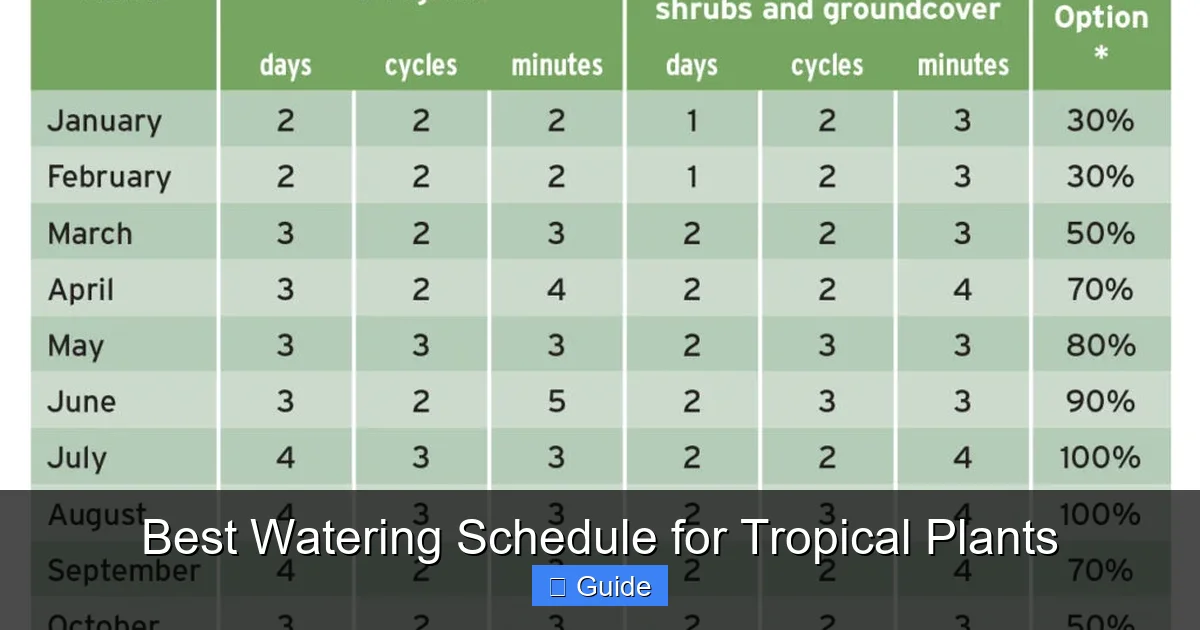
Visual guide about Best Watering Schedule for Tropical Plants
Image source: irvinestandard.com
A wooden chopstick works too. Insert it, pull it out, and look at the tip. Dry wood means dry soil. Wet wood means moist soil.
Moisture meters give a numeric reading. They are inexpensive and easy to read. Use them for large collections or hard‑to‑reach pots.
When to Use a Moisture Meter
Use a meter for deep pots where fingers cannot reach. Use it for plants that are very sensitive to overwatering. Calibrate the meter once a month for accuracy.
Place the probe at the same depth each time. Consistent depth gives comparable readings. Record the numbers in a notebook.
Visual Soil Checks
Look at the soil color. Dark soil usually holds water. Light, crusty soil is dry. A thin white crust can indicate salt buildup from hard water.
If you see mold on the surface, the soil is staying too wet. Reduce watering frequency immediately.
Creating a Seasonal Watering Calendar
Spring and summer bring heat and longer days. Water tropical plants every five to seven days. Check soil each time before you pour.
Fall brings cooler temps and shorter days. Stretch the interval to ten to fourteen days. Reduce volume per watering as growth slows.
Winter often means indoor heating and low humidity. Water only when the top inch is dry. This may be every two weeks or longer.
Adjusting for Indoor Climate
Heating vents dry the air fast. Place a humidifier near plants. Group pots to create a microclimate. Mist leaves lightly in the morning.
A pebble tray filled with water adds humidity without wetting the roots. Refill the tray as water evaporates.
Tracking Your Schedule
Write dates on a calendar or use a phone app. Mark each watering day. Note any changes in plant appearance. Patterns emerge over weeks.
Review the log monthly. Adjust the calendar based on real observations. Flexibility beats a rigid plan.
Adjusting for Pot Size, Soil Mix, and Humidity
Large pots hold more soil and water. They dry out slower than small pots. A 12‑inch pot may need water half as often as a 6‑inch pot.
Soil mix changes drainage. A mix with peat, perlite, and bark drains fast. A heavy peat mix retains water longer. Choose a mix that matches the plant’s native habitat.
High ambient humidity reduces evaporation. In a bathroom or greenhouse, water less often. In a dry living room, water more often.
Choosing the Right Pot
Terracotta breathes and wicks moisture away. Plastic retains water. Match pot material to your watering style.
Glazed ceramic sits in between. It slows evaporation but still allows some airflow.
Repotting Considerations
After repotting, water thoroughly to settle soil. Then wait until the top inch dries before the next drink. This prevents root shock.
Use fresh, sterile mix to avoid pathogens. A clean start reduces the risk of root rot.
Common Mistakes and How to Fix Them
Overwatering is the number one killer. Roots rot when they sit in soggy soil. Fix by letting soil dry deeper before the next watering.
Underwatering shows as crispy leaf edges. Increase frequency slightly. Add a humidity tray if the air is dry.
Watering on a strict calendar ignores weather changes. Always check soil first. Flexibility beats rigidity.
Using cold tap water can shock tropical roots. Let water sit to reach room temperature. Rainwater or filtered water is ideal.
Rescuing an Overwatered Plant
Remove the plant from its pot. Trim black, mushy roots. Repot in fresh, well‑draining mix. Water lightly and place in bright, indirect light.
Do not fertilize until new growth appears. Fertilizer adds salts that stress recovering roots.
Rescuing an Underwatered Plant
Soak the pot in a basin of water for 15 minutes. Allow excess to drain. Resume normal checks after the soil rehydrates.
Trim any dead leaf tips. New growth will replace them once moisture is stable.
Pro Tips for Long‑Term Success
Rotate pots weekly for even light exposure. This balances growth and water use.
Fertilize during active growth only. Too much fertilizer raises salt levels and increases water demand.
Use a saucer with pebbles and water to raise humidity without soggy roots.
Observe new leaves. They are the best indicator of proper moisture.
Keep a care journal. Note date, amount, and plant response. Over time you will master the best watering schedule for tropical plants.
Advanced Tools
Smart irrigation controllers can automate outdoor tropical gardens. They adjust to weather data. Indoor growers can use Wi‑Fi moisture sensors that alert your phone.
Data logs from sensors reveal trends you might miss. Use those trends to fine‑tune your calendar.
Community Resources
Join local plant clubs or online forums. Share schedules and troubleshoot together. Collective experience speeds learning.
Attend workshops when possible. Hands‑on practice builds confidence.
Conclusion
Creating the best watering schedule for tropical plants is about observation, flexibility, and a little science. Start with the finger test. Build a seasonal calendar. Adjust for pot, soil, and humidity. Avoid common pitfalls. Use tools and community wisdom. Your tropical collection will reward you with vibrant foliage and steady growth.
Frequently Asked Questions
What is the best watering schedule for tropical plants?
The best watering schedule for tropical plants depends on species, pot size, and season. Generally water when the top inch of soil feels dry, about every 5–7 days in warm months and every 10–14 days in cooler months.
How do I know if I am overwatering?
Signs of overwatering include yellowing leaves, mushy stems, and a sour smell from the soil. Let the soil dry deeper before watering again.
Can I use a moisture meter for all tropical plants?
Yes, a moisture meter works for most tropical plants. Calibrate it regularly and use it as a guide, not a strict rule.
Should I mist tropical plant leaves?
Misting can raise humidity temporarily but does not replace proper soil watering. Use misting as a supplement in very dry indoor air.
What soil mix is ideal for tropical plants?
A well‑draining mix of peat, perlite, and bark mimics rainforest floor conditions. Adjust ratios based on each plant’s moisture preference.
How does pot material affect watering frequency?
Terracotta pots dry out faster than plastic or glazed ceramic. Choose pot material that matches your watering style and environment.