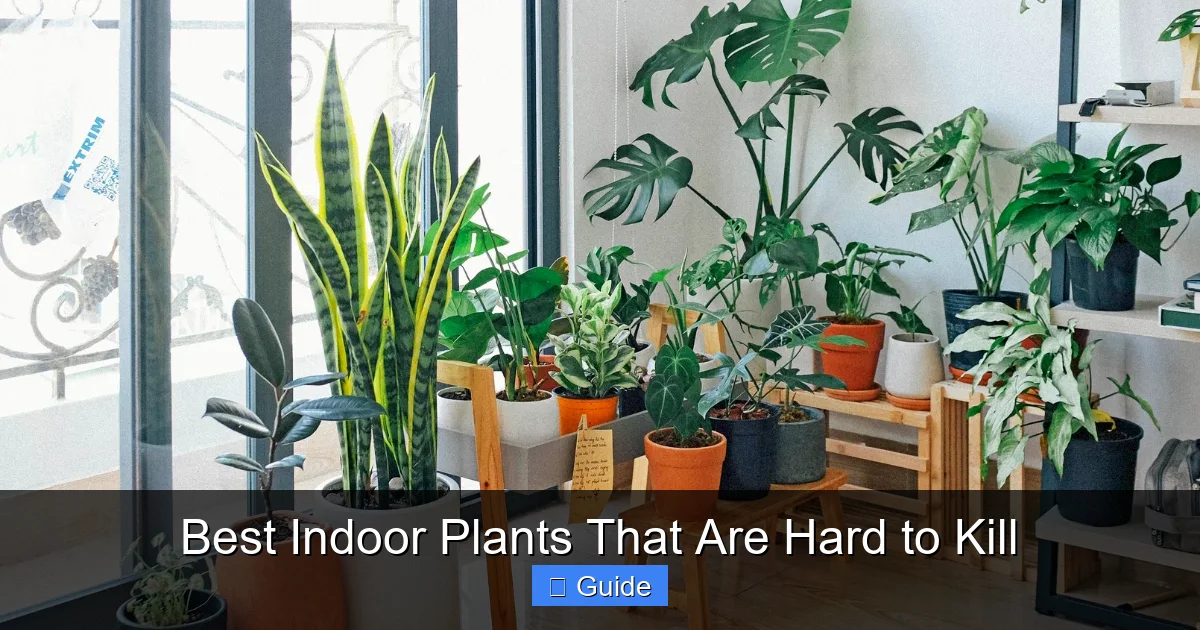
Best Indoor Plants That Are Hard to Kill
Looking for the best indoor plants that are hard to kill? This guide covers ten nearly unkillable houseplants that thrive on neglect, plus expert care tips to keep them thriving. From snake plants to ZZ plants, find your perfect green match today.
Key Takeaways
- Snake plants and ZZ plants top the list: These two varieties tolerate low light, irregular watering, and temperature fluctuations better than almost any other houseplant.
- Overwatering is the number one killer: Even the toughest plants succumb to root rot when soil stays soggy. Always check soil moisture before watering.
- Light requirements vary by species: While most hard-to-kill plants handle low light, they grow faster and look better with bright indirect light.
- Well-draining soil is non-negotiable: Use cactus or succulent mix, or amend regular potting soil with perlite or orchid bark for optimal drainage.
- Less fertilizer is more: Hardy plants need minimal feeding. Once or twice during growing season with diluted fertilizer is plenty.
- Propagation is easy with these varieties: Most unkillable plants can be multiplied through division, leaf cuttings, or water propagation.
- Match plants to your lifestyle: Frequent travelers should choose ZZ plants or snake plants. Pet owners need non-toxic options like spider plants or cast iron plants.
Quick Answers to Common Questions
What is the absolute easiest indoor plant to keep alive?
The ZZ plant (Zamioculcas zamiifolia) is widely considered the easiest. Its underground rhizomes store water for months, it thrives in low light, and it tolerates neglect better than any other common houseplant.
How often should I water snake plants?
Water snake plants only when the soil is completely dry. In summer, this might be every two to three weeks. In winter, once a month or less. Always check soil moisture with your finger before watering.
Which hard-to-kill plants are safe for cats and dogs?
Spider plants, cast iron plants, prayer plants, parlor palms, Boston ferns, African violets, and haworthias are non-toxic to pets. Avoid peace lilies, pothos, ZZ plants, snake plants, jade, aloe, and rubber plants if you have curious pets.
Why are my pothos leaves turning yellow?
Yellow pothos leaves usually indicate overwatering. Let the soil dry out between waterings. Ensure the pot has drainage holes. Remove yellow leaves. If many leaves yellow at once, check for root rot and repot in fresh, well-draining soil.
Can I keep unkillable plants in a windowless bathroom?
No plant survives in total darkness. Windowless bathrooms need artificial light. Use a full-spectrum LED grow light on a timer for twelve hours daily. ZZ plants and snake plants tolerate low light best but still need some light source.
📑 Table of Contents
- Why Choose Hard-to-Kill Indoor Plants?
- Top 10 Best Indoor Plants That Are Hard to Kill
- Essential Care Tips for Nearly Unkillable Plants
- Common Mistakes That Kill Even Tough Plants
- How to Choose the Right Plant for Your Space
- Troubleshooting Guide for Hardy Houseplants
- Propagation: Multiply Your Unkillable Plants
- Seasonal Care Adjustments
- Building Your Unkillable Plant Collection
- Conclusion
Why Choose Hard-to-Kill Indoor Plants?
Let me tell you a quick story. Three years ago, I brought home a beautiful fiddle leaf fig. I named her Francesca. I researched her care. I bought a moisture meter. I set calendar reminders. And within six weeks, Francesca was a crispy, leaf-less stick in a pot. Sound familiar?
If you have ever felt the sting of plant parent failure, you are not alone. The good news? You do not need a green thumb. You just need the right plants. The best indoor plants that are hard to kill share a few key traits. They store water in thick leaves or rhizomes. They evolved in harsh environments. They photosynthesize efficiently in low light. And they forgive you when you forget them for two weeks.
Choosing resilient plants builds confidence. It lets you enjoy the benefits of indoor greenery without the anxiety. Cleaner air. Better mood. Natural decor. All without the daily stress of “did I water that today?” This guide walks you through the absolute toughest options, how to care for them, and how to avoid the few things that can actually take them down.
Top 10 Best Indoor Plants That Are Hard to Kill
1. Snake Plant (Sansevieria)
If there is a king of unkillable plants, the snake plant wears the crown. Native to West Africa, these architectural beauties have thick, upright leaves that store water like succulents. They convert CO2 to oxygen at night, making them ideal bedroom companions.
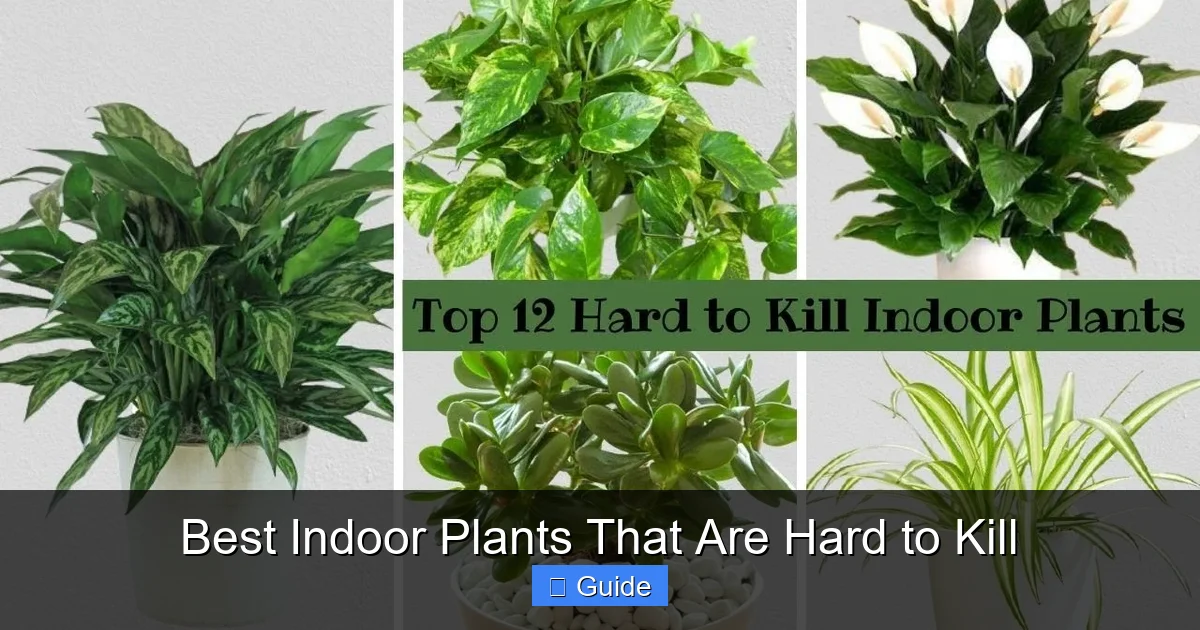
Visual guide about Best Indoor Plants That Are Hard to Kill
Image source: i.ytimg.com
Snake plants handle low light, bright light, dry air, and weeks without water. The only real threat? Soggy soil. Plant in a terra cotta pot with cactus mix. Water only when the soil is bone dry. That might mean once a month in winter. Varieties like ‘Laurentii’ with yellow edges or ‘Moonshine’ with silvery leaves add visual interest.
2. ZZ Plant (Zamioculcas zamiifolia)
The ZZ plant is practically indestructible. Its secret weapon? Potato-like rhizomes underground that store water for months. I have literally forgotten a ZZ plant in a closet for six weeks. It looked a little droopy but bounced back fully after one drink.
ZZ plants thrive in low light offices and bright living rooms alike. Their glossy, dark green leaves look polished year-round. The ‘Raven’ variety offers dramatic near-black new growth. Water when the top two inches of soil feel dry. In winter, that could be every three to four weeks. They rarely need repotting since they prefer being slightly root-bound.
3. Pothos (Epipremnum aureum)
Pothos might be the most rewarding plant for beginners. These trailing vines grow fast, tolerate neglect, and tell you exactly what they need. Droopy leaves? Water me. Yellow leaves? Too much water. Pale leaves? More light please.
Golden pothos features heart-shaped leaves splashed with yellow. ‘Marble Queen’ shows stunning white variegation. ‘Neon’ glows chartreuse. All varieties root easily in water. Snip a vine below a node, pop it in a jar, and watch roots appear in weeks. Perfect for sharing with friends or filling empty shelves.
4. Spider Plant (Chlorophytum comosum)
Spider plants have been household staples since the Victorian era for good reason. They produce adorable “spiderettes” on long stems that dangle like ornaments. These babies root while still attached to the mother plant.
Spider plants prefer bright indirect light but adapt to moderate shade. They like consistent moisture but forgive drying out. Brown leaf tips usually mean fluoride in tap water or low humidity. Use filtered water or let tap water sit overnight. They are non-toxic to cats and dogs, a huge plus for pet parents.
5. Cast Iron Plant (Aspidistra elatior)
The name says it all. Cast iron plants survived gas-lit Victorian parlors with soot and temperature swings. They handle deep shade, poor soil, irregular watering, and temperature extremes. Their broad, dark green leaves add lush texture to dark corners.
Variegated varieties like ‘Variegata’ with white stripes need more light to maintain color. Water when the top inch of soil dries. They grow slowly, so repotting is rare. These make excellent floor plants for north-facing rooms where nothing else survives.
6. Chinese Evergreen (Aglaonema)
Chinese evergreens bring tropical flair with patterned leaves in silver, pink, red, and cream. They are slower growing than pothos but equally forgiving. NASA studies confirm they filter indoor air pollutants effectively.
Darker green varieties tolerate lower light. Colorful varieties need brighter indirect light to maintain vibrancy. Keep soil lightly moist but never soggy. They appreciate humidity but survive average home conditions. Watch for mealybugs in leaf axils. Wipe leaves monthly with a damp cloth.
7. Peace Lily (Spathiphyllum)
Peace lilies have a dramatic way of communicating. They collapse completely when thirsty, then perk up within hours of watering. It is hard to ignore a plant that faints. Their white “flowers” (actually modified leaves called spathes) bloom intermittently year-round.
They prefer consistent moisture and medium to bright indirect light. Low light reduces flowering. They are sensitive to chlorine and fluoride. Use filtered water. Peace lilies are toxic to pets, so place them out of reach. The ‘Sensation’ variety grows huge for statement floor plants.
8. Jade Plant (Crassula ovata)
Jade plants are succulents with woody stems and plump, oval leaves. They live for decades, becoming miniature trees. In many cultures, they symbolize prosperity and friendship. They are incredibly drought-tolerant thanks to water-storing leaves.
Jades need bright light, ideally some direct sun. Without enough light, they stretch and become leggy. Water thoroughly but infrequently. Let soil dry completely between waterings. Use a heavy pot to counterbalance top-heavy growth. Prune to shape and encourage branching.
9. Rubber Plant (Ficus elastica)
Rubber plants offer large, glossy leaves in deep green, burgundy, or variegated patterns. They grow into impressive indoor trees with minimal fuss. Their thick leaves resist pests and hold moisture well.
Bright indirect light keeps them compact and colorful. Lower light causes leaf drop. Water when the top two inches dry. Wipe leaves regularly to keep pores open for photosynthesis. They dislike cold drafts and sudden temperature changes. Stake tall varieties for support.
10. Aloe Vera
Aloe vera pulls double duty as decor and first aid. The gel inside those spiky leaves soothes burns, cuts, and skin irritation. As a succulent, it stores water in leaves and tolerates neglect beautifully.
Aloe needs bright light, preferably direct morning sun. Insufficient light causes pale, floppy leaves. Plant in cactus mix in a pot with drainage holes. Water deeply but rarely. Let soil dry completely. Pups (baby plants) form at the base. Separate them to share or expand your collection.
Essential Care Tips for Nearly Unkillable Plants
Master the Finger Test
Forget watering schedules. Your finger is the best moisture meter. Stick it two inches into the soil. If it feels dry at your fingertip, water. If it feels cool or damp, wait. This simple habit prevents ninety percent of plant deaths. Most hard-to-kill plants prefer drying out between waterings. When in doubt, wait one more day.
Choose the Right Pot
Drainage holes are mandatory. No exceptions. Decorative pots without holes? Use them as cachepots. Keep the plant in a plastic nursery pot with holes. Set that inside the pretty pot. Empty excess water after watering. Terra cotta pots wick moisture away, great for succulents and snake plants. Plastic retains moisture longer, better for peace lilies and ferns.
Soil Matters More Than You Think
Standard potting soil holds too much water for tough plants. Mix your own: two parts potting soil, one part perlite, one part orchid bark. Or buy cactus/succulent mix. For aroids like pothos and ZZ plants, add extra orchid bark for aeration. Repot only when roots circle the bottom or grow out drainage holes. Spring is the best time.
Light Reality Check
“Low light” does not mean “no light.” It means several feet from a north window or near an east window with sheer curtains. No plant grows in darkness. If you can read a book comfortably without artificial light, that is low light. If you need a lamp, that is too dark. Rotate plants monthly for even growth. Clean leaves maximize photosynthesis.
Fertilize Sparingly
Hardy plants are light feeders. Use balanced liquid fertilizer diluted to half strength. Apply once in spring, once in summer. Skip fall and winter. Over-fertilizing burns roots and causes weak, leggy growth. Slow-release granules worked into soil in spring work too. Flush soil with plain water occasionally to prevent salt buildup.
Humidity Hacks
Most unkillable plants tolerate average home humidity (thirty to forty percent). But they thrive with fifty to sixty percent. Group plants together to create a microclimate. Set pots on pebble trays with water (pot bottoms above water line). Run a humidifier in winter. Misting helps briefly but does not raise ambient humidity significantly.
Temperature Stability
Keep plants away from heating vents, AC units, radiators, and drafty doors. Sudden temperature swings stress even tough plants. Ideal range: sixty-five to seventy-five degrees Fahrenheit. Most tolerate brief dips to fifty-five. Frost kills tropical plants instantly. In summer, acclimate gradually before moving outdoors.
Common Mistakes That Kill Even Tough Plants
Overwatering: The Silent Killer
This is the number one cause of death for the best indoor plants that are hard to kill. Loving them too much drowns roots. Roots need oxygen. Soggy soil pushes air out. Anaerobic bacteria take over. Roots rot. The plant cannot uptake water. Leaves yellow and drop. The irony? It looks like underwatering. So you water more. The cycle accelerates.
Signs of overwatering: yellowing lower leaves, mushy stems, fungus gnats, mold on soil surface, foul smell from pot. Solution: stop watering. Increase light and airflow. Remove plant from pot. Trim black, mushy roots. Repot in fresh, dry, well-draining mix. Wait a week before watering.
No Drainage Holes
Planting directly in decorative pots without holes is a death sentence. Water pools at the bottom. The “gravel layer” myth does not work. Water does not move easily from fine soil into coarse gravel. It creates a perched water table. Roots sit in that saturated zone. Rot follows. Always use pots with holes or the cachepot method.
Ignoring Light Needs
“Low light tolerant” is not “low light loving.” A snake plant in a dark corner survives but does not grow. It stretches toward light (etiolation). Leaves become thin, floppy, pale. New growth is weak. Pests attack stressed plants. Give your tough plants the brightest light they can handle. They reward you with vigorous growth and better color.
Wrong Soil Mix
Using moisture-retentive soil for succulents or cacti causes root rot. Using pure sand for tropicals causes chronic underwatering. Match soil to plant type. Succulents and snake plants: gritty, fast-draining mix. Tropicals like pothos and peace lilies: moisture-retentive but aerated mix. When in doubt, add perlite.
Repotting Too Often or Too Large
Plants like being slightly root-bound. Repotting into a huge pot surrounds roots with wet soil they cannot reach. That soil stays soggy. Rot develops. Only go up one pot size (two inches wider). Repot only when necessary: roots circling, growing out holes, or soil breaking down. Spring repotting aligns with active growth.
Cold Damage
Leaves touching freezing windows in winter get cellular damage. Blackened, mushy patches appear days later. Drafts from doors cause similar issues. Move plants back from windows at night in winter. Use cardboard or bubble wrap as insulation between plant and glass. Keep away from entry doors.
Pest Neglect
Tough plants resist pests but are not immune. Spider mites love dry, warm conditions. Mealybugs hide in leaf axils. Scale looks like brown bumps on stems. Check leaves (top and bottom) weekly. Wipe with neem oil or insecticidal soap at first sign. Isolate affected plants. Early treatment prevents infestations.
How to Choose the Right Plant for Your Space
Assess Your Light Honestly
Stand in the spot where the plant will live. At noon on a sunny day, hold your hand twelve inches above a white paper. Sharp, defined shadow? Bright direct light. Soft, fuzzy shadow? Bright indirect light. Barely visible shadow? Low light. No shadow? Too dark. Match plants to reality, not wishful thinking.
Consider Your Schedule
Travel frequently? Choose ZZ plant, snake plant, or jade. They survive weeks without water. Home daily? Peace lily or ferns work if you enjoy regular care. Forgetful waterer? Succulents and snake plants forgive missed weeks. Overwaterer? Terra cotta pots and fast-draining soil create safety margins.
Pet and Child Safety
Many popular plants are toxic. Peace lily, pothos, ZZ plant, snake plant, jade, aloe, and rubber plant cause irritation or worse if eaten. Safe options: spider plant, cast iron plant, prayer plant, parlor palm, Boston fern, African violet, haworthia. Place toxic plants on high shelves or in hanging planters out of reach.
Space Constraints
Small apartment? Trailing pothos on shelves. Spider plant in hanging basket. Compact snake plant varieties like ‘Bird’s Nest’ or ‘Hahnii’. Large floor space? Rubber tree, large snake plant, ZZ plant, or cast iron plant. Vertical space? Train pothos up a moss pole. Monstera deliciosa (moderately tough) makes a statement.
Aesthetic Preferences
Architectural and modern? Snake plant, ZZ plant, jade. Lush and tropical? Rubber plant, Chinese evergreen, peace lily. Cascading and whimsical? Pothos, spider plant, string of hearts. Colorful foliage? Chinese evergreen varieties, ‘Neon’ pothos, ‘Raven’ ZZ plant. Flowers? Peace lily, anthurium (moderately tough).
Air Purification Goals
NASA clean air study top performers: snake plant, peace lily, spider plant, Chinese evergreen, pothos. They remove formaldehyde, benzene, trichloroethylene. But you need many plants for measurable impact. One plant per hundred square feet is the guideline. Combine with ventilation and air purifiers for best results.
Troubleshooting Guide for Hardy Houseplants
Yellow Leaves
Yellow leaves usually mean water issues. Bottom leaves yellowing? Often natural aging. Multiple leaves yellowing? Check soil. Wet? Overwatering. Bone dry? Underwatering. Yellow with green veins? Nutrient deficiency (iron or nitrogen). Fertilize lightly. Yellow after repotting? Transplant shock. Keep conditions stable. It will recover.
Brown Leaf Tips
Crispy brown tips signal low humidity, fluoride sensitivity, or fertilizer burn. Spider plants and peace lilies are prone. Use filtered water. Increase humidity. Flush soil monthly with plain water. Trim brown tips with clean scissors at an angle to match leaf shape. Do not cut into green tissue.
Drooping Leaves
Peace lilies faint dramatically when dry. Pothos leaves curl and droop. Snake plant leaves flop when overwatered (rot) or severely underwatered. Check soil first. Water if dry. If wet, check roots for rot. Drooping from heat stress? Move to cooler spot. Recovery usually takes hours to a day.
Leggy, Stretched Growth
Long spaces between leaves (internodes) mean insufficient light. Plant is reaching. Move to brighter spot. Prune leggy stems. Root cuttings in water. New growth will be compact. Rotate plant weekly for even light exposure. Consider grow lights for dark rooms.
Leaf Drop
Sudden leaf drop signals shock. Recent move? Repotting? Temperature change? Draft? Overwatering? Identify the trigger. Stabilize conditions. Do not fertilize stressed plants. Rubber plants and ficus drop leaves when moved. They regrow once acclimated. Patience is key.
Pale or Washed-Out Color
Variegated plants losing color? Need more light. Variegation is unstable in low light. Plant reverts to green for more chlorophyll. Move to brighter spot. New growth should show pattern. Solid green plants turning pale? Could be nitrogen deficiency or too much direct sun bleaching leaves. Adjust accordingly.
Sticky Residue or Webbing
Sticky honeydew on leaves or nearby surfaces? Scale, mealybugs, or aphids. Fine webbing? Spider mites. Isolate plant. Wipe leaves with alcohol-dipped cotton swab for visible pests. Spray with neem oil or insecticidal soap weekly for three weeks. Check neighboring plants. Increase humidity to deter spider mites.
White Crust on Soil or Pot
Mineral buildup from tap water and fertilizer. Harmless but unsightly. Scrape off top soil layer. Flush soil thoroughly: run water through pot for several minutes. Let drain completely. Switch to filtered or distilled water. Reduce fertilizer frequency. Terra cotta pots develop exterior crust. Soak in vinegar solution to clean.
Propagation: Multiply Your Unkillable Plants
Water Propagation Basics
Pothos, spider plants, and Chinese evergreens root easily in water. Cut below a node (where leaf meets stem). Remove lower leaves. Place in clear glass with room temperature water. Node submerged, leaves above. Change water weekly. Roots appear in two to four weeks. Pot when roots are two inches long.
Division Method
Snake plants, ZZ plants, peace lilies, and cast iron plants grow from rhizomes or clumps. Remove plant from pot. Gently separate root ball into sections. Each section needs roots and leaves. Use clean knife for tough roots. Pot divisions in appropriate soil. Water lightly. Keep in bright indirect light. Avoid fertilizer for a month.
Leaf Cuttings
Snake plants and jade plants grow from single leaves. Cut healthy leaf into three-inch sections (snake plant) or remove whole leaf cleanly (jade). Let cut ends callous over for two to three days. Place snake plant sections upright in moist sand or perlite. Lay jade leaves on soil surface. Mist occasionally. Tiny plants form at base in weeks to months.
Pup Separation
Aloe, spider plants, and Chinese evergreens produce offsets (pups). Wait until pup has own roots and several leaves. Gently dig around base. Separate with clean knife. Pot pup in small container with appropriate mix. Water sparingly until established. Mother plant continues producing more pups.
Air Layering for Woody Stems
Rubber plants and large ficus benefit from air layering. Choose a stem section. Make upward cut halfway through stem. Insert toothpick to keep open. Wrap with damp sphagnum moss. Cover with plastic wrap. Secure with tape. Roots form in moss in four to eight weeks. Cut below roots. Pot new plant.
Seasonal Care Adjustments
Spring: Wake Up and Grow
Days lengthen. Growth resumes. Resume fertilizing. Repot if needed. Prune leggy growth. Propagate. Check for pests emerging from dormancy. Increase watering frequency as soil dries faster. Move winter-protected plants to brighter spots gradually. Clean leaves for maximum photosynthesis.
Summer: Peak Growth
High light, heat, evaporation. Water more frequently. Monitor for sunburn if near windows. Increase humidity with AC running. Fertilize monthly at half strength. Watch for spider mites in hot, dry conditions. Rotate for even growth. Stake tall growers. Enjoy the lush results of your care.
Fall: Slow Down
Growth slows. Reduce fertilizing. Stop by October. Water less frequently as light decreases. Bring outdoor summer plants inside before nights hit fifty degrees. Inspect thoroughly for pests. Quarantine two weeks. Reduce watering for dormant succulents. Clean windows for maximum winter light.
Winter: Survival Mode
Low light, dry air, cold drafts. Water minimally. Most tough plants need water every three to four weeks. No fertilizer. Keep away from heat sources. Use humidifier. Provide supplemental light if possible. Accept slower growth. Some leaf drop is normal. Do not panic. Spring returns.
Building Your Unkillable Plant Collection
Start Small, Dream Big
Do not buy ten plants at once. Start with one or two. Learn their rhythms. Build confidence. A snake plant and a pothos give you upright structure and trailing drama. Master their care. Then add a ZZ plant for a dark corner. A spider plant for the bathroom. A jade for the sunny windowsill.
Create Plant Communities
Group plants with similar needs. Succulent corner: snake plant, jade, aloe, haworthia. Tropical shelf: pothos, Chinese evergreen, peace lily. Low light nook: ZZ plant, cast iron plant, snake plant. Grouping simplifies care and boosts humidity. Rotate the whole group for even light.
Invest in Quality Tools
A few good tools make care easier. Moisture meter (backup to finger test). Quality pruning shears (clean cuts heal faster). Watering can with long spout (target soil, not leaves). Spray bottle for humidity. Neem oil concentrate. Sticky traps for fungus gnats. Terra cotta pots in various sizes. Bag of perlite and orchid bark.
Document Your Journey
Take photos monthly. Note watering dates, fertilizer, repotting, problems, solutions. A simple notebook or phone app works. Patterns emerge. You learn your specific conditions. You become the expert on your plants. Share successes and failures with plant communities online. We all learn together.
Conclusion
You made it through the ultimate guide to the best indoor plants that are hard to kill. Here is the truth: there is no such thing as a plant you cannot kill. But these ten come remarkably close. They want to live. They evolved to survive drought, shade, poor soil, and neglect. Your job is simply to not love them to death with water.
Start with one. A snake plant on your nightstand. A pothos trailing from your bookshelf. A ZZ plant in that dark hallway. Watch them. Learn them. Celebrate the first new leaf. Forgive yourself for the occasional crispy tip. Plants are resilient. So are you.
The benefits go beyond aesthetics. Cleaner air. Reduced stress. A living thing that depends on you but does not demand perfection. That is a rare gift in modern life. So go ahead. Bring home that unkillable green companion. Your future self will thank you for the oxygen, the beauty, and the quiet pride of keeping something alive.
Remember: the best indoor plants that are hard to kill are the ones that match your light, your schedule, and your style. Choose wisely. Water sparingly. Enjoy immensely. Happy growing.
Frequently Asked Questions
What makes a plant “hard to kill”?
Plants labeled hard to kill typically have adaptations like water-storing tissues (succulent leaves, rhizomes), low light tolerance, slow growth rates, and resistance to pests. They evolved in harsh environments where survival required resilience.
Do hard-to-kill plants still need fertilizer?
Yes, but very little. Most tough plants need fertilizer only once or twice during the growing season (spring and summer). Use a balanced liquid fertilizer diluted to half strength. Over-fertilizing damages roots more than under-fertilizing.
How do I know if my plant needs repotting?
Signs include roots growing out of drainage holes, water running straight through the pot, soil drying out in one day, or the plant becoming top-heavy and tipping over. Spring is the ideal time to repot.
Can I put my unkillable plants outside in summer?
Yes, most benefit from a summer outdoors. Acclimate them gradually over seven to ten days. Start in full shade. Increase light exposure daily. Bring them back inside before night temperatures drop below fifty-five degrees Fahrenheit.
What is the best soil mix for snake plants and ZZ plants?
Use a cactus or succulent potting mix, or make your own with two parts regular potting soil, one part perlite, and one part coarse sand or orchid bark. Excellent drainage is critical for these rhizomatous plants.
Why do the tips of my spider plant leaves turn brown?
Brown tips on spider plants are usually caused by fluoride in tap water, low humidity, or fertilizer salt buildup. Use filtered or distilled water, increase humidity, and flush the soil monthly with plain water to prevent this issue.