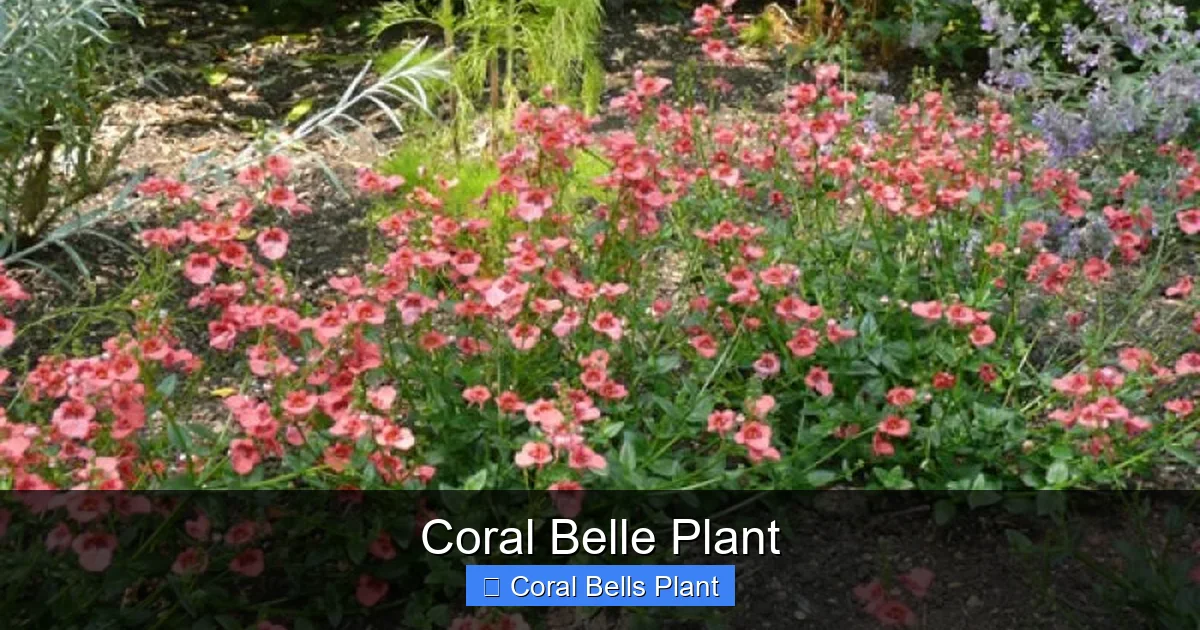
Coral Belle Plant
The coral belle plant is a vibrant variety of coral bells (Heuchera) prized for its ruffled, deep coral-pink foliage and delicate bell-shaped flowers. This low-maintenance perennial thrives in partial shade, adds year-round color to gardens, and attracts pollinators with its airy blooms.
Key Takeaways
- Stunning foliage: The coral belle plant features ruffled leaves in shades of coral, pink, and bronze that provide year-round visual interest.
- Shade tolerant: This perennial thrives in partial to full shade, making it perfect for woodland gardens and shaded borders.
- Low maintenance: Once established, coral belle plants require minimal care beyond occasional watering and division every few years.
- Pollinator friendly: The delicate bell-shaped flowers attract hummingbirds, bees, and butterflies throughout the blooming season.
- Versatile design: Works beautifully in containers, rock gardens, border edges, and mass plantings for ground cover.
- Cold hardy: Hardy in USDA zones 4-9, the coral belle plant withstands freezing temperatures with proper winter care.
- Deer resistant: The slightly fuzzy, textured foliage naturally deters deer and rabbits from browsing.
Quick Answers to Common Questions
What light conditions does the coral belle plant prefer?
The coral belle plant thrives in partial shade with morning sun and afternoon shade. In cooler climates it tolerates more sun, but in hot regions it needs protection from harsh afternoon rays to prevent leaf scorch.
How often should I water my coral belle plant?
Water deeply when the top inch of soil feels dry, typically about once per week including rainfall. New plantings need more frequent watering. Container plants may need daily watering in hot weather.
When is the best time to divide coral belle plants?
Early spring as new growth emerges is ideal for division. Early fall works in mild climates if done at least 6 weeks before the ground freezes. Divide every 3-4 years to maintain vigor.
Is the coral belle plant deer resistant?
Yes, the coral belle plant is generally deer and rabbit resistant due to its slightly fuzzy, textured foliage. However, no plant is completely deer-proof in times of extreme hunger.
Can coral belle plants grow in containers?
Absolutely. The coral belle plant excels in containers with good drainage and quality potting mix. It makes a stunning focal point or filler in shaded container combinations on patios and porches.
📑 Table of Contents
- Introduction to the Coral Belle Plant
- Understanding the Coral Belle Plant
- Ideal Growing Conditions for Coral Belle Plant
- Planting Your Coral Belle Plant
- Ongoing Care and Maintenance
- Common Problems and Solutions
- Design Ideas and Companion Plants
- Propagation Methods
- Coral Belle Plant Varieties and Relatives
- Buying and Selecting Healthy Plants
- Frequently Asked Questions About Coral Belle Plant Care
- Conclusion
Introduction to the Coral Belle Plant
If you are looking for a perennial that brings serious color to shady spots without demanding constant attention, the coral belle plant might just become your new garden favorite. This stunning variety of coral bells, botanically known as Heuchera ‘Coral Belle,’ offers a spectacular show of ruffled foliage in shades that shift from coral-pink to deep bronze throughout the seasons. Unlike many flowering perennials that fade after a few weeks, this plant keeps its vibrant personality all year long.
I first discovered the coral belle plant at a local nursery about five years ago, and it completely changed how I approach shade gardening. Before that, I struggled to find plants that offered more than just green leaves in the darker corners of my yard. The coral belle plant proved that shade gardens can be just as exciting as sunny borders. Its compact mounding habit makes it incredibly versatile, whether you tuck it into a container on a covered porch or plant it in drifts along a woodland path.
Understanding the Coral Belle Plant
What Makes This Variety Special
The coral belle plant belongs to the Heuchera genus, commonly called coral bells or alumroot. What sets ‘Coral Belle’ apart from other cultivars is its distinctive foliage coloration. The leaves emerge in spring with a bright coral-pink hue that deepens to a rich bronze-coral as summer progresses. In cooler weather, the colors often intensify further, creating a stunning autumn display. Each leaf features gentle ruffling along the edges, adding texture that catches light beautifully.
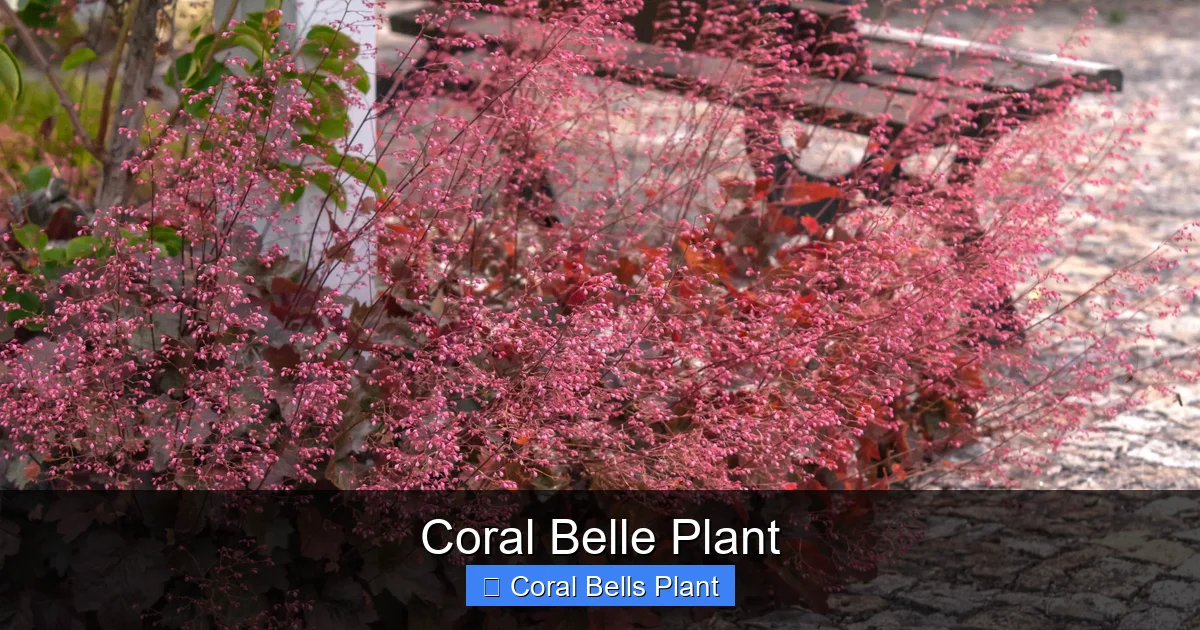
Visual guide about Coral Belle Plant
Image source: thespruce.com
The plant forms a neat, rounded mound typically reaching 12 to 18 inches tall and wide. In late spring to early summer, slender stems rise above the foliage, bearing clusters of tiny bell-shaped flowers in soft pink to cream shades. These airy blooms hover like a cloud above the colorful leaves, attracting hummingbirds and beneficial insects. While the flowers are lovely, most gardeners grow the coral belle plant primarily for its spectacular foliage.
Botanical Background and Origins
Heuchera species are native to North America, with many varieties originating from woodland areas, rocky cliffs, and alpine regions. The coral belle plant is a cultivated hybrid, bred specifically for its ornamental foliage characteristics. Modern coral bells breeding programs have focused on developing varieties with improved heat tolerance, disease resistance, and novel leaf colors. The coral belle plant represents years of careful selection to achieve its unique coral coloration and reliable garden performance.
Understanding the native habitat of Heuchera helps explain the coral belle plant’s preferences. In the wild, these plants often grow in dappled shade with well-draining, humus-rich soil. They have adapted to survive in rocky crevices and forest floors where moisture is consistent but never waterlogged. This background makes them remarkably adaptable to garden conditions that mimic these environments.
Ideal Growing Conditions for Coral Belle Plant
Light Requirements
The coral belle plant performs best in partial shade, receiving morning sun and afternoon shade or dappled light throughout the day. In cooler northern climates, it can tolerate more sun, even full sun with adequate moisture. However, in hot southern regions, afternoon shade is essential to prevent leaf scorch and color fading. The ideal location provides bright, indirect light that brings out the richest coral tones without stressing the plant.
I have found that the coral belle plant’s foliage color actually changes based on light exposure. Plants in deeper shade tend to develop greener leaves with less coral pigmentation, while those in brighter light (but not harsh afternoon sun) show the most intense coral and bronze colors. Experimenting with placement in your garden can yield different color effects from the same plant.
Soil Preferences
Well-draining soil rich in organic matter is the foundation for a happy coral belle plant. These perennials dislike heavy clay that stays soggy, as their crowns are prone to rot in wet conditions. If your soil is dense, amend it generously with compost, leaf mold, or well-rotted manure before planting. A slightly acidic to neutral pH between 6.0 and 7.0 is ideal, though the coral belle plant adapts to a range of soil types as long as drainage is good.
Raised beds or berms work wonderfully for coral belle plants in areas with poor drainage. You can also plant them on a slight slope or mound the soil slightly to encourage water runoff. In containers, use a high-quality potting mix designed for perennials, not garden soil, which compacts over time.
Water Needs
Consistent moisture keeps the coral belle plant looking its best, but established plants have moderate drought tolerance. Water deeply when the top inch of soil feels dry, aiming for about an inch of water per week including rainfall. Mulching with shredded bark, pine straw, or compost helps retain soil moisture and keeps roots cool. Avoid overhead watering late in the day, as wet foliage overnight can encourage fungal issues.
New plantings need more frequent watering during their first growing season to establish strong root systems. Check container-grown coral belle plants daily during hot weather, as pots dry out much faster than garden soil. A layer of mulch in containers also helps reduce watering frequency.
Temperature and Hardiness
The coral belle plant is cold hardy in USDA zones 4 through 9, making it suitable for a wide range of climates. In zone 4, provide winter protection with a thick layer of mulch after the ground freezes. In the warmest parts of its range (zones 8-9), the plant may remain evergreen through winter but benefits from afternoon shade and consistent moisture during summer heat. Extreme heat combined with humidity can stress the plant, so ensure good air circulation.
Planting Your Coral Belle Plant
When to Plant
Spring and early fall are the optimal times to plant coral belle plants. Spring planting gives the roots all summer to establish before winter, while fall planting allows root growth in cool, moist conditions without the stress of summer heat. Avoid planting during the hottest part of summer or when the ground is frozen. If you must plant in summer, provide extra shade and water diligently.
Step-by-Step Planting Guide
Start by preparing the planting area. Loosen the soil to a depth of 12 to 15 inches and mix in 2 to 3 inches of compost. Dig a hole twice as wide as the root ball but no deeper. The crown of the coral belle plant (where stems meet roots) should sit at or slightly above soil level. Planting too deep is a common mistake that leads to crown rot.
Gently remove the plant from its container and loosen any circling roots. Place it in the hole, backfill with amended soil, and firm gently around the roots. Water thoroughly to settle the soil and eliminate air pockets. Apply a 2-inch layer of mulch around the plant, keeping it a few inches away from the crown. Space multiple plants 12 to 18 inches apart for mass plantings, or closer for quicker coverage.
Container Planting Tips
The coral belle plant thrives in containers, making it perfect for shaded patios, balconies, and entryways. Choose a pot at least 12 inches wide with drainage holes. Use a premium potting mix with added perlite or coarse sand for drainage. Plant at the same depth as in the nursery pot. Container plants need more frequent watering and fertilizing than in-ground plants. In cold climates, move pots to a protected location or insulate them for winter.
Ongoing Care and Maintenance
Fertilizing Schedule
The coral belle plant is not a heavy feeder. A light application of balanced, slow-release fertilizer in early spring as new growth emerges is usually sufficient. Alternatively, top-dress with compost annually for a gentle, sustained nutrient supply. Avoid high-nitrogen fertilizers, which promote lush green growth at the expense of the coral coloration. Over-fertilizing can also make the plant more susceptible to pests and diseases.
Pruning and Deadheading
Maintenance pruning keeps the coral belle plant looking tidy. Remove any damaged, diseased, or winter-burned leaves in early spring before new growth starts. After flowering, you can cut back the flower stems to the base to redirect energy to foliage production. Some gardeners leave the seed heads for winter interest and bird food. In late winter or early spring, cut back any remaining tattered foliage to make way for fresh growth.
Division and Rejuvenation
Every 3 to 4 years, the coral belle plant benefits from division. The center of the clump can become woody and less vigorous, with reduced foliage quality. Spring is the best time to divide. Dig up the entire clump, shake off excess soil, and pull or cut apart into sections, each with healthy roots and several growth points. Replant divisions immediately at the same depth, water well, and mulch. Division also gives you free plants to expand your garden or share with friends.
Winter Care
In most zones, the coral belle plant requires minimal winter care. After the ground freezes, apply a 3 to 4 inch layer of mulch such as straw, pine needles, or shredded leaves to prevent freeze-thaw cycles that can heave the crown out of the soil. Remove heavy mulch in early spring as new growth emerges. In zones 4-5, a protective layer of evergreen boughs can provide extra insulation. Container plants need special attention; move them to an unheated garage or bury the pots in the ground for winter.
Common Problems and Solutions
Pest Issues
The coral belle plant is relatively pest-resistant, but a few insects can cause trouble. Vine weevils are the most serious pest; adults notch leaf edges at night while larvae feed on roots, potentially killing the plant. Check for notched leaves and treat with beneficial nematodes in spring or fall. Aphids occasionally cluster on new growth and flower stems; blast them off with water or use insecticidal soap. Slugs and snails may chew holes in leaves, especially in damp conditions; use organic slug bait or beer traps.
Disease Concerns
Fungal diseases are the primary health threat to coral belle plants, usually stemming from poor drainage or overhead watering. Crown rot causes the plant to wilt and collapse at the base; prevention through proper planting depth and drainage is key. Powdery mildew appears as white powdery coating on leaves in humid conditions with poor air circulation. Space plants adequately, water at the base, and remove affected leaves. Rust shows as orange-brown pustules on leaf undersides; improve air flow and avoid wetting foliage.
Environmental Stress
Leaf scorch appears as brown, crispy edges when the coral belle plant receives too much sun or insufficient water. Relocate to a shadier spot or increase watering. Heaving occurs when freeze-thaw cycles push the crown above soil level; gently press the plant back into the soil and mulch heavily. Poor color development usually indicates too much shade or excessive nitrogen; move to brighter light and reduce fertilizer.
Design Ideas and Companion Plants
Garden Design Applications
The coral belle plant shines in numerous garden settings. Its compact size makes it perfect for the front of shaded borders, where its colorful foliage creates a living edge. Plant in groups of three, five, or seven for maximum impact. In woodland gardens, interplant with spring bulbs like daffodils and snowdrops; the coral belle plant’s emerging foliage hides dying bulb leaves. Rock gardens benefit from its mounding form and tolerance of well-drained conditions.
Container combinations are where the coral belle plant truly excels. Pair it with trailing plants like creeping jenny or ivy, upright elements like ferns or Japanese forest grass, and seasonal flowers for continuous interest. The coral foliage complements purple, chartreuse, silver, and deep green companions beautifully. Try it in a shade container with ‘Jack Frost’ brunnera, ‘Aureola’ Japanese forest grass, and white impatiens for a sophisticated look.
Best Companion Plants
Choose companions with similar cultural needs: partial shade, moist well-drained soil, and moderate fertility. Excellent partners include hostas (especially blue and gold varieties), ferns (Japanese painted fern, autumn fern), astilbes, heucherellas, tiarellas, and brunneras. Spring bulbs, hellebores, and epimediums provide early season interest before the coral belle plant hits its stride. For texture contrast, add ornamental grasses like carex or hakonechloa.
Consider color theory when selecting companions. The coral-pink foliage harmonizes with purple-leaved plants like ‘Palace Purple’ heuchera or ‘Black Scallop’ ajuga. Chartreuse foliage (golden creeping jenny, ‘All Gold’ hakonechloa) creates vibrant contrast. Silver plants (Japanese painted fern, ‘Silver Heart’ brunnera) cool down the warm coral tones. White flowers (astilbe, hellebore, foamflower) brighten shady areas and echo the coral belle plant’s own blooms.
Seasonal Interest Planning
Plan for year-round appeal by combining the coral belle plant with plants that peak at different times. Early spring: hellebores, bulbs, pulmonaria. Late spring: coral belle plant flowers, foamflower, brunnera. Summer: hosta foliage, astilbe plumes, Japanese forest grass. Fall: coral belle plant foliage intensifies, autumn fern color changes. Winter: evergreen ferns, hellebore foliage, coral belle plant’s persistent leaves in mild climates. This succession ensures your shade garden never has a dull moment.
Propagation Methods
Division
As mentioned in the maintenance section, division is the easiest and most reliable way to propagate coral belle plants. It produces mature plants quickly and maintains the exact characteristics of the parent. Divide in early spring as new growth emerges or in early fall. Each division should have several healthy leaves and a good root system. Replant immediately and keep well-watered until established.
Seed Propagation
Growing coral belle plants from seed is possible but with caveats. Heuchera hybrids like ‘Coral Belle’ do not come true from seed; seedlings will vary in foliage color and form. However, this can be a fun experiment for patient gardeners. Collect seeds when capsules turn brown and split open. Sow fresh seeds on the surface of moist seed-starting mix (they need light to germinate). Keep at 65-70°F with bright indirect light. Germination takes 2-8 weeks. Transplant seedlings to individual pots when they have true leaves.
Leaf Cuttings
Some gardeners experiment with leaf cuttings, though success rates vary. Take a healthy leaf with a short piece of petiole (leaf stem) in spring or early summer. Dip the cut end in rooting hormone and insert into moist perlite or sand. Cover with a plastic bag to maintain humidity and place in bright indirect light. Roots may form in 4-8 weeks. This method is less reliable than division but can produce multiple plants from a single leaf.
Coral Belle Plant Varieties and Relatives
Other Coral Bells Worth Knowing
While the coral belle plant is exceptional, the Heuchera world offers dozens of stunning cultivars. ‘Palace Purple’ started the purple-leaf craze in the 1980s. ‘Caramel’ features amber-gold foliage with pink undersides. ‘Lime Rickey’ brings electric chartreuse to shade. ‘Obsidian’ offers near-black leaves that hold color in sun. ‘Peach Flambe’ shows bright peach leaves that turn plum in fall. ‘Berry Smoothie’ has large rose-pink leaves with metallic sheen. Each brings unique color to the shade palette.
Heucherella and Tiarella
Two close relatives expand your options. Heucherella (foamy bells) are hybrids between Heuchera and Tiarella, combining colorful foliage with more prominent flower spikes. ‘Sweet Tea’ has cinnamon-starred leaves; ‘Alabama Sunrise’ shows gold leaves with red veins. Tiarella (foamflower) offers deeply lobed leaves often marked with dark centers and airy white or pink flower spikes. ‘Spring Symphony’ and ‘Sugar and Spice’ are excellent cultivars. All three genera share similar cultural needs and play well together.
Buying and Selecting Healthy Plants
What to Look For
When shopping for coral belle plants, inspect carefully. Choose plants with vibrant, undamaged foliage showing good coral coloration (though color may be greener in nursery shade conditions). Avoid plants with yellowing leaves, brown crispy edges, or signs of pests. Check the crown; it should be firm, not mushy or hollow. Gently lift the plant from its pot to examine roots; they should be white or light tan, firm, and not circling excessively.
Where to Buy
Local nurseries and garden centers often carry coral belle plants in spring and fall, allowing you to see the actual plant before buying. Specialty perennial nurseries may offer a wider selection of Heuchera cultivars. Online retailers ship bare-root or potted plants; order from reputable sources with good reviews. Plant sales at botanical gardens and master gardener events can yield unique varieties at reasonable prices. Whenever possible, buy from sources that grow plants in your region for better adaptation.
Size Considerations
Coral belle plants are typically sold in 4-inch, quart, or gallon pots. Smaller pots cost less but take longer to reach mature size. Larger pots provide instant impact but cost more. For mass plantings, smaller pots are economical; for specimen containers or focal points, larger plants give immediate results. Consider your timeline and budget when deciding.
Frequently Asked Questions About Coral Belle Plant Care
Why is my coral belle plant turning green?
Loss of coral color usually means the plant is getting too much shade or too much nitrogen fertilizer. Move it to a brighter location with morning sun or dappled light, and switch to a balanced or low-nitrogen fertilizer. Some seasonal color change is normal; foliage is often greener in summer heat and more colorful in spring and fall.
Can coral belle plant grow in full sun?
In cool climates (zones 4-6) with consistent moisture, yes. In warmer zones, full sun will scorch the leaves and fade the color. Afternoon shade is essential in zones 7-9. If you must plant in sun, choose a location with morning sun only, provide ample water, and mulch heavily.
How often should I divide my coral belle plant?
Every 3 to 4 years, or when the center becomes woody and foliage quality declines. Spring division allows the longest recovery time before winter. Fall division works in mild climates but should be done at least 6 weeks before the ground freezes.
Is coral belle plant deer resistant?
Yes, generally. The slightly fuzzy, textured leaves are unpalatable to deer and rabbits. However, no plant is completely deer-proof; hungry animals may sample anything. In high-pressure areas, use repellents or fencing for valuable plantings.
Can I grow coral belle plant indoors?
Not as a long-term houseplant. Heuchera needs a winter dormancy period triggered by cold temperatures and short days. You can overwinter container plants in an unheated garage or cold frame, but they will not thrive as permanent indoor plants.
What causes holes in coral belle plant leaves?
Slugs, snails, and vine weevil adults are the usual culprits. Slugs leave irregular holes with slime trails; vine weevils notch leaf edges. Check at night with a flashlight to identify the pest. Treat accordingly with organic controls.
Conclusion
The coral belle plant has earned its place as a shade garden superstar through sheer versatility and beauty. Its ruffled coral-pink foliage provides months of color when flowers are scarce, its compact habit fits almost anywhere, and its easy-going nature makes it accessible to gardeners of all experience levels. Whether you are designing a sophisticated woodland border, brightening a shaded container, or simply tucking a few plants into a difficult corner, the coral belle plant delivers reliable performance with minimal fuss.
My own garden would feel incomplete without drifts of coral belle plants weaving through the ferns and hostas. They have taught me that shade gardening is not about compromise but about discovering a whole different palette of colors and textures. The way morning light catches those ruffled coral leaves, the hummingbirds dancing among the flower wands in June, the bronze glow that persists into November — these are the moments that make gardening worthwhile.
If you have not yet made room for a coral belle plant, I encourage you to try one this season. Start with a single plant in a prominent container or border edge where you can appreciate its changing colors up close. Chances are, like me, you will find yourself planning where to add more. The coral belle plant is not just a plant; it is a year-round celebration of what shade gardens can be.
Frequently Asked Questions
Does the coral belle plant come back every year?
Yes, the coral belle plant is a hardy perennial that returns reliably in USDA zones 4-9. With proper winter mulching in colder zones, it will emerge each spring with fresh colorful foliage.
How big does a coral belle plant get?
The coral belle plant forms a compact mound typically 12-18 inches tall and wide. Flower stems can add another 6-12 inches of height during the blooming season in late spring to early summer.
What soil is best for coral belle plant?
Well-draining, humus-rich soil with a slightly acidic to neutral pH (6.0-7.0) is ideal. Amend heavy clay with compost before planting. Avoid soggy conditions which cause crown rot.
Why are my coral belle plant leaves turning brown?
Brown leaf edges usually indicate too much sun, insufficient water, or both. Move to a shadier location and ensure consistent moisture. Mulching helps retain soil moisture and keep roots cool.
Do coral belle plants spread aggressively?
No, coral belle plants are clump-forming perennials that slowly expand over years. They do not run or self-seed aggressively. Division every few years controls size and rejuvenates the plant.
What fertilizer should I use for coral belle plant?
Apply a light dose of balanced slow-release fertilizer in early spring, or top-dress with compost annually. Avoid high-nitrogen fertilizers which reduce the coral foliage coloration.