Stainless Steel Buying Guide for Snake Plant
Choosing the right stainless steel planter transforms snake plant care. This guide covers sizing, drainage, finish types, and maintenance tips to help your sansevieria thrive. Avoid common mistakes and invest in a planter that lasts for decades.
Welcome to the most comprehensive stainless steel buying guide for snake plant enthusiasts you will find anywhere. If you have ever stood in a garden center staring at rows of metal planters wondering which one will actually keep your sansevieria alive and thriving, you are in the right place. Snake plants are famous for being nearly indestructible, but the wrong container can undo all their natural resilience faster than you might think.
Stainless steel has become a top choice for modern plant parents. It looks sleek, lasts forever, and resists the moisture damage that destroys terracotta, ceramic, and cheap metal pots. But not all stainless steel is created equal. The grade, finish, construction, and drainage design all matter enormously. This guide walks you through every factor so you can buy once, buy right, and enjoy healthy snake plants for years to come.
Key Takeaways
- Grade 304 stainless steel resists corrosion best: It handles moisture and fertilizer salts without rusting, making it ideal for long-term plant health.
- Drainage holes are non-negotiable: Snake plants hate wet feet. Always choose or drill holes to prevent root rot.
- Size up only 1-2 inches: Oversized pots hold excess water. A snug fit encourages healthy root growth.
- Brushed finishes hide scratches better: Polished surfaces show every mark. Brushed or matte finishes stay looking new longer.
- Double-wall construction insulates roots: It protects against temperature swings near windows or HVAC vents.
- Elevate pots with feet or risers: Airflow underneath prevents moisture buildup on floors and improves drainage.
- Clean with mild soap only: Harsh chemicals damage the protective chromium oxide layer that prevents rust.
Quick Answers to Common Questions
What grade of stainless steel is best for snake plant planters?
Grade 304 is the standard for indoor use. Grade 316 is better for coastal areas or heavy fertilizer use. Avoid grades 201 and 430.
Do stainless steel planters need drainage holes?
Yes, absolutely. Snake plants rot quickly in standing water. Buy pre-drilled or drill 4-6 holes yourself using a cobalt step bit.
How big should the planter be for my snake plant?
Only 1-2 inches wider than the current root ball. Snake plants prefer tight pots. Oversizing causes root rot.
Can I put a stainless steel planter directly on hardwood floors?
No. Condensation and thermal transfer damage floors. Always use a cork-backed saucer, acrylic protector, or furniture sliders.
How do I clean a stainless steel planter without damaging it?
Use warm water, mild dish soap, and a soft microfiber cloth. Never use bleach, vinegar, steel wool, or abrasive cleaners.
📑 Table of Contents
- Why Stainless Steel Works So Well for Snake Plants
- Understanding Stainless Steel Grades and What They Mean for Plants
- Sizing Your Stainless Steel Planter Correctly
- Drainage Design: The Make-or-Break Feature
- Finish Types and Their Practical Impact
- Double-Wall and Insulated Construction
- Maintenance and Longevity Tips
- Matching Planter Style to Your Space
- Budget Planning and Value Assessment
- Common Mistakes to Avoid
- Conclusion
Why Stainless Steel Works So Well for Snake Plants
The Moisture Management Advantage
Snake plants store water in their thick, upright leaves. They prefer to dry out completely between waterings. Porous materials like terracotta wick moisture away from the soil, which sounds helpful but can actually pull water unevenly and leave salt deposits. Plastic traps moisture and can become brittle over time. Stainless steel hits a sweet spot. It is non-porous, so it does not wick water away from the root zone. It also does not degrade when wet. This stability helps you control the drying cycle precisely, which is the single biggest factor in snake plant success.
Durability That Outlasts Trends
A quality stainless steel planter survives drops, knocks, UV exposure, and decades of watering cycles. Unlike powder-coated steel that chips and rusts at the first scratch, solid stainless steel maintains its integrity. The chromium in the alloy forms a passive oxide layer that self-heals minor surface damage. For a slow-growing plant like a snake plant that may stay in the same pot for five to ten years, this longevity matters. You buy the pot once. It becomes a permanent part of your decor.
Weight and Stability Benefits
Tall snake plant varieties like Sansevieria trifasciata ‘Laurentii’ or the cylindrical Sansevieria cylindrica can become top-heavy. Lightweight plastic pots tip over easily. Heavy ceramic pots are stable but dangerous to move. Stainless steel offers a middle ground. It has enough heft to anchor a tall plant securely, especially when the bottom is weighted or the base is wide. Yet it remains light enough to relocate for cleaning or seasonal light changes without risking a back injury.
Understanding Stainless Steel Grades and What They Mean for Plants
Grade 304: The Gold Standard for Planters
When you see “18/8” or “304” stamped on a planter, you are looking at the industry standard for food and beverage equipment. This alloy contains 18 percent chromium and 8 percent nickel. The high chromium content creates a robust passive layer that resists corrosion from water, fertilizer salts, and the mild acids produced by decomposing organic matter in potting mix. For a stainless steel buying guide for snake plant applications, grade 304 is the baseline you should accept. Anything less will eventually show pitting or rust stains, especially near drainage holes where water pools.
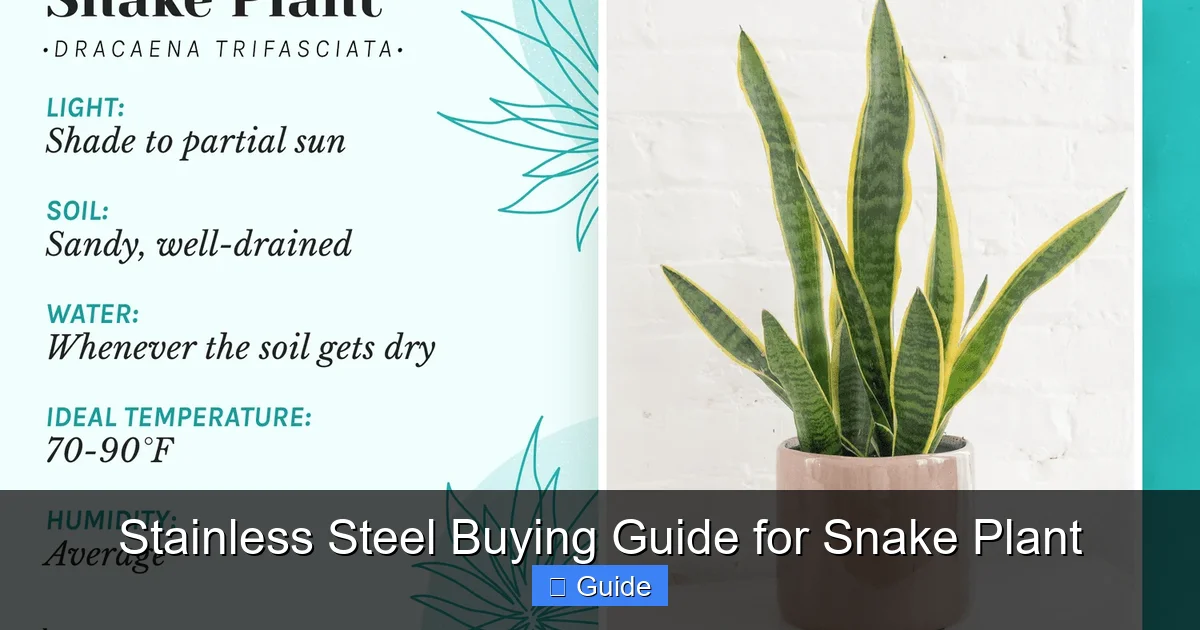
Visual guide about Stainless Steel Buying Guide for Snake Plant
Image source: thespruce.com
Grade 316: Worth the Upgrade for Harsh Conditions
Grade 316 adds 2 to 3 percent molybdenum to the 304 formula. This dramatically increases resistance to chlorides. If you live near the ocean, use softened water high in sodium, or fertilize heavily with synthetic salts, 316 is worth the extra cost. It is also the choice for commercial installations where planters face constant moisture and public handling. For most indoor home growers, 304 performs beautifully. But if your snake plant lives on a covered patio in a coastal climate, spend the extra 20 to 30 percent for 316.
Avoid Grade 201 and 430 for Planters
Budget planters often use grade 201 (high manganese, lower nickel) or grade 430 (ferritic, no nickel). Both are magnetic, unlike 304 and 316. They corrode faster in damp environments. Grade 201 can develop rust spots within a year of constant soil contact. Grade 430 lacks the self-healing passive layer. A simple magnet test helps you spot these. If a strong magnet sticks firmly, the pot is likely a lower grade. Quality 304 and 316 are non-magnetic or only weakly magnetic due to cold working. Bring a neodymium magnet when shopping.
Sizing Your Stainless Steel Planter Correctly
The Two-Inch Rule
Snake plants prefer tight quarters. Their rhizomes spread horizontally just below the soil surface. A pot that is too wide encourages the plant to put energy into root expansion rather than leaf growth. It also holds a large volume of soil that stays wet too long in the center. The rule of thumb: choose a pot 1 to 2 inches wider in diameter than the current root ball. If your snake plant sits in a 6-inch nursery pot, move it to a 7 or 8-inch stainless steel planter. No bigger.
Depth Matters More Than You Think
Shallow pots look modern and stylish. But snake plants develop surprisingly deep root systems when given room. A pot less than 6 inches deep forces roots to circle and mat, reducing water uptake efficiency. Aim for a depth at least equal to the diameter, or slightly deeper. An 8-inch wide pot should be 8 to 10 inches deep. This proportion supports healthy rhizome development and provides a reservoir of moisture at the bottom that the plant can access during long dry spells without risking rot at the crown.
Planning for Pups and Division
Healthy snake plants produce offsets called pups. These emerge from the rhizome at the soil line. If you want to keep the clump together, factor in extra width for future pups. A pot 2 inches wider than the current root ball gives about two years of pup space before division becomes necessary. If you prefer to separate pups annually, stick to the 1-inch upsize. Your stainless steel buying guide for snake plant decisions should include a honest assessment of how often you actually want to repot.
Drainage Design: The Make-or-Break Feature
Pre-Drilled Holes vs. DIY Drilling
Many decorative stainless steel planters arrive without drainage holes to preserve the clean aesthetic. Do not use them as-is. Standing water at the bottom creates an anaerobic zone where harmful bacteria thrive. Root rot follows quickly. You have two options. Buy planters with factory-drilled holes. These are precisely placed, deburred, and often include a raised interior ridge that prevents soil from clogging the holes. Or buy undrilled and drill yourself. Use a cobalt or titanium-coated step bit. Drill slowly with cutting oil. Place 4 to 6 holes of 3/8 inch diameter in a ring 1 inch from the bottom edge. Deburr thoroughly to protect roots.
The Cache Pot Strategy
Some designers insist on solid-bottom stainless steel for the look. The solution is the cache pot method. Keep your snake plant in a plastic nursery pot with excellent drainage. Slip that into the decorative stainless steel outer pot. Add a layer of pebbles or a custom-cut acrylic riser at the bottom so the inner pot never sits in drainage water. This preserves the clean lines while giving you full drainage control. It also makes watering easy. Lift the inner pot, water in the sink, let it drain fully, and return it. No water stains on your floors.
Saucers and Floor Protection
Stainless steel conducts heat and cold efficiently. A pot sitting directly on hardwood or tile transfers temperature extremes to the roots. It also traps condensation underneath, damaging floors. Always use a saucer. Matching stainless steel saucers look cohesive but can scratch floors. Cork-backed saucers or clear acrylic protectors work better. For large floor pots, use furniture sliders or caster cups rated for the weight. This allows easy rotation for even light exposure without gouging your flooring.
Finish Types and Their Practical Impact
Brushed or Satin Finish: The Practical Choice
Brushed stainless steel has a uniform, directional grain created by abrasive belts. It diffuses light, hiding fingerprints, water spots, and minor scratches from tools or moving the pot. For a working planter that gets watered, fertilized, and occasionally bumped, brushed is the most forgiving finish. It maintains a clean look with minimal maintenance. Most commercial-grade planters use a #4 brushed finish. This is your best bet for a stainless steel buying guide for snake plant scenarios where function leads.
Mirror Polished: High Drama, High Maintenance
Mirror finish (also called #8 finish) reflects like a chrome bumper. It makes a stunning design statement, especially with architectural snake plant varieties. But it shows every water droplet, dust mote, and micro-scratch. Maintaining that mirror shine requires dedicated metal polish and soft cloths weekly. Avoid abrasive cleaners. They destroy the passive layer. If you choose mirror finish, accept the ritual. It becomes part of your plant care routine.
Powder Coated and PVD Colored Options
Black, white, bronze, and gold stainless steel planters use either powder coating or Physical Vapor Deposition (PVD). Powder coating is thicker and more impact resistant but can chip if the pot is dropped. PVD is a molecular bond, extremely hard and colorfast, but thinner. Both eliminate the need for polishing. However, if the coating is breached, the underlying steel can corrode unseen. Inspect colored pots carefully on arrival. Any chip, no matter how small, should be a return reason.
Double-Wall and Insulated Construction
Why Root Zone Temperature Matters
Snake plants tolerate a wide temperature range, but their roots prefer stability. A single-wall metal pot in direct sun can heat the soil to 100°F or higher, cooking tender root tips. In winter near a cold window, the same pot can chill the root zone below 50°F, slowing metabolism and inviting rot. Double-wall construction creates an air gap that buffers these swings. The outer wall takes the environmental hit. The inner wall stays closer to room temperature. This is especially valuable for snake plants placed near HVAC vents, radiators, or south-facing glass.
Weight and Cost Trade-offs
Double-wall pots use roughly twice the material. They cost 50 to 100 percent more than single-wall equivalents. They are also heavier. A 12-inch double-wall planter can weigh 15 pounds empty. With wet soil and a mature plant, you are looking at 40+ pounds. Ensure your flooring and your back can handle it. For tabletop sizes under 8 inches, the weight penalty is negligible and the insulation benefit is real. For large floor pots, consider whether you will ever need to move it. If yes, single-wall with a cache pot inner liner may be smarter.
Condensation Management
One hidden benefit of double-wall design: the outer wall stays closer to room temperature, so it rarely sweats. Single-wall metal pots in humid rooms develop condensation that drips onto furniture or floors. The air gap acts as a thermal break. If you have experienced mysterious water rings under your planters, double-wall construction solves it elegantly.
Maintenance and Longevity Tips
Cleaning Without Damaging the Passive Layer
The chromium oxide layer that makes stainless steel “stainless” is only nanometers thick. Harsh chemicals strip it. Bleach, chlorine cleaners, muriatic acid, and even undiluted vinegar can damage it. Clean your planters with warm water, a drop of mild dish soap, and a soft microfiber cloth. Rinse thoroughly. Dry with a second cloth to prevent water spots. For mineral deposits from hard water, use a 50/50 mix of distilled water and white vinegar applied briefly, then rinse immediately. Never use steel wool, wire brushes, or abrasive pads. They embed iron particles that rust independently.
Seasonal Deep Cleaning
Once a year, ideally during repotting, give the empty pot a thorough cleaning. Remove all soil. Scrub inside and out with a soft nylon brush and mild soap. Rinse until water runs clear. Inspect drainage holes for blockage. Check the bottom rim for any signs of pitting. If you see tiny rust spots, treat them immediately with a stainless steel passivation gel (available at welding supply stores). This restores the chromium oxide layer. Early intervention prevents structural damage.
Preventing Fertilizer Salt Buildup
Synthetic fertilizers leave salt residues that concentrate at the soil line and drainage holes. Over time, these create a localized corrosive environment even grade 316 struggles with. Flush the soil monthly by watering until water runs freely from the bottom for 60 seconds. This carries salts out. If you see white crust on the interior rim, wipe it away during your regular cleaning. Consider switching to organic fertilizers like worm castings or fish emulsion. They leave minimal salt residue and feed soil biology that benefits your snake plant.
Matching Planter Style to Your Space
Modern Minimalist: Clean Lines, Hidden Function
For modern interiors, choose a simple cylinder or square tube with a brushed finish. Look for invisible drainage. Some high-end planters use a false bottom with hidden slots that drain into a recessed reservoir. The water evaporates slowly, adding humidity. The exterior shows zero hardware. Pair with a tall Sansevieria trifasciata ‘Zeylanica’ for architectural impact. The stainless steel echoes appliances and fixtures, tying the room together.
Industrial Loft: Raw Material Honesty
Exposed weld seams, visible rivets, and a slightly uneven brushed finish suit industrial spaces. These planters often use thicker gauge steel (14 or 16 gauge) that develops character over time. A patina of water marks and minor scratches becomes part of the story. Choose a wide, low bowl for a spreading Sansevieria ‘Moonshine’ with its broad silvery leaves. The contrast between the organic form and the honest metal feels intentional and grounded.
Small Space Solutions: Vertical and Wall-Mounted
Stainless steel’s strength allows thin walls that maximize soil volume in narrow profiles. Wall-mounted troughs 4 inches wide and 24 inches long hold a row of dwarf snake plants like ‘Hahnii’ or ‘Golden Hahnii’. They turn a blank wall into living art. Ensure the mounting system includes a waterproof backing board. Stainless steel brackets into studs. The planter hangs on cleats for easy removal. This is where a stainless steel buying guide for snake plant meets interior design innovation.
Budget Planning and Value Assessment
Price Tiers and What You Get
Entry level ($30-60): Thin gauge (20-22), grade 201 or 430, no drainage, single wall. Lasts 2-3 years indoors. Mid-range ($80-180): 18 gauge, grade 304, pre-drilled drainage, brushed finish, single wall. Lasts 10-20 years. Premium ($200-500+): 16 gauge or heavier, grade 304 or 316, double-wall option, precision drainage, PVD color options, weighted base. Lasts a lifetime. For a plant that lives decades, the mid-range tier offers the best value. The premium tier makes sense for design-critical locations or harsh environments.
Hidden Costs to Factor In
Saucers ($15-40), caster cups ($20-50), potting mix formulated for succulents ($15/bag), and potentially a drill bit ($12) if you buy undrilled. A cache pot inner liner ($10-25) if you go that route. Quality tools for maintenance: microfiber cloths, passivation gel, soft nylon brush. Budget $50-100 above the pot price for a complete setup. Skipping the saucer or using garden soil instead of succulent mix costs far more in plant replacement.
Where to Buy for Quality Assurance
Specialty planter retailers (online and brick-and-mortar) provide material certifications. They specify grade, gauge, finish, and drainage details. Big box stores often carry private-label planters with vague descriptions. “Stainless steel” on the tag may mean 201 grade. Amazon listings vary wildly. Read the Q&A section. Ask the seller directly for the grade and gauge. Reputable sellers answer within hours. If they dodge, buy elsewhere. Local metal fabrication shops can build custom planters to your specs using certified 304 or 316 sheet. This costs more but gives you exact dimensions and features.
Common Mistakes to Avoid
Mistake 1: Choosing Style Over Drainage
The most beautiful planter kills your plant if water pools at the bottom. Never assume you can “just be careful with watering.” Life happens. You get busy. Someone else waters. The soil compacts. Drainage holes are insurance. Buy them or make them. No exceptions.
Mistake 2: Oversizing the Pot
“Room to grow” sounds logical. For snake plants, it is a death sentence. Excess soil holds water the roots cannot reach. The center stays soggy. Roots rot. The plant collapses. Stick to the 1-2 inch upsize rule. It feels tight. It is correct.
Mistake 3: Using Garden Soil or Standard Potting Mix
Snake plants need sharp drainage. Standard peat-based mixes hold too much water. Use a cactus/succulent mix amended with 30-50 percent pumice, perlite, or coarse sand. Or make your own: 2 parts succulent mix, 1 part pumice, 1 part coco coir. The stainless steel pot does not wick moisture. The mix must do all the drainage work.
Mistake 4: Ignoring the Magnet Test
Bring a strong neodymium magnet. Test every pot before buying. Strong attraction means high iron, low nickel. That pot will rust. Weak or no attraction means 304 or 316. It takes five seconds. It saves years of disappointment.
Mistake 5: Placing Directly on Sensitive Floors
Stainless steel + condensation + time = floor damage. Hardwood stains. Tile grout darkens. Carpet molds. Always use a protective barrier. Cork, acrylic, or purpose-made planter feet. This is not optional. It is part of the system.
Conclusion
You now have a complete stainless steel buying guide for snake plant success. The key takeaways are simple but powerful. Choose grade 304 or 316. Insist on drainage. Size conservatively. Pick a brushed finish for easy living. Consider double-wall for temperature stability. Maintain gently. Protect your floors. These choices compound. A well-chosen stainless steel planter becomes a permanent, beautiful home for a plant that purifies your air, tolerates your neglect, and outlives your furniture trends.
Your snake plant asks for little. Bright indirect light. Water when bone dry. A pot that breathes and drains. Stainless steel delivers all three with industrial elegance. Whether you buy a $90 brushed cylinder or commission a $400 custom double-wall trough, the principles remain the same. Apply them. Your plants will thank you with decades of architectural green presence. Happy planting.
Frequently Asked Questions
Will stainless steel rust if used as a planter?
Quality grade 304 or 316 stainless steel will not rust under normal planter conditions. Lower grades like 201 or 430 can develop rust spots within a year, especially near drainage holes where moisture and fertilizer salts concentrate. Always verify the grade before buying.
Can I use a stainless steel cache pot without drainage holes?
Yes, this is a popular and effective method. Keep your snake plant in its plastic nursery pot with drainage holes. Place that inside the solid stainless steel cache pot. Add a layer of pebbles or a riser at the bottom so the inner pot never sits in water. This gives you the clean look with full drainage control.
What is the best finish for a snake plant planter?
Brushed or satin finish (#4 finish) is the most practical. It hides fingerprints, water spots, and minor scratches from daily use. Mirror polished finishes show every mark and require weekly polishing. PVD colored finishes are durable but irreparable if chipped.
How thick should the stainless steel be for a durable planter?
Look for 18 gauge (0.048 inches) or thicker for single-wall planters. 16 gauge (0.060 inches) is better for large floor pots. Double-wall planters use two thinner layers with an air gap. Avoid 20 gauge or thinner as they dent easily and transmit temperature extremes to roots.
Do snake plants need special soil in stainless steel pots?
Yes. Because stainless steel is non-porous, it does not wick moisture like terracotta. Use a fast-draining cactus/succulent mix amended with 30-50 percent pumice, perlite, or coarse sand. Standard potting soil holds too much water and causes root rot in non-porous containers.
Can I leave my stainless steel planter outdoors year-round?
Grade 316 stainless steel handles outdoor exposure well in most climates. Grade 304 works in mild climates but may show surface tea staining in coastal or high-pollution areas. Ensure drainage holes are clear. Elevate the pot on feet to prevent freeze-thaw damage to the bottom. Move tender snake plant varieties indoors below 50°F.