Malabar Catmint Plant
The Malabar Catmint Plant is a fragrant, easy-to-grow perennial herb that thrives in warm climates and attracts pollinators while delighting cats. With its silvery foliage and lavender blooms, this low-maintenance plant adds beauty and function to any garden space.
Key Takeaways
- Botanical Identity: The Malabar Catmint Plant (Nepeta cataria var. citriodora) is a lemon-scented variety of catnip native to the Malabar Coast of India.
- Growing Conditions: Thrives in full sun to partial shade with well-draining soil and moderate water needs once established.
- Cat Attraction: Contains nepetalactone that triggers euphoric responses in 70-80% of cats, making it a favorite for pet owners.
- Medicinal Uses: Traditionally used for digestive issues, anxiety relief, and as a mild sedative in herbal medicine.
- Pollinator Magnet: Attracts bees, butterflies, and beneficial insects with its nectar-rich lavender flowers.
- Low Maintenance: Drought-tolerant, pest-resistant, and deer-resistant once established in the garden.
- Versatile Applications: Use fresh or dried for cat toys, herbal teas, culinary garnish, and companion planting.
Quick Answers to Common Questions
Is Malabar Catmint Plant the same as regular catnip?
No, Malabar Catmint (Nepeta cataria var. citriodora) is a lemon-scented variety native to India’s Malabar Coast, while regular catnip (Nepeta cataria) has a more minty aroma and originates from Europe and Asia.
How much sun does Malabar Catmint Plant need?
Malabar Catmint Plant thrives in full sun (6+ hours daily) but tolerates partial shade. Full sun produces the strongest fragrance, most flowers, and highest essential oil content for cat attraction.
Can I grow Malabar Catmint Plant indoors?
Yes, grow it in a sunny south-facing window with at least 4-6 hours of direct light. Use well-draining soil, water when the top inch feels dry, and provide good air circulation to prevent fungal issues.
Is Malabar Catmint Plant safe for all cats?
Yes, it’s non-toxic and non-addictive. About 70-80% of cats respond to its nepetalactone. Kittens under 3-6 months and some senior cats may not react. Offer in moderation to prevent mild digestive upset.
When should I harvest Malabar Catmint Plant for maximum potency?
Harvest just as flower buds form but before they open, typically late morning on a dry, sunny day. This timing captures peak essential oil concentration for both cat use and herbal applications.
📑 Table of Contents
- Introduction to the Malabar Catmint Plant
- Understanding the Malabar Catmint Plant
- Growing the Malabar Catmint Plant Successfully
- Maintenance and Care Throughout the Seasons
- The Cat Connection: Why Felines Love This Plant
- Harvesting and Using Your Malabar Catmint Plant
- Designing with Malabar Catmint in the Landscape
- Troubleshooting Common Issues
- Conclusion
Introduction to the Malabar Catmint Plant
Have you ever wondered what makes cats go absolutely wild with joy? The answer might be growing in your garden right now. The Malabar Catmint Plant is one of nature’s most fascinating herbs, combining ornamental beauty with practical benefits that both humans and felines appreciate. This remarkable plant has been cultivated for centuries along the southwestern coast of India, where the warm, humid climate of the Malabar region provides ideal growing conditions.
Unlike its more common cousin, regular catnip (Nepeta cataria), the Malabar variety offers a distinctive lemony fragrance that sets it apart. Gardeners love it for its resilience, pollinator appeal, and long blooming season. Cat owners adore it for the sheer entertainment value it provides. Herbalists value it for its gentle medicinal properties. Whatever your reason for growing it, this plant delivers on multiple fronts with minimal fuss.
Understanding the Malabar Catmint Plant
Botanical Classification and Origins
The Malabar Catmint Plant belongs to the Lamiaceae family, which includes other aromatic herbs like mint, basil, and lavender. Its scientific name is Nepeta cataria var. citriodora, though some botanists classify it as Nepeta hindostana or Nepeta cataria subsp. citriodora. The “citriodora” designation refers to its citrus-like aroma, which becomes most pronounced when the leaves are crushed.
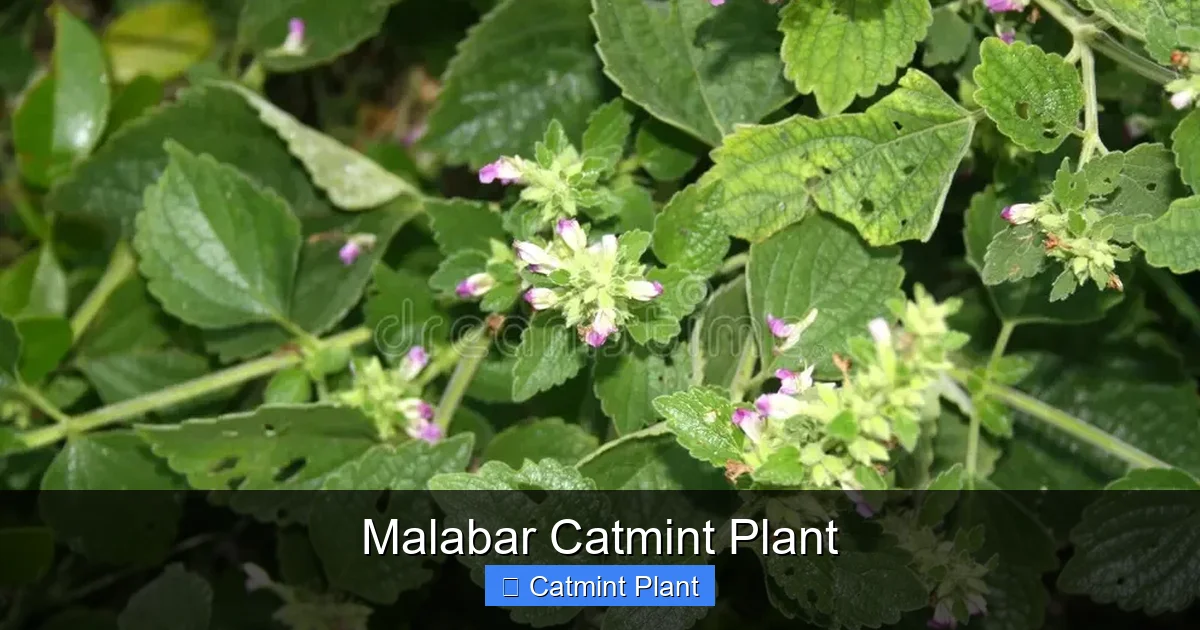
Visual guide about Malabar Catmint Plant
Image source: thumbs.dreamstime.com
Native to the Malabar Coast — a historic region spanning the southwestern shoreline of India from Goa to Cape Comorin — this plant has adapted to tropical and subtropical climates. The region’s monsoon seasons, high humidity, and warm temperatures have shaped a remarkably tough perennial that handles both wet and dry periods with grace. Portuguese traders and later British colonists documented its use in local gardens and traditional medicine, helping spread its cultivation to other parts of the world.
Physical Characteristics
At first glance, the Malabar Catmint Plant resembles other members of the mint family. It grows as a herbaceous perennial reaching 2 to 3 feet in height with a similar spread. The stems are square in cross-section — a hallmark of the Lamiaceae family — and covered in fine, soft hairs that give the plant a slightly fuzzy appearance.
The leaves are heart-shaped to oval with serrated edges, measuring 1 to 3 inches long. They display a beautiful gray-green color on top with a paler, almost silvery underside. This coloration comes from dense trichomes (tiny hairs) that help the plant conserve moisture and reflect intense sunlight. When brushed against or crushed, the leaves release their signature lemon-mint fragrance, stronger and more complex than standard catnip.
From late spring through early fall, the plant produces whorls of small, tubular flowers in shades of pale lavender to violet-blue. Each flower measures about ¼ inch long and features the characteristic two-lipped structure of mint family blooms. The lower lip serves as a landing platform for pollinators, while the upper lip protects the reproductive parts. These flowers appear in dense spikes at the stem tips, creating a lovely hazy effect when the plant is in full bloom.
Growing the Malabar Catmint Plant Successfully
Ideal Climate and Hardiness Zones
The Malabar Catmint Plant thrives in USDA hardiness zones 8 through 11 as a perennial. In zones 5 through 7, it often dies back in winter but returns reliably from the root system in spring. Gardeners in colder zones (3-4) can grow it as an annual or in containers that move indoors during winter. The plant’s tropical origins mean it handles heat and humidity exceptionally well, unlike some European catmint varieties that struggle in southern gardens.
If you live in a region with harsh winters, consider mulching heavily around the base in late fall. A 3 to 4-inch layer of straw, shredded leaves, or pine needles protects the crown and root system. In spring, pull the mulch back gradually as new growth emerges. This simple step can mean the difference between a thriving perennial and having to replant each year.
Sunlight Requirements
Full sun produces the most compact growth, strongest fragrance, and heaviest flowering. Aim for at least 6 hours of direct sunlight daily. In the hottest climates (zones 10-11), some afternoon shade prevents leaf scorch and reduces water stress. The plant tolerates partial shade (4-6 hours of sun) but becomes leggier, flowers less profusely, and may have reduced essential oil content — meaning less potency for cats and herbal use.
Morning sun with afternoon shade is an ideal compromise in many gardens. This mimics the plant’s natural habitat where it often grows at forest edges or in clearings with dappled light. If you’re growing primarily for cat enjoyment, prioritize maximum sun exposure to boost nepetalactone production.
Soil Preferences and Preparation
The Malabar Catmint Plant isn’t fussy about soil type but demands excellent drainage. It grows in sandy, loamy, or even rocky soils, but heavy clay leads to root rot — especially during wet winters. The ideal pH range falls between 6.0 and 7.5, slightly acidic to neutral. Before planting, work 2 to 3 inches of compost into the top 8 to 10 inches of soil. This improves drainage in clay soils and moisture retention in sandy soils while providing slow-release nutrients.
If your soil is poorly drained, consider raised beds or mounding the planting area 6 to 8 inches above grade. Container growing works beautifully too — use a quality potting mix amended with perlite or coarse sand (1 part amendment to 3 parts potting mix). Ensure containers have adequate drainage holes and never let them sit in standing water.
Planting Techniques and Timing
Spring planting after the last frost date gives the Malabar Catmint Plant the longest establishment period before winter. In zones 9-11, fall planting works well too, allowing roots to establish during cool, moist months. Space plants 18 to 24 inches apart to accommodate their mature spread and promote air circulation, which reduces fungal issues.
Dig a hole twice as wide as the root ball but no deeper. Gently loosen any circling roots, place the plant at the same depth it grew in its container, and backfill with amended soil. Water thoroughly to settle the soil and eliminate air pockets. Apply a 2-inch layer of organic mulch (bark chips, straw, or shredded leaves) keeping it a few inches away from the stem to prevent rot.
Watering Strategies
Newly planted Malabar Catmint needs consistent moisture for the first 4 to 6 weeks while roots establish. Water deeply 2 to 3 times per week, adjusting for rainfall. Once established, the plant becomes remarkably drought-tolerant thanks to its deep taproot and moisture-conserving leaf hairs. In most climates, weekly deep watering during dry spells suffices. In extreme heat, twice-weekly watering may be needed.
The key is deep, infrequent watering rather than frequent shallow sprinkling. This encourages roots to grow downward, accessing deeper soil moisture. Water at the base of the plant, avoiding wetting the foliage, which can promote powdery mildew in humid conditions. A soaker hose or drip irrigation system works perfectly.
Fertilization Needs
Less is more with the Malabar Catmint Plant. Over-fertilization, especially with high-nitrogen products, produces lush foliage at the expense of flowers and essential oil concentration. A single application of balanced, slow-release organic fertilizer (such as 5-5-5) in early spring provides all the nutrients needed for the season. Alternatively, top-dress with 1 to 2 inches of compost around the base each spring.
If growing in containers, nutrients leach out more quickly. Feed monthly during the growing season with a diluted liquid fertilizer at half strength, or use slow-release pellets formulated for herbs. Stop fertilizing by late summer to allow the plant to harden off before winter.
Maintenance and Care Throughout the Seasons
Pruning for Shape and Vigor
Regular pruning keeps the Malabar Catmint Plant compact, encourages bushier growth, and extends the blooming period. In early spring, cut back any dead or winter-damaged stems to about 4 to 6 inches above ground. This stimulates fresh growth from the base. After the first major flush of flowers fades (usually early summer), shear the entire plant back by one-third to one-half. This “Chelsea chop” technique promotes a second heavy bloom in late summer to fall.
Throughout the growing season, pinch back stem tips occasionally to encourage branching. Remove spent flower spikes (deadheading) to prevent self-seeding if you don’t want volunteers popping up everywhere. The plant self-sows readily in favorable conditions. In late fall, after frost kills the top growth in colder zones, you can cut stems to the ground or leave them for winter interest and beneficial insect habitat.
Division and Propagation
Every 3 to 4 years, the center of mature clumps may become woody and less productive. Spring division rejuvenates the plant and provides free new plants. Dig up the entire clump, shake off excess soil, and use a sharp knife or spade to divide into sections, each with healthy roots and several shoots. Replant divisions immediately at the same depth, water well, and mulch.
Stem cuttings root easily in late spring to early summer. Take 4 to 6-inch cuttings from non-flowering stems, remove lower leaves, dip the cut end in rooting hormone (optional but helpful), and insert into moist potting mix. Cover with a clear plastic bag to maintain humidity, place in bright indirect light, and roots should form in 2 to 3 weeks. Seeds can be started indoors 6 to 8 weeks before the last frost or direct-sown after frost danger passes. Light aids germination, so press seeds into the soil surface without covering.
Pest and Disease Management
One of the Malabar Catmint Plant’s greatest strengths is its natural resistance to most pests and diseases. The aromatic oils that attract cats repel many insects. Deer and rabbits typically avoid it. However, no plant is completely immune. Watch for these occasional issues:
- Spider mites: Appear during hot, dry weather. Look for fine webbing and stippled leaves. Blast with water or use insecticidal soap.
- Whiteflies: Small white insects on leaf undersides. Yellow sticky traps and neem oil help control.
- Powdery mildew: White powdery coating on leaves in humid, crowded conditions. Improve air circulation, avoid overhead watering, and apply sulfur-based fungicide if needed.
- Root rot: Caused by poor drainage. Prevention through proper soil preparation is the only cure.
- Leaf spot: Fungal spots in wet conditions. Remove affected leaves and improve air flow.
Companion planting with other aromatic herbs (rosemary, thyme, lavender) creates a confusing scent barrier for pests. The Malabar Catmint Plant also attracts beneficial predatory insects like ladybugs, lacewings, and parasitic wasps that keep pest populations in check naturally.
The Cat Connection: Why Felines Love This Plant
The Science Behind the Reaction
The Malabar Catmint Plant contains nepetalactone, a volatile oil that mimics feline pheromones. When cats smell it, the compound binds to receptors in their nasal tissue, stimulating sensory neurons that project to the brain’s olfactory bulb, amygdala, and hypothalamus — areas involved in emotion, behavior, and hormonal responses. The result? A temporary euphoric state lasting 5 to 15 minutes, followed by a refractory period of about an hour during which the cat won’t respond again.
Approximately 70 to 80% of cats inherit sensitivity to nepetalactone. Kittens under 3 to 6 months old and senior cats often show reduced or no response. The reaction is completely harmless and non-addictive. Cats may roll, rub, purr, drool, vocalize, or become playfully aggressive. Some enter a blissed-out trance. All responses are normal and temporary.
Growing for Your Cats
If you’re growing the Malabar Catmint Plant specifically for feline enjoyment, consider these strategies. Plant several specimens in different locations — some protected, some accessible. A dedicated “cat garden” corner with multiple cat-friendly plants (catmint, catnip, cat thyme, valerian) gives cats their own space and may spare your prized perennials.
Protect young plants with wire cages or cloches until established. Cats can destroy seedlings by rolling on them repeatedly. Once plants reach 12 to 18 inches tall, they withstand feline attention better. Harvest stems for indoor use by cutting in mid-morning after dew dries but before hot sun volatilizes oils. Dry upside down in small bundles in a dark, well-ventilated area. Store dried leaves in airtight containers away from light.
Creative Cat Enrichment Ideas
Beyond letting cats visit the living plant, you can use harvested Malabar Catmint in numerous ways. Stuff dried leaves into fabric toys or socks tied closed. Sprinkle on scratching posts to encourage use. Make a “catnip tea” by steeping fresh leaves in hot water, cooling, and spraying on toys or bedding. Freeze fresh leaves in ice cubes for summer entertainment. Create a digging box with dried leaves mixed into soil or sand.
Rotate toys and refresh with new catmint every few weeks to maintain novelty. Cats habituation. Some cats prefer fresh over dried, others the reverse. Experiment to discover your cat’s preference. Remember that the Malabar variety’s lemony scent adds an extra dimension some cats find especially appealing.
Harvesting and Using Your Malabar Catmint Plant
When and How to Harvest
For maximum essential oil content, harvest the Malabar Catmint Plant just as flower buds form but before they fully open — typically late morning on a dry, sunny day. Cut stems 4 to 6 inches above the ground, leaving enough foliage for the plant to recover. You can harvest 2 to 3 times per season from established plants. For culinary use, pick individual young leaves as needed throughout the growing season.
To dry, gather stems into small bundles (no more than 1 inch diameter at the base) and secure with rubber bands that contract as stems shrink. Hang upside down in a dark, dry, well-ventilated space at 70-80°F. A spare room, attic, or closet works well. Drying takes 1 to 2 weeks. Leaves should crumble easily when fully dry. Strip leaves from stems and store in glass jars with tight-fitting lids, labeled and dated. Keep in a cool, dark place for up to a year.
Culinary Applications
The lemon-mint flavor of Malabar Catmint adds a unique twist to both sweet and savory dishes. Use sparingly — the flavor is more potent than regular mint. Finely chop fresh young leaves into fruit salads, especially watermelon, cantaloupe, and berries. Add to iced tea, lemonade, or cocktails (muddle gently with simple syrup). Sprinkle over grilled peaches or pineapple. Mix into yogurt with honey for a refreshing breakfast.
In savory applications, pair with lamb, chicken, or fish. Stir into pea soup or gazpacho. Blend into compound butter for grilled corn or vegetables. Add to pea or mint pesto for pasta. The flowers make beautiful edible garnishes for desserts, salads, and drinks. Remember that heat diminates the delicate oils, so add fresh leaves at the very end of cooking or use raw.
Herbal and Medicinal Uses
Traditional herbal medicine values the Malabar Catmint Plant for its calming, digestive, and diaphoretic (sweat-inducing) properties. A tea made from 1 to 2 teaspoons of dried herb per cup of boiling water, steeped 10 minutes, serves as a gentle relaxant before bed. It may ease tension headaches, mild anxiety, and nervous stomach. Some herbalists use it for menstrual cramps and to reduce fever by promoting sweating.
As with any herb, consult a healthcare provider before medicinal use, especially if pregnant, nursing, taking medications, or managing a health condition. The plant may interact with sedatives, lithium, and certain other drugs. Avoid large amounts during pregnancy as it may stimulate uterine contractions. For cats, the plant is safe but should be offered in moderation — excessive consumption may cause mild digestive upset.
Companion Planting Benefits
The Malabar Catmint Plant earns its keep in vegetable and flower gardens through companion planting. Its strong aroma confuses pests seeking host plants by scent. Plant near roses to deter aphids. Surround brassicas (cabbage, broccoli, kale) to repel cabbage moths and flea beetles. Interplant with tomatoes and peppers to discourage whiteflies and spider mites. Border squash and cucumber beds to reduce cucumber beetle damage.
The flowers attract hoverflies, parasitic wasps, and tachinid flies — natural predators of garden pests. Bees and butterflies visit for nectar, improving pollination of nearby fruiting crops. The plant’s deep roots bring up nutrients from subsoil, benefiting shallow-rooted neighbors when leaves decompose. As a bonus, the silvery foliage provides beautiful contrast against green vegetables and bright flowers.
Designing with Malabar Catmint in the Landscape
Garden Styles and Placement
The Malabar Catmint Plant fits seamlessly into numerous garden styles. In cottage gardens, its informal habit and long bloom season blend perfectly with roses, delphiniums, and foxgloves. Mediterranean gardens benefit from its drought tolerance and silver foliage alongside lavender, rosemary, and sage. Pollinator gardens gain a reliable nectar source that blooms for months. Herb gardens appreciate its culinary and medicinal value.
Use it as a soft edging along paths where brushing against it releases fragrance. Plant in drifts of 3, 5, or 7 for visual impact in perennial borders. The mounded habit works well spilling over retaining walls or container edges. In rock gardens, its tolerance for lean soil and heat makes it a star. For sensory gardens, place near seating areas where visitors can touch and smell.
Color Combinations and Plant Partners
The lavender-blue flowers and silvery foliage of Malabar Catmint create stunning combinations. Pair with yellow-flowering plants like coreopsis, black-eyed Susan, or yarrow for classic complementary contrast. Combine with pink echinacea, phlox, or roses for a softer palette. White-flowering companions (Shasta daisy, white phlox, candytuft) create a moon garden effect. Deep purple salvias, penstemons, or alliums extend the blue-purple theme.
For foliage contrast, plant alongside dark-leaved heucheras, purple basil, or black mondo grass. Chartreuse foliage (golden oregano, ‘Aureola’ hakone grass) makes the silver pop. Ornamental grasses like blue fescue, Mexican feather grass, or fountain grass add movement and texture. The key is choosing partners with similar sun, soil, and water needs.
Container Growing Success
Containers offer flexibility for gardeners with limited space, poor soil, or harsh winters. Choose a pot at least 12 inches wide and deep with good drainage. Use a gritty potting mix (2 parts potting soil, 1 part perlite or coarse sand, 1 part compost). Place in full sun to part shade. Water when the top inch of soil feels dry — containers dry faster than ground soil.
Fertilize monthly with half-strength liquid fertilizer during active growth. In zones 7 and below, move containers to an unheated garage or basement (35-45°F) after frost kills top growth. Water sparingly — just enough to prevent soil from completely drying out. In spring, repot or refresh top few inches of soil, resume watering and fertilizing, and move back outside after frost danger passes.
Troubleshooting Common Issues
Leggy, Floppy Growth
If your Malabar Catmint Plant becomes tall, sparse, and flops open at the center, it’s usually due to insufficient sunlight, over-fertilization (especially nitrogen), or lack of pruning. Move to a sunnier location if possible. Stop fertilizing. Cut the plant back hard in early summer (by half) to force bushy regrowth. Pinch stem tips regularly. Divide crowded clumps that compete for light.
Yellowing Leaves
Yellow leaves signal several possible problems. Overwatering or poor drainage causes root rot — check soil moisture and improve drainage. Nutrient deficiency (usually nitrogen or iron) responds to compost top-dressing or balanced fertilizer. Natural aging of lower leaves is normal — just remove them. Spider mite damage causes yellow stippling — treat with water blasts or insecticidal soap.
Poor Flowering
Few flowers typically mean too much shade, too much nitrogen fertilizer, improper pruning timing, or the plant needs division. Ensure 6+ hours of sun. Stop high-nitrogen fertilizers. Prune only after first bloom flush, not in early spring when flower buds form. Divide old, woody clumps in spring.
Winter Dieback in Marginal Zones
In zones 5-7, the Malabar Catmint Plant may die to the ground but should return from roots. Improve survival by: planting in well-drained soil (wet winter soil kills more than cold), applying 4-inch winter mulch after ground freezes, leaving dead stems standing until spring for crown protection, and avoiding fall fertilization that encourages tender late growth.
Conclusion
The Malabar Catmint Plant truly earns its place in gardens across diverse climates and styles. This remarkable herb bridges the gap between ornamental and practical, offering months of pollinator-friendly blooms, aromatic foliage that delights both humans and cats, culinary versatility, and gentle medicinal properties — all wrapped in a low-maintenance, drought-tolerant package. Whether you’re a cat lover seeking the ultimate feline enrichment, a gardener wanting reliable color and fragrance, an herbalist exploring traditional remedies, or simply someone who appreciates beautiful, useful plants, this species delivers.
Success with the Malabar Catmint Plant comes down to a few fundamentals: give it sun, provide excellent drainage, water deeply but infrequently, prune strategically, and divide occasionally. In return, you’ll enjoy a plant that asks little but gives abundantly. Its lemon-scented leaves will perfume your garden paths, its lavender blooms will hum with bee activity, and if you have cats, you’ll witness some of the most entertaining moments in pet ownership. Few plants offer so much joy for so little effort.
Consider adding this Malabar Coast native to your garden this season. Start with one plant, observe its character through the seasons, and you’ll likely find yourself propagating more to share with friends — both the two-legged and four-legged varieties. The Malabar Catmint Plant isn’t just another herb; it’s a garden companion that enriches the ecosystem, the kitchen, and the home in equal measure.
Frequently Asked Questions
What is the difference between Malabar Catmint and other catmint varieties?
Malabar Catmint (Nepeta cataria var. citriodora) features a distinct lemon-citrus fragrance alongside the classic minty catnip aroma. It’s more heat and humidity tolerant than European catmint varieties (like Nepeta x faassenii) and grows as a larger, more robust perennial in warm climates.
How do I prevent my Malabar Catmint Plant from spreading aggressively?
Deadhead spent flowers before seeds mature to prevent self-seeding. Divide clumps every 3-4 years to control size. Install root barriers if planting near delicate areas. Grow in containers for complete containment. Regular pruning also limits spread.
Can Malabar Catmint Plant survive frost and freezing temperatures?
In zones 8-11, it remains evergreen or semi-evergreen. In zones 5-7, top growth dies back but roots survive with winter mulch. In zones 3-4, grow as an annual or overwinter containers indoors at 35-45°F with minimal watering.
What pests or diseases commonly affect Malabar Catmint Plant?
It’s naturally pest-resistant due to aromatic oils. Occasional issues include spider mites in dry heat, whiteflies in humid conditions, powdery mildew with poor air circulation, and root rot in wet soil. Deer and rabbits avoid it.
How do I use Malabar Catmint Plant for herbal tea?
Steep 1-2 teaspoons dried leaves (or 1 tablespoon fresh) in 1 cup boiling water for 10 minutes. Strain and enjoy plain or with honey. This gentle tea promotes relaxation, aids digestion, and may relieve tension headaches. Avoid during pregnancy.
Will Malabar Catmint Plant attract bees and butterflies to my garden?
Absolutely! The lavender-blue flowers produce abundant nectar from late spring through fall, attracting honeybees, native bees, butterflies, hoverflies, and beneficial predatory wasps. It’s an excellent pollinator plant for wildlife gardens.