Best Grow Tent Oscillating Fan
Choosing the right oscillating fan keeps your grow tent air fresh and prevents hot spots. Top models combine quiet motors, adjustable speed, and sturdy clips for easy mounting.
Airflow is the lifeblood of a grow tent. Without moving air plants can suffer. Heat builds up quickly. Humidity can become uneven. Stems stay weak. A good fan solves these problems. The best grow tent oscillating fan moves air in a wide arc. It reaches every corner. It runs quietly. It uses little power. You can mount it on a pole or a wall. It has variable speed settings. You can adjust the breeze for each stage of growth. This guide will help you pick the right model. We will cover key features. We will review top picks. We will explain placement. We will share maintenance tips. Read on to learn more.
Choosing a fan can feel overwhelming. There are many sizes. There are many brands. There are many price points. This article breaks down the decision into simple steps. You will learn what to look for. You will see three top models. You will get placement advice. You will learn how to keep the fan clean. By the end you will feel confident.
Let us start with why airflow matters.
Key Takeaways
- Airflow prevents heat buildup: Moving air spreads heat evenly across the canopy.
- Oscillation covers more area: A sweeping motion reaches corners that a fixed fan misses.
- Quiet operation matters: Low noise lets you run the fan day and night without disturbance.
- Adjustable speed gives control: You can match breeze strength to each growth stage.
- Secure mounting avoids vibration: Strong clips or pole mounts keep the fan stable.
- Regular cleaning extends life: Dust on blades reduces efficiency and adds noise.
Quick Answers to Common Questions
What size fan do I need for a 4×4 tent?
An 8 inch fan with around 250 CFM is ideal for a 4×4 foot tent.
How often should I clean the fan blades?
Clean the blades at least once a month to keep airflow strong and noise low.
Can I use a regular household fan in a grow tent?
Household fans lack the oscillation range and mounting options needed for a tent.
What is the ideal oscillation range for a grow tent fan?
A 180 degree sweep covers the whole canopy and eliminates dead zones.
How do I reduce fan noise in my grow room?
Choose a brushless motor model, mount it securely, and keep blades clean.
📑 Table of Contents
Why Airflow Matters in a Grow Tent
Prevents Heat Buildup
Lights produce heat. That heat rises and gathers at the top of the tent. Without a fan the canopy can become too hot. Hot spots stress leaves. They can cause curling or bleaching. A steady breeze pushes hot air away. It mixes the warm layer with cooler air below. The result is a more even temperature. Plants stay in their comfort zone. A best grow tent oscillating fan prevents heat buildup by constantly moving air across the canopy.
Reduces Humidity Pockets
Transpiration adds moisture to the air. In a still tent moisture collects near the leaves. High humidity invites mold and mildew. Oscillating motion spreads the moist air. It helps the exhaust system remove excess water vapor. Balanced humidity keeps disease away. The sweeping action of a best grow tent oscillating fan eliminates stagnant pockets.
Strengthens Plant Stems
Gentle wind mimics outdoor conditions. Plants respond by thickening their stems. Strong stems support heavy buds later. A fan that swings back and forth gives a natural rhythm. This rhythm encourages uniform growth. The best grow tent oscillating fan provides that rhythm without blasting the plants.
Improves CO2 Distribution
Plants need carbon dioxide for photosynthesis. Still air can create a layer of depleted CO2 around leaves. A moving breeze brings fresh CO2 to the leaf surface. This boosts growth rates. The best grow tent oscillating fan constantly refreshes the air envelope. Growers see faster vegetative growth when CO2 is well mixed. A gentle sweep is enough. Too strong a wind can strip CO2 away. Aim for a light rustle of leaves.
Reduces Pest Pressure
Stagnant air favors spider mites and fungus gnats. Moving air makes it harder for pests to settle. The oscillation creates a changing environment that discourages egg laying. A best grow tent oscillating fan helps keep the canopy dry. Dry leaves are less attractive to mold. Regular airflow also helps beneficial insects move. Growers report fewer infestations with consistent breeze. Combine fan use with sticky traps for best results.
Supports Even Transpiration
Even transpiration keeps leaf temperature stable. When air moves evenly each leaf loses water at a similar rate. This prevents some leaves from drying out while others stay wet. The best grow tent oscillating fan creates a uniform breeze across the canopy. Growers notice more consistent moisture levels in the substrate. Balanced transpiration also improves nutrient uptake. A steady fan rhythm mimics natural wind patterns. This leads to healthier overall plant metabolism.
Improves Light Penetration
Good airflow clears the boundary layer around leaves. This lets light reach deeper into the canopy. When the air is still a thin stagnant film blocks photons. The best grow tent oscillating fan constantly disrupts that film. Better light penetration boosts lower bud development. Growers see more even cola formation. A gentle sweep is enough to keep the layer thin. Combine with proper light spacing for best results.
What to Look for in a Grow Tent Fan
Size and CFM Rating
CFM stands for cubic feet per minute. It tells you how much air the fan moves. A small tent needs less CFM. A large tent needs more. Match the fan size to your tent dimensions. A 6‑inch fan often suits a 2 × 2 ft tent. An 8‑inch fan works for a 4 × 4 ft space. A 12‑inch fan can handle a 5 × 5 ft or larger area. When shopping for the best grow tent oscillating fan check the CFM rating first.
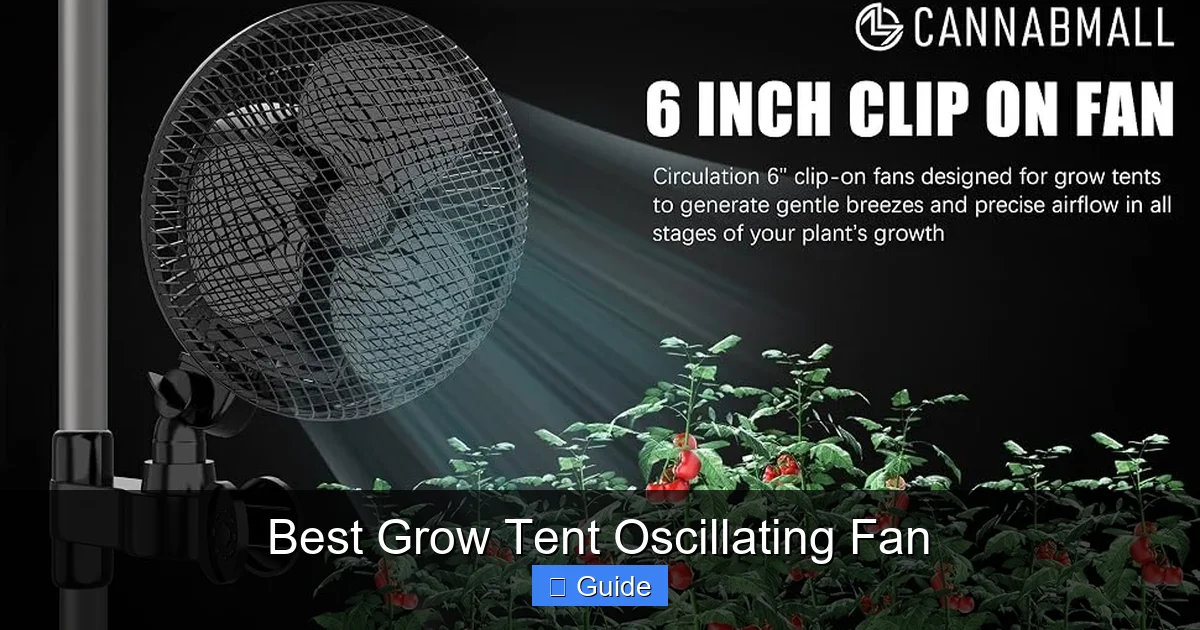
Visual guide about Best Grow Tent Oscillating Fan
Image source: m.media-amazon.com
Noise Level
Fans run continuously. Loud fans become annoying. Look for a decibel rating below 50 dB. Many modern models use brushless motors. Brushless motors are quieter and last longer. A quiet fan lets you sleep near the grow area. The best grow tent oscillating fan will often feature a brushless design for silent operation.
Oscillation Range
Some fans sweep 90 degrees. Others sweep 180 degrees. A wider sweep covers more canopy. Check the spec sheet before buying. A 180‑degree sweep is ideal for rectangular tents. The best grow tent oscillating fan typically offers a full 180 degree arc.
Mounting Options
Clip‑on fans attach to tent poles. Wall‑mount fans screw into a frame. Pole‑mount fans slide onto a vertical pole. Choose a mount that fits your tent design. Secure mounting prevents vibration. Vibration can loosen screws over time. The best grow tent oscillating fan includes versatile clips for easy installation.
Power Consumption
Energy efficient fans save money. Look for a low wattage rating. Many fans use 20‑30 watts on high speed. Running a fan 24 hours a day adds up. An efficient model keeps the electric bill low. The best grow tent oscillating fan balances airflow and power draw.
Build Quality and Materials
A fan made of metal housing lasts longer than plastic. Metal dissipates heat better. Look for reinforced blades that resist warping. A sturdy grill protects fingers and pets. The best grow tent oscillating fan often uses a metal frame and high‑grade polymer blades. Check reviews for durability reports. A well built unit survives frequent moves. Cheap fans may crack after a few months.
Warranty and Support
A longer warranty shows confidence. Many brands offer two to three years. Read the fine print for motor coverage. Good customer service can save you time. The best grow tent oscillating fan usually comes with a responsive support team. Register the product after purchase. Keep the receipt in a safe place. A solid warranty protects your investment.
Energy Star Certification
Energy Star certified fans meet strict efficiency standards. They use less electricity for the same airflow. This lowers operating costs over a full grow cycle. The best grow tent oscillating fan with an Energy Star label often qualifies for rebates. Check the product spec sheet for the logo. A certified unit also tends to have better build quality. It runs cooler and lasts longer. Choosing an efficient fan is smart for both the planet and your wallet.
Smart Controls Integration
Some fans connect to Wi‑Fi or Bluetooth. You can adjust speed from a phone app. Scheduling features let you match light cycles automatically. The best grow tent oscillating fan with smart control adds convenience. Alerts notify you of motor faults. Remote monitoring helps when you are away. Integration with environmental controllers creates a sealed loop. This tech reduces manual checks and improves stability.
Top Picks for the Best Grow Tent Oscillating Fan in 2024
Model A – Quiet Breeze 6 Inch
The Quiet Breeze 6 Inch is a compact powerhouse. It delivers 120 CFM at only 35 dB. The brushless motor runs cool. It offers three speed settings. The clip fits 1‑inch poles securely. The oscillation covers 120 degrees. Users praise its low vibration. It is a great choice for small tents. The price is around forty dollars. It comes with a one year warranty.
Model B – Turbo Flow 8 Inch
The Turbo Flow 8 Inch moves 250 CFM while staying under 45 dB. It features a 180‑degree sweep. The digital display shows speed and timer. The remote control adds convenience. The sturdy metal clip holds firm on thick poles. This model fits medium tents perfectly. The cost is about seventy dollars. It includes a two year warranty.
Model C – Eco Spin 12 Inch
The Eco Spin 12 Inch pushes 400 CFM with a 50 watt motor. It runs at 48 dB on high. The oscillation reaches 180 degrees. The fan includes a built‑in timer and memory function. The wide base allows floor placement. It is ideal for large tents or multiple tents linked together. The price is near one hundred twenty dollars. It offers a three year warranty.
Honorable Mention – Compact Clip Fan
The Compact Clip Fan is a budget option for tiny tents. It provides 80 CFM at 30 dB. The clip fits 0.5 inch poles. Oscillation covers 90 degrees. It runs on USB power. The best grow tent oscillating fan for micro grows may be this model. It costs under twenty dollars. It includes a one year limited warranty. Users like its portability.
Comparison Chart
A quick comparison chart helps you decide. List CFM, noise, oscillation, price, and warranty side by side. The best grow tent oscillating fan for your budget will stand out. Use a spreadsheet or a paper table. Update the chart when new models appear. This visual aid saves time during research. Share the chart with fellow growers for feedback. A clear comparison leads to a confident purchase.
User Rating Summary
Online ratings give a quick quality signal. Look for models with four stars or higher. Read recent reviews for current performance. The best grow tent oscillating fan often has hundreds of verified purchases. Pay attention to comments about noise and longevity. A high rating with many reviews is more trustworthy. Filter by your tent size to find relevant feedback. Use ratings as a guide not a guarantee.
How to Position Your Fan for Maximum Effect
Place Near the Canopy
Mount the fan just above the top of the plants. The breeze should hit the leaves directly. This placement cools the canopy and strengthens stems. Keep a distance of 12‑18 inches from the foliage. Too close can cause wind burn. Position the best grow tent oscillating fan so the arc covers the entire canopy width.
Angle Downward
Tilt the fan slightly downward. The airflow then moves across the canopy and down to the lower branches. This pattern mimics a natural breeze. It also helps push stale air toward the exhaust vent. A slight tilt of ten degrees works well for most setups.
Use Multiple Fans for Large Tents
One fan may not cover a 5 × 5 ft area evenly. Add a second fan on the opposite side. Set them to oscillate in opposite directions. The combined flow creates a gentle circulation loop. This setup eliminates dead zones. For very large tents consider three fans spaced evenly.
Height Adjustment Tips
Adjust the fan height as plants grow. Early vegetative stage needs the fan low. Flowering stage benefits from a higher position. Use an adjustable pole or a telescoping arm. The best grow tent oscillating fan often includes a height‑adjustable bracket. Keep the airflow aimed at the middle of the canopy. Avoid blowing directly on the soil. This prevents root zone drying.
Using a Timer for Consistency
A timer automates fan cycles. Run the fan during lights on for cooling. Turn it off during dark period to save energy. Some fans have built‑in timers. The best grow tent oscillating fan with a timer reduces manual work. Set the timer to match your light schedule. Consistent airflow prevents temperature spikes. A simple plug‑in timer works if the fan lacks one.
Avoiding Hot Spots
Hot spots form where airflow is weak. Place a second fan to cover shadowed corners. Use a handheld anemometer to test air speed. The best grow tent oscillating fan should deliver at least 100 feet per minute across the canopy. Adjust fan angles until readings are even. Rotate plants weekly to expose all sides. Consistent airflow prevents localized heat stress. A balanced environment yields uniform growth.
Nighttime Airflow Strategy
Plants still respire at night. Gentle airflow prevents condensation on leaves. Run the fan on low speed during dark hours. The best grow tent oscillating fan with a timer can automate this. Keep the oscillation range wide to cover the whole canopy. Avoid strong gusts that may chill the plants. A steady night breeze supports healthy transpiration. This practice reduces mold risk in humid climates.
Maintenance Tips to Keep Your Fan Running Smoothly
Clean the Blades Monthly
Dust builds up on blades quickly. Turn off the fan. Wipe each blade with a damp cloth. Dry thoroughly before restarting. Clean blades move air more efficiently. They also stay quieter. Clean the best grow tent oscillating fan blades at least once a month for peak performance.
Check the Motor Bearings
Listen for a grinding sound. That can indicate worn bearings. If you hear it apply a drop of light machine oil to the bearing shaft. Do this once a year. Proper lubrication extends motor life. A well maintained best grow tent oscillating fan can last many seasons.
Inspect the Power Cord
Look for frayed insulation or loose plugs. A damaged cord is a fire risk. Replace the cord immediately if you see any wear. Keep the cord away from sharp edges. Secure the cord with zip ties to prevent accidental pulling.
Lubrication Schedule
Lubricate the motor bearings every six months. Use a light machine oil. Apply one drop to each bearing port. Wipe away excess oil. The best grow tent oscillating fan runs smoother with regular lubrication. Noise drops noticeably after oiling. Skip this step and the motor may overheat. A small maintenance routine extends life by years.
Off‑Season Storage
When the grow cycle ends store the fan clean. Remove dust from blades and housing. Disconnect the power cord. Place the fan in a dry box. Cover the motor vents with a breathable cloth. The best grow tent oscillating fan stays ready for the next run. Avoid stacking heavy items on top. Proper storage prevents corrosion and damage.
Replacing Worn Parts
Blades, bearings, and cords wear out over time. Inspect each part during monthly cleaning. Replace cracked blades immediately. Worn bearings cause vibration and noise. The best grow tent oscillating fan often sells spare parts online. Keep a spare set of blades on hand. A quick swap restores full performance. Regular part replacement avoids unexpected downtime.
Cleaning the Grill
The grill protects the motor but collects dust. Remove the grill once a month. Wash it with mild soap and water. Dry completely before reattaching. The best grow tent oscillating fan runs cooler with a clean grill. A clogged grill forces the motor to work harder. This raises temperature and shortens life. A quick grill cleaning takes only a few minutes.
Final Thoughts on Choosing the Right Fan
Pick a fan that matches your tent size. Check the CFM rating. Choose a low noise model. Verify the oscillation range. Ensure the mount fits your frame. The best grow tent oscillating fan will run quietly, move enough air, and last for years. Invest in quality now to avoid trouble later. Your plants will thank you with healthier growth and bigger yields.
Buying Checklist
Before you buy check these points. Match CFM to tent size. Verify noise rating below 50 dB. Confirm oscillation covers at least 120 degrees. Ensure mount type fits your frame. Look for a brushless motor. Read warranty length. The best grow tent oscillating fan meets all these criteria. A quick checklist saves time and money.
Long Term Benefits
A quality fan pays off over many harvests. Consistent airflow reduces disease risk. Strong stems support heavier yields. Lower energy bills add up. The best grow tent oscillating fan becomes a reliable partner. Invest once and enjoy years of trouble free operation. Your plants will reward you with dense, resinous buds. Happy growing.
Community Recommendations
Join online forums to hear real user stories. Growers often share which fan survived multiple cycles. The best grow tent oscillating fan frequently appears in top recommendation threads. Look for consistent praise about quiet operation and durability. Ask questions about your specific tent size. Community feedback can reveal hidden issues. Combine expert reviews with peer advice for the best choice. A well informed decision leads to a smoother grow.
Future Proofing Your Setup
Technology improves each year. Choose a fan with modular parts for easy upgrades. A brushless motor can accept a new controller later. The best grow tent oscillating fan that supports firmware updates stays current. Plan for a larger tent by picking a fan with higher CFM headroom. Investing in flexibility saves money down the road. Your grow room will adapt as your skills grow.
In summary, choose a fan that fits your tent, runs quietly, and moves enough air. The best grow tent oscillating fan will serve you for many harvests. Happy growing!
Frequently Asked Questions
What CFM rating is best for a 5×5 tent?
A 12 inch fan delivering 400 CFM or more will comfortably ventilate a 5×5 foot tent. Match the CFM to your tent volume for best results.
Are brushless motors worth the extra cost?
Brushless motors run cooler, last longer, and produce less noise than brushed motors. The higher upfront price pays off in reliability and lower electricity use.
Can I mount an oscillating fan on a tent pole?
Most grow tent fans come with adjustable clips that fit standard 1 inch poles. Verify the clip size before purchasing.
How do I know if my fan is too powerful?
If leaves flutter violently or soil dries out quickly, the airflow may be excessive. Reduce the speed or increase the distance from the canopy.
What maintenance extends fan life?
Monthly blade cleaning, yearly bearing lubrication, and regular cord inspections keep the fan running smoothly. Replace worn parts promptly.
Is it safe to run a fan 24/7?
Yes, quality grow tent fans are designed for continuous operation. Ensure the fan is rated for 24 hour use and keep it clean to avoid overheating.